
Choosing a bottle feels easy, but the wrong one creates production headaches[^1]. This simple mistake can cost you time and money, affecting your brand's look and feel.
The best bottle depends on your goals. Cosmo round[^3]d bottles](https://fhpkg.com/why-cosmo-round-bottles-are-preffered-as-liquid-containers/?srsltid=AfmBOoptrX5Nykz7KM1A4LAp5EmPq8BcT0HEqD59GqKeZRjCoJX2aMth)[^2] are practical, stable, and cost-effective for most products. Bullet bottle[^5]es](https://en.wikipedia.org/wiki/Polycarbonate)[^4] offer a sleek, premium look but often cost more and require careful handling during production. Your product type and budget are the deciding factors.

The choice seems to be just about looks, but it goes much deeper than that. I've seen brands make costly mistakes by overlooking the small details. Let's break down why this decision is so important and how you can get it right from the start.
Why Your Bottle Shape Matters More Than You Think?
A bottle is just a container, right? But the wrong shape can increase shipping costs[^6], cause labeling issues[^7], and even make your product feel cheap to customers.
A bottle's shape is part of your brand identity[^8] and user experience[^9]. It affects labeling, stability on production lines[^10], shipping efficiency, and how customers perceive your product's quality. It's a choice that impacts both your brand image and your bottom line.

The shape of your bottle sends a message before the customer even reads the label. It’s the first physical interaction they have with your brand, and it sets expectations.
Brand Perception
Think about it. A tall, slender bottle might communicate elegance and luxury, while a shorter, wider bottle can feel more practical and grounded. This subconscious signal is powerful. Choosing a shape that doesn't align with your brand's message can create confusion and weaken your identity in a crowded market. It's not just a container; it's a silent salesperson on the shelf.
Production and Logistics
From my experience, this is where many brands get into trouble. A visually appealing but unstable bottle can constantly tip over on a filling line, causing expensive delays. Its shape also determines how many units you can fit into a shipping box, directly impacting your freight costs. A slight change in shape can mean the difference between a smooth production run and a logistical nightmare.
The Customer Experience
Finally, consider how the customer will use it. Is the bottle easy to hold? Does it dispense the product well? A bottle that is hard to grip or tips over easily in the shower can frustrate users, even if they love the product inside. The shape directly influences the daily usability of your product.
What Is a Cosmo Round Bottle?
You've seen this classic bottle style everywhere, from lotions to shampoos. But not knowing its official name or benefits means you might overlook a perfect packaging solution.
A Cosmo round[^3] bottle, also known as a "Cosmo," has a tall, slender body with soft, rounded shoulders. It's a classic, versatile design known for its stability and large, easy-to-label surface area. It offers a modern and clean look for many personal care products.

The Cosmo round[^3] is one of the most recognizable and widely used bottle shape[^11]s in the personal care industry, and for good reason. Its design is a masterclass in balancing aesthetics with practicality, making it a go-to for many brands I work with.
Key Design Features
The defining characteristics of a Cosmo round[^3] are its tall profile and gently rounded shoulders that lead up to the neck. Unlike bottles with sharp, defined shoulders, the Cosmo's smooth curve gives it a softer, more modern appeal. Its base is typically wide relative to its height, which gives it excellent stability. The body itself is a straight-sided cylinder, which is a huge advantage for labeling—it provides a large, flat surface that makes application simple and wrinkle-free.
Common Materials and Applications
Most Cosmo round[^3]s you'll find are made from PET (Polyethylene terephthalate) because it offers great clarity, looks like glass, and is shatter-resistant. You can also find them in HDPE (High-Density Polyethylene) for a more opaque look. They are perfect for products like lotions, shampoos, conditioners, and body washes.
What Is a Bullet Bottle?
You're looking for a bottle that screams "premium" and "modern." But finding a shape that looks elegant without being impractical can be a real challenge for your brand.
A Bullet bottle[^5], also called an "Imperial round," is characterized by its perfectly straight sides and sharp, flat shoulders. This design creates a very sleek, streamlined silhouette. It's often chosen for products that want to project a high-end, minimalist, or modern brand image.
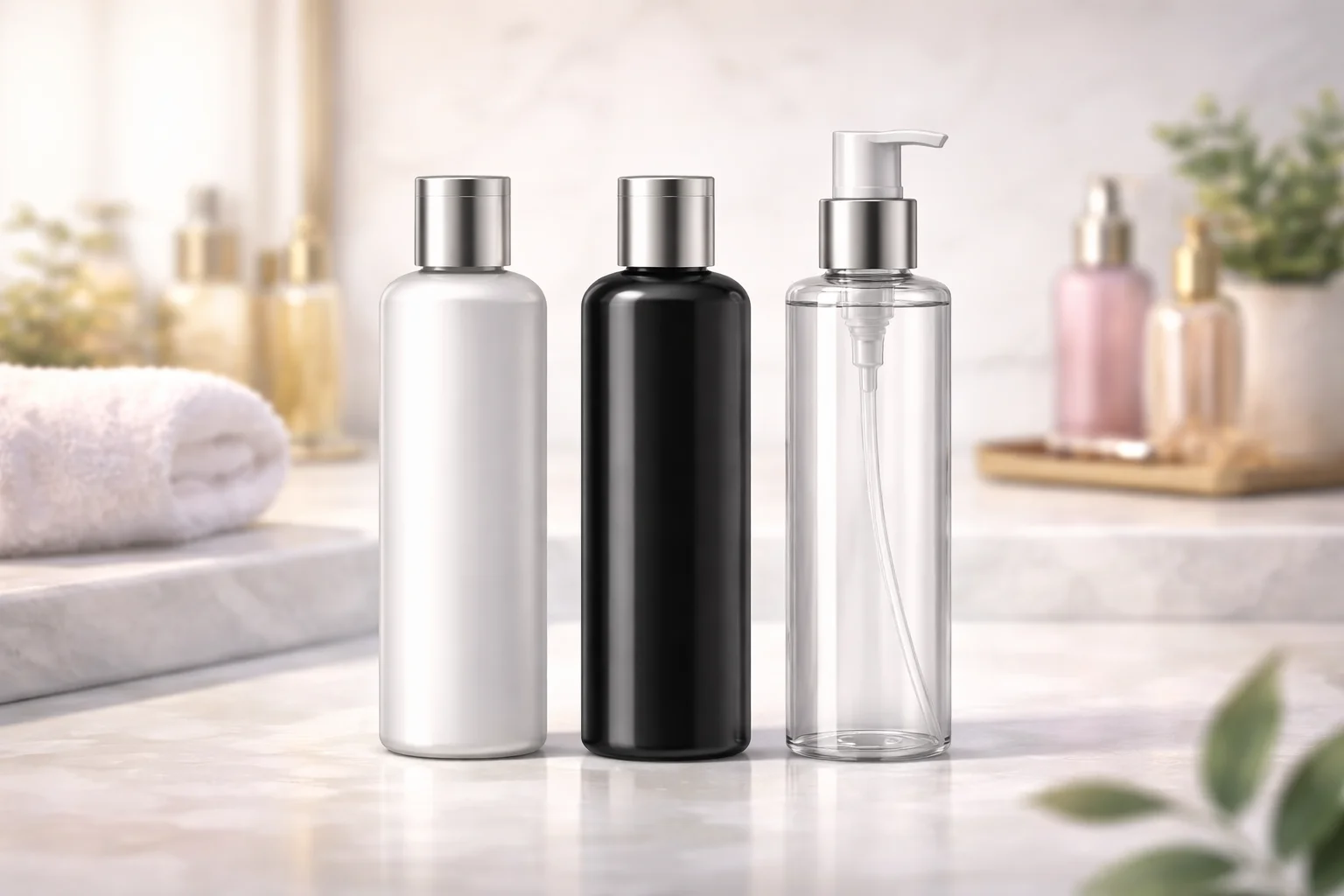
The Bullet bottle[^5] is the Cosmo's sharper, more architectural cousin. While they share a cylindrical body, the key difference lies in the shoulders, and that one detail changes everything about the bottle's personality and how it performs in production.
Key Design Features
The signature feature of a Bullet bottle[^5] is its completely flat, squared-off shoulder. There's no gentle curve; the body transitions to the neck at a sharp, clean angle. This gives the bottle a distinct, geometric look. Like the Cosmo, it has straight sides that are great for labeling. However, its base can sometimes be narrower in proportion to its height, which can make it slightly less stable than a Cosmo of the same volume.
Aesthetic Appeal and Applications
The Bullet's appeal is all about its clean lines. It feels modern, precise, and sophisticated. Brands often choose this shape to convey a sense of quality and minimalism, making it ideal for serums, toners, high-end facial cleansers, and aromatherapy oils. When you see a row of Bullet bottle[^5]es](https://en.wikipedia.org/wiki/Polycarbonate)[^4] on a shelf, they create a very uniform and high-end impression.
Cosmo Round vs. Bullet Bottles: The Real Differences?
At first glance, these two bottles look almost the same. This makes it easy to assume the choice is purely cosmetic, a mistake that can lead to unexpected problems.
The main difference is the shoulder design: Cosmo round[^3]s have soft, curved shoulders, while Bullets have sharp, flat ones. This affects stability (Cosmos are often more stable), aesthetics (Bullets look more premium), and sometimes production efficiency[^12] and cost.
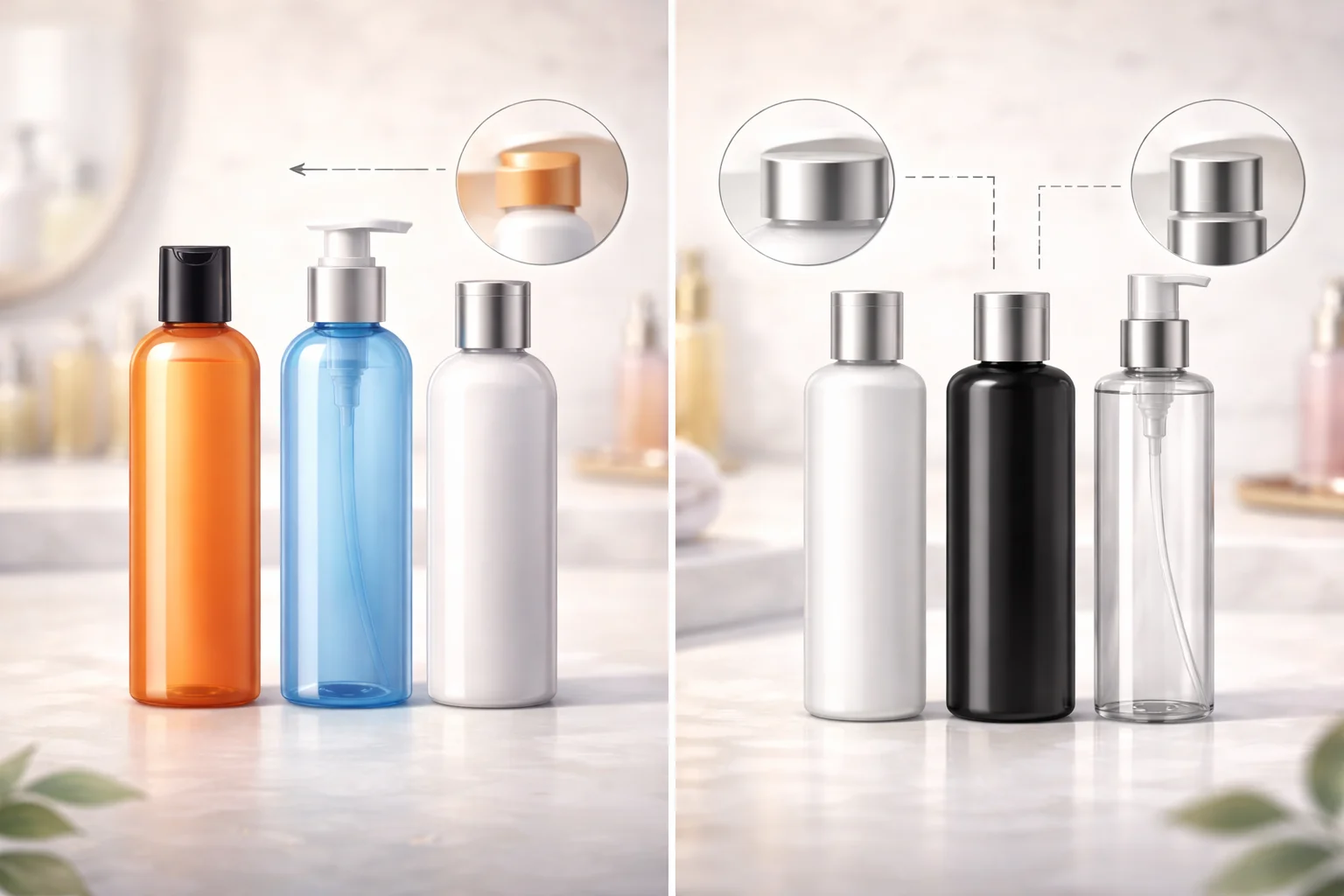
I've seen brands agonize over this choice, and I've also seen them pick one without much thought. The reality is that the "better" bottle depends entirely on your priorities. To make it simple, I’ve put the key differences into a table.
| Feature | Cosmo Round Bottle | Bullet Bottle |
|---|---|---|
| Shoulder Design | Soft, rounded shoulders | Sharp, flat shoulders |
| Aesthetics | Classic, versatile, soft | Modern, premium, architectural |
| Stability | Generally very stable due to wider base | Can be less stable, especially taller sizes |
| Labeling | Excellent; large, straight panel | Excellent; large, straight panel |
| Cost & Availability | Often more cost-effective, widely available | Can be slightly more expensive, less common |
The table gives you a quick overview, but let's dig in. The stability issue is a big one. On a high-speed filling line, a bottle that tips easily can shut down the whole operation. The Cosmo's design is inherently more stable. Aesthetically, the Bullet often wins for brands wanting a sharp, high-end look. However, that premium feel can come with a literal cost, as the manufacturing process for Bullet bottle[^5]es](https://en.wikipedia.org/wiki/Polycarbonate)[^4] can be less forgiving, sometimes leading to slightly higher prices.
When Should You Choose a Cosmo Round Bottle?
You need a bottle that works without causing problems or breaking the budget. But you’re afraid the most practical option will make your brand look plain and uninspired.
Choose a Cosmo round[^3] bottle when you need reliability, cost-effectiveness, and versatility. It's the ideal choice for high-volume products, brands prioritizing production efficiency[^12], or when you need a stable container for products like lotions, shampoos, and conditioners.

From a manufacturer's perspective, the Cosmo round[^3] is often the path of least resistance, and I mean that in the best way possible. It's a workhorse that solves more problems than it creates. I recommend it to clients in several specific situations.
When Your Priority is Production Speed
If you're planning to produce a large volume of product, efficiency is everything. The Cosmo's stable base means it moves smoothly and quickly down filling and capping lines with minimal tipping. This reduces downtime and waste, which directly saves you money. For any brand looking to scale up, the Cosmo is a very safe and smart bet.
When Budget is a Major Factor
Because Cosmo round[^3]s are so popular and have been in production for so long, they are widely available from many suppliers. This competition and high volume generally lead to lower per-unit costs compared to more specialized shapes. If you need to keep your packaging costs[^13] down without sacrificing quality, the Cosmo is almost always the most economical choice.
When You Need a Versatile Package
The Cosmo design works well with almost any type of closure: pumps, fine mist sprayers, disc tops, flip tops. Its classic look also fits a wide range of product categories, from skincare to haircare to pet products. This versatility means you can use the same bottle shape[^11] across multiple products in your line, creating a cohesive brand look.
When Are Bullet Bottles the Better Choice?
Your brand is all about a premium, modern feel. But achieving that look with your packaging can seem impossible without sacrificing practicality or spending a fortune on custom molds.
Bullet bottle[^5]es](https://en.wikipedia.org/wiki/Polycarbonate)[^4] are the better choice when brand image and a premium aesthetic are your top priorities. They are perfect for luxury skincare[^14], serums, men's grooming lines, or any product that needs to communicate a modern, minimalist, and high-quality message.

While I often praise the practicality of the Cosmo, there are times when the aesthetic power of the Bullet bottle[^5] is undeniably the right move. It’s a choice that puts design at the forefront, and for certain brands, that's exactly what's needed to succeed.
When Brand Image is Everything
If you are positioning your product in the luxury or masstige market, the packaging has to do a lot of heavy lifting. The Bullet bottle[^5]’s clean lines and sharp shoulders immediately signal a higher price point and a more sophisticated product. It helps create a perception of quality before the customer even tries what's inside. For serums, facial oils, and high-end toners, this shape is a natural fit.
For Minimalist or "Sciency" Brands
The architectural, almost clinical look of the Bullet bottle[^5] aligns perfectly with brands that have a minimalist, gender-neutral, or science-backed identity. The shape is no-fuss and intentional. It suggests that the focus is on the efficacy of the formula inside. This makes it a popular choice for modern men's grooming lines and cosmeceutical brands.
When You Have Production Flexibility
Choosing a Bullet bottle[^5] means you must pay closer attention during production. Because they can be less stable, they may require slower line speeds or more careful handling. If you are working with a co-packer or a factory (like ours) that can fine-tune the process for this specific bottle shape[^11], you can get the premium look without major headaches. It's a trade-off: a better look for a bit more operational care.
The Most Common Mistakes When Choosing Between Them?
You’ve found a bottle that looks perfect for your brand. But moving forward without checking a few key details can lead to costly and frustrating mistakes down the line.
The most common mistakes[^15] are choosing based only on looks, ignoring the product's viscosity[^16], and failing to test the bottle with the chosen cap and label. An unstable bottle can halt production, and a mismatched cap can cause leaks.
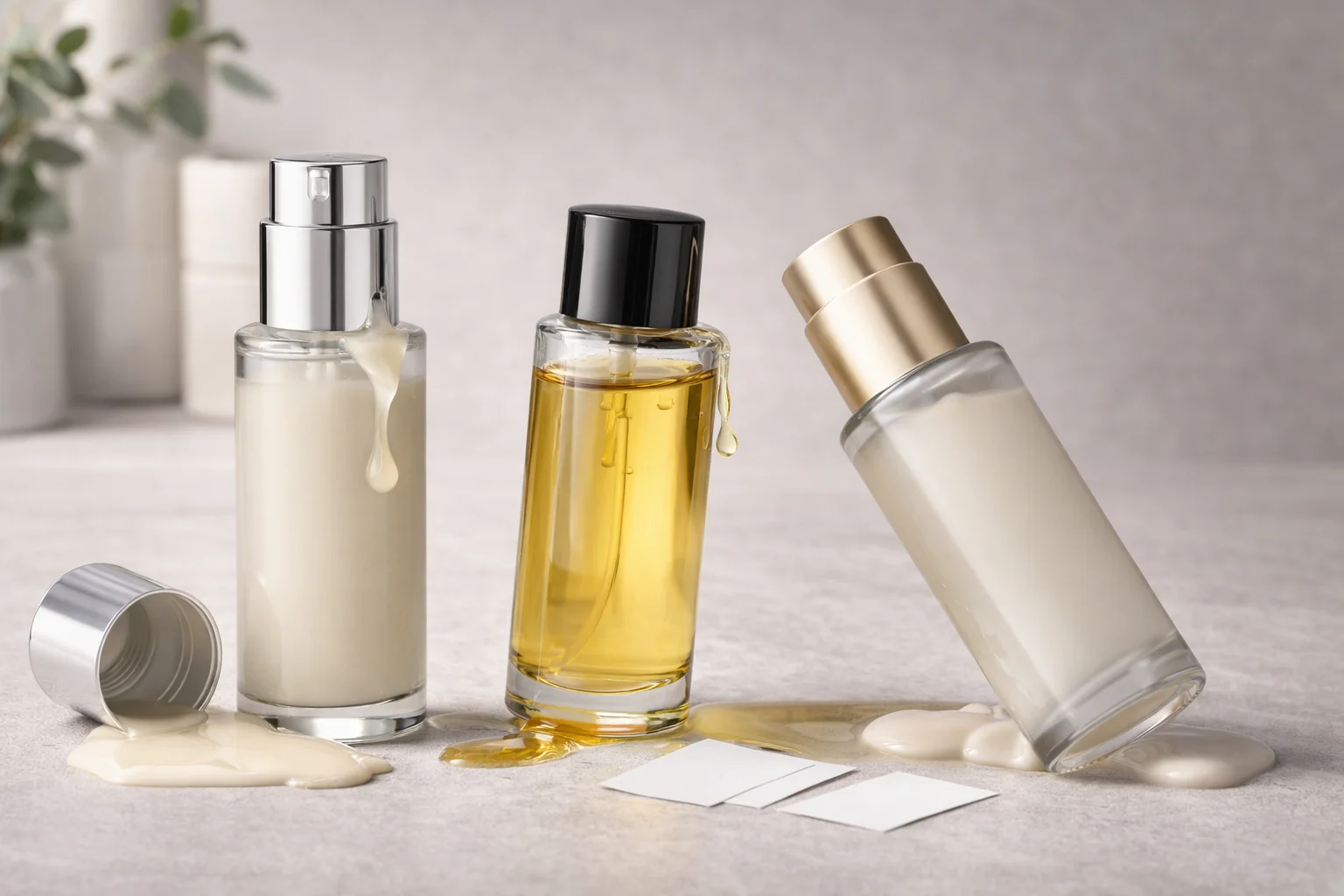
I've been in this business a long time, and I've seen the same preventable problems trip up new and established brands alike. The excitement of launching a new product can make it easy to overlook these details, but trust me, getting them right upfront saves a world of trouble.
Mistake 1: Choosing on Looks Alone
This is the biggest one. A brand falls in love with the sleek look of a tall Bullet bottle[^5] but plans to put a thick, heavy cream inside. The bottle looks great, but customers can't get the product out. You must match the bottle shape[^11] and opening to your product's viscosity[^16]. Always ask: "Is this bottle practical for what's going inside it?"
Mistake 2: Not Testing the Full Package
You order 10,000 bottles from one supplier and 10,000 pump caps from another, assuming they'll fit because they have the same neck finish size. But small variations in manufacturing tolerances can cause leaking or assembly problems. You must always, always test the exact bottle and exact cap together with your actual product inside before placing a bulk order.
Mistake 3: Mismatched Labeling
Both Cosmo and Bullet bottle[^5]es](https://en.wikipedia.org/wiki/Polycarbonate)[^4] have great, straight-sided label panels. But problems arise when a brand tries to use a label that's too tall and extends onto the curved shoulder of a Cosmo bottle. This inevitably leads to wrinkling and a cheap-looking final product. Your label dimensions[^17] must fit perfectly within the bottle's flat surface area.
How to Choose the Right Bottle for Your Product (Simple Guide)?
With so many variables, picking the right bottle can feel like a gamble. Making the wrong call is an expensive mistake you don't want to make on your product.
To choose the right bottle, first define your brand identity[^8] (premium or practical). Then, consider your product's needs (viscosity[^16], dispensing). Finally, evaluate your budget and production reality. Always test your final choice with your cap and label before ordering.
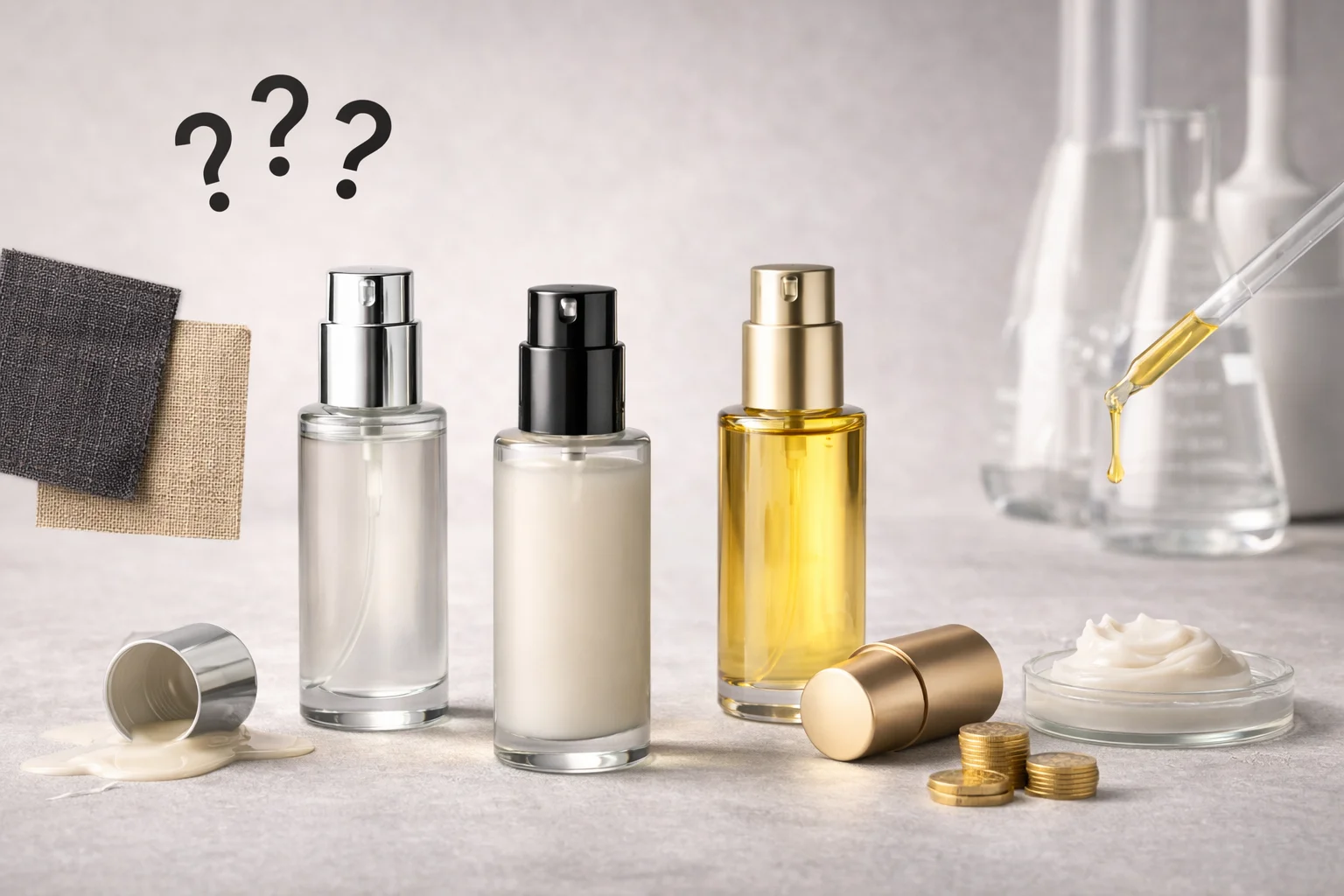
Choosing the right bottle doesn't have to be complicated. If you follow a logical process, you can make a confident decision that aligns your brand, product, and budget. I walk my clients through these four steps to ensure we land on the perfect package every time.
1. Start with Your Brand
First, who are you? Are you a luxury, minimalist brand or a practical, family-friendly one? Your answer immediately points you in a direction. A premium brand should lean toward the Bullet, while a value-focused brand would likely start with the Cosmo. Your bottle is a key part of your brand story.
2. Think About the Product
Next, what are you putting inside? Is it a thin, watery toner or a thick, heavy lotion? A thin liquid works in almost any bottle, but a thick product requires a wider mouth or a specific type of pump. Don't forget the user experience. Will it be used in the shower, where a stable base is critical?
3. Be Realistic About Production
Now, think about the numbers. What is your budget per unit for packaging? How many units are you producing? For large-scale runs, the stability and cost-effectiveness of the Cosmo are huge advantages. For smaller, boutique runs, the extra care required for a Bullet bottle might be perfectly manageable.
4. Always Test Everything
Once you have a candidate, get samples. Get the bottle, the cap, and the label. Fill it with your product. Let it sit. Ship it to yourself. Use it for a week. This is the only way to know for sure that you've made the right choice before you commit to a massive order.
Need Help Choosing the Right Bottle for Your Brand?
Even with all this information, making the final call can be stressful. The risk of choosing wrong and wasting thousands of dollars on the wrong packaging is very real.
If you're still unsure, the best next step is to talk to a packaging expert. We can look at your specific product, brand, and budget to provide a tailored recommendation that prevents costly mistakes and ensures your product looks and performs its best.

I wrote this guide based on years of seeing what works and what doesn't from a manufacturer's point of view. Sometimes, reading about it isn't enough. Having a conversation with someone who deals with these challenges every day can provide the clarity you need to move forward with confidence.
Why Talk to an Expert?
When you partner with a manufacturer like us, you're not just buying bottles. You're getting access to a team of people who understand the entire process. We know which plastic resins work best with certain ingredients. We know which cap and bottle combinations have the tightest seal. We can look at your product and immediately flag potential issues you might not see, like a bottle being too tall for a certain retail shelf or a shape being notoriously difficult to label cleanly.
How We Can Help
We can guide you through the selection process, provide physical samples for you to test, and give you realistic feedback on how your choices will impact production costs and timelines. Our goal is the same as yours: to create a final product that is successful, profitable, and makes customers happy. Don't guess. Let's work together to find the perfect packaging solution for your brand. Contact us today to get started.
Conclusion
Choosing between Cosmo and Bullet bottles isn't just about looks. It’s about matching your brand, product, and production reality to create a package that truly works for you.
[^1]: Understand the potential production issues that can occur from improper bottle selection.
[^2]: Explore the advantages of Cosmo round bottles, known for their stability and cost-effectiveness, ideal for various products.
[^3]: Get insights into the versatile applications of Cosmo round bottles in personal care.
[^4]: Learn about Bullet bottles, their sleek design, and how they can enhance your brand's premium image.
[^5]: Find out which products benefit most from the sleek design of Bullet bottles.
[^6]: Find out how the design of your bottle can affect shipping efficiency and costs.
[^7]: Learn about the labeling challenges that can occur with different bottle shapes.
[^8]: Explore the connection between packaging choices and brand identity in the market.
[^9]: Discover how the design of a bottle can enhance or hinder the customer experience.
[^10]: Learn why stability in bottle design is crucial for efficient production operations.
[^11]: Discover how the shape of your bottle influences customer perception and brand identity.
[^12]: Learn how the right bottle design can streamline production processes and reduce costs.
[^13]: Explore the various factors that can impact the cost of packaging your products.
[^14]: Explore the best packaging choices for luxury skincare to enhance brand perception.
[^15]: Identify common pitfalls in bottle selection to avoid costly mistakes in production.
[^16]: Discover how the viscosity of your product should influence your bottle selection.
[^17]: Get tips on how to choose the right label dimensions for your bottle to avoid issues.