Struggling with that last bit of shampoo in the bottle? It's a common frustration. You know there's more in there, but you just can't get it out.
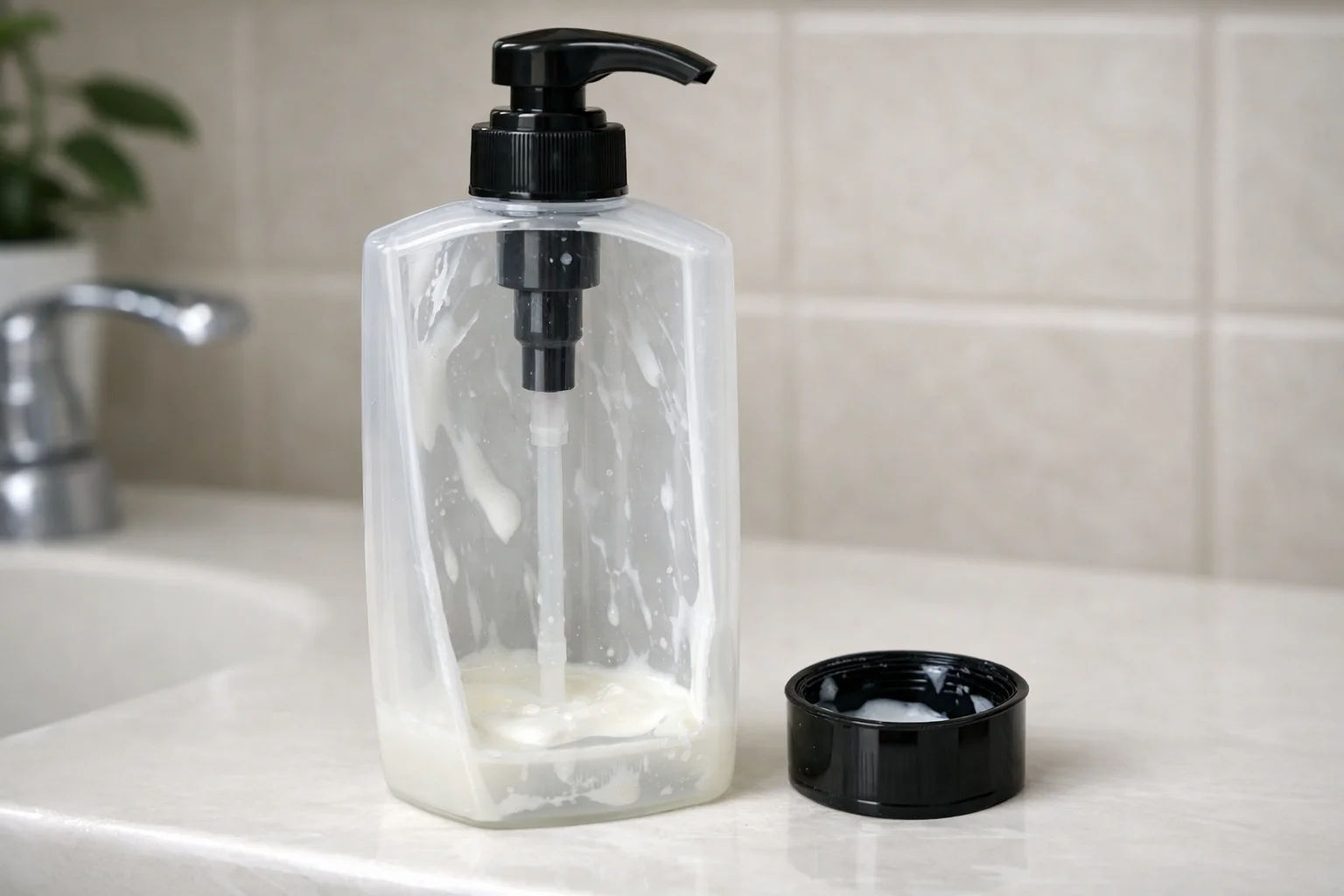
The main reasons are the shampoo's thickness[^1] and the bottle's shape. Thick shampoo, known as a viscous liquid[^2], clings to the plastic walls. Design features like sharp corners[^3], shoulders, and pump mechanisms trap the product, making it nearly impossible to get every last drop out.
I’ve spent years in the packaging industry, and this is a problem we think about a lot. It seems small, but it's a perfect example of how science, design, and user experience come together in an everyday object. It's frustrating for you, and it's a challenge for us as designers. So, let's break down why this happens and what we, and you, can do about it. This is about more than just shampoo; it's about getting value and being less wasteful.
Why do shampoo bottles always seem impossible to empty?
Can't get that last drop of product? You shake the bottle, you bang it on your hand, but nothing comes out. This common problem has a simple explanation.
Shampoo bottles seem impossible to empty because of a combination of factors. The thick product sticks to the plastic. The bottle's shape, with its corners and shoulders, traps the shampoo. And standard pumps can't reach the very bottom, leaving a pool of unusable product behind.
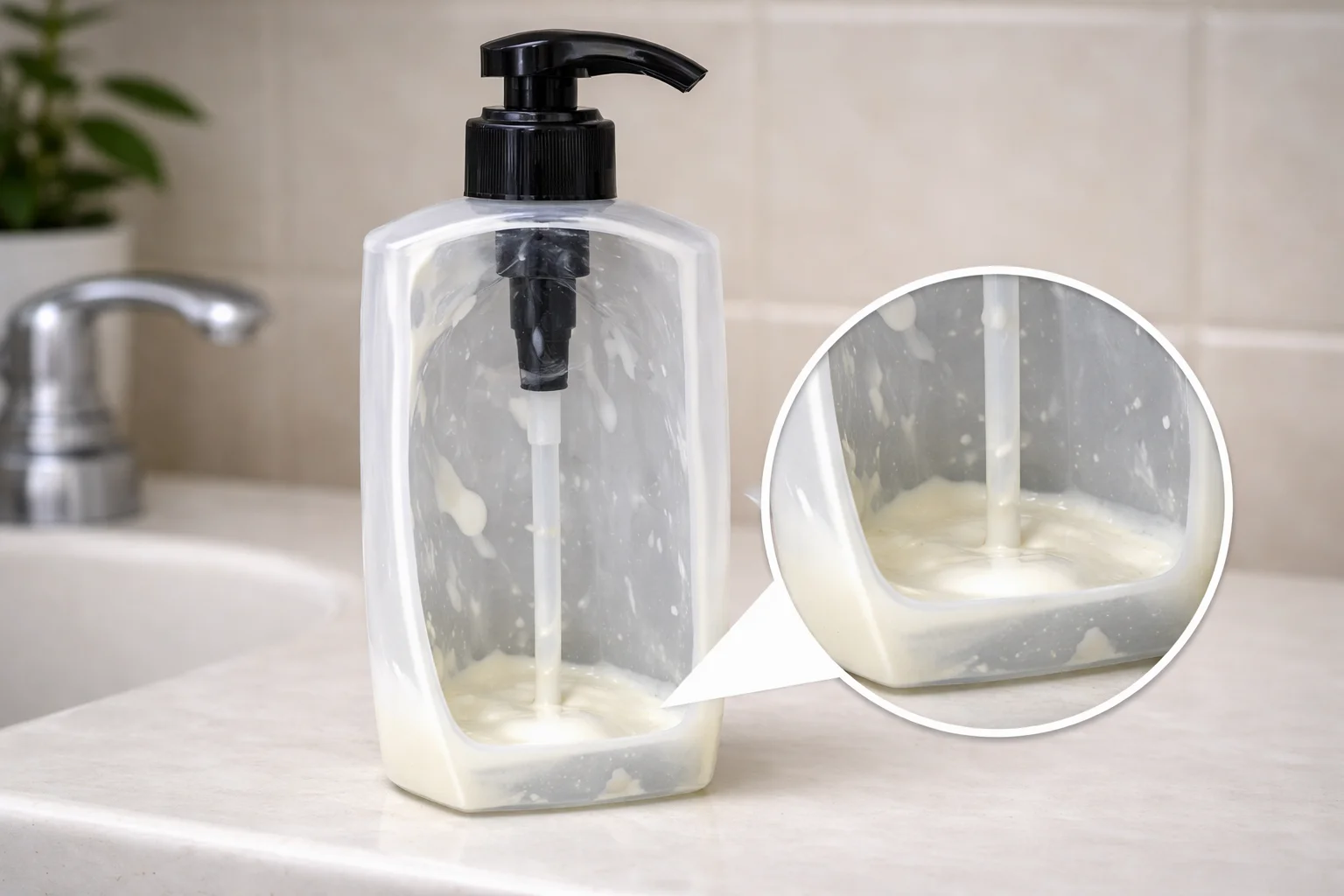
In my line of work, we call the ability to get product out "product evacuation[^4]." A bad evacuation rate is frustrating for everyone. Several things work together to keep that last bit of shampoo hostage. It's a mix of physics and practical design choices.
The Science of 'Sticking'
Shampoo is designed to be thick. This thickness, or viscosity, helps you control how much you use. But it also means the shampoo moves slowly and sticks to surfaces. This is due to something called surface tension[^5]. The shampoo molecules are more attracted to the plastic bottle than they are to each other, so they cling to the sides.
The Problem with Bottle Shape
The classic bottle shape isn't great for getting everything out. Here’s a breakdown of the problem areas I see all the time.
| Bottle Feature | The Problem It Causes |
|---|---|
| Sharp Shoulders | Creates a shelf where shampoo gets stuck. |
| Narrow Neck | Makes it hard to scrape out remaining product. |
| Complex Base | Crevices and corners in the bottom trap liquid. |
| Rigid Plastic | You can't squeeze the bottle effectively to force product out. |
These design choices are often made for looks or for stability on a shelf, not always for a perfect user experience.
Why is shampoo so hard to rinse out?
You add a little water to your shampoo bottle, hoping to get one last wash. But it just creates a bubbly, watery mess that doesn't feel right. There's a reason for that.
Shampoo is hard to rinse out because it contains surfactants[^6] and thickening agents[^7]. These ingredients are designed to cling to your hair to clean it. Unfortunately, they do the same thing to the inside of the bottle, resisting being easily washed away with just water.
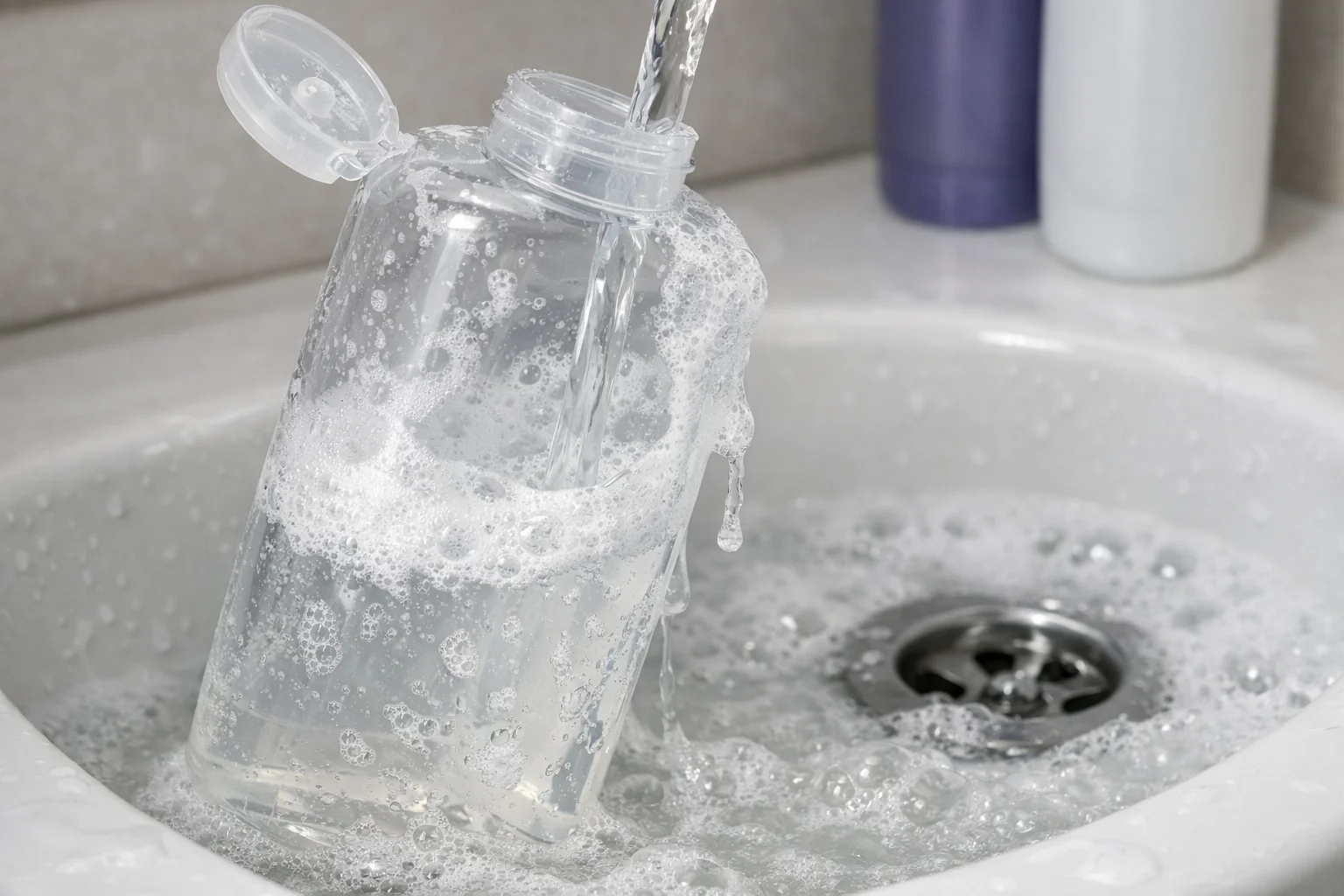
Shampoo is a complex chemical mixture. It’s not just soap. Its job is to grab onto oil and dirt on your hair and scalp. To do this, it uses special ingredients that make it sticky. I remember a project where we tested different formulas, and the ones that cleaned hair the best were always the hardest to get out of the prototype bottles.
The Key Ingredients Causing the Problem
A few types of ingredients in your shampoo are the main culprits. They are great for your hair, but not for an empty bottle.
- Surfactants: These are the primary cleaning agents. They have a head that loves water and a tail that loves oil. This structure allows them to trap dirt, but it also helps them stick to the plastic surface of the bottle.
- Thickeners: Ingredients like polymers and gums are added to give shampoo its rich, thick texture. This high viscosity means it flows very slowly, making it easy to get stuck.
- Conditioning Agents: Silicones and oils are often included to make hair feel smooth. These ingredients can create a film on the inside of the bottle, trapping even more shampoo.
So when you add water, you're not just thinning it out. You're fighting the very chemistry that makes the product work in the first place.
How does bottle design affect product waste?
Have you ever looked at a fancy bottle and thought, "This is going to be a pain to empty"? You're probably right. The design of a bottle plays a huge role in how much product you waste.
Bottle design directly causes product waste. Features like sharp internal corners, narrow neck[^8]s, and inflexible plastic trap significant amounts of shampoo. Pump-based designs are also a major issue, as the dip tube never reaches the very bottom or the corners of the container.
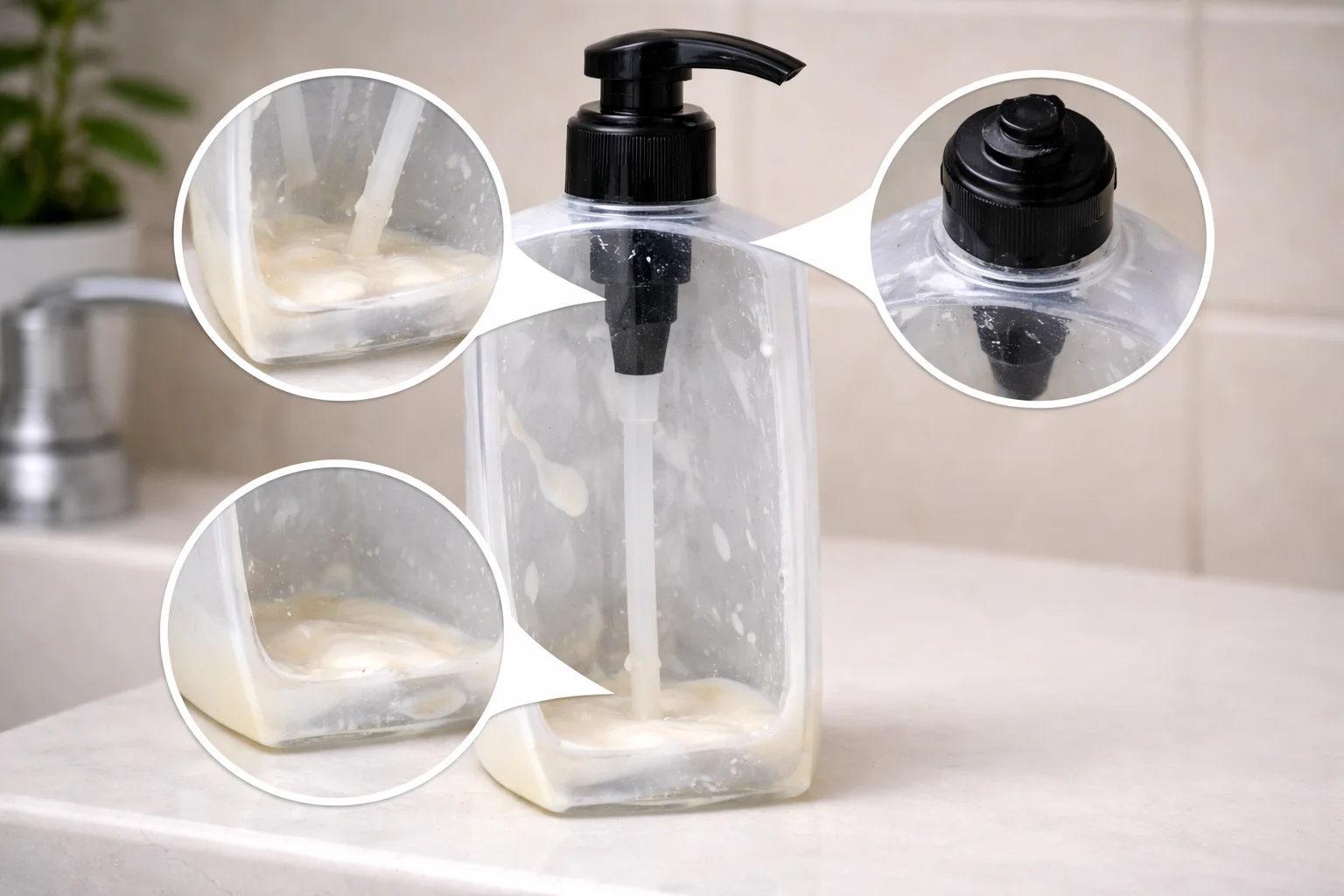
This is where my job gets really interesting. We can make small changes to a bottle's design that have a big impact on how much product a customer can actually use. We call it "designing for evacuation." A bottle that looks great on the shelf but leaves 15% of the product inside is, in my opinion, a failed design.
Good Design vs. Bad Design
Let's compare some common design features and see how they perform. The goal is to create a bottle that is stable, looks good, and lets you use almost every drop you paid for.
| Design Element | Bad for Evacuation | Good for Evacuation |
|---|---|---|
| Shoulder Angle | A flat, 90-degree shoulder. | A steep, sloped shoulder that guides product down. |
| Base Shape | A flat bottom with sharp corners[^3]. | A rounded or cone-shaped base that funnels product to the center. |
| Material | Very rigid, hard plastic. | A flexible material that you can easily squeeze. |
| Dispenser | A short pump dip tube. | A tube that reaches the very bottom edge, or a simple cap. |
We are constantly balancing these factors. For example, a rounded bottom is great for getting product out, but it can make the bottle unstable. It's a puzzle we work to solve with every new project.
How much shampoo is usually left in the bottle?
You toss that "empty" bottle, but how much product are you really throwing away? The amount is probably more than you think, and it adds up quickly over time.
Studies and industry estimates show that up to 15-25% of product can be left in bottles with pumps. For standard squeeze bottles, the waste is lower but can still be around 5-10%. Over a year, this can equal throwing away one or two full bottles.
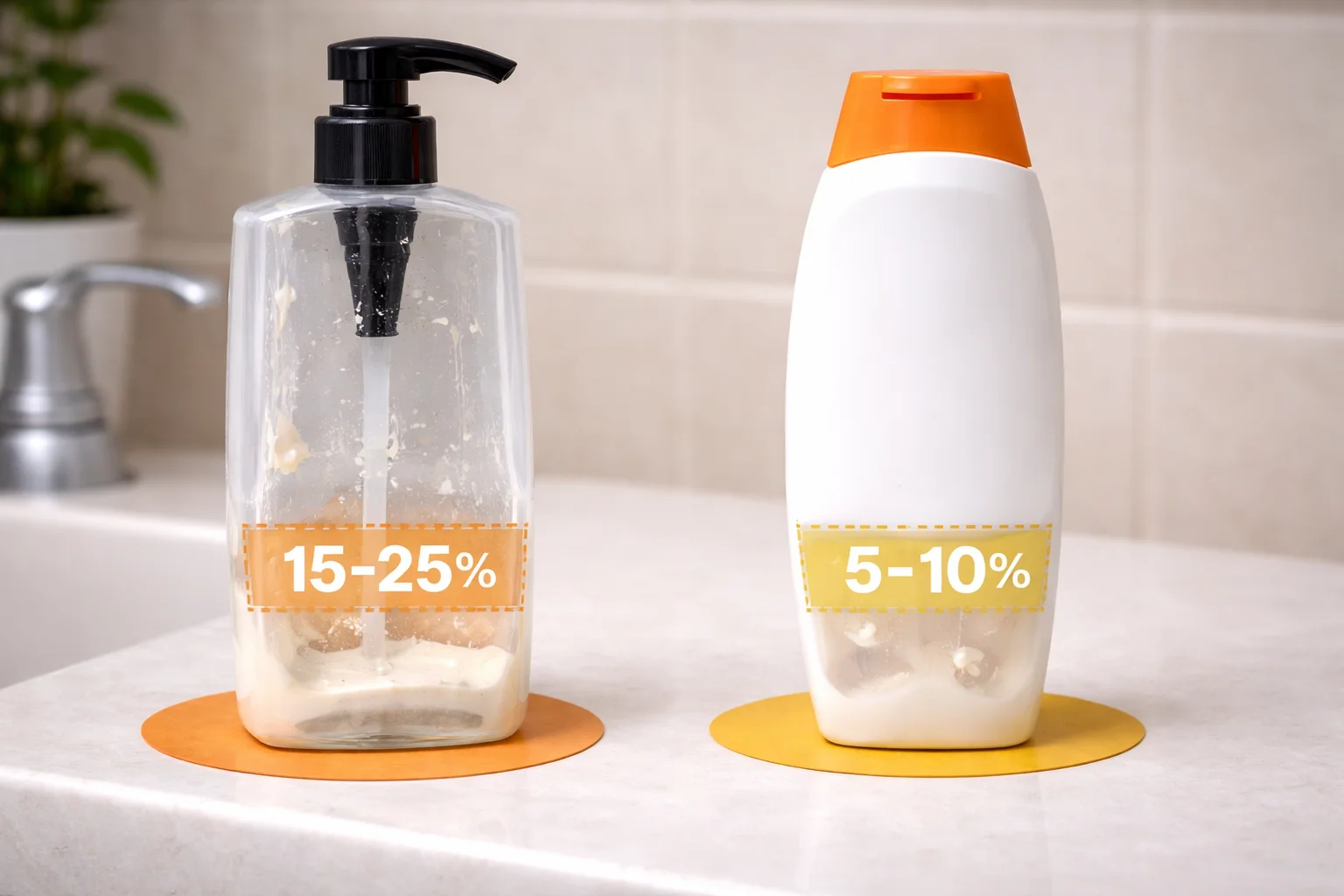
The amount of waste varies a lot based on the product's thickness and the bottle's design. In our own lab tests, I've seen some pump bottles leave behind a shocking amount of lotion or conditioner. We weigh the bottles when they are full and again when the consumer says they are "empty." The difference is the waste. For a family of four, this waste can add up to a surprising amount of money each year.
A Look at the Numbers
Let's imagine an average family's usage to see how the waste adds up.
| Bottle Type | Average Waste Per Bottle | Annual Waste (12 Bottles/Year) |
|---|---|---|
| Pump Bottle | 15% | Nearly 2 full bottles |
| Squeeze Bottle | 7% | Nearly 1 full bottle |
| Tube | 3% | Less than half a bottle |
This is just for one product. Think about conditioner, lotion, liquid soap, and foundation. The total waste is significant. It's money down the drain and a problem for the environment. This is why making small improvements in packaging design is so important to me and my team.
What are simple ways to get the last shampoo out?
Don't give up on that bottle just yet. You can rescue that trapped shampoo with a few easy tricks. These methods help you get your money's worth and reduce waste.
The simplest ways to get the last shampoo out are to store the bottle upside down, add a small amount of water and shake it, or use a thin tool like a cosmetic spatula to scrape the sides. For plastic tubes, cutting them open is also very effective.
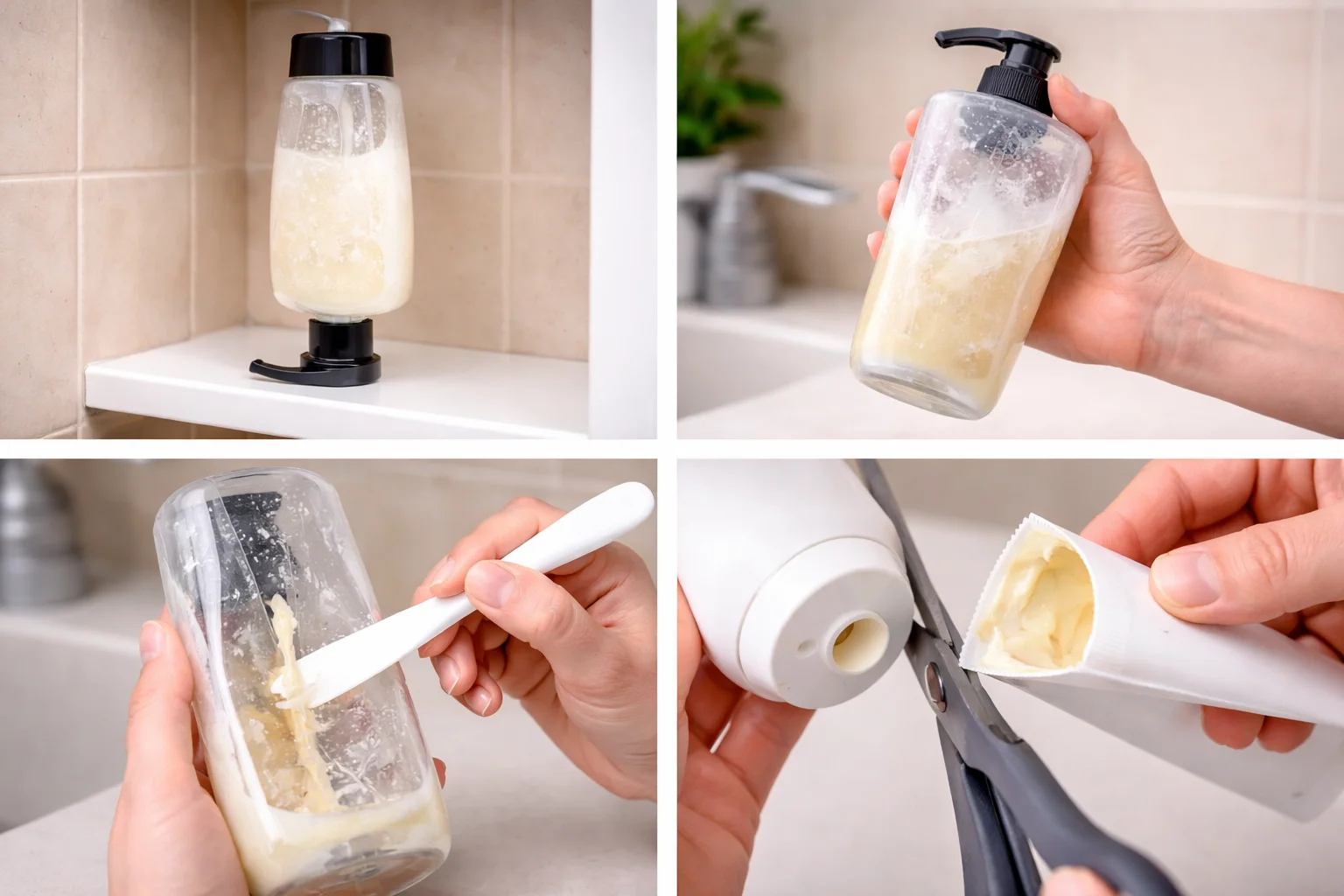
Before new packaging designs solve this problem for good, we have to use some clever hacks. I use these myself all the time. They are simple, and they really work.
Your Toolkit for Fighting Waste
Here are four effective methods you can try at home.
1. The Gravity Method
This is the easiest one. When your bottle is getting low, just store it upside down. Gravity will pull the remaining shampoo down toward the cap. You can lean it in a corner of the shower or buy a special cap or stand designed for this purpose.
2. The Dilution Method
This is a classic for a reason. Add a tablespoon or two of warm water to the bottle. Close the cap tightly and shake it vigorously for about 30 seconds. This thins the shampoo, allowing it to flow out easily. You might get two or three more washes this way.
3. The Scraping Method
If you want to get every last bit, use a tool. A long, thin cosmetic spatula works perfectly. You can scrape the sides and scoop out the remaining product. I’ve even seen people use the handle of a toothbrush in a pinch.
4. The Drastic Method
For plastic tubes (like conditioner or lotion), this is the best way. Be careful, and use a sturdy pair of scissors to cut the tube in half. You will often find enough product for several more uses inside.
Why does this matter for recycling?
You finished your bottle, rinsed it a bit, and tossed it in the recycling bin. You did the right thing, right? Well, it depends on how well you rinsed it. Leftover product can cause big problems.
Leftover shampoo in bottles can contaminate an entire batch of recyclable plastic. At the recycling facility, dirty containers may be sorted out and sent to a landfill. Clean, empty bottles are essential for the recycling process[^9] to work effectively.
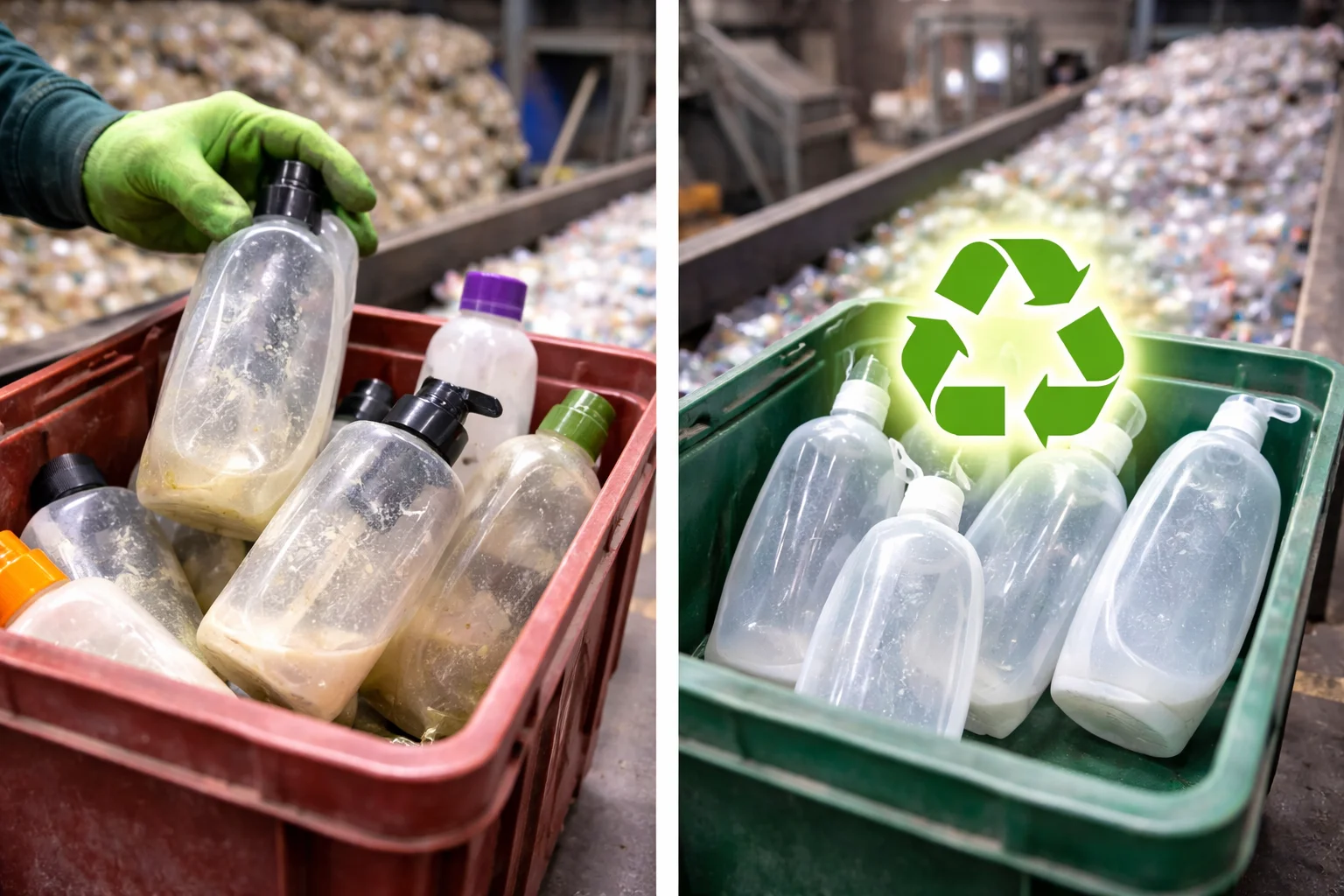
As a packaging professional, I feel a huge responsibility here. We design the package, so we need to think about its entire life, including what happens after it's empty. A package that is hard to empty is also hard to recycle properly.
How Residue Disrupts Recycling
Here’s a simple breakdown of the problem.
- Collection and Sorting: Your bottle arrives at a Materials Recovery Facility (MRF). Here, plastics are sorted by type.
- Contamination: If a bottle contains too much liquid, it can leak and ruin other materials, like paper and cardboard. The weight of the leftover product can also mess up the automated sorting machines.
- Washing and Shredding: The sorted plastics are washed and shredded into small flakes. If there is too much gunk, the washing process isn't effective.
- Melting and Reforming: The clean flakes are melted down to create new plastic pellets. Any remaining shampoo or dirt will burn and ruin the quality of the new plastic, making it weak and unusable.
When a batch is too contaminated, the entire load might be thrown away. That's why getting your bottle as empty and clean as possible is so important. It helps ensure your effort to recycle actually counts.
What packaging innovations[^10] reduce product waste?
Are you tired of wasteful bottles? The good news is that packaging designers and engineers are working on it. The future of packaging is much smarter and more efficient.
New packaging innovations[^10] include bottles with super-slippery internal coatings that let thick liquids slide right out. Other solutions are flexible pouches[^11] that you can roll up, collapsing bottles, and clever bottom-dispensing designs that use gravity to their advantage.
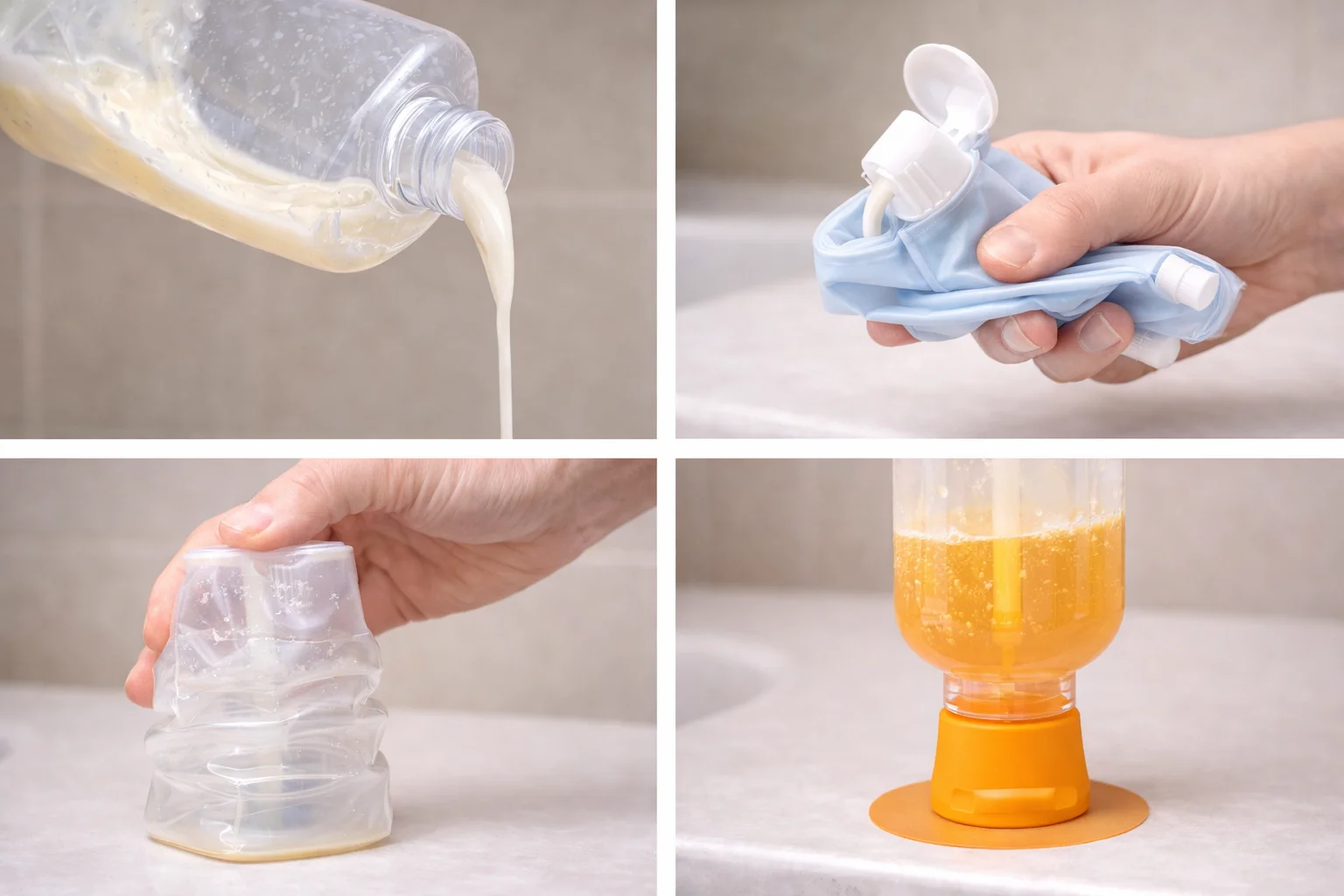
This is the most exciting part of my job. We are using new materials and new thinking to solve this old problem. The goal is to create packaging that allows for near-perfect product evacuation[^4]. This is better for the customer and much better for the planet. Some of these innovations are already on the shelves.
The Future of Bottles
Here are some of the most promising technologies that are changing how we get products out of their containers.
| Innovation | How It Works | Key Benefit |
|---|---|---|
| Slippery Coatings | A microscopic, non-toxic coating is applied to the inside of the bottle. The product slides off the surface instead of sticking. | Can achieve over 99% product evacuation[^4]. |
| Flexible Pouches | Like a toothpaste tube, you can squeeze and roll up the package to get everything out. | Less plastic used, and very little product is wasted. |
| Bottom-Up Dispensers | The bottle is designed to be stored upside down, with the cap at the bottom acting as the dispenser. | Gravity does all the work for you. |
| Collapsible Liners | A flexible bag or liner inside a rigid bottle collapses as the product is used, pushing everything out. | Great for air-sensitive products and reduces waste. |
As a consumer, you can support this change. When you see a brand using smarter packaging, choose it. Your choice sends a message to companies that good design matters.
Conclusion
Getting all your shampoo out is possible with better bottle designs and good habits. This simple change saves you money, reduces frustration, and helps our planet by making recycling more effective.
[^1]: Understanding the thickness of shampoo can help you choose products that are easier to use and waste less.
[^2]: Learn about viscous liquids to better understand how they interact with packaging and your experience.
[^3]: Understanding design flaws like sharp corners can help you make informed choices about packaging.
[^4]: Discover the concept of product evacuation to appreciate the design challenges in packaging.
[^5]: Explore the role of surface tension in product retention and how it impacts your experience.
[^6]: Understanding surfactants can help you choose effective hair care products that work well.
[^7]: Learn about thickening agents to understand their role in product performance and usability.
[^8]: Learn how narrow necks can trap product and lead to waste, influencing your purchasing decisions.
[^9]: Understanding the recycling process can motivate you to ensure your bottles are clean and empty.
[^10]: Stay informed about new packaging technologies that can help reduce waste and improve usability.
[^11]: Learn about flexible pouches and how they can reduce waste and improve product access.