Your business launched a recycling program[^1], but it's costly and confusing. You want to be sustainable, but the results are disappointing. The problem is not recycling, but the approach.
Most business plastic recycling program[^1]s fail because they are treated as marketing initiatives, not operational systems. They ignore supply chain[^2] realities, the low commercial value of mixed plastics[^3], and the critical need to simplify materials from the very beginning. Success depends on operational, not promotional, changes.
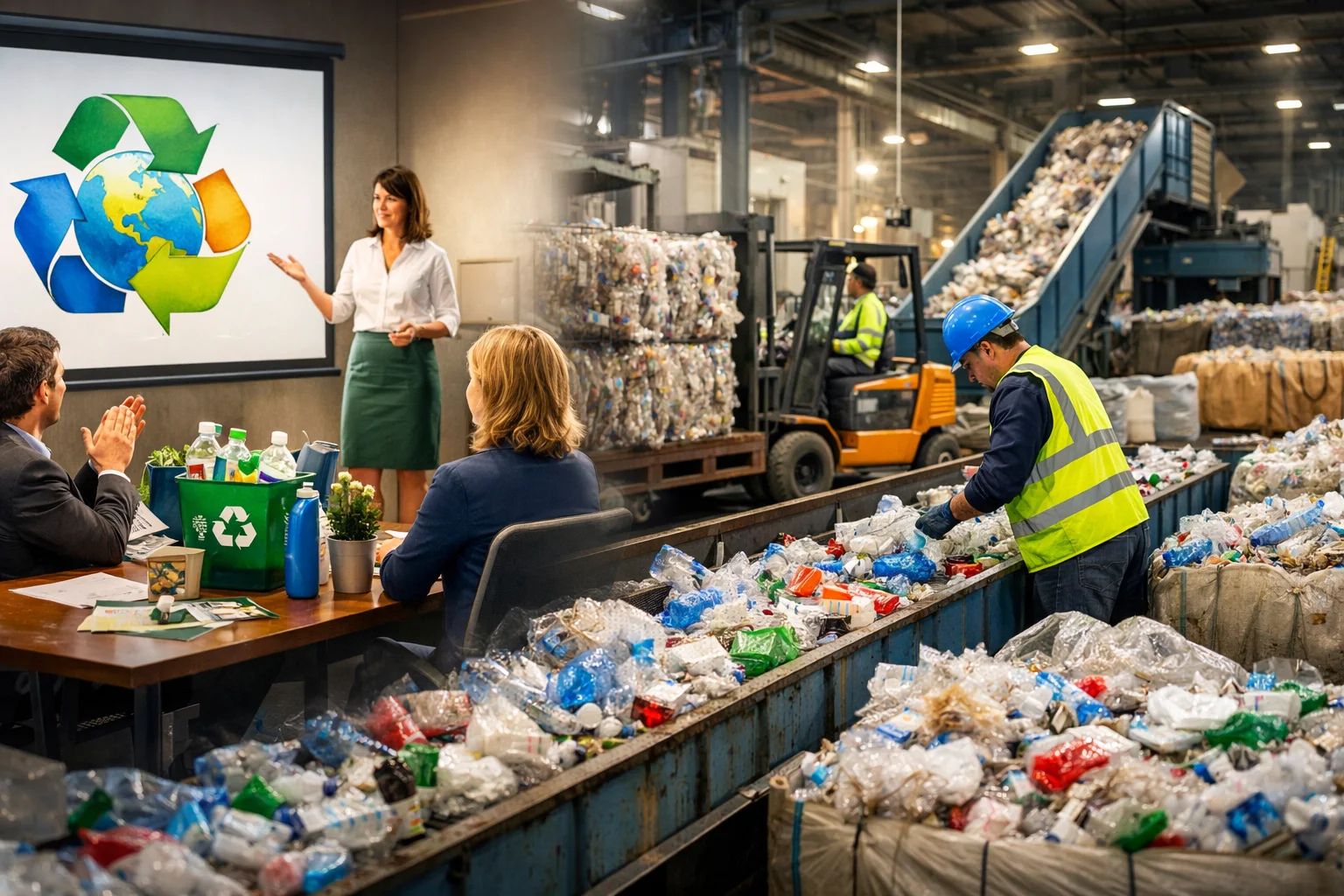
It seems simple on the surface. You collect plastic, a truck picks it up, and you feel good about helping the planet. But the reality is much more complicated, and the reasons for failure are often hidden deep within your own operations. Let's break down why this well-intentioned process so often goes wrong and what you can actually do to fix it.
Why Does Plastic Recycling Sound Easy, But Isn’t?
You see the recycling symbol on a package and assume it's a simple process. But then you face confusing rules and low success rates. There is a huge gap between theory and practice.
Plastic recycling is difficult because "plastic" is not one material; it's a family of different polymers. Each type requires a separate recycling process. Contamination, collection logistics, and low market demand for the final product add layers of complexity that most business programs completely overlook.
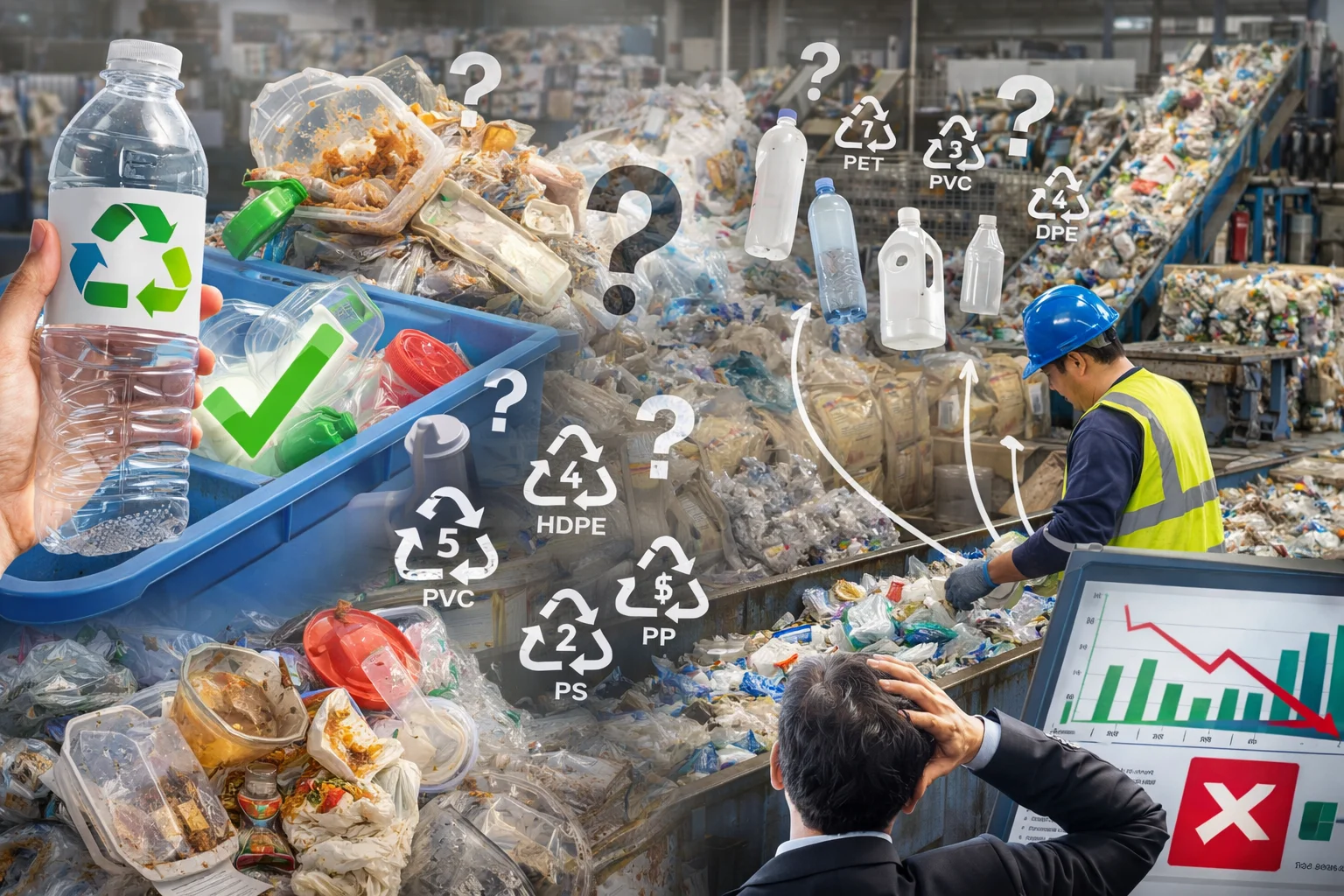
The biggest misunderstanding starts with the chasing arrows symbol. Most people think it means "this is recyclable." In reality, it's a resin identification code that just tells you what type of plastic it is. I remember visiting a materials recovery facility (MRF) for the first time. I saw mountains of baled plastic just sitting there. The manager told me, "This has been here for six months. We can't find a buyer." That was a huge wake-up call. The system is not based on good intentions; it is based on economics. If a manufacturer can't buy the recycled plastic pellets and make a new product profitably, the entire system breaks down. This is why some plastics are recycled far more often than others.
| Plastic Code | Name | Common Uses | Recyclability |
|---|---|---|---|
| #1 PET | Polyethylene Terephthalate | Soda bottles, water bottles | High |
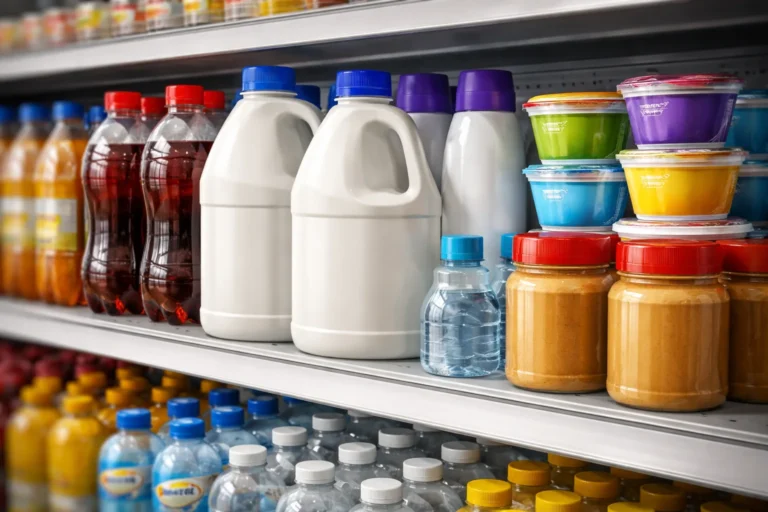
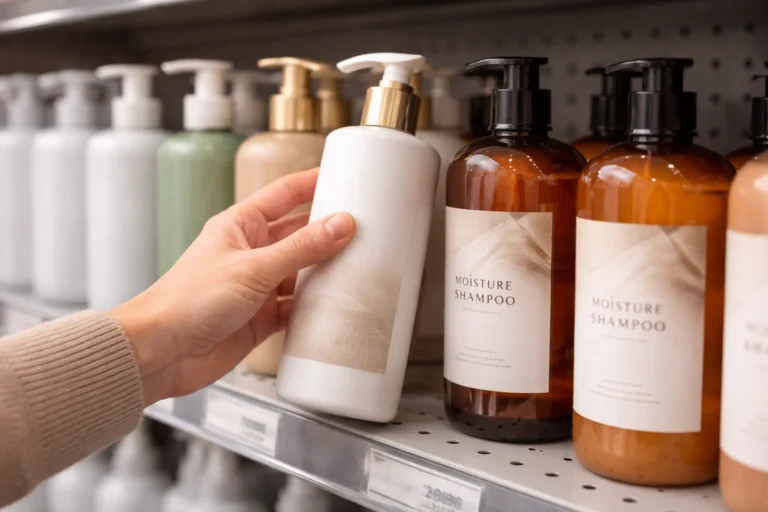
| #2 HDPE | High-Density Polyethylene | Milk jugs, shampoo bottles | High |
| #3 PVC | Polyvinyl Chloride | Pipes, credit cards | Low / Difficult |
| #4 LDPE | Low-Density Polyethylene | Plastic bags, films | Low / Difficult |
| #5 PP | Polypropylene | Yogurt tubs, bottle caps | Medium |
| #6 PS | Polystyrene | Foam cups, take-out containers | Very Low / Difficult |
| #7 Other | All other plastics | Mixed products, multi-layer | Very Low / Difficult |
What Are The 5 Most Common Mistakes Businesses Make?
You launched a recycling program[^1] to be more sustainable. Now you are spending more money and creating more headaches for your team. The most common mistakes are surprisingly easy to make.
Businesses often make five key mistakes. They focus on collection, not material quality[^4]. They use too many different types of plastic. They ignore supplier collaboration[^5]. They treat recycling as a marketing stunt. And they completely misunderstand the true operational costs involved.
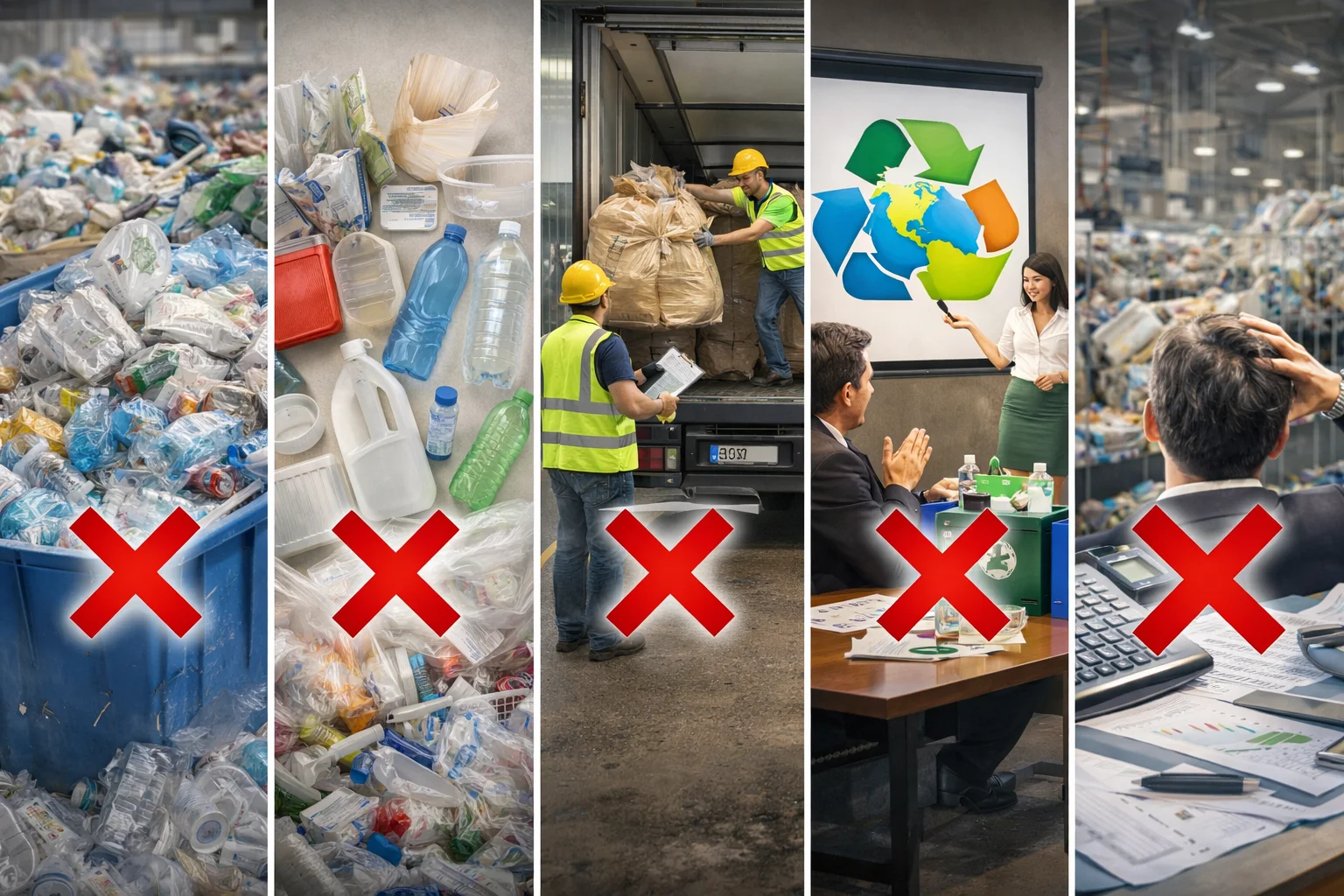
I've seen these same mistakes play out time and time again. They all stem from treating recycling as an afterthought. It's something tacked on at the end instead of being built into the system from the beginning. Let's look at these in more detail.
Mistake 1: Treating it as a Marketing Play
Many companies put recycling bins out, issue a press release, and call it a day. This is "greenwashing[^6]." It feels good, but it doesn't solve the underlying problem. A real program requires operational changes[^7], not just a new page on your website.
Mistake 2: Ignoring Material Simplification
Your business probably uses dozens of different plastic types in its packaging, products, and operations. Trying to recycle all of them is a logistical nightmare. The simplest, most effective change is to standardize on one or two easily recycled types, like PET (#1) or HDPE (#2).
Mistake 3: The "Wish-cycling" Trap
This is when people toss questionable items into the recycling bin, hoping they can be recycled. A single greasy container or the wrong type of plastic can contaminate an entire bale, forcing the recycler to send it all to the landfill.
Mistake 4: Not Involving the Supply Chain
Your suppliers are your greatest allies. They know exactly which materials are truly recyclable and which ones are not. Failing to have this conversation is a huge missed opportunity.
Mistake 5: Overlooking Contamination
This is the silent killer of recycling program[^1]s. A small amount of food waste, liquid, or the wrong plastic type downgrades the value of your materials, often to zero.
What Actually Works as a Practical Recycling Framework?
Your current recycling plan isn't working as it should. It feels like a waste of time and money. The good news is that there is a better, more practical way to do this.
A working framework starts before you even choose your plastic. It involves three core steps. First, simplify your materials to one or two easily recyclable types. Second, build a clean, uncontaminated collection system. Third, partner directly with suppliers and recyclers to create a closed loop[^8].
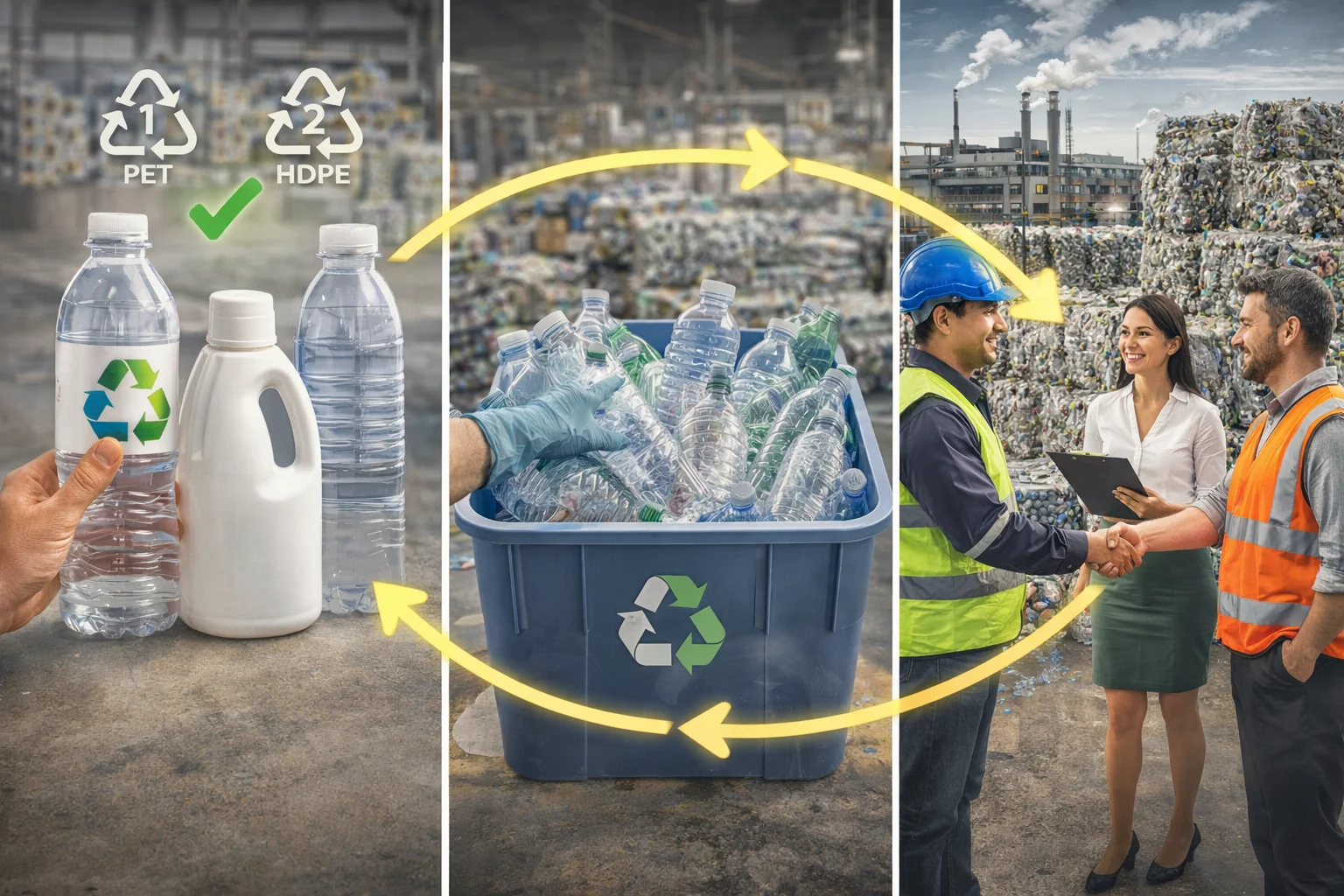
A truly successful program isn’t about collecting more stuff; it’s about collecting the right stuff in the right way. I worked with a client who was incredibly frustrated with their recycling costs. We ignored their collection bins and started by looking at what they were buying. This shift in focus changed everything.
Step 1: Design for Recyclability
This is the most important step. Before you buy a product or design your packaging, ask the critical question: "What happens to this at the end of its life?" Choose materials that have a strong end-market, like PET. Avoid complex, multi-layer plastics that are technically recyclable but have no actual buyers. This single decision can solve 80% of your recycling problems.
Step 2: Implement a Clean Stream
Instead of one big "mixed recycling" bin, create separate, clearly labeled bins for specific materials. For example, one bin for "Clean PET Bottles Only." This eliminates contamination[^9] at the source. It requires a bit of training for your team, but it dramatically increases the value of the materials you collect.
Step 3: Create Supplier Partnerships
Talk to your suppliers. Ask them, "What recycled material can you actually use in your process?" Then, ask your waste hauler, "How can we provide our plastic waste back to you in a way that is valuable?" This closes the loop. I’ve seen companies get rebates from their waste haulers because their sorted plastic was so clean and valuable. That’s a real win-win.
What Are The Hidden Costs No One Talks About?
You budgeted for bins and a weekly pickup. But now you are facing surprise costs for sorting, contamination[^9] fees, and worthless materials. These hidden costs[^10] can easily kill your program's budget.
The hidden costs[^10] of recycling go far beyond collection fees. They include labor for sorting, lost productivity, fees for contaminated loads, and the cost of handling materials that nobody will buy. These operational costs are often much higher than the initial program budget.
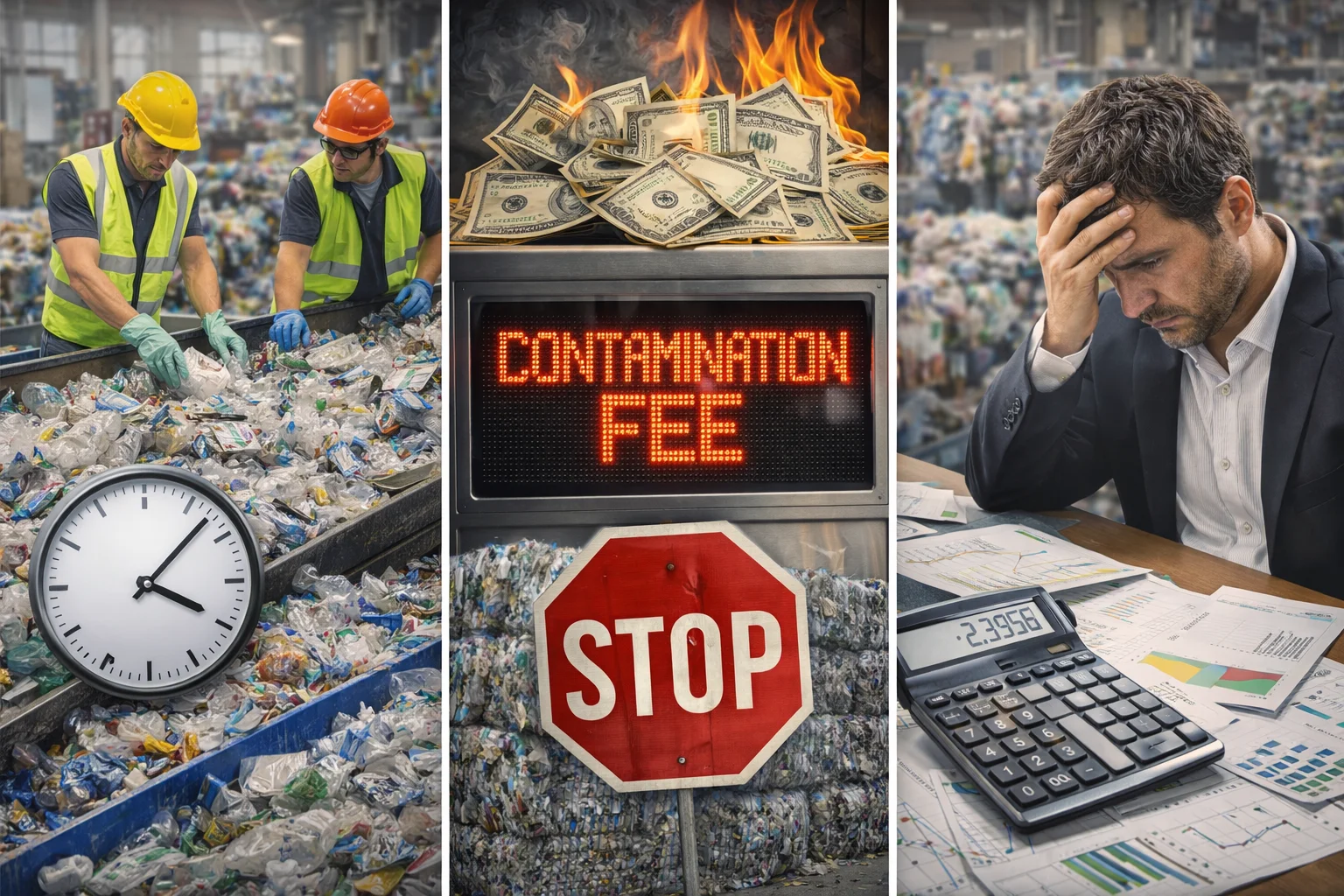
When I consult with businesses, I always start by mapping out the true costs. The numbers on the waste hauling invoice are just the tip of the iceberg. The real expenses are buried in your operational budget, and they add up quickly. A poorly planned recycling program[^1] can easily become a financial drain on the company without providing any real environmental benefit. Understanding these costs is the first step to building a system that actually makes financial sense.
| Hidden Cost | Description | Real-World Example |
|---|---|---|
| Labor & Sorting | Employees spending time cleaning and sorting recyclables instead of doing their primary jobs. | A warehouse worker spending an hour per day sorting plastic wrap from cardboard boxes. |
| Contamination Fees | Waste haulers charging extra when a recycling bin contains non-recyclable items or is too dirty. | A $150 fine on your monthly bill because someone threw a half-full drink in the plastics bin. |
| Storage & Logistics | The physical space and effort required to store and manage sorted materials before pickup. | Dedicating a valuable 100 sq ft of your facility to storing bulky bags of low-value plastic. |
| Low Material Value | Getting very little or no money back for your collected plastic, meaning it's purely a cost. | Collecting a ton of mixed plastic (#3-#7) and discovering its market value is effectively zero. |
| Lost Opportunity | The cost of not designing a product or process for recyclability[^11] from the start. | Spending thousands to redesign a package that could have been made from simple PET initially. |
What Should You Know From a Supplier's Perspective?
You think you are helping by sending your used plastic for recycling. But your supplier often sees a contaminated, inconsistent, low-quality mess. Seeing it from their view is the key to success.
From a supplier's or manufacturer's perspective, consistency and purity[^12] are everything. They need a reliable stream of clean, single-type plastic to create quality recycled material. Mixed, dirty plastics are not a resource to them; they are a costly disposal problem.
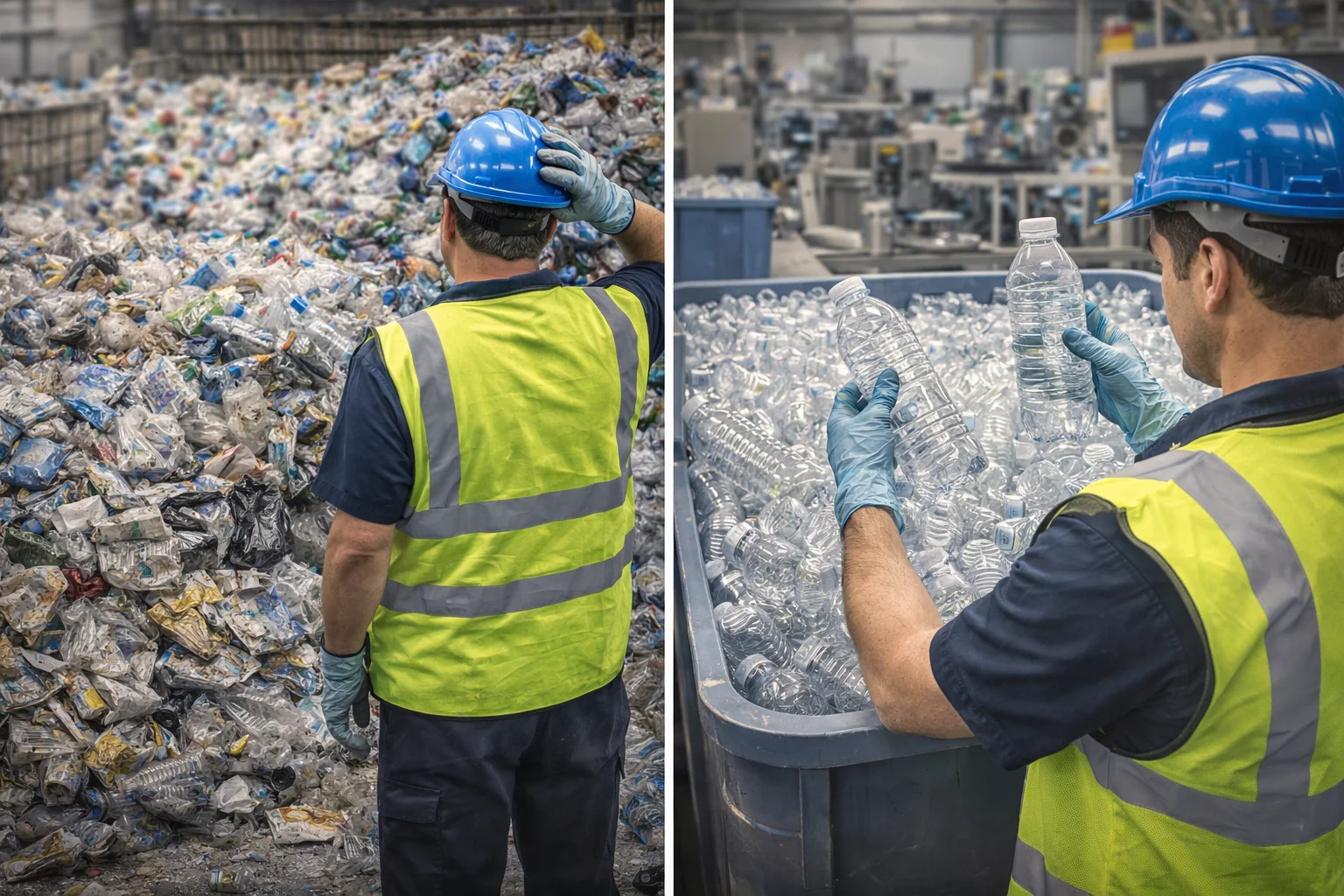
A supplier once told me something that completely changed my perspective. He said, "Don't send me your garbage. Send me my future raw material." That’s the entire game right there. Recyclers and manufacturers who use recycled content are not waste managers; they are raw material producers. For them to succeed, their recycled plastic pellets must be able to compete with brand-new, virgin plastic on both price and quality. If the material you give them is low-quality, the product they make will be low-quality.
Purity is King
A single piece of PVC plastic mixed into a batch of PET can ruin an entire production run for a recycler. It melts at a different temperature and can clog expensive machinery. This is why a clean, sorted stream from your business is so much more valuable than a mixed stream.
Volume and Consistency Matter
Recyclers need a predictable amount of material to run their operations efficiently. A large, consistent supply of clean HDPE from your facility is far more valuable than small, sporadic collections of seven different plastic types. This allows them to plan their production and secure buyers for their finished recycled pellets.
When Does Recycling Make Sense, And When Doesn't It?
You feel pressure from customers and employees to recycle everything. But some efforts cost more, use more energy, and do more harm than good. Knowing where to focus your efforts is critical.
Recycling makes sense when you have a clean stream[^13] of a high-demand material like PET or HDPE, especially when you have a closed-loop system with a partner. It does not make sense for contaminated, mixed, or low-grade plastics where the energy and cost[^14] to recycle outweigh any benefit.
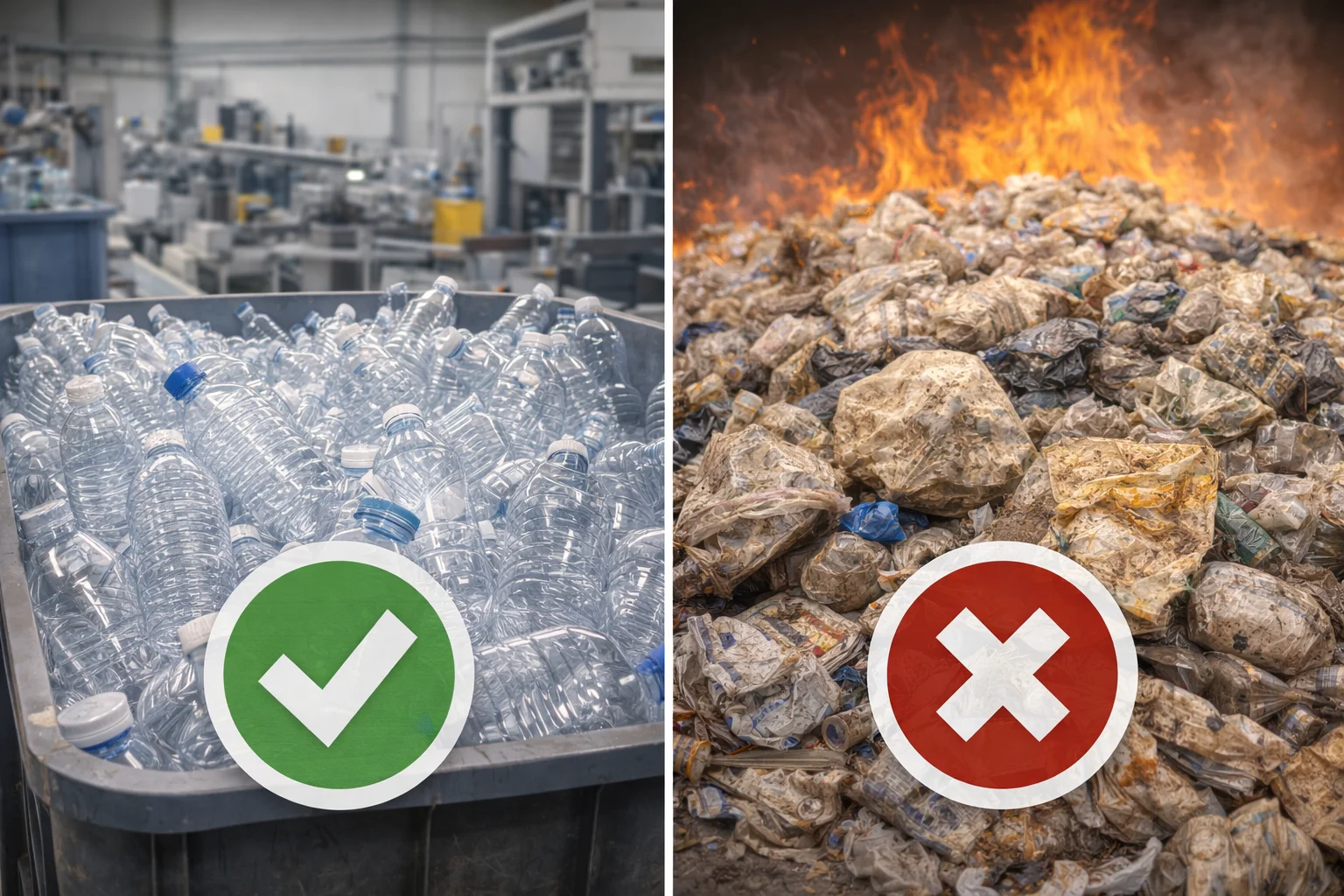
The goal is sustainability[^15], not just recycling for the sake of it. Sometimes, the most environmentally and economically sound decision is not to recycle a particular item. This feels counterintuitive, but it's an operational reality. The key is to analyze the entire lifecycle. If recycling an item requires more truck fuel, energy, and water than simply sending it to a modern, energy-capturing landfill, then you aren't actually helping the environment. The focus should always be on the materials that provide the biggest positive impact with the least amount of effort. I advise my clients to be ruthless in this analysis. Don't try to be a hero and recycle everything. Be a strategist and recycle what actually makes a difference.
| Makes Sense to Recycle ✅ | Doesn't Make Sense to Recycle ❌ |
|---|---|
| Clean, sorted PET bottles (#1) | Greasy food containers of any type |
| Uncontaminated HDPE jugs (#2) | Multi-layer flexible pouches and films |
| Large, consistent volumes of a single plastic type | Small, miscellaneous plastic parts (#3-#7) |
| When there is a local or regional buyer for the material | When it must be shipped long distances for processing |
| When it can be part of a closed-loop system | When the material is heavily contaminated with other waste |
How Can You Build a Cost-Effective Recycling Strategy?
Your current recycling program[^1] feels like a money pit. You feel like you are just paying to feel good, without seeing real results. You can build a strategy that is both sustainable and financially smart.
A cost-effective recycling strategy has four pillars. First, conduct a waste audit[^16] to see what you actually have. Second, simplify your incoming materials. Third, establish clean and easy collection points. Fourth, negotiate with your waste hauler or find a direct recycling partner.
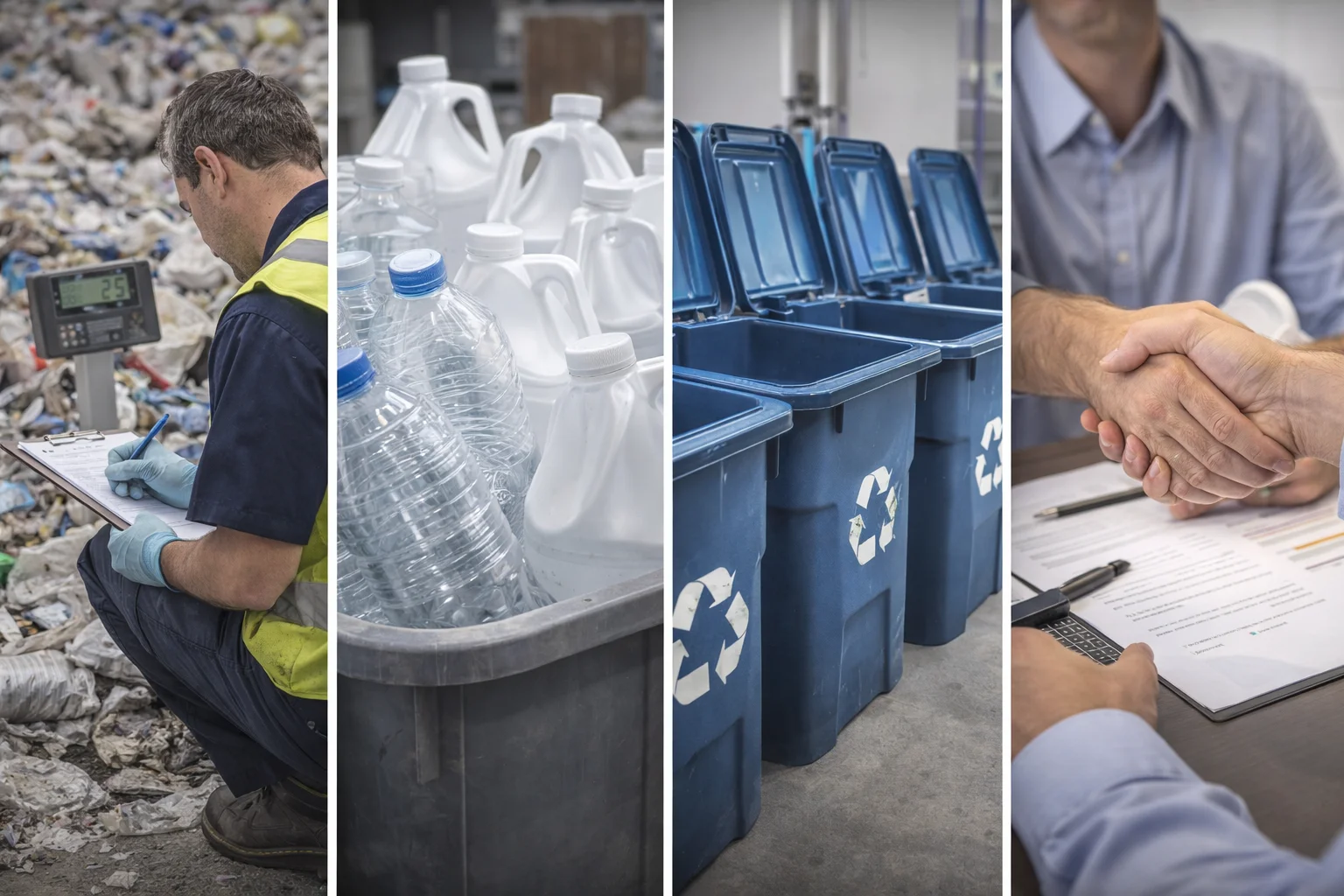
Building a program that saves you money, or even makes you money, is entirely possible. It just requires shifting your focus from waste disposal to resource management. The goal is to turn your plastic waste from a liability on an invoice into an asset that someone else values. I have guided many businesses through this process, and it always starts with getting your hands dirty.
Step 1: The Waste Audit
You cannot manage what you do not measure. The first step is to literally go through your trash and recycling for a day. Separate and weigh everything. The first time I did this, I was shocked. I found that over 80% of our plastic waste was from just two types of packaging from two specific suppliers. This simple data gives you a clear target.
Step 2: Simplify and Standardize
Take your audit data to your procurement team. Ask them, "Can we switch to suppliers who use only PET?" or "Can we standardize our own packaging on HDPE?" This is a high-leverage move that simplifies your entire downstream process.
Step 3: Educate and Isolate
Once you have a simplified material stream, train your staff on what goes where. Use very clear signage with pictures. Make the clean recycling stream easy to use and the trash bin the option of last resort.
Step 4: Partner Up and Negotiate
Go to your waste hauler with your new, clean stream. Ask them, "What is this clean PET worth to you?" You may be able to negotiate a lower hauling fee or even get a rebate. This is how you turn a cost center into a positive line on your budget.
Conclusion
In the end, successful plastic recycling is not about having more bins. It's about having a smarter supply chain, simpler materials, and stronger partnerships with your suppliers and recyclers.
[^1]: Explore effective strategies to enhance your recycling program and achieve sustainability goals.
[^2]: Understanding supply chain dynamics can help optimize your recycling efforts and reduce costs.
[^3]: Learn about the complexities of mixed plastics and how to address them in your recycling strategy.
[^4]: Understanding the significance of material quality can enhance your recycling program's effectiveness.
[^5]: Discover the benefits of working closely with suppliers to enhance recycling outcomes.
[^6]: Learn how to identify and avoid greenwashing in your sustainability initiatives.
[^7]: Discover the essential operational adjustments needed to improve recycling outcomes.
[^8]: Learn about closed loop systems and how they can enhance recycling efficiency.
[^9]: Understanding contamination's impact can help you implement better recycling practices.
[^10]: Learn about the often-overlooked costs associated with recycling to better manage your budget.
[^11]: Explore design strategies that prioritize recyclability and improve sustainability.
[^12]: Discover why maintaining purity in recycled materials is crucial for successful recycling.
[^13]: Understanding clean streams can help you reduce contamination and improve recycling rates.
[^14]: Learn to identify when recycling efforts may be counterproductive to sustainability goals.
[^15]: Learn effective practices to enhance sustainability and reduce environmental impact.
[^16]: A waste audit can provide valuable insights to optimize your recycling program.