Finding a reliable US cosmetic packaging supplier1 can feel impossible. The wrong choice leads to delays and quality issues, but this guide will simplify your search and set you up for success.
The top US cosmetic packaging manufacturers are specialists in areas like sustainability, luxury materials2, or full-service production3. The best partner for you depends on your brand’s specific needs, including budget, order volume4, and sustainability goals5. US suppliers generally offer superior speed, compliance, and communication.
Choosing a packaging partner is one of the biggest decisions you’ll make for your brand. I remember the stress of my first big production run, and I made a lot of mistakes along the way. I’ve built this guide to walk you through the entire process, from understanding the landscape to making your final choice. Let’s make sure you get it right the first time.
Why does choosing the right cosmetic packaging manufacturer matter so much?
You might think packaging is just a container for your product. But picking a bad manufacturing partner can completely derail your launch, damage your brand image, and destroy your budget.
The right manufacturer is a true partner who ensures product safety6, brand consistency7, and on-time delivery. This choice directly impacts your costs, your customer’s first impression, and your ability to scale. Getting it right protects your reputation and prevents costly mistakes that can cripple a business.

Choosing a manufacturer is about more than just finding the lowest price. This partner is responsible for the first physical thing your customer will touch. It’s the gatekeeper to your amazing formula. I learned this the hard way years ago when a cheap supplier produced a batch of tubes with faulty seals. We had to recall thousands of units, and the damage to our brand’s reputation was far more expensive than the money we initially "saved." A great partner understands this and works with you to protect your brand and your bottom line.
Brand Reputation
Your packaging is a silent salesperson. A premium, well-made component communicates quality before the customer even tries the product. In contrast, a leaky bottle or a cap that breaks on the first use tells the customer you cut corners. This directly impacts how they see your brand and whether they will buy from you again.
Financial Impact
A poor manufacturer can cost you a fortune. Think about the costs of production delays, product recalls due to faulty packaging, or lost sales from being out of stock. A reliable partner helps you avoid these pitfalls. They provide accurate timelines and consistent quality, which makes financial planning much easier and protects your profit margins.
Operational Efficiency
Working with a good manufacturer makes your life easier. They communicate clearly, solve problems proactively, and streamline the entire process from design to delivery. This frees up your time to focus on other critical parts of your business, like marketing and product development.
Is this guide on US cosmetic packaging manufacturers right for you?
You feel overwhelmed by all the information online about suppliers. Most guides feel like a sales pitch and aren’t built for your specific needs. This guide is different and written for you.
This guide is for indie beauty brand founders, product development managers, and procurement teams. If you are launching a new product, considering reshoring your production, or looking for sustainable packaging8 from a US-based supplier, you will find this information extremely helpful for your journey.
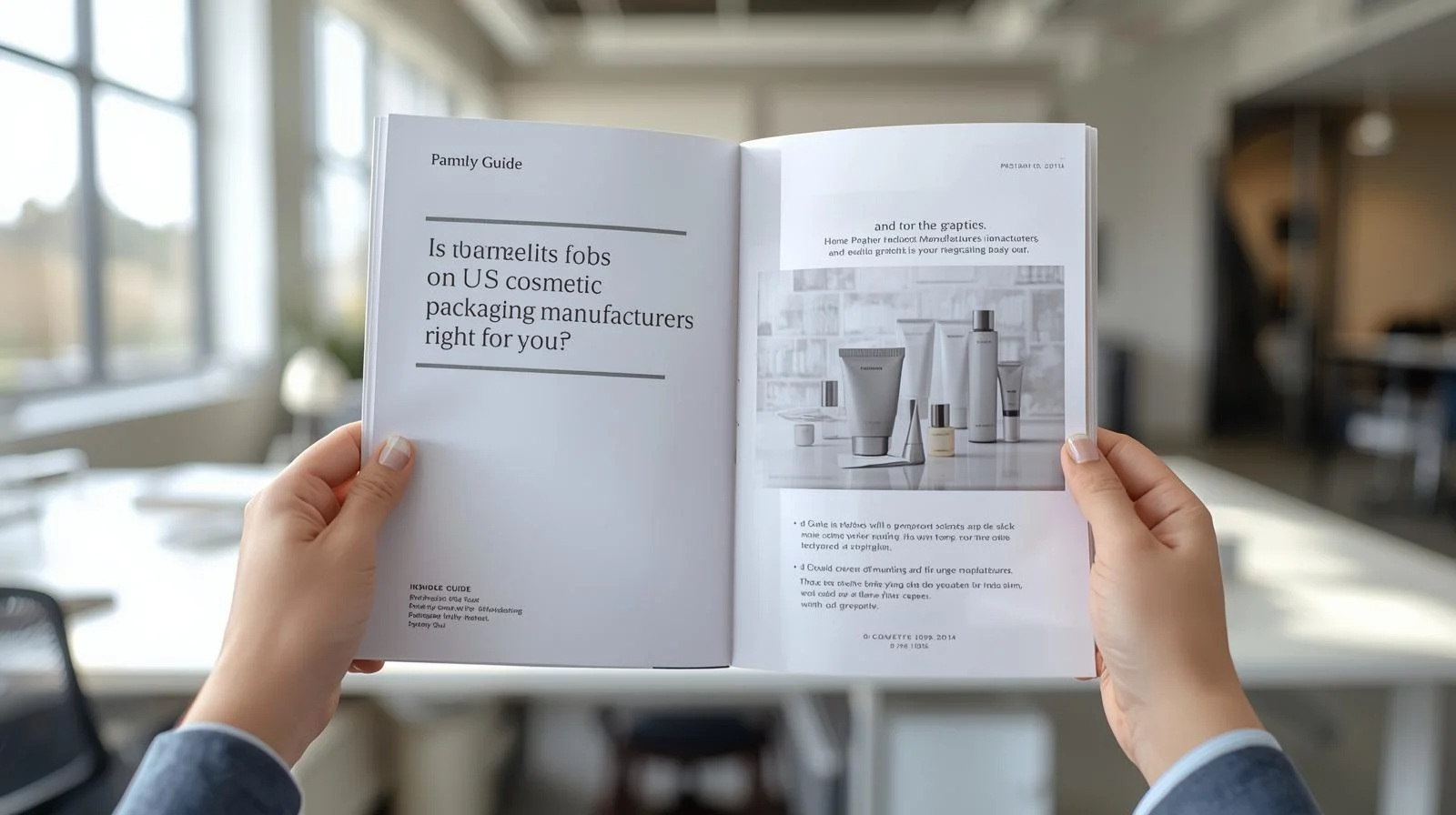
Whether you’re just starting out or are part of an established brand, this guide is designed to provide value. When I was just launching my first product, my needs were totally different from what they are today. I needed a partner who could handle small orders and guide me through the process. Now, I need partners who can handle large volumes and innovate with new materials. This guide speaks to all stages of that journey because I’ve lived through them myself. It’s written to help you find the right partner for where you are right now.
Here’s a quick breakdown of who will benefit most and how:
| Brand Profile | How This Guide Helps |
|---|---|
| Early-Stage Startup | Helps you find partners with low Minimum Order Quantities (MOQs)9 and fast turnarounds for market testing. |
| Growing Indie Brand | Shows you how to find manufacturers who can help you scale up production and explore custom packaging options. |
| Established Brand | Provides insights on diversifying your supply chain10, reshoring, and finding specialized US partners for innovation. |
| Product Developer | Offers a clear overview of the US manufacturing landscape, key trends, and a framework for vetting suppliers. |
How did I select and categorize these manufacturers?
Lists of suppliers are a dime a dozen online. But how can you trust them when most are just paid advertisements? I wanted to create a resource you can actually rely on.
I selected these manufacturers based on their industry reputation, specialization, material innovation, and compliance with US regulations. I categorized them by their core strengths—like eco-friendly packaging11 or full-service capabilities—to help you quickly find a partner that matches your brand’s unique needs.

My process wasn’t about a quick Google search. I’ve spent years in this industry, attending trade shows, talking to founders, and building a personal network of trusted contacts. This guide is the result of that experience. I didn’t include anyone I wouldn’t consider working with myself. The focus is on quality, reliability, and a true partnership mindset, because I believe those are the things that truly matter when building a lasting brand. This is the list I wish I had when I was starting out.
Industry Reputation and Experience
I looked for companies that have a proven track record in the beauty industry. This includes checking their client portfolios, looking for industry awards, and gathering feedback from my network. A long history often means they’ve overcome challenges and know how to navigate the complexities of cosmetic packaging.
Specialization and Innovation
The best partners are often specialists. I sought out manufacturers who are leaders in specific areas, whether it’s creating beautiful glass packaging, pioneering new sustainable materials, or offering a seamless full-service experience. Innovation is key to staying relevant.
Compliance and Quality Control
This is non-negotiable. Every manufacturer considered for this guide has a strong reputation for adhering to US standards, including FDA regulations12 and Good Manufacturing Practices (GMP)13. Quality control is essential for ensuring your product is safe and meets customer expectations.
Who are the top US cosmetic packaging manufacturers you should know?
You need a real list of options, not just more theory. But spending weeks searching for qualified suppliers one by one is a massive waste of your time. Here is my curated list.
The top US manufacturers include specialists in different niches. Some excel in sustainable materials like PCR plastic, while others focus on high-end luxury packaging or offer full-service solutions from design to delivery. The best partner for you depends entirely on your product and brand vision.
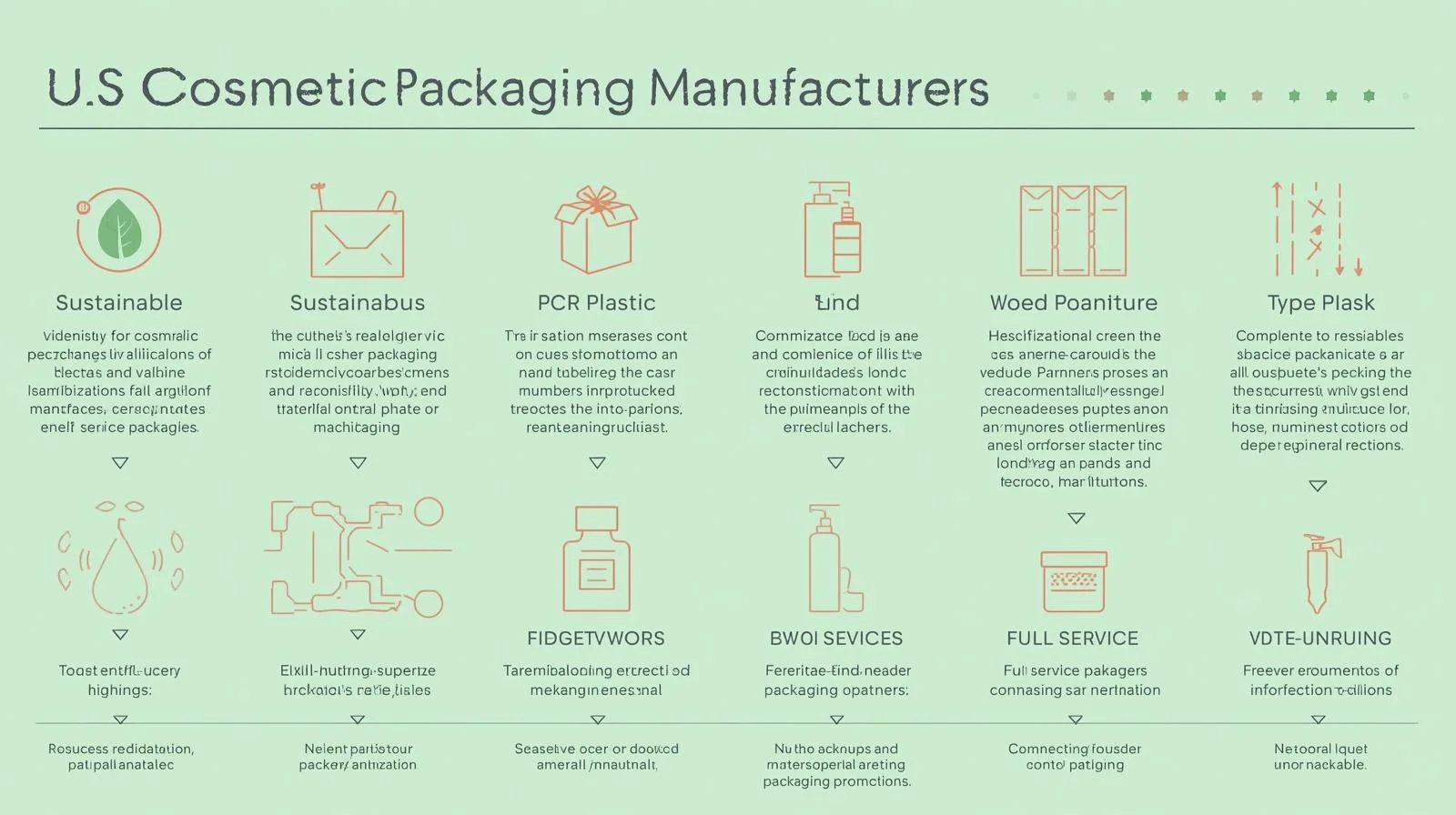
Instead of just listing company names, I’ve grouped them into categories. This approach is more helpful because it allows you to identify the type of partner you need first. Once you know you’re looking for an "Eco-Innovator," for example, your search becomes much more focused and effective. Think of this as a map to help you find the right neighborhood before you start looking at individual houses. I’ve found this method saves a ton of time and leads to better partnerships in the long run.
| Manufacturer Category | Key Strengths | Ideal For |
|---|---|---|
| The Eco-Innovator | Expertise in PCR, glass, wood, and biodegradable materials. Strong focus on circular economy principles. | Brands with a core mission of sustainability and transparency. |
| The Luxury Craftsman | Specializes in heavy-wall jars, custom metalwork, unique decorating techniques, and premium materials. | Prestige and masstige beauty brands that want a high-end, tactile customer experience. |
| The Full-Service Partner | Offers end-to-end solutions: design, engineering, sourcing, filling, and final assembly. | Startups and brands that need comprehensive support and want to simplify their supply chain10. |
| The Speed Specialist | Maintains a large inventory of in-stock packaging components14 for rapid turnaround and decoration. | Brands needing to launch quickly, test a new product, or manage unpredictable demand. |
How do these top US cosmetic packaging manufacturers compare?
You have a list of potential partner types, but now you need to compare them. Juggling different websites, spec sheets, and sales calls to get a clear picture is confusing and time-consuming.
US manufacturers generally provide faster lead times and much easier communication. However, they often have higher costs and may have less capacity for massive production runs. The key trade-off you’ll face is choosing between speed and compliance versus the lowest possible cost per unit.
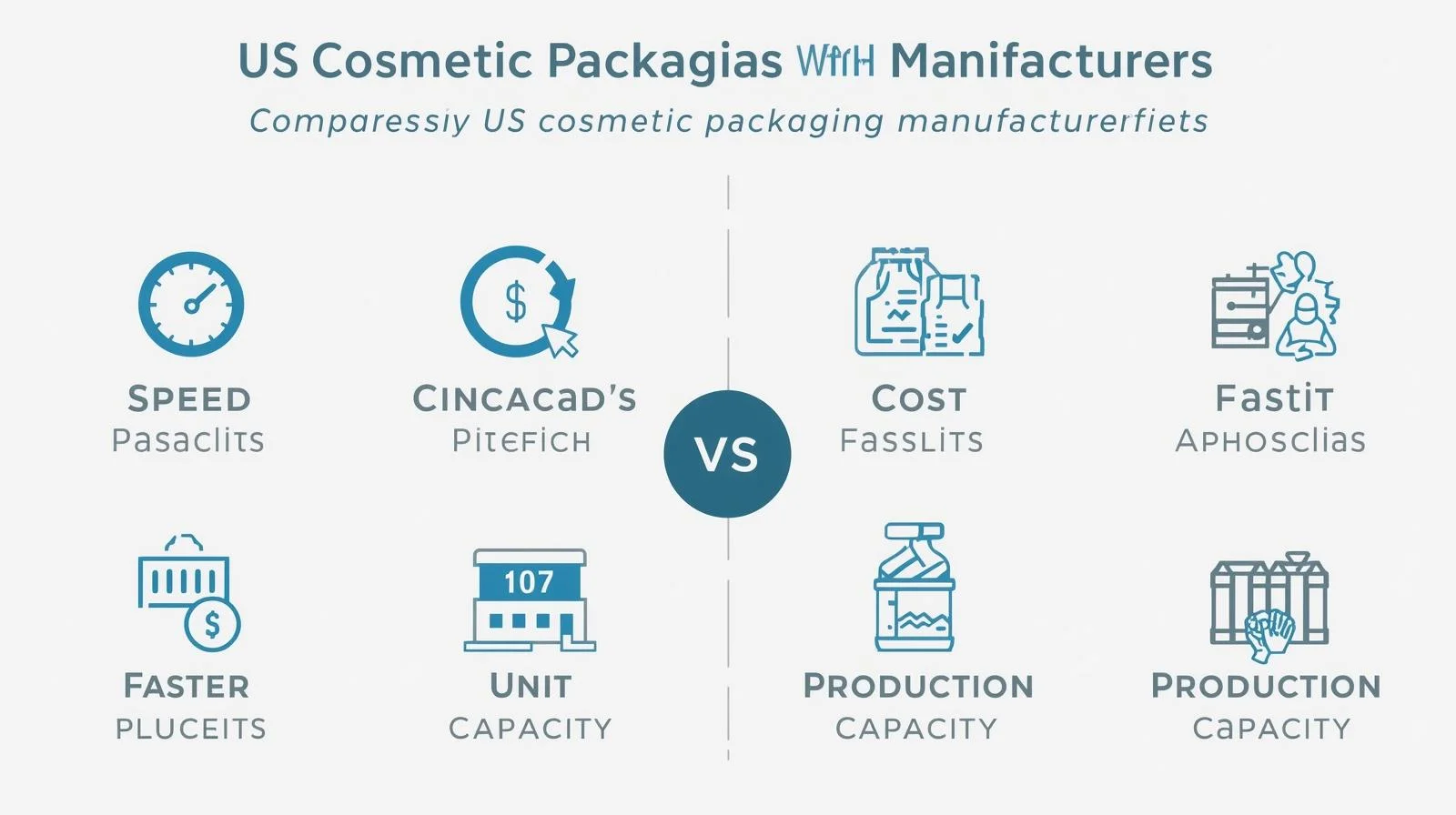
Thinking about this trade-off is critical. Early in my career, I was obsessed with getting the lowest unit price from overseas suppliers. I didn’t factor in the high cost of shipping, import duties, and the money I lost when a shipment was delayed for six weeks. A US supplier might have a higher unit price, but the "total landed cost" can sometimes be surprisingly competitive, especially when you need speed and reliability. This table breaks down the general differences I’ve seen between sourcing domestically versus overseas.
| Factor | US Manufacturers | Overseas Manufacturers |
|---|---|---|
| Lead Time | Shorter (e.g., 4-8 weeks for custom) | Longer (e.g., 12-16+ weeks) |
| Communication | Easier (same time zone, language, culture) | Can be challenging (time zones, language barriers) |
| Cost Per Unit | Generally Higher | Generally Lower |
| MOQs | Can be higher for custom, lower for stock | Often more flexible, especially for custom work |
| Compliance | Stronger alignment with US regulations (FDA, Prop 65) | Varies; requires significant due diligence from you |
| Scalability | Can be limited for massive volumes (millions of units) | Extremely high scalability for mass production |
| Shipping Costs | Lower and more predictable | Higher and can be volatile |
How can you choose the right manufacturer for your brand?
You understand the different options, but making that final decision is intimidating. Picking the wrong partner feels like a permanent and expensive mistake. You can avoid that with a clear process.
First, clearly define your core needs: budget, volume, timeline, and material goals. Next, create a shortlist of 3-5 potential suppliers and request quotes. Finally, evaluate them not just on price, but on communication quality, samples, and their potential as a long-term partner.
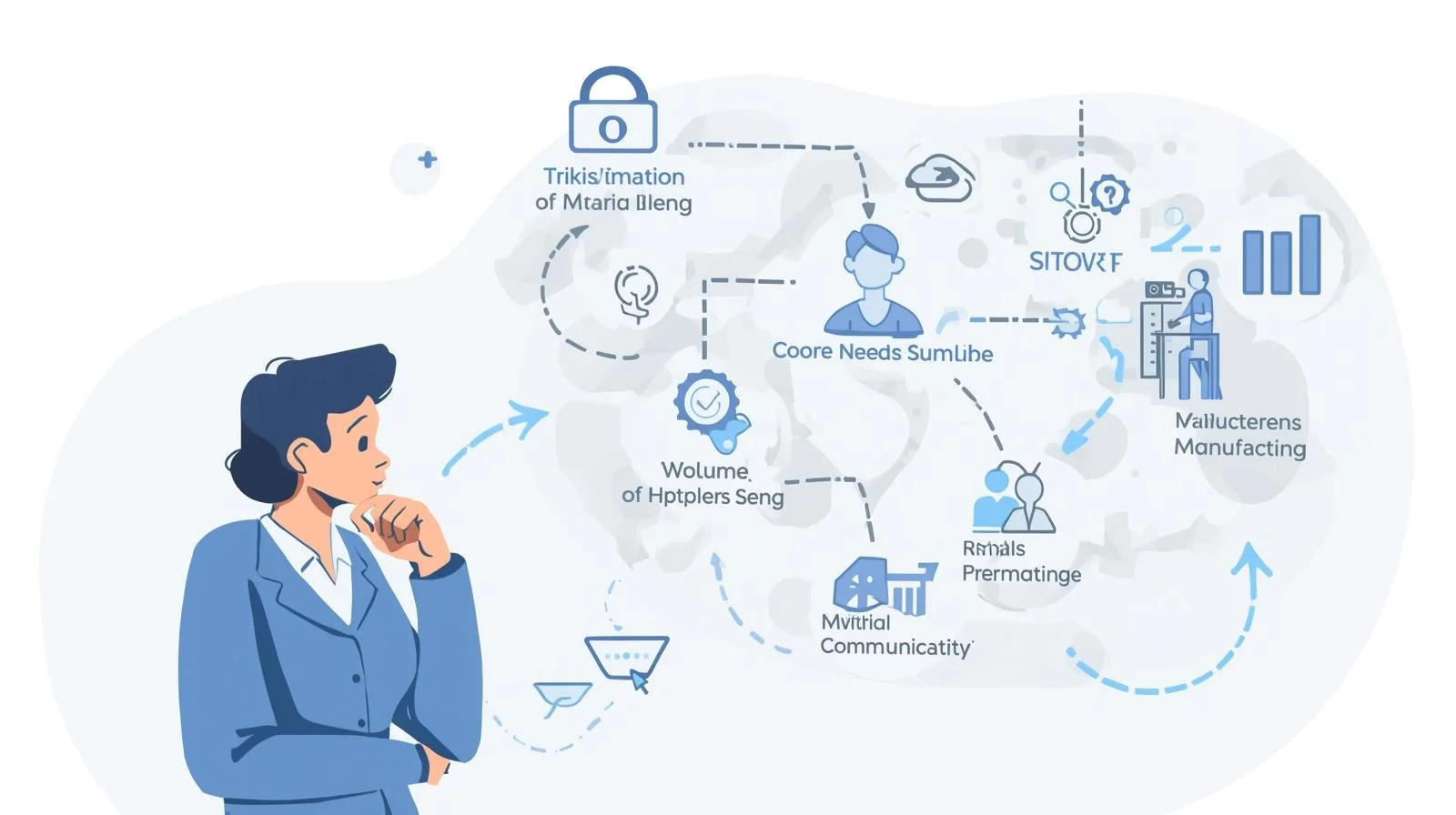
This process is about finding a partner, not just a supplier. I always add a personal test. In my first email, I’ll ask a slightly complicated question or a "what if" scenario. How they respond tells me everything. Do they give a thoughtful answer? Do they try to help solve the problem? Or do they give a generic, unhelpful reply? Their communication style from the very beginning is a huge indicator of what it will be like to work with them when real problems arise. Don’t skip this part of your evaluation.
Step 1: Define Your Core Needs
Before you talk to anyone, get clear on what you need. Write it down.
- Budget: What is your target cost per unit? What is your budget for tooling or setup fees?
- Volume: How many units do you need for your first order? What is your forecast for the next 12 months?
- Timeline: When do you need the packaging delivered to your filler?
- Specifications: What materials, colors, and decoration do you want?
Step 2: Create a Shortlist and Request Quotes (RFQs)
Using the categories in this guide, identify 3-5 manufacturers that seem like a good fit. Send each of them a formal Request for Quote (RFQ) with all the details from Step 1. The more detailed your RFQ, the more accurate their quote will be.
Step 3: Evaluate Samples and Communication
Once quotes come in, ask for samples. A physical sample is the only way to truly judge quality. Pay close attention to how they communicate during this process. Are they responsive? Helpful? Transparent? The price is just one piece of the puzzle.
What are the key trends in US cosmetic packaging for 2026?
You want your brand to feel fresh and current. Using outdated packaging can make even the best formula seem old and irrelevant. Staying on top of trends is essential for success.
Key trends for 2026 include deep sustainability, with a major focus on refillable systems15 and mono-material packaging for easy recycling. Personalization and "postable" packaging design16ed for e-commerce are also growing rapidly. Finally, consumers are demanding more transparency about where materials come from.
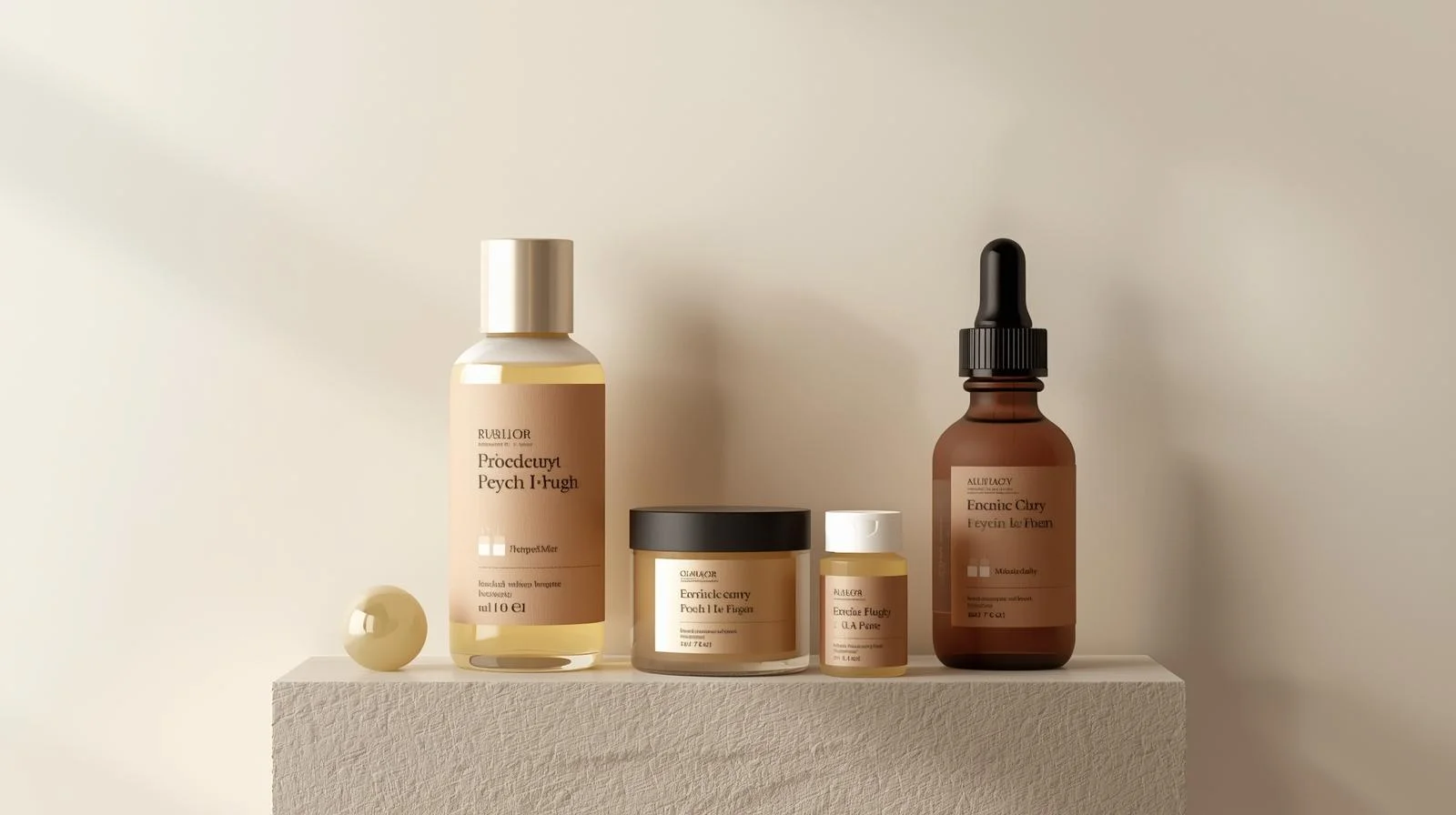
These trends are a direct response to consumer demands. People want less waste, and they want packaging that works for their online-first shopping habits. US manufacturers are often quick to adopt these trends because they are so close to the American consumer market. They see the shifts happening in real time. For my brand, leaning into the refillable trend was a game-changer. It not only reduced our environmental footprint but also created a recurring revenue stream and a more loyal customer base.
| Trend | Description | Why It Matters for Your Brand |
|---|---|---|
| Radical Sustainability | Moving beyond just "recyclable." This includes refillable pods, compostable materials, and mono-material designs that make recycling foolproof. | Shows a genuine commitment to the environment, which is a key purchasing driver for Millennial and Gen Z consumers. |
| E-commerce Optimization | Packaging designed to be lightweight, durable, and ready to ship without an extra box. Often called "postable packaging." | Reduces your shipping costs, lowers your carbon footprint, and creates a better unboxing experience for the customer. |
| Digital Integration | Using QR codes or NFC chips on packaging to link customers to tutorials, ingredient sourcing information, or AR try-on experiences. | Turns your packaging into an interactive tool that builds engagement and provides value beyond the physical product. |
| Inclusive Design | Features like braille, easy-to-open mechanisms, and clear, high-contrast text that make products accessible to more people. | Broadens your customer base and shows that your brand is thoughtful and cares about all of its users. |
What are the most frequently asked questions about US cosmetic packaging manufacturers?
You’ve absorbed a lot of information, but you might still have some specific questions. Searching for these answers online often leads you down a rabbit hole of conflicting and confusing advice.
Common questions revolve around Minimum Order Quantities (MOQs), lead times, and the true cost difference compared to overseas suppliers. Brands also frequently ask about custom tooling costs and how to verify a manufacturer’s compliance with regulations like California’s Prop 65.
These are the exact questions I had when I was starting out. The answers aren’t always simple, but understanding the general principles is crucial for making smart decisions for your business. Let’s tackle them one by one with straight, no-fluff answers based on my experience in the industry. These are the practical details that can make or break your production plan.
What is a typical MOQ for a US manufacturer?
It varies wildly. For in-stock packaging, you can often buy by the case, which could be just a few hundred units. For custom packaging that requires a new mold or specific color, MOQs typically start around 5,000 to 10,000 units per item. My advice for startups is to always begin with stock packaging. You can make it your own with a great label design. This lets you launch quickly with less risk.
Are US manufacturers always more expensive?
The price per unit is almost always higher than a quote from an overseas factory. However, you have to calculate the total landed cost. Factor in shipping, import duties, and the cost of your time managing a more complex supply chain. Also, consider the risk of delays. For a small run or a quick launch, a US supplier can sometimes be more cost-effective overall when you look at the complete picture.
How should I use a hybrid supply chain (US + Overseas)?
This is the strategy many smart brands use as they grow. It’s what I do now. Use US suppliers for your initial product launches, for limited edition items, and for products where speed-to-market is critical. Once a product is proven and selling in high volume, you can explore moving production of that specific packaging overseas to improve your margins. This gives you the best of both worlds: speed and flexibility from US partners, and cost-efficiency from global partners.
Conclusion
Choosing the right US packaging manufacturer comes down to balancing speed, cost, and scale. Start by defining your brand’s current needs, and evolve your sourcing strategy as your business grows.
-
Explore this link to find reliable suppliers that can meet your specific packaging needs. ↩
-
Discover high-end materials that can elevate your brand’s image and product appeal. ↩
-
Understand the benefits of partnering with manufacturers that offer comprehensive services. ↩
-
Find insights on how order size can impact pricing and supplier selection. ↩
-
Learn about innovative practices that can help your brand become more sustainable. ↩
-
Explore the critical role of safety in maintaining brand integrity and customer trust. ↩
-
Learn how effective packaging can reinforce your brand identity and message. ↩
-
Stay updated on eco-friendly packaging solutions that resonate with consumers. ↩
-
Get clarity on MOQs and how they affect your production planning. ↩
-
Learn strategies to strengthen your supply chain and mitigate risks. ↩ ↩
-
Discover how sustainable packaging can enhance your brand’s reputation. ↩
-
Understand the legal requirements for packaging to ensure compliance. ↩
-
Learn about GMP and its importance in maintaining product quality. ↩
-
Learn about the key elements that make up effective cosmetic packaging. ↩
-
Explore innovative packaging solutions that promote sustainability and customer loyalty. ↩
-
Explore the impact of design on consumer perception and sales. ↩