Are you worried about choosing the wrong plastic for your cosmetic line? This mistake can ruin your product and brand image. Let me guide you to the perfect material choice[^1].
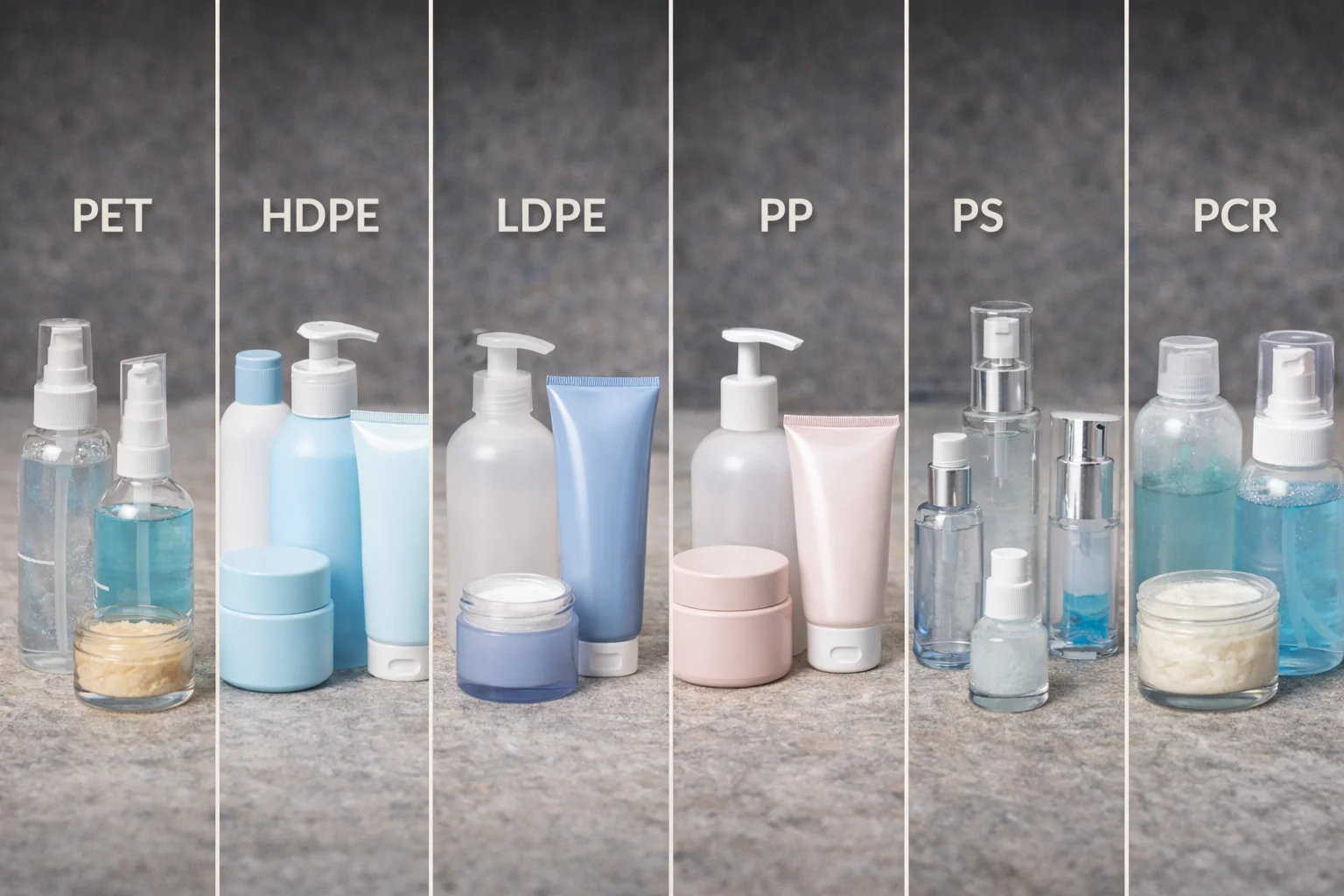
The seven most common plastic materials for cosmetic packaging are PET, HDPE, LDPE, PP, PS, SAN/AS, and PCR. The best choice depends entirely on your product's formula, your brand's positioning, and your budget. Each material offers a unique combination of clarity[^2], flexibility, and cost.
Choosing a bottle seems simple, but it's one of the most critical decisions you'll make for your product. It goes far beyond just holding your formula. The right material acts as a silent salesperson on the shelf and ensures your customer has a great experience from the first use to the last. Let's explore why this choice carries so much weight.
Why Does Choosing the Right Plastic Bottle Matter More Than You Think?
Many brands underestimate the importance of their plastic bottle choice. This can lead to product leaks, formula degradation, and ultimately, a damaged brand reputation. Understanding the 'why' is your first step.
It matters because the material directly impacts product stability[^3], user experience[^4], brand perception[^5], and total cost. The right plastic protects your carefully developed formula, feels good in the customer's hand, and reinforces the quality and value of your brand. Getting it wrong can cost you everything.
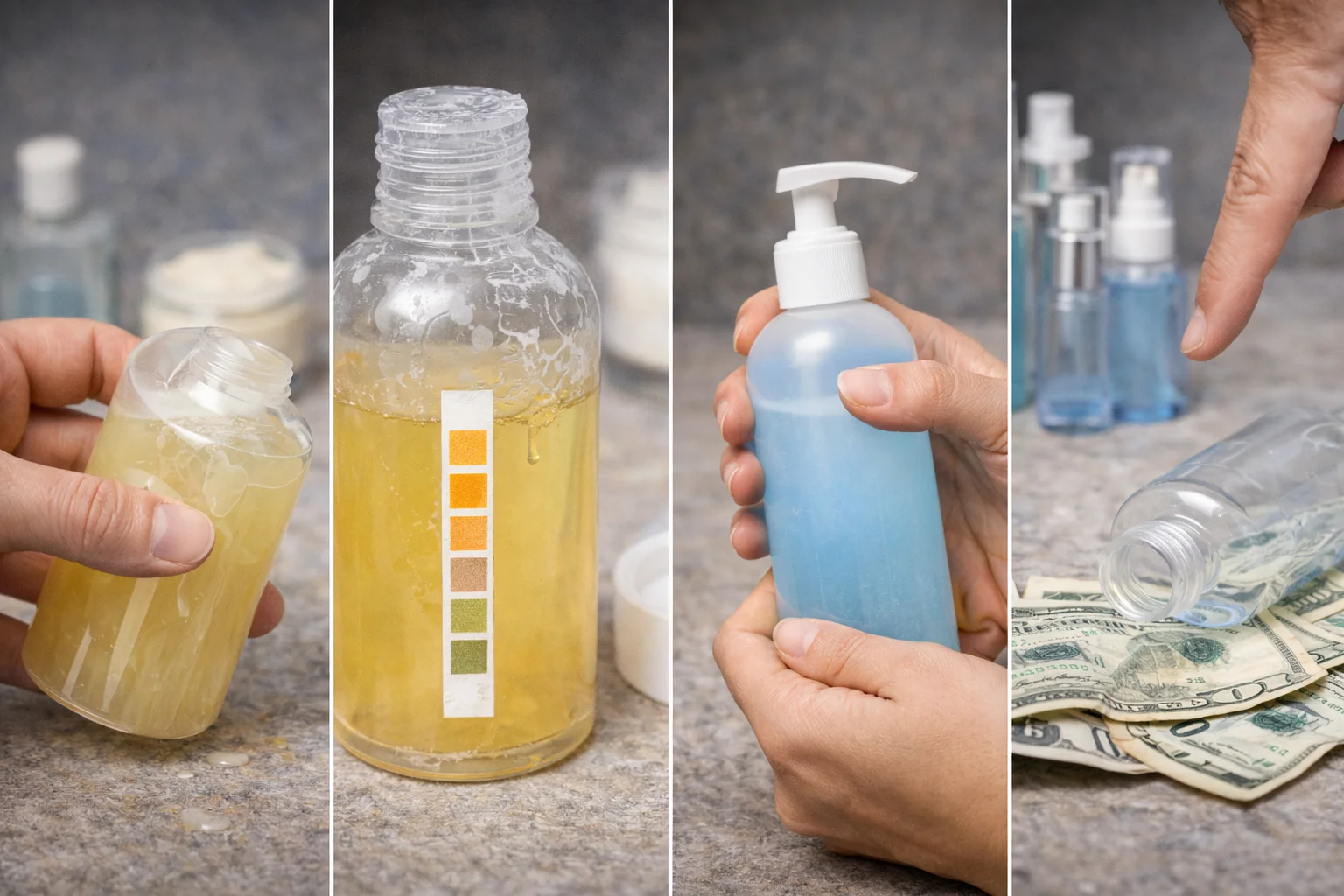
When I first started in this business, I saw a client's beautiful, expensive serum turn yellow and cloudy within weeks of launch. The problem wasn't the formula; it was the bottle. They chose a plastic that reacted with one of the active ingredients. This single choice led to a costly recall and a loss of customer trust. Your packaging is your product's first line of defense and its first impression.
Product Integrity and Safety
Your primary concern should be chemical compatibility[^6]. Certain plastics can react with oils, alcohols, or acids, causing the bottle to warp, crack, or leach chemicals into your product. This not only ruins the formula but can also be a safety issue.
Brand Perception and User Experience
The feel of the package communicates value. A heavy, glass-like PET bottle feels more luxurious than a thin, crinkly LDPE bottle. Think about how your customer will use the product. A thick cream needs a squeezable tube (LDPE) or a wide-mouth jar (PP), not a rigid bottle.
The True Cost
The cheapest unit price is not the whole story. Consider these factors:
| Factor | Description | Potential Cost Impact |
|---|---|---|
| Shipping Weight | Lighter materials like HDPE reduce shipping costs. | Lower freight expenses. |
| Durability | Brittle materials like PS may break in transit. | Higher costs from breakage and returns. |
| Production | Some materials require more complex molding. | Higher manufacturing setup fees. |
A slightly more expensive but durable material can save you thousands in the long run by preventing product loss and protecting your brand's reputation.
What are the 7 Most Common Plastic Materials for Cosmetic Bottles?
You see dozens of different plastic containers, but do you know what separates them? Using the wrong type for your specific product is a common and costly mistake. Let's break down the top materials.
The seven most common materials are PET, HDPE, LDPE, PP, PS, SAN/AS, and Post-Consumer Recycled (PCR)[^7] plastic. Each has distinct properties, benefits, and ideal uses, making them suitable for everything from watery serums and thick lotions to loose powders and solid balms.
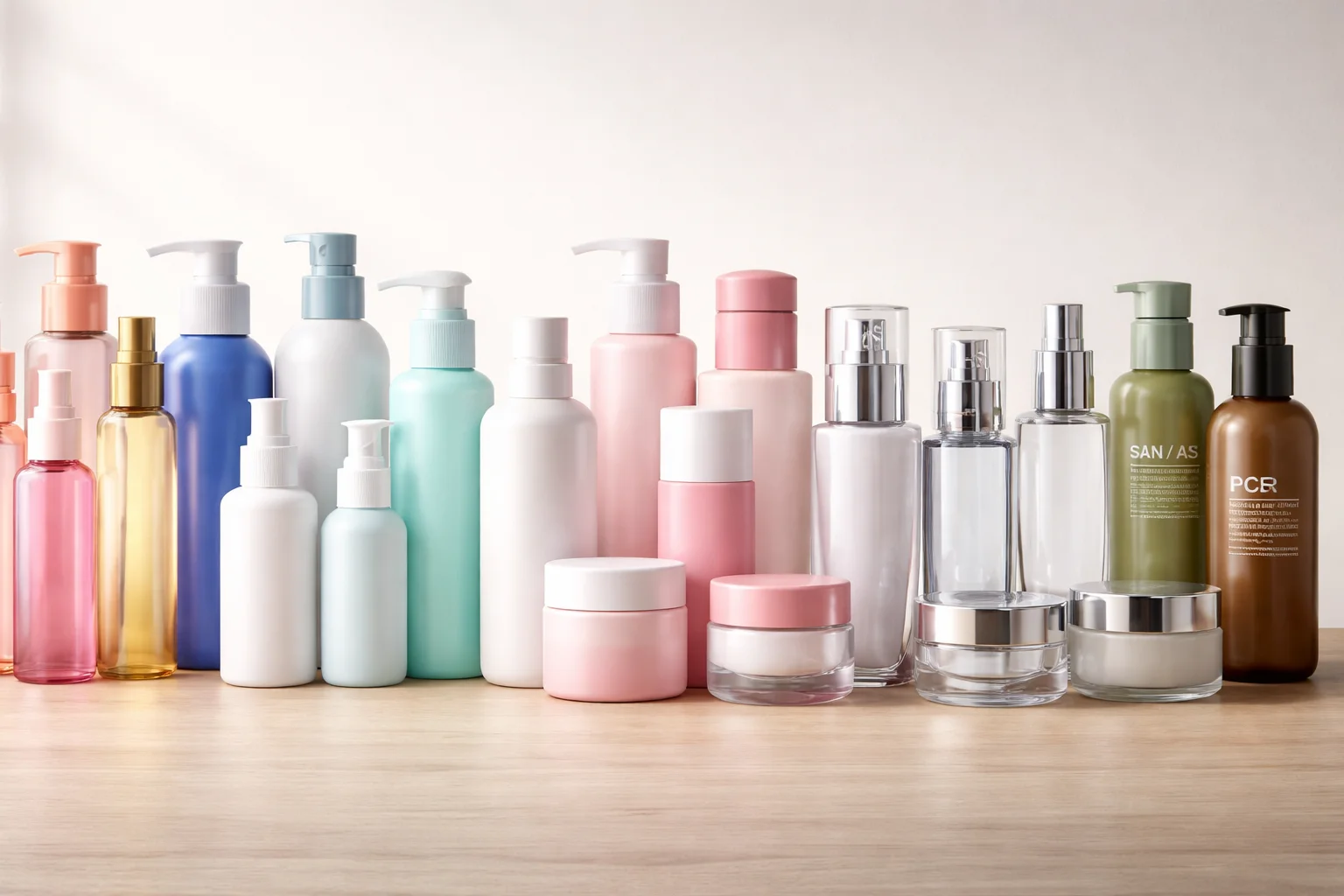
Navigating these options is essential for any brand owner. Each abbreviation represents a different chemical makeup that determines how the final bottle will look, feel, and perform. Understanding these basics will empower you to have more productive conversations with your packaging supplier[^8] and make a choice that truly fits your product. Here is a closer look at each one.
PET (Polyethylene Terephthalate)
- What it is: A strong, lightweight plastic known for its excellent clarity[^2], often resembling glass.
- Pros: Great barrier against moisture and oxygen. High shatter resistance. Looks premium.
- Cons: Poor resistance to high temperatures. Not ideal for highly acidic or alkaline formulas.
- Common Uses: Bottles for toners, serums, micellar water, and body sprays.
HDPE (High-Density Polyethylene)
- What it is: A tough, semi-rigid, and opaque plastic. It's one of the most widely used plastics.
- Pros: Excellent chemical resistance. Cost-effective. Impact-resistant.
- Cons: Not transparent, so you can't see the product inside.
- Common Uses: Shampoo and conditioner bottles, body wash, and lotions.
LDPE (Low-Density Polyethylene)
- What it is: A soft, flexible, and squeezable plastic.
- Pros: Very flexible and durable. Good moisture barrier.
- Cons: Poor oxygen barrier. Can feel less premium.
- Common Uses: Squeeze tubes for face wash, hand cream, and masks.
PP (Polypropylene)
- What it is: A rigid plastic with a high melting point and excellent chemical resistance.
- Pros: Great for hot-fill products. Strong against chemicals, oils, and solvents.
- Cons: Can be brittle at cold temperatures. Often has a slightly hazy appearance.
- Common Uses: Jars for creams and balms, bottle caps, and airless pump components.
PS (Polystyrene)
- What it is: A hard, rigid, and crystal-clear plastic.
- Pros: Excellent clarity[^2] and stiffness. Very affordable.
- Cons: Very brittle and has poor impact resistance. Poor barrier properties.
- Common Uses: Compacts for pressed powders, sample jars, and protective outer shells.
SAN / AS (Styrene Acrylonitrile)
- What it is: A copolymer that combines the clarity[^2] of Polystyrene with added strength and chemical resistance.
- Pros: Stiff, clear, and more durable than PS. Good chemical resistance.
- Cons: More expensive than PS and PP. Can still be brittle compared to PET.
- Common Uses: High-end jars, outer casings for lipstick, and luxury compacts.
PCR (Post-Consumer Recycled)
- What it is: This isn't a new material, but rather recycled PET, HDPE, or PP. It's an eco-friendly option.
- Pros: Reduces plastic waste and carbon footprint. Appeals to environmentally conscious consumers.
- Cons: Can have slight color variations ("grayish" or "yellowish" tint). May have supply chain inconsistencies.
- Common Uses: Can be used for most applications where virgin PET, HDPE, or PP are used.
Quick Comparison – Which Material Is Right for You?
You now know the seven main materials, but you're probably still confused. Making a final decision can feel overwhelming with so many factors to consider. This quick comparison table will simplify your choice.
The right material depends on your product's formula (oil vs. water), desired look (clear vs. opaque), and function (squeezable vs. rigid). This table directly helps you match your specific needs to the best possible material, saving you time and preventing costly errors.
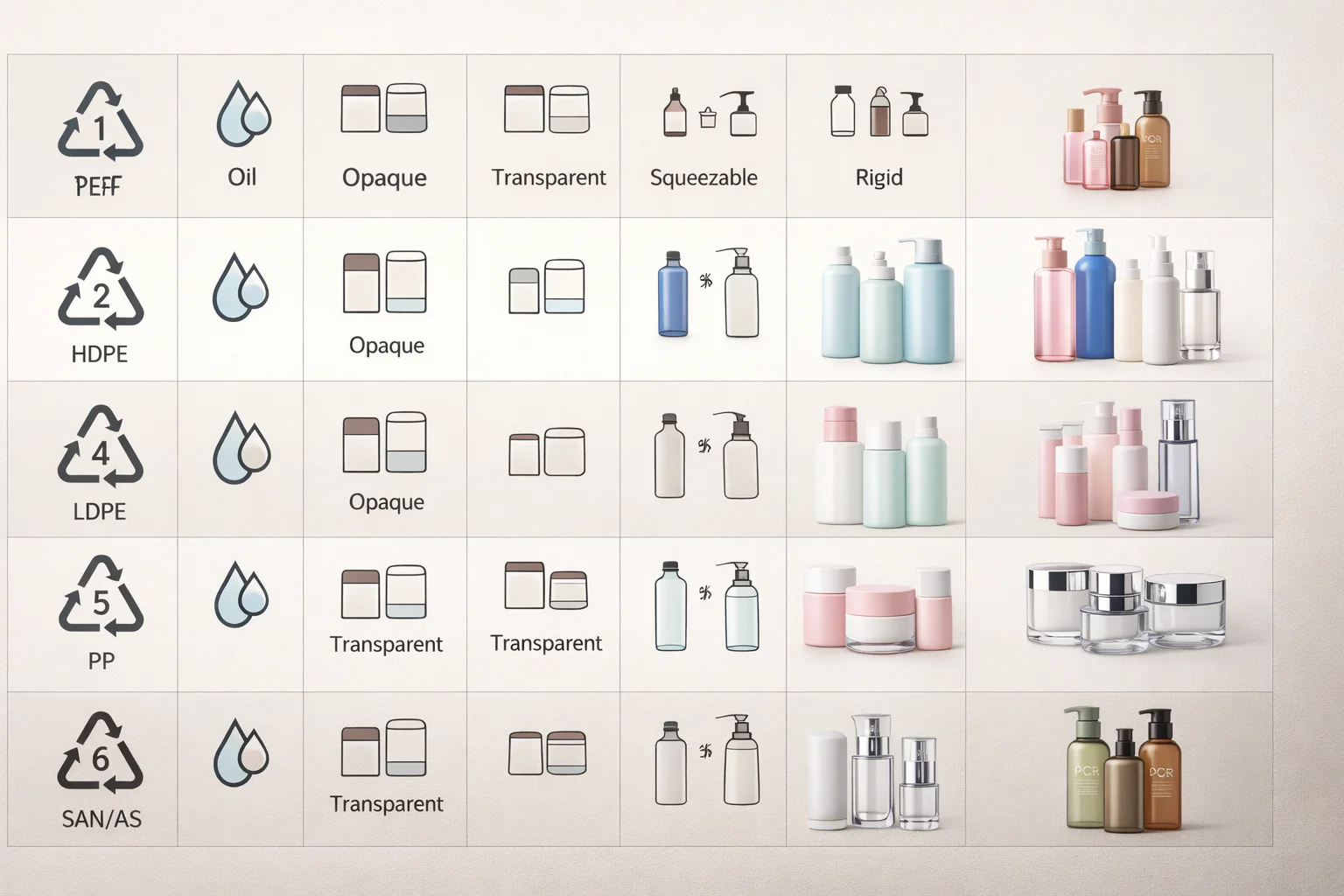
Use this table as your starting point. Identify the one or two most important features for your product. For example, if you have a beautiful, colored serum, "Clarity" is your top priority, pointing you toward PET or SAN. If you have a thick body butter, "Rigidity" (or lack thereof) and "Form" are key, pointing you to a PP jar or an LDPE tube. This process of elimination makes the decision much easier.
| Material | Clarity | Rigidity | Cost | Chemical Resistance | Best For |
|---|---|---|---|---|---|
| PET | Excellent | Semi-Rigid | $$ | Good | Water-based serums, toners, sprays |
| HDPE | Opaque | Rigid | $ | Excellent | Shampoos, lotions, cleansers |
| LDPE | Translucent | Flexible | $ | Good | Squeezable tubes for creams, cleansers |
| PP | Hazy/Opaque | Rigid | $$ | Excellent | Jars, caps, hot-fill products, balms |
| PS | Excellent | Very Rigid | $ | Poor | Powder compacts, sample pots (dry goods) |
| SAN/AS | Excellent | Very Rigid | $$$ | Good | Luxury jars, outer packaging |
| PCR | Varies | Varies | $$ | Varies | Eco-conscious brands (bottles/jars) |
This table is a powerful tool, but it's not the final word. Always remember the most important step: testing. Once you've narrowed your options, get samples and test them with your actual product formula.
What are the 5 Costly Mistakes Brands Make When Choosing Plastic Bottles?
Many brands, especially new ones, make the same preventable packaging mistakes[^9]. These simple errors can cost you a fortune in wasted inventory, customer trust, and time. Let's review the five most common pitfalls to avoid.
The biggest mistakes are ignoring chemical compatibility[^6], choosing based on cost alone, overlooking the user experience[^4], not testing samples[^10], and failing to consider sustainability[^11] from the start. Avoiding these five traps will save you significant resources and headaches in the long run.
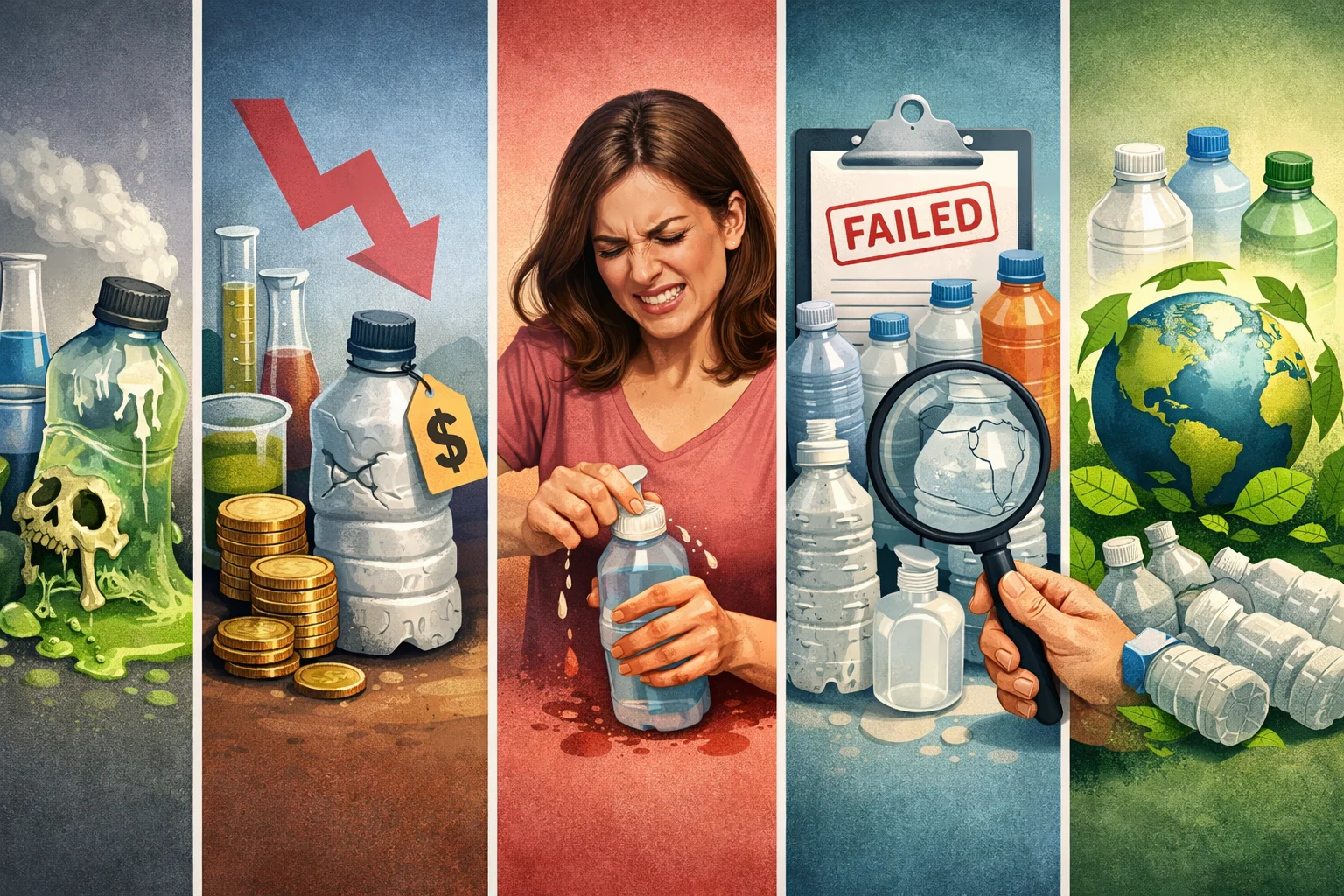
I once worked with a brand that fell in love with a beautiful, cheap PS jar for their new face cream. They skipped compatibility testing to save time. Two months later, their warehouse was full of cracked jars and leaking product. The oils in their cream had attacked the plastic. They learned a hard lesson: skipping a small step at the beginning can create a massive disaster later.
1. Ignoring Formula Compatibility
This is the number one mistake. You cannot put an oil-based formula in a standard PET bottle or an alcohol-heavy toner in a PS container. The plastic will degrade. Always provide your full ingredient list to your supplier and request compatibility testing.
2. Focusing Only on Unit Cost
Choosing the cheapest bottle available is a false economy. A low-quality bottle might break during shipping, leak on retail shelves, or feel cheap to the customer, devaluing your product. The "total cost of ownership[^12]" includes replacements, lost sales, and brand damage.
3. Forgetting the User Experience
How will your customer get the product out of the bottle? A thick, luxurious cream in a rigid bottle with a tiny opening is a recipe for frustration. Think about squeezability, pumps, and droppers. The packaging's function is just as important as its form.
4. Skipping the Sampling and Testing Phase
You would never launch a formula without testing it, so why would you launch packaging without testing? Fill your sample bottles with your actual product. Let them sit for weeks. Ship them across the country to yourself. See how they perform in real-world conditions.
5. Treating Sustainability as an Afterthought
If you want to use PCR material, you must plan for it from the beginning. PCR plastic can have slight color variations and may not be available in all shapes and sizes. Trying to "add" sustainability[^11] at the end often leads to compromises or delays. Make it part of your initial brief.
From a Factory Perspective: What Do Most Brands Not Know?
There is often a communication gap between brands and their packaging factories. This gap leads to delays, production errors, and unexpected costs for the brand. Let me give you an insider's view from the factory floor.
Most brands don't realize that early, clear decisions on materials are critical for a smooth production run. Vague specifications cause delays. We know the best material is rarely the most expensive one; it's the one that fits your product, brand, and function perfectly.

From my experience on the factory side, the biggest source of problems isn't production errors—it's unclear requirements from the very beginning. A brand might ask for "a nice, clear bottle," but that doesn't tell us anything. Does it need to be squeezable? Does it need to hold an oil-based formula? Does it need to feel heavy and luxurious? The more specific you are upfront, the faster and more accurately we can deliver. A ten-minute phone call to align on these details at the start can save ten days of rework later. Your supplier should be your partner in this process, not just an order-taker. We want your product to succeed, and that starts with helping you choose the right foundation: the material.
How Do You Choose the Right Bottle for Your Product?
You have all this information, but how do you actually apply it to make a decision? Making that final choice can still feel daunting. Here is a simple, step-by-step process you can follow.
First, define your product's technical needs, like its formula and viscosity. Second, consider your brand's image and the customer experience. Finally, and most importantly, test physical samples with your actual product before placing a bulk order. This structured approach removes the guesswork.
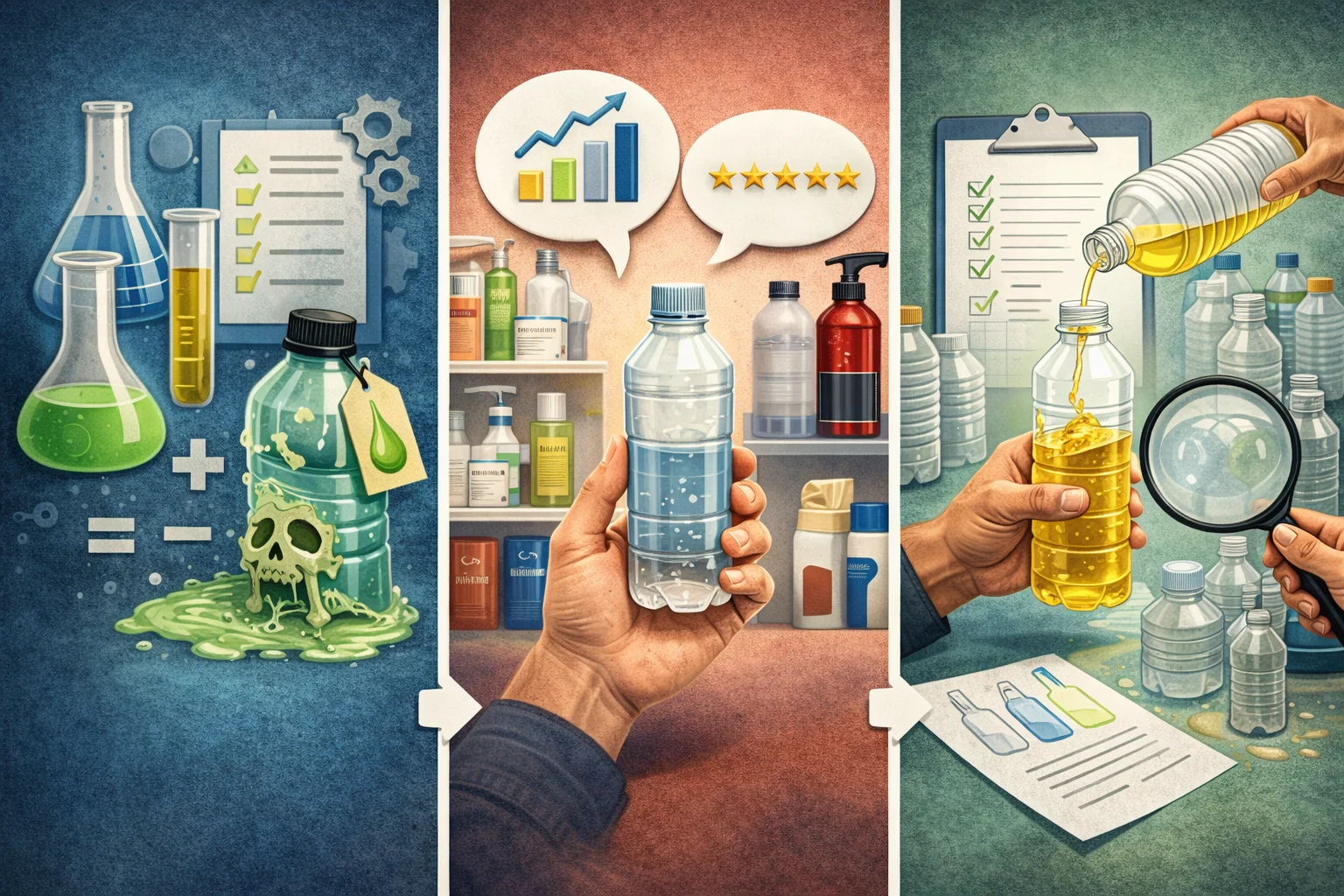
Following a clear process transforms a complicated decision into a series of simple questions. It ensures you don't miss any critical factors and helps you communicate your needs clearly to your packaging partner. This is the exact process I walk my most successful clients through.
Step 1: Analyze Your Formula
Before you even think about bottle shapes, look at your ingredient list.
- Is it water-based, oil-based, or does it contain high levels of alcohol or acids? This is your first filter. For example, high oil content rules out standard PET. High acid content rules out PS.
- What is the viscosity? Is it thin like water, or thick like honey? This will influence whether you need a spray, pump, dropper, or squeezable tube.
Step 2: Define the User Experience and Brand Image
Now, think about your customer and your brand.
- How should it feel? Should it be heavy and substantial (thick-wall PET, SAN) or lightweight and easy to carry (HDPE)?
- What should it look like? Do you need crystal clarity[^2] to show off the product's color (PET)? Or is an opaque, matte finish more aligned with your brand (HDPE)?
Step 3: Create a Shortlist and Request Samples
Based on the first two steps, you should have a shortlist of 2-3 material options. For example: "I need a clear, semi-rigid bottle for a water-based serum, so I'm considering PET and SAN." Now, contact your supplier and request samples of bottles made from these materials.
Step 4: Test, Test, Test
This is the most critical step. Fill the sample bottles with your final formula.
- Stability Test: Let them sit for several weeks. Check for any changes in the product or the bottle.
- Use Test: Use the product yourself as a customer would. Is it easy to dispense? Does the cap close securely?
- Shipping Test: Put the filled bottles in a box and mail them to yourself. See if they leak or break.
Step 5: Make Your Final Decision with Your Supplier
Review your test results. Now you have real-world data. Discuss your findings with your factory partner. They may have suggestions, such as a specific grade of a material or a coating that can improve performance. With all this information, you can confidently make your final choice.
Conclusion
Choosing the right plastic is a strategic decision that balances product needs, brand identity, and budget. Get this foundational step right, and you set your product up for success.
[^1]: This resource will guide you through the process of selecting the best material for your products.
[^2]: Learn how clarity can enhance the visual appeal of your cosmetic products.
[^3]: Understanding product stability can help you select the right packaging to protect your formula.
[^4]: Discover how user experience can enhance customer satisfaction and brand loyalty.
[^5]: Explore how the right packaging can elevate your brand's image and attract customers.
[^6]: Learn about the importance of chemical compatibility in packaging to avoid costly mistakes.
[^7]: Find out how PCR plastic can reduce waste and enhance your brand's sustainability efforts.
[^8]: Get tips on selecting a packaging supplier that aligns with your brand's needs and values.
[^9]: Avoid costly errors by learning about the most common packaging mistakes brands make.
[^10]: Discover the significance of testing samples to ensure compatibility and performance.
[^11]: Learn about sustainable packaging options and how they can appeal to eco-conscious consumers.
[^12]: Explore the concept of total cost of ownership to make informed packaging decisions.