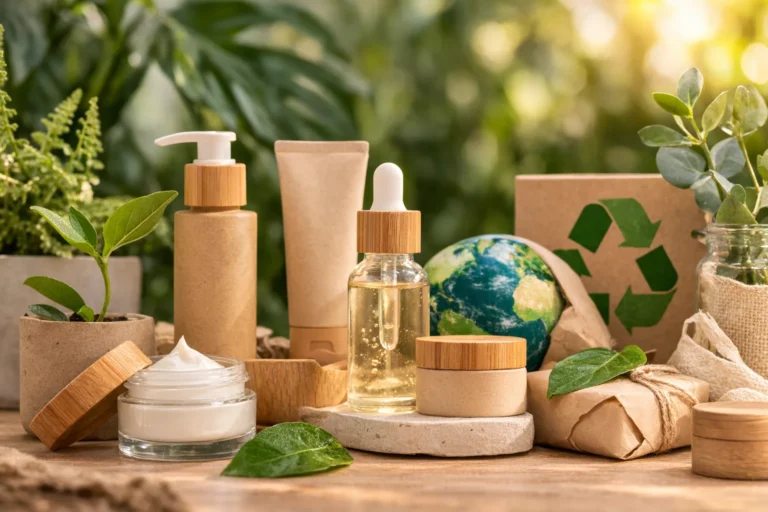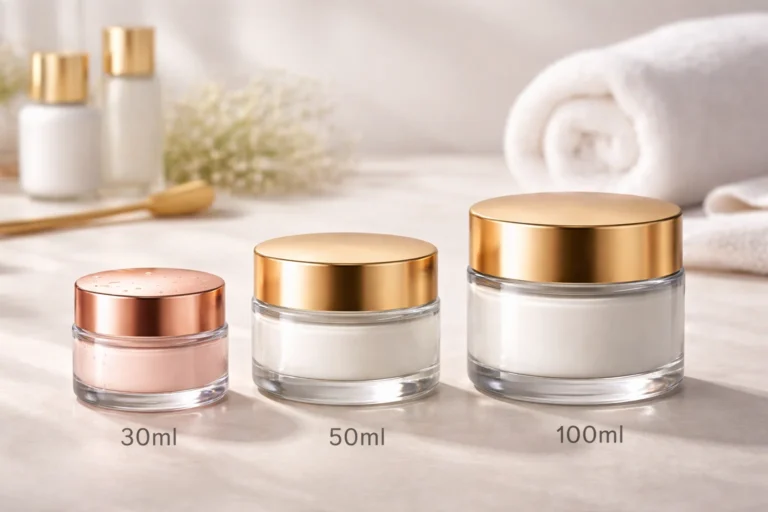
Are you launching a beauty brand but feel lost in the world of packaging? The wrong choices can lead to leaks and a brand that looks cheap. This guide gives you a manufacturer's inside look.
Cosmetic packaging[^1] is the container and presentation for a beauty product. It includes primary, secondary, and tertiary layers. Its job is to protect the formula, attract customers, and provide important information, all while representing your brand's identity and quality.
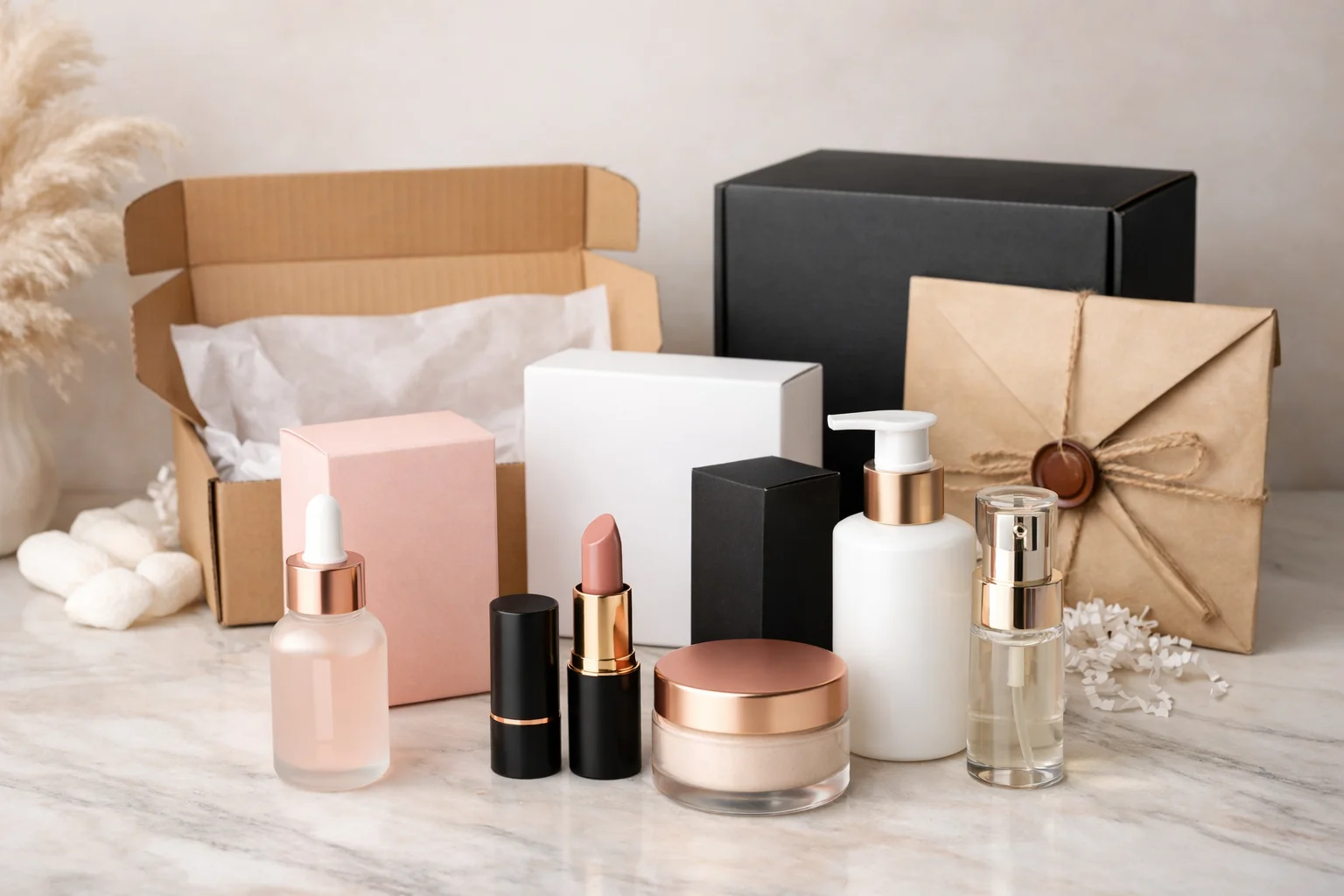
It seems simple, but there's a lot to unpack when it comes to packaging. I've been in this industry for decades, and I've seen brands succeed or fail based on these very decisions. Let's break it down step-by-step so you can avoid the most common and costly mistakes.
What Exactly Is Cosmetic Packaging?
Confused by terms like "primary" and "secondary" packaging? It can feel like a secret language. Let me translate what it all means for your product's success and safety.
Cosmetic packaging[^1] is the system of containers and materials used to house, protect, and market a beauty product. It covers everything from the bottle holding the cream to the box it sits in on the shelf.
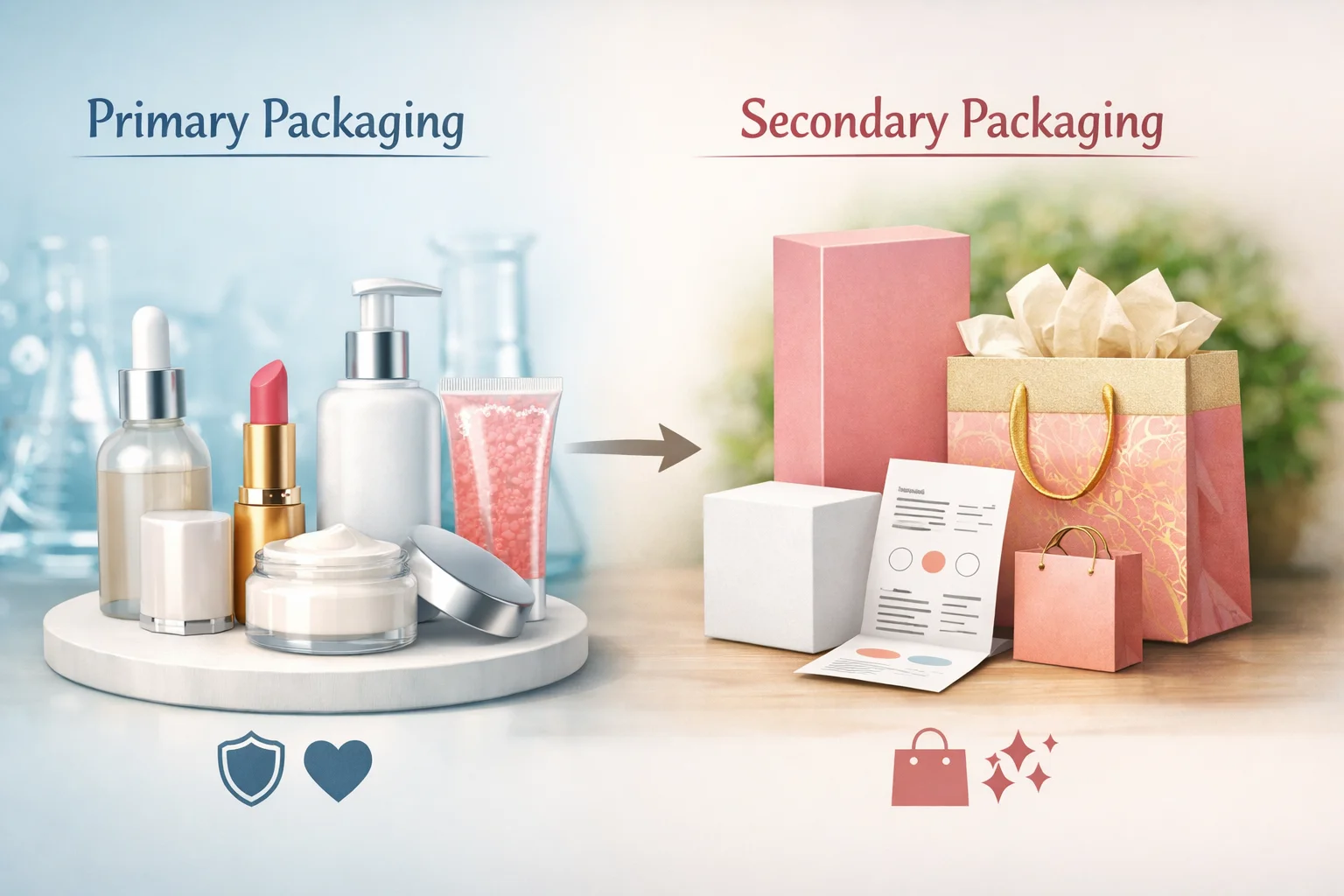
From my factory's perspective, packaging is a functional system with four key jobs. If it fails at any one of these, it fails completely. First is Protection[^2]. The package must protect your formula from air, light, bacteria, and moisture. I've seen entire batches of product ruined because a brand chose a cheap jar that let in too much air. Second is Usability[^3]. It must be easy for your customer to use. A pump that clogs or a cap that's hard to open creates a bad experience they won't forget. Third is Marketing[^4]. Your packaging is a silent salesman on the shelf. Its shape, color, and feel communicate your brand's value instantly. Finally, it must carry Information[^5]. Legally required details like ingredients, volume, and usage instructions have to be clear and legible. It's a balance of art, science, and logistics.
Why Does Cosmetic Packaging Matter So Much?
Think packaging is just a pretty box? This mistake can cost your brand its reputation. Bad packaging can ruin a great formula and lose customer trust forever.
Packaging is crucial because it protects your product's integrity, communicates your brand's value, and ensures a positive user experience. It's the first physical interaction a customer has with your brand, directly influencing their purchase decision and long-term loyalty.
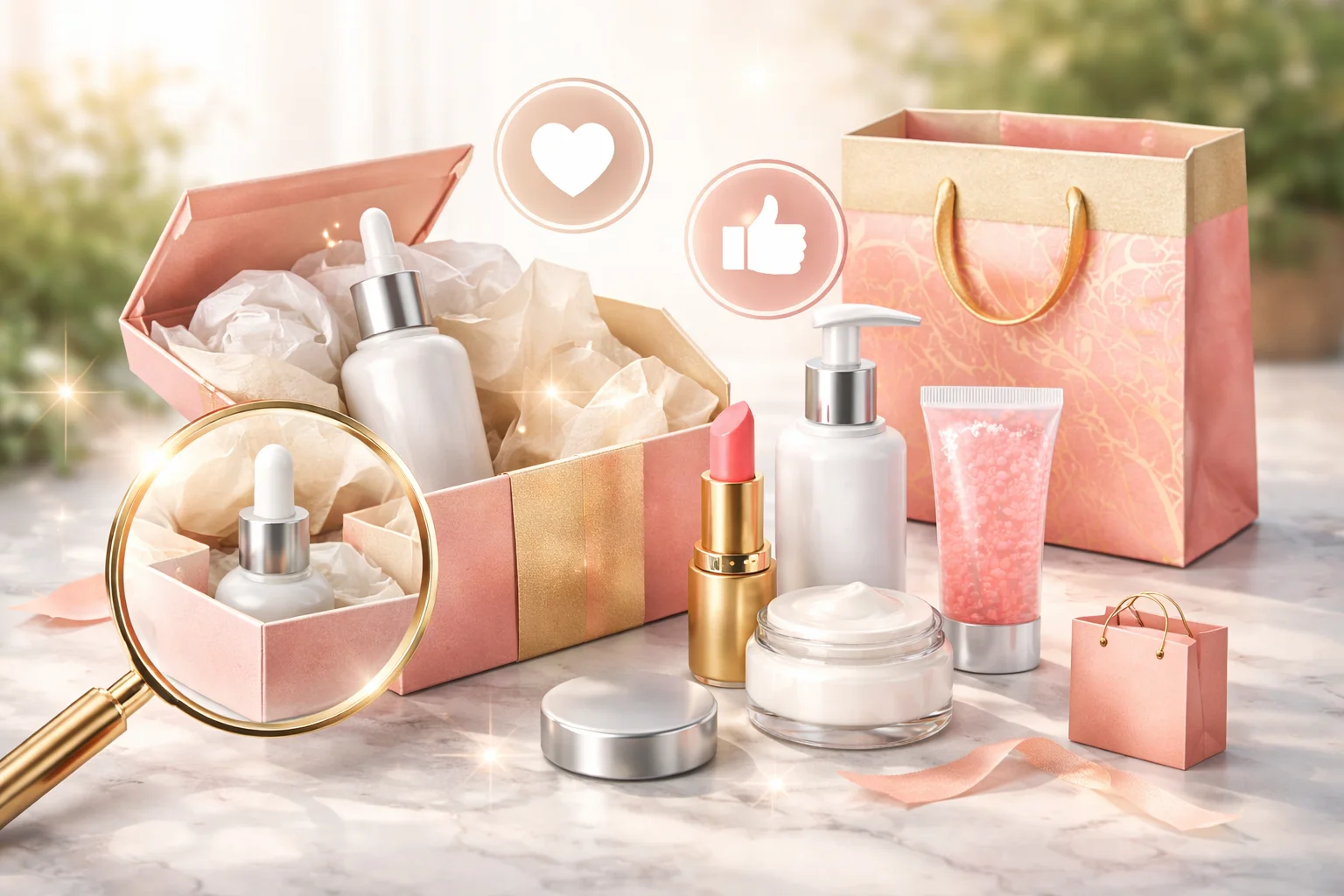
Your packaging tells a story long before the customer tries what's inside. We see this every day. One of my clients switched from a standard lightweight plastic tube to one with a heavier, soft-touch finish. Their perceived value skyrocketed, allowing them to increase their price without changing the formula. The packaging alone communicated a more luxurious experience. Then there is product protection, which is my main concern. An unstable ingredient like Vitamin C needs an airless pump or an opaque bottle to prevent oxidation. I remember one brand that came to us after putting a potent Vitamin C serum in a clear glass jar. The product turned brown on retail shelves within weeks. All their research and development investment was wasted because of one poor packaging choice. Finally, think about the daily user experience. A leaky bottle is a disaster. Good packaging is intuitive and makes using the product a pleasure, not a chore.
What Are The 3 Layers of Cosmetic Packaging?
Heard terms like "primary" and "tertiary" but not sure what they mean? This confusion can lead to costly planning mistakes. Let's clarify these essential layers simply.
The three layers are: Primary Packaging[^6] (the container holding the product, like a bottle), Secondary Packaging[^7] (the outer box or wrap), and Tertiary Packaging[^8] (the shipping carton). Understanding each layer helps you plan your budget and logistics.
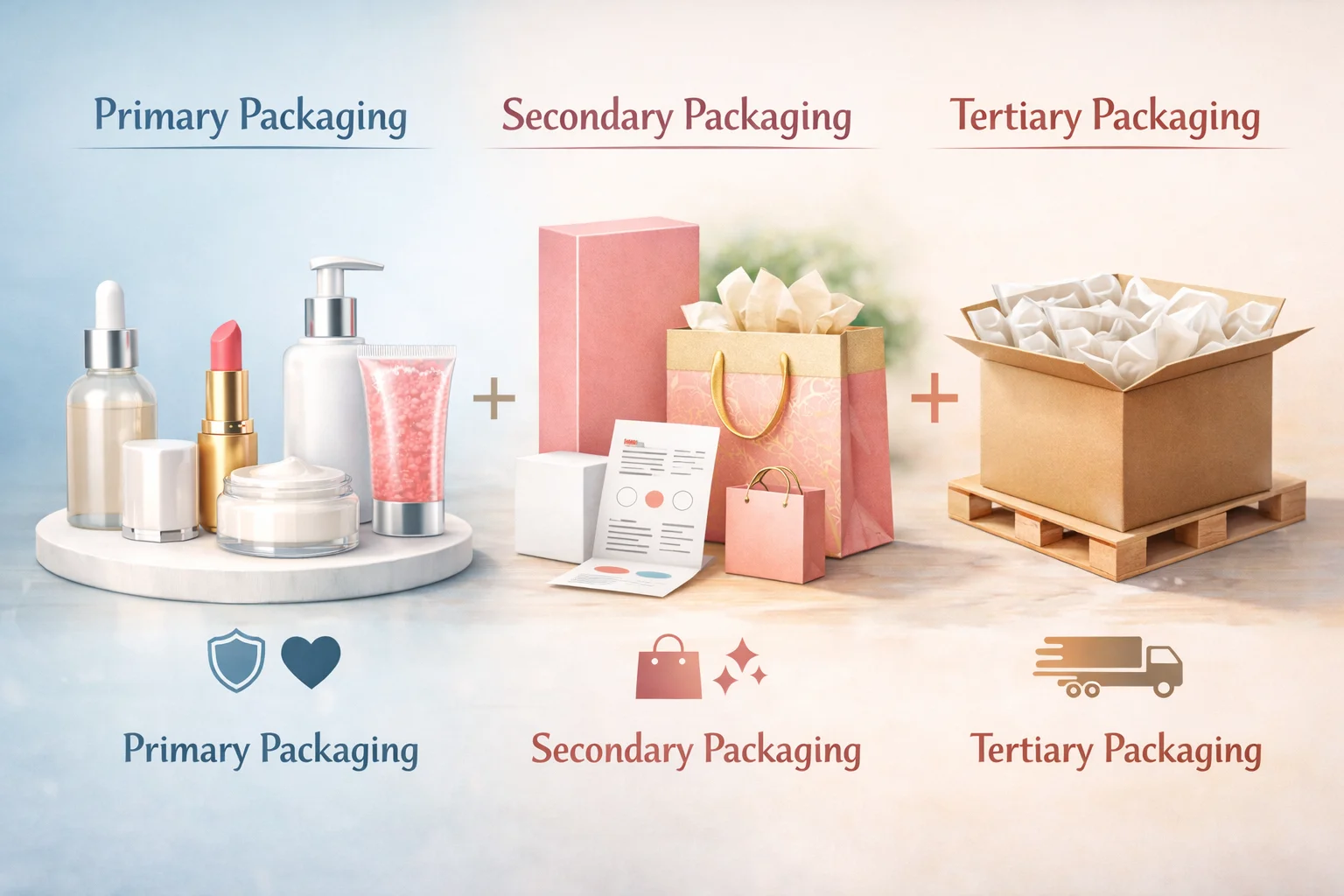
Breaking down these layers helps you think like a manufacturer and plan effectively. Each layer has a distinct job and its own cost considerations.
Primary Packaging[^6]: The First Contact
This is the component that directly touches your formula. It's the bottle, jar, tube, or compact. The most important factor here is material compatibility. You must ensure the plastic or glass doesn't react with your ingredients. This layer is also about dispensing the product correctly, whether through a pump, dropper, or simple opening.
Secondary Packaging[^7]: The Retail Shell
This is typically the paperboard box the primary container sits in. Its job is to add another layer of protection, provide a large canvas for your branding and marketing story, and display required information like the ingredient list. It also provides tamper evidence and makes the product look substantial on a retail shelf.
Tertiary Packaging[^8]: The Shipper
This is the humble brown cardboard box. Its only mission is to get a case of your products from my factory to your warehouse or retailer without damage. It's all about durability, stacking strength, and logistical efficiency.
Here is a table to make it even clearer:
| Layer | Also Known As | Purpose | Example |
|---|---|---|---|
| Primary | The Container | Holds & protects the formula | The glass bottle for a serum |
| Secondary | The Retail Box | Branding, information, shelf appeal | The paper box the serum bottle comes in |
| Tertiary | The Shipper | Bulk transport and protection | The large cardboard box holding 24 serum boxes |
What Materials Should You Choose for Your Packaging?
Choosing between glass, plastic, or aluminum feels overwhelming. The wrong material can react with your formula, break in transit, or misrepresent your brand. Let’s look at the pros and cons of each.
Most brands choose between plastic (like PET, PP, PE), glass, and aluminum. Plastic is versatile and cost-effective. Glass feels premium but is heavy and fragile. Aluminum offers great protection but can dent. Your choice depends on your formula, brand, and budget.
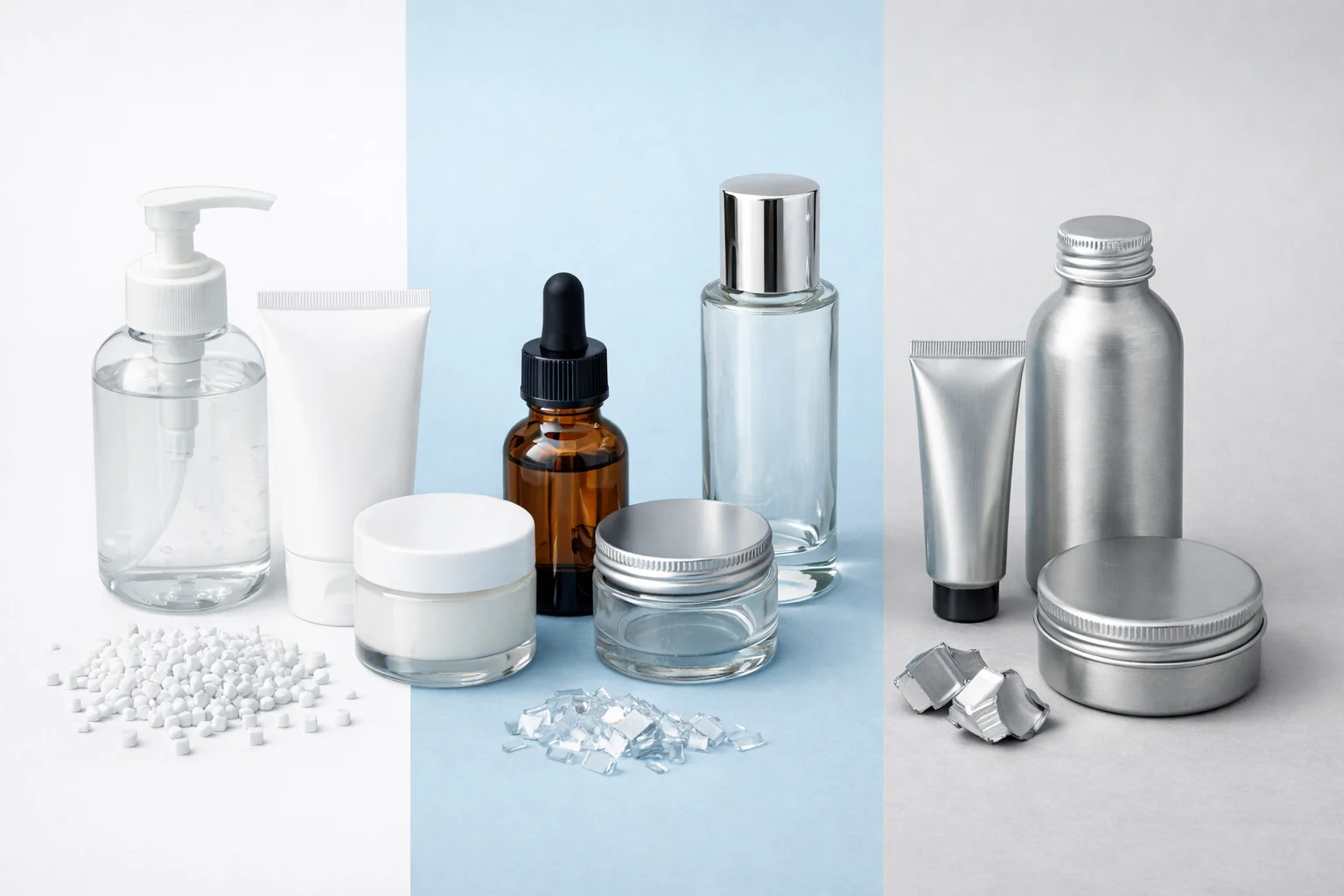
On our factory floor, we handle these materials every day. Here are the practical realities beyond the marketing claims.
Plastic (PET, PP, PE, PCR)
This is the industry workhorse. It's lightweight, which saves on shipping. It's durable and can be molded into almost any shape imaginable. The biggest trend right now is Post-Consumer Recycled (PCR) plastic, which brands request to meet sustainability goals. The one thing to always remember with plastic is to do compatibility testing. Certain formulas, especially those with high concentrations of essential oils, can degrade some plastics over time.
Glass
Glass is the go-to choice for luxury brands. It has a satisfying weight, feels premium in the hand, and is very non-reactive, making it perfect for sensitive or high-end formulas. The downsides are obvious: it's heavy, which increases shipping costs, and it can break. We have to use extra protective packaging when shipping glass products, which adds to the cost.
Aluminum
Aluminum is perfect for products that need total protection from light and air, like ointments or some organic formulas. It's often used for tubes. It's also lightweight and infinitely recyclable. The main drawback is that it dents very easily. A small dent can make a product look damaged and unsellable.
| Material | Pros | Cons | Best For |
|---|---|---|---|
| Plastic | Lightweight, durable, low cost, versatile | Can feel cheap, potential compatibility issues | Lotions, cleansers, mass-market products |
| Glass | Premium feel, non-reactive, recyclable | Heavy, fragile, higher cost, high shipping cost | Serums, oils, luxury creams |
| Aluminum | Excellent barrier, lightweight, recyclable | Dents easily, higher cost than plastic | Hand creams, ointments, aerosol products |
What Are the Most Common Types of Cosmetic Packaging?
Jars, bottles, tubes, airless pumps... the options are endless. Choosing the wrong type can frustrate customers and waste product. Let’s review the most popular formats and their uses.
The most common types are jars, bottles, tubes, and airless pumps. Jars are for thick creams. Bottles are for liquids like toners and serums. Tubes are great for gels and cleansers. Airless pumps[^9] protect sensitive formulas and provide precise dosing.
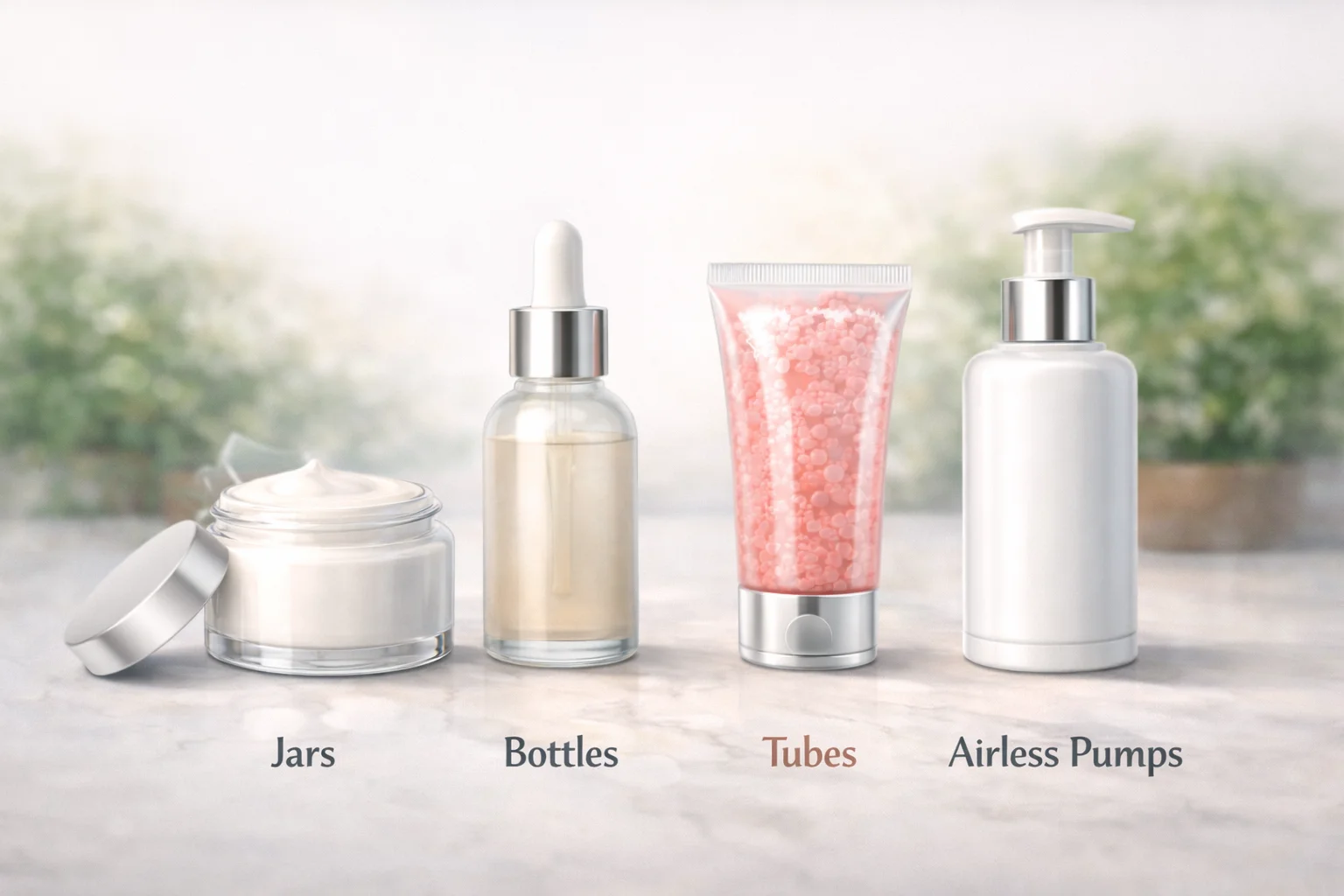
We produce millions of these units, and each format has a specific purpose. Choosing the right one makes your product more effective and enjoyable to use.
Jars
Jars are simple, classic, and allow you to show off a product's beautiful color and texture. We make them in both glass and plastic. They're ideal for thick creams, balms, and masks. The main drawback is hygiene, as users dip their fingers in. Because of this, I always recommend that brands include a small spatula with any jarred product.
Bottles
Bottles are the most versatile format. They are suitable for almost any liquid viscosity, from watery toners and serums to thicker lotions and oils. We pair them with a wide range of closures like pumps, droppers, misters, or simple screw caps. The material choice here—clear glass, frosted plastic, etc.—heavily influences the customer's perception of your brand.
Tubes
Tubes are highly practical and cost-effective, especially for larger volume products like cleansers, sunscreens, and hand creams. They are easy to use and allow the customer to squeeze out most of the product, reducing waste. We can produce them from standard plastic, eco-friendly PCR plastic, or protective aluminum.
Airless Pumps
This technology is more expensive, but it is the best solution for protecting advanced formulas. If your product has delicate ingredients like antioxidants, retinoids, or is preservative-free, I strongly recommend an airless system. An internal piston pushes the product up, preventing any air from getting inside and degrading the formula. It also provides a clean, measured dose every time.
What Key Decisions Affect Your Packaging Cost and Quality?
Want high-quality packaging without a huge budget? Small, early decisions can have a massive impact. Ignoring them leads to unexpected costs and delays right before your launch.
Your key cost and quality drivers are: Material (glass is pricier than plastic), Decoration (multi-color printing costs more than a simple label), and Order Quantity (MOQ). Making these decisions early and clearly is the best way to control your budget.
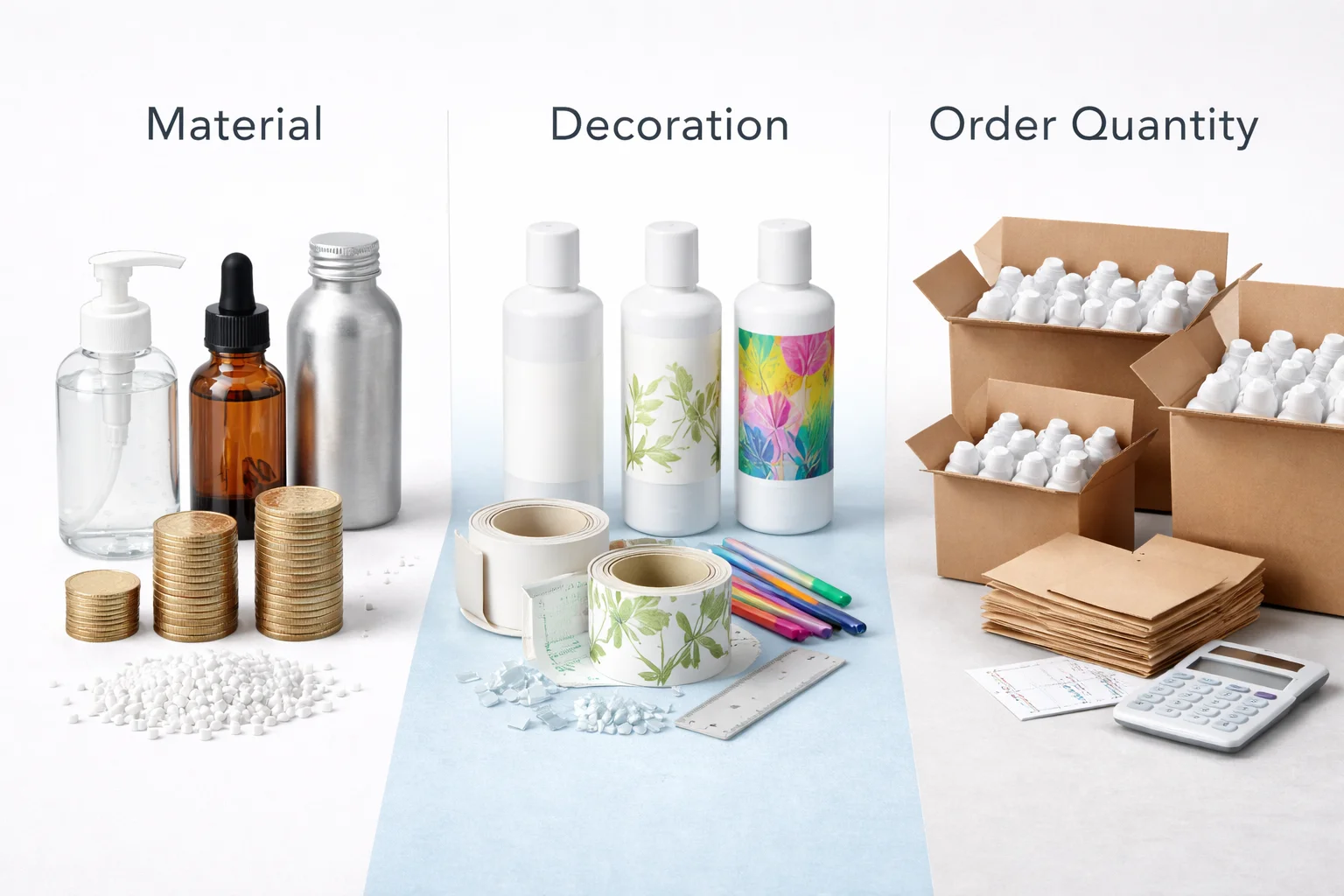
As a manufacturer, my main insight for you is this: the fastest way to save money on packaging is to avoid rework. And you avoid rework through good planning. Here is where the money really goes.
Material and Weight
This is a big one. A heavy, thick-walled glass jar costs more to produce and significantly more to ship than a lightweight plastic tube. When you're shipping thousands of units, that weight adds up fast. Think about the entire journey, not just the initial component cost.
Decoration Method
Decoration is how you print your design on the package. A simple, one-color silkscreen print is very affordable. A complex design with multiple colors, a metallic hot stamp, and a full wrap is much more expensive. Each color and each process is an extra step on our machines, which adds cost. Often, a simple, elegant design looks more premium and costs less.
Minimum Order Quantity (MOQ)[^10]
Our machines are built for mass production. The time and cost to set up a machine for a run are the same whether we produce 1,000 units or 50,000 units. This is why the per-unit cost is very high for small orders. The larger your order, the more that setup cost is spread out, and the lower your per-unit price will be.
Why Are Pumps, Caps, and Closures the Real Problem Point?
Your bottle looks great, but does it leak? The closure is often an afterthought. This small part can cause the biggest quality headaches, leading to customer complaints and returns.
Closures are often the problem point because they are mechanical parts with tight tolerances. A mismatch between a bottle's neck and a pump's threading can cause leaks. A pump's engine might not work with a thick formula. Always test the complete package together.
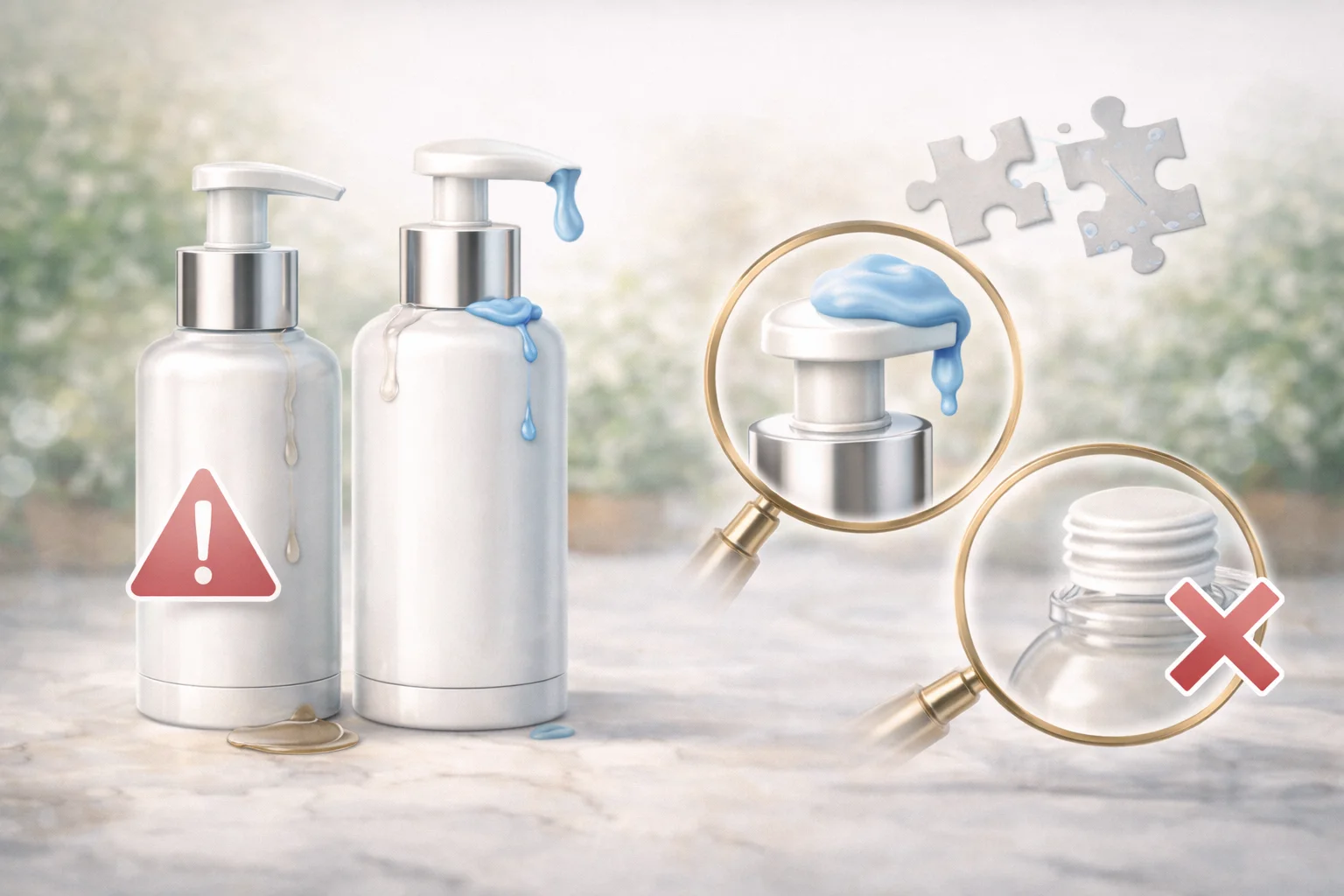
I spend more of my time troubleshooting closures than any other component. A beautiful, expensive bottle is completely worthless if its cap leaks during shipping.
The Mismatch Problem
This happens all the time. A brand tries to save a few cents by sourcing a bottle from one supplier and a pump from another. Even if both are listed as a standard "24/410" neck size, the threading can have tiny differences between factories. This can create an imperfect seal that leads to slow leaks. My advice is to always source the bottle and closure from the same supplier. If you can't, you must test them together rigorously before placing a mass order.
The Formula vs. The Pump
The closure must be compatible with your formula. A thick, viscous cream needs a lotion pump with a powerful engine and a wide opening. A thin, watery serum works best with a treatment pump that dispenses a small, controlled dose. We once had a client who insisted on using a specific treatment pump for their very thick cream. It clogged on the first use. We had to halt production and find a new pump, which delayed their launch by six weeks. Always test your final formula with your exact packaging.
What Packaging Trends Are Buyers Actually Asking For?
Want your brand to look modern and relevant? Following the wrong trends can make you look dated or cheap. Let's cover the trends that have real staying power with customers.
The biggest trends we see are: Sustainability[^11] (PCR plastic, refillable systems, less packaging), Minimalism[^12] (simple designs, clean fonts, muted colors), and "Airless" Technology (for product protection and a premium feel). Customers want packaging that is smart and responsible.
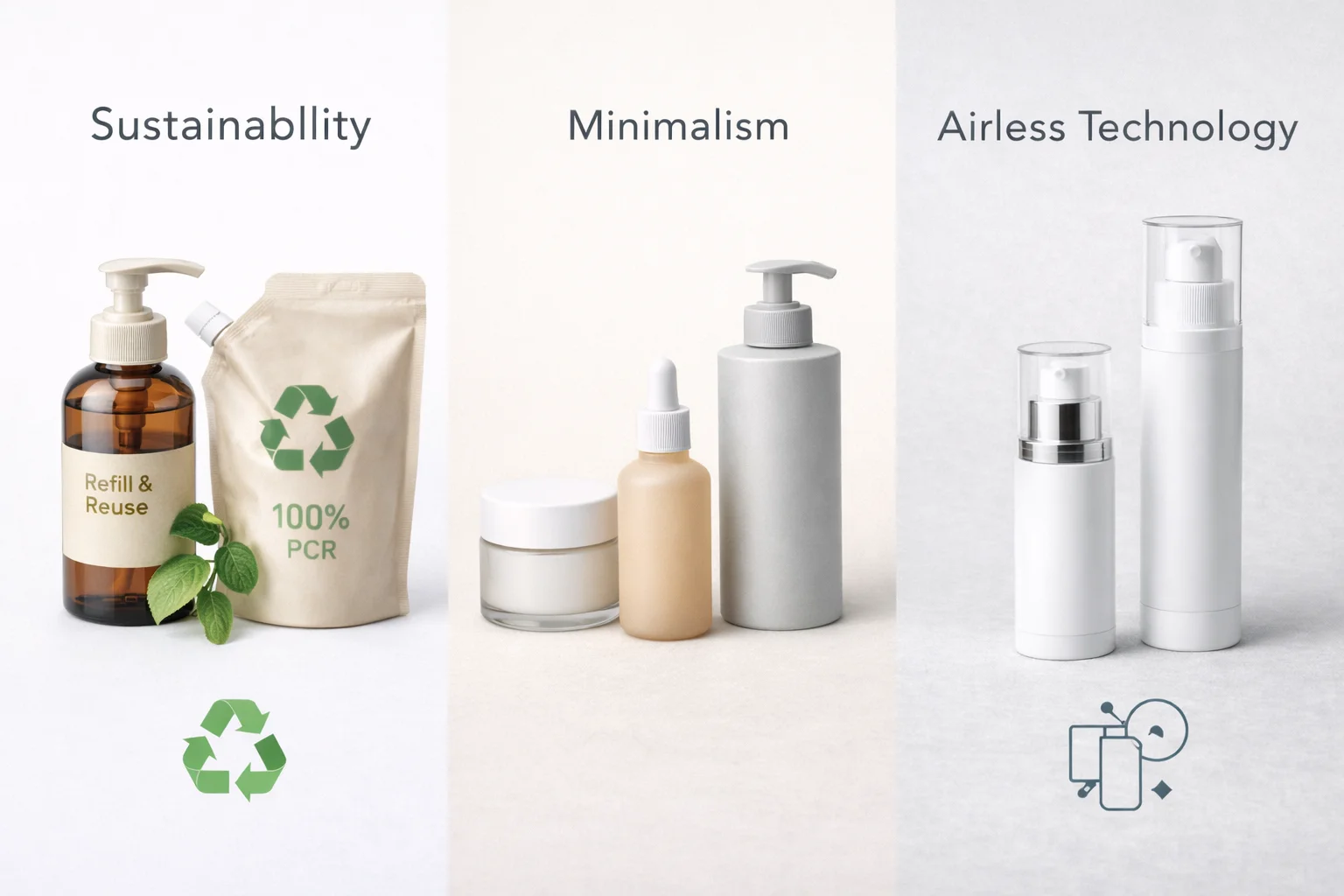
We see thousands of purchase orders. Here is what brands are actually buying, not just what trend forecasters are talking about.
Sustainability is King
This is no longer a niche trend; it's the new standard. The number one request we get is for Post-Consumer Recycled (PCR) plastic. Brands want to be able to put "This bottle is made from 50% recycled plastic" on their label. Refillable systems are also becoming very popular. The customer buys an elegant outer container once, and then purchases smaller, cheaper "refill pods." It reduces waste, lowers long-term cost for the consumer, and builds brand loyalty.
Clean Minimalism
Forget loud, busy designs. The "shelfie" culture on social media means packaging needs to look good sitting in a person's bathroom. This translates to simple geometric shapes, soft-touch or matte finishes, and elegant, easy-to-read typography. This clean aesthetic communicates confidence; it says the product inside is so good, it doesn't need to shout.
Functional Luxury
Customers are more educated than ever. They understand that an airless pump isn't just a gimmick; it protects the ingredients. They appreciate packaging that is not just pretty but also smart. We're seeing more requests for unique applicators, like cooling ceramic tips for eye creams or built-in spatulas. These features add to the ritual of using the product and signal effectiveness.
What Basic Compliance and Labeling Do You Need to Know?
Afraid of getting your product rejected by regulators? Labeling rules can be confusing. Making a simple mistake can lead to costly reprints and legal trouble down the road.
At a minimum, your packaging must clearly show the product name, net weight or volume, an ingredient list (INCI), and your company's name and address. A Period After Opening (PAO) symbol is also required for most products.
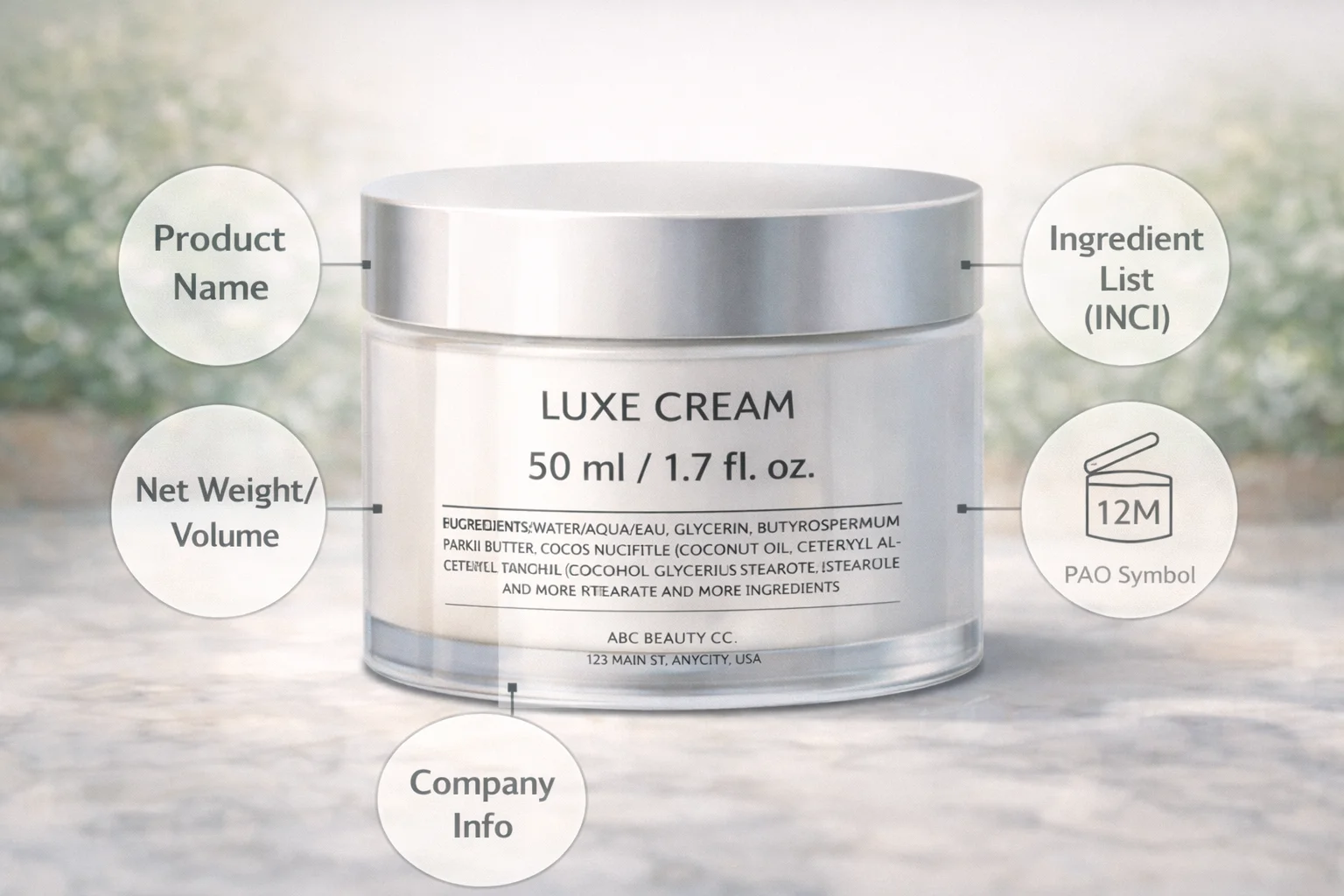
First, a disclaimer: I am a manufacturer, not a regulatory consultant. You should always have your final artwork reviewed by a legal expert. However, based on the thousands of files we print, here are the absolute basics you cannot afford to get wrong.
The Non-Negotiables
Your artwork file must have space for these key pieces of information. We check for them before we even make a printing plate.
- Product Identity: What is the product? (e.g., "Hydrating Face Cream")
- Net Quantity: How much is inside? This must be in metric and imperial units. (e.g., "50 mL / 1.7 fl. oz.")
- Distributor Information: Your company name and address.
- Ingredient List: This is usually on the secondary packaging (the box) and must follow the International Nomenclature of Cosmetic Ingredients (INCI) format.
Important Symbols
You'll see these on almost every product.
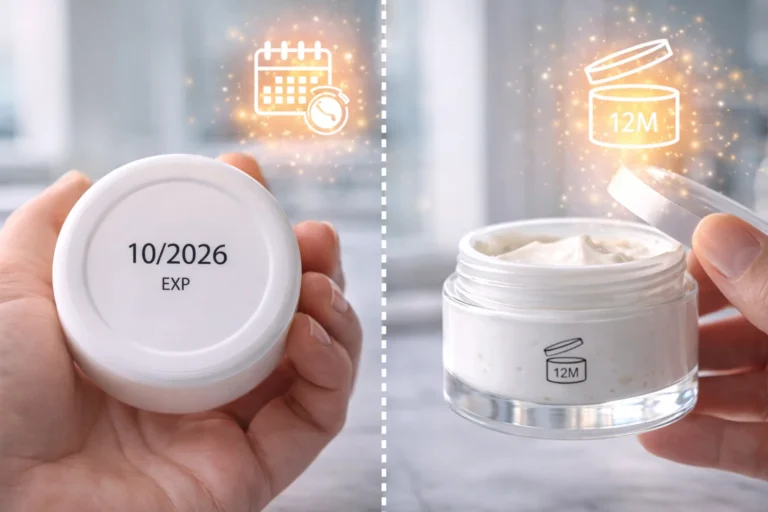
- The Period After Opening (PAO) symbol is an icon of an open jar with a number followed by "M" (e.g., "12M"). This tells the customer the product is safe to use for 12 months after it has been opened.
- Other symbols like the Leaping Bunny (for cruelty-free) or recycling codes are also common. Make sure you have the official right to use any certification logos.
How Do You Choose the Right Packaging Supplier?
Worried about picking a supplier who will cause delays or deliver poor quality? Choosing the wrong partner is the fastest way to ruin your launch. Here is how to find a great one.
Choose a supplier who asks smart questions, offers solutions, and provides samples for testing. Look for clear communication, quality control processes (like ISO certification), and a willingness to be a partner in problem-solving, not just a price list.
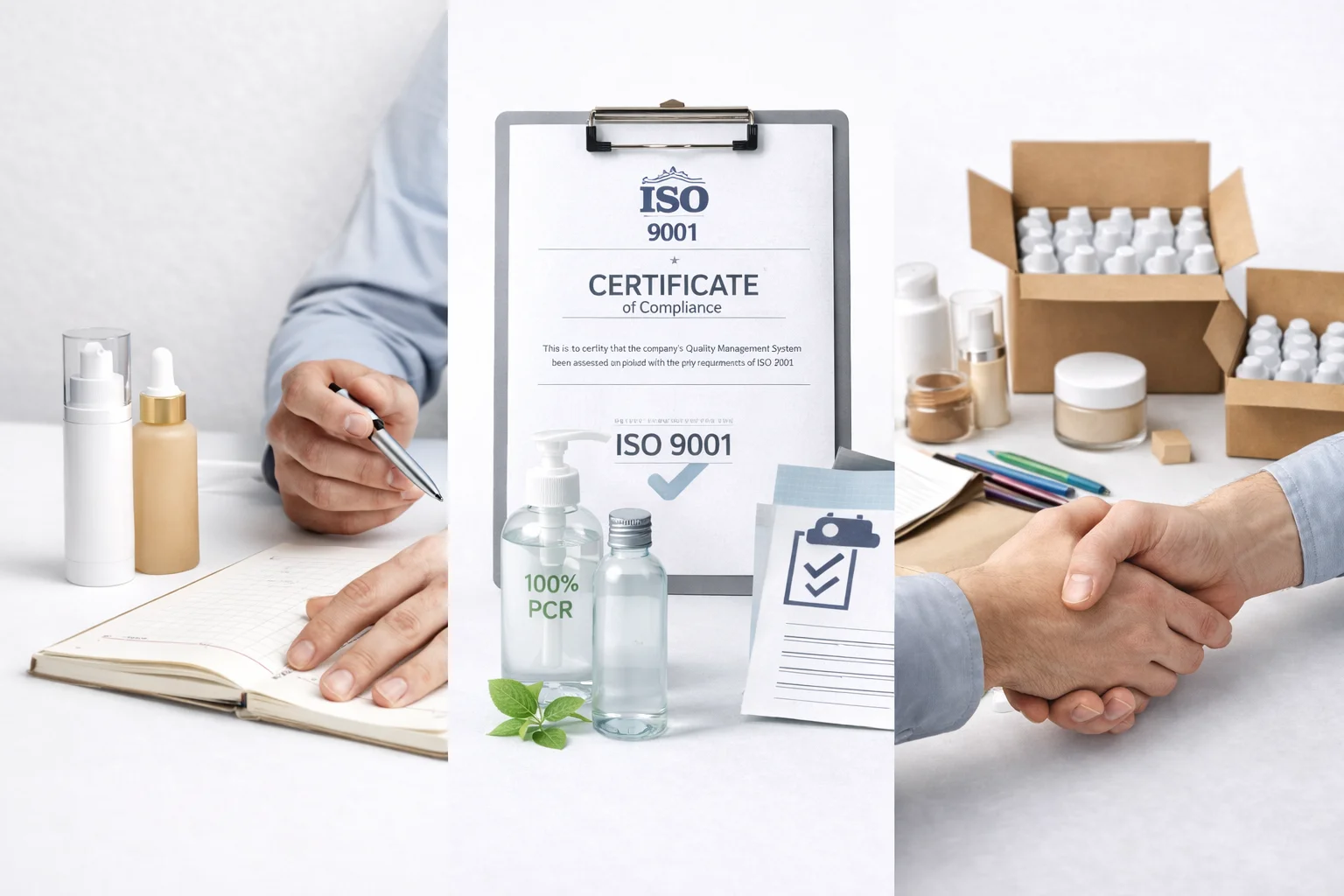
After decades in this business, I can tell you that the difference between a good supplier and a bad one has very little to do with the initial price quote. It's about partnership.
They Ask Questions
A bad supplier will just send you a price. A good supplier will ask about your product. "What is the viscosity of your formula? Are there any light-sensitive ingredients? Will this be sold primarily online or in physical retail stores?" They ask these questions because they are trying to anticipate problems and help you succeed. Their experience is your asset.
They Offer Proactive Solutions
A great partner will guide you. If you ask for something they know might cause problems, they'll tell you and suggest a better alternative. For example: "A full hot-stamped logo on that soft-touch material might scratch off easily during shipping. We'd recommend a debossed logo with a one-color fill instead for better durability." They want to prevent returns just as much as you do.
They Have a Clear Process
Ask them to explain their process from sample approval to mass production. They should have clear quality control checkpoints. Don't be afraid to ask for factory certifications like ISO 9001. A good supplier will be proud to show you their credentials and explain how they guarantee quality. This transparency is how you build a reliable supply chain.
Conclusion
Great cosmetic packaging isn't about spending the most money. It's about smart, early planning with the right partner to create a package that protects your formula and delights your customers.
[^1]: Understanding cosmetic packaging is crucial for protecting your product and enhancing brand identity.
[^2]: Find out how effective packaging safeguards your formulas from damage and contamination.
[^3]: Learn how usability affects customer experience and product satisfaction.
[^4]: Understand how packaging design influences consumer perception and brand value.
[^5]: Ensure compliance and clarity by knowing what details are legally required on your packaging.
[^6]: Learn about primary packaging to ensure your product is well-protected and appealing to customers.
[^7]: Discover how secondary packaging enhances branding and provides essential information to consumers.
[^8]: Explore the importance of tertiary packaging for safe and efficient product transport.
[^9]: Discover how airless pumps protect sensitive formulas and enhance user experience.
[^10]: Understand how MOQ affects your production costs and planning.
[^11]: Stay updated on sustainable practices that consumers are increasingly demanding.
[^12]: Discover how minimalist designs can enhance brand appeal and customer attraction.