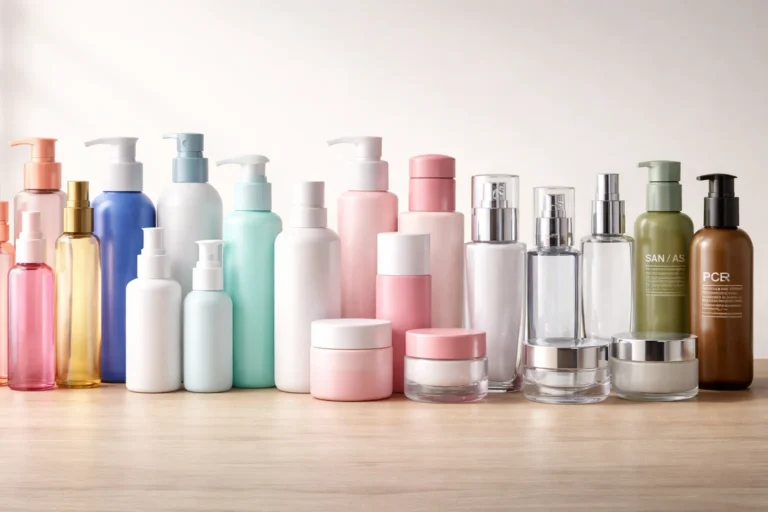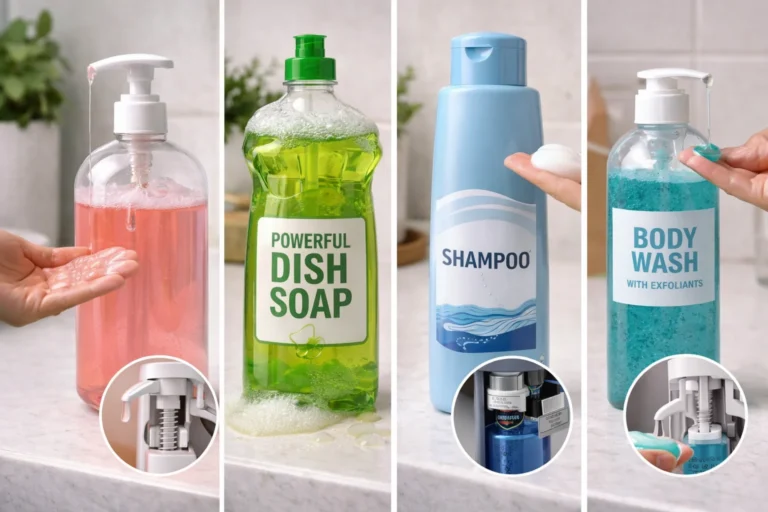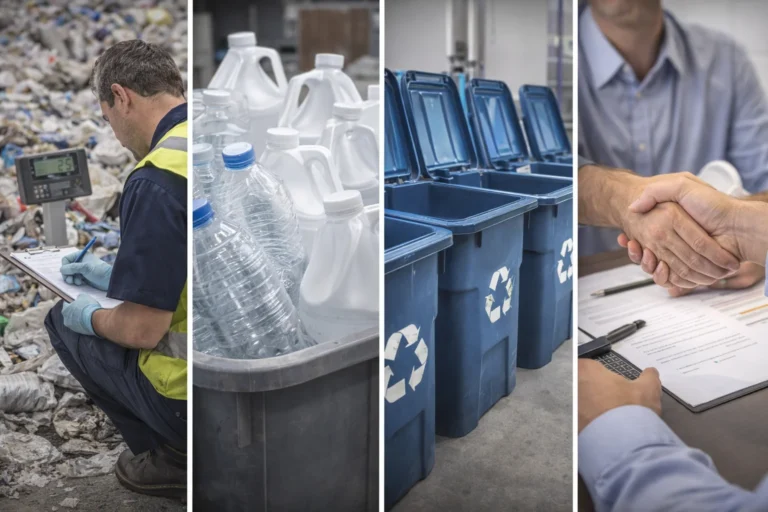
Choosing the wrong plastic[^1] can ruin your product and your brand's reputation. This guide will help you select the perfect material to avoid cost[^2]ly mistakes and ensure product success.
The ten most common plastic[^1]s for cosmetic packaging[^3] are PET[^4], HDPE[^5], LDPE[^6], PP[^7], PS[^8], SAN[^9], ABS[^10], PMMA[^11] (Acrylic), PETG[^12]](https://en.wikipedia.org/wiki/Polyethylene_terephthalate)[^4]G, and PCR[^13]. To choose the right one, you must match the material's properties with your product formula[^14], brand positioning[^15], budget, and functional requirements.
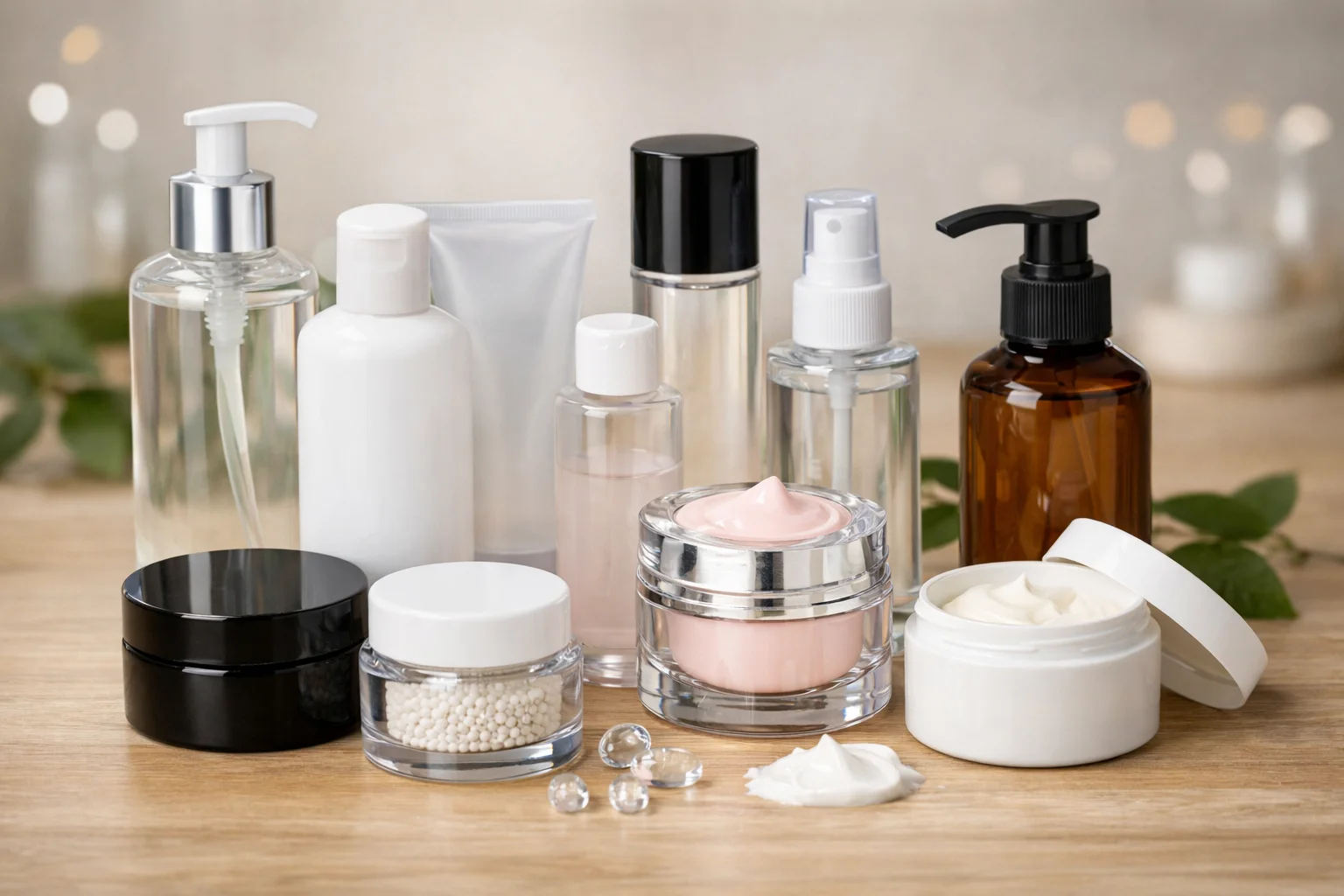
I've been in the packaging industry for years. I've seen brands launch amazing products that fail simply because of a poor packaging choice. It's a frustrating and expensive mistake. But it's also completely avoidable. You don't need to be a chemical engineer to make a smart decision. You just need to understand the basics of what makes each plastic[^1] different and how those differences affect your product. This guide is designed to give you that understanding, from a practical, factory-floor perspective. Let's walk through it together.
Why Does Choosing the Right Plastic Material Matter?
You think the packaging is just a container, but it's much more. Choosing incorrectly leads to leaks, product spoilage, and unhappy customers, damaging your brand's reputation and bottom line.
Choosing the right plastic[^1] is critical because it ensures your product is safe and stable, provides a good user experience[^16], and protects your brand's image. The material directly impacts chemical compatibility[^17], durability[^18] during shipping, and the customer's perception of your product's quality and value.
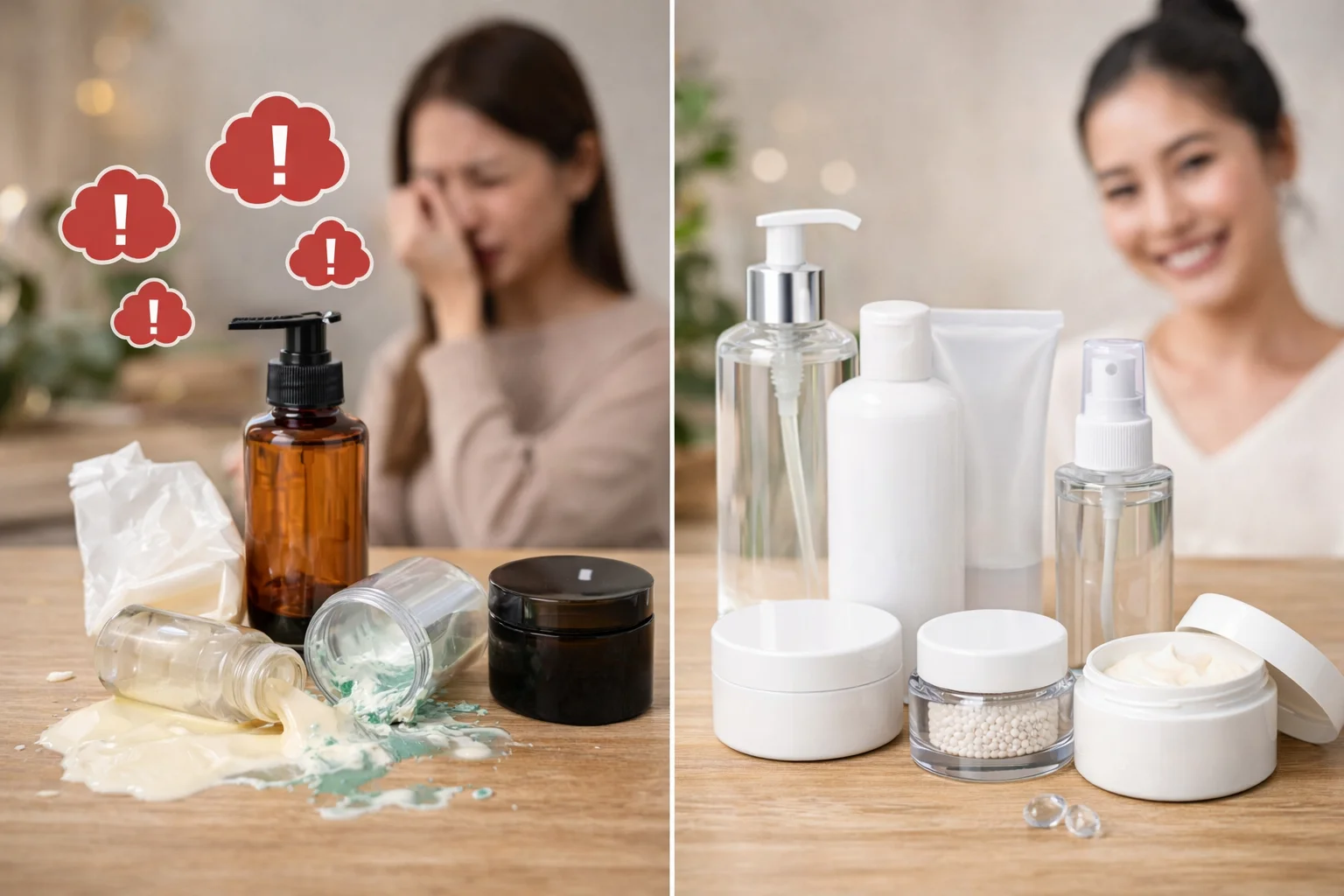
I can't tell you how many times a new brand has come to us with a beautiful design that just won't work. The material they picked looks great in a 3D render, but it's completely wrong for their formula. For example, some essential oils can literally eat through certain types of plastic[^1], causing the container to warp or crack. We call this a failure in chemical compatibility[^17]. Then there's the physical journey. Your package has to survive being filled, capped, boxed, shipped across the country, and handled by stockists and customers. A brittle plastic[^1] like standard Polystyrene (PS[^8]) might look crystal clear, but it can easily shatter if dropped. On the other hand, a flexible material like LDPE[^6] is great for a squeezable tube but would feel cheap for a luxury face cream jar. The material tells a story about your brand before the customer even opens the product. It needs to tell the right story.
What are the 10 Plastic Materials at a Glance?
Trying to compare different plastic[^1]s can feel overwhelming. You can waste hours digging through technical data sheets full of jargon. Here is a simple comparison to get you started quickly.
The best way to get a quick overview of the 10 plastic[^1]s is with a comparison table. This lets you see key features like clarity, typical cost[^2], and common uses side-by-side, helping you narrow down your options before diving into the technical details.
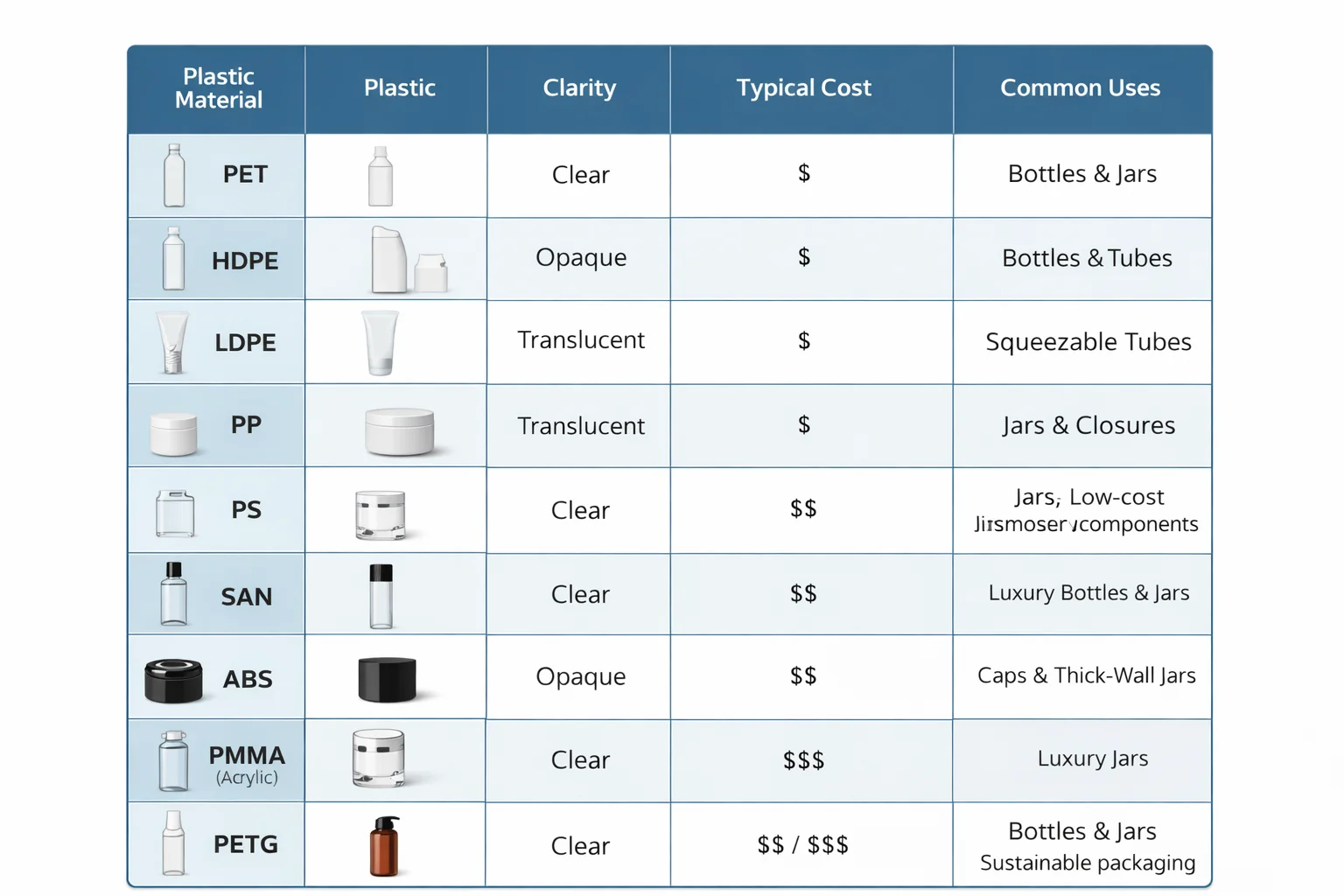
When we consult with brands, the first thing we do is try to narrow the field. You don't need to be an expert on all ten materials, but knowing the main differences is a huge advantage. I've put together a table below that we often use internally. It simplifies things into three main categories: cost[^2], clarity, and common use. Think of it as a cheat sheet. For cost[^2], "$" is the most affordable, while "$$$" is the most premium. For clarity, we've noted whether it's typically clear, translucent, or opaque. This table won't give you the final answer, but it will point you in the right direction. For example, if you need a clear bottle for a water-based serum and have a medium budget, this table will immediately show you that PET[^4] or PETG[^12]](https://en.wikipedia.org/wiki/Polyethylene_terephthalate)[^4]G are strong contenders, while HDPE[^5] would be a poor fit.
| Material | Code | Clarity | Cost | Common Uses |
|---|---|---|---|---|
| Polyethylene Terephthalate | PET[^4] | Clear | $$ | Bottles (serums, toners), Jars |
| High-Density Polyethylene | HDPE[^5] | Opaque/Translucent | $ | Shampoo bottles, Squeeze tubes |
| Low-Density Polyethylene | LDPE[^6] | Translucent | $ | Squeezable tubes, Liners |
| Polypropylene | PP[^7] | Translucent/Opaque | $ | Jars, Caps, Airless pumps |
| Polystyrene | PS[^8] | Clear | $$ | Compacts, Sample pots (brittle) |
| Styrene-Acrylonitrile | SAN[^9] | Clear | $$ | Thick-wall jars, Overcaps |
| Acrylonitrile Butadiene Styrene | ABS[^10] | Opaque | $$ | Caps, Cases, Decorative parts |
| Polymethyl Methacrylate | PMMA[^11] | Clear | $$$ | Luxury jars, "Glass-like" items |
| Polyethylene Terephthalate Glycol | PETG[^12]](https://en.wikipedia.org/wiki/Polyethylene_terephthalate)[^4]G | Clear | $$$ | High-end bottles, Thick-wall jars |
| Post-Consumer Recycled | PCR[^13] | Varies | $-$$$ | Bottles, Jars, Tubes (Eco-option) |
What are the 10 Plastic Materials Used in Cosmetic Packaging?
You see the names PET[^4], PP[^7], and Acrylic, but what do they really mean? Choosing a material based on its name or appearance alone is a gamble. Let's break down each one.
The 10 common plastic[^1]s are PET[^4], HDPE[^5], LDPE[^6], PP[^7], PS[^8], SAN[^9], ABS[^10], PMMA[^11] (Acrylic), PETG[^12]](https://en.wikipedia.org/wiki/Polyethylene_terephthalate)[^4]G, and PCR[^13]. Each has unique properties, making it suitable for specific cosmetic applications like jars for creams, bottles for liquids, or tubes for gels.
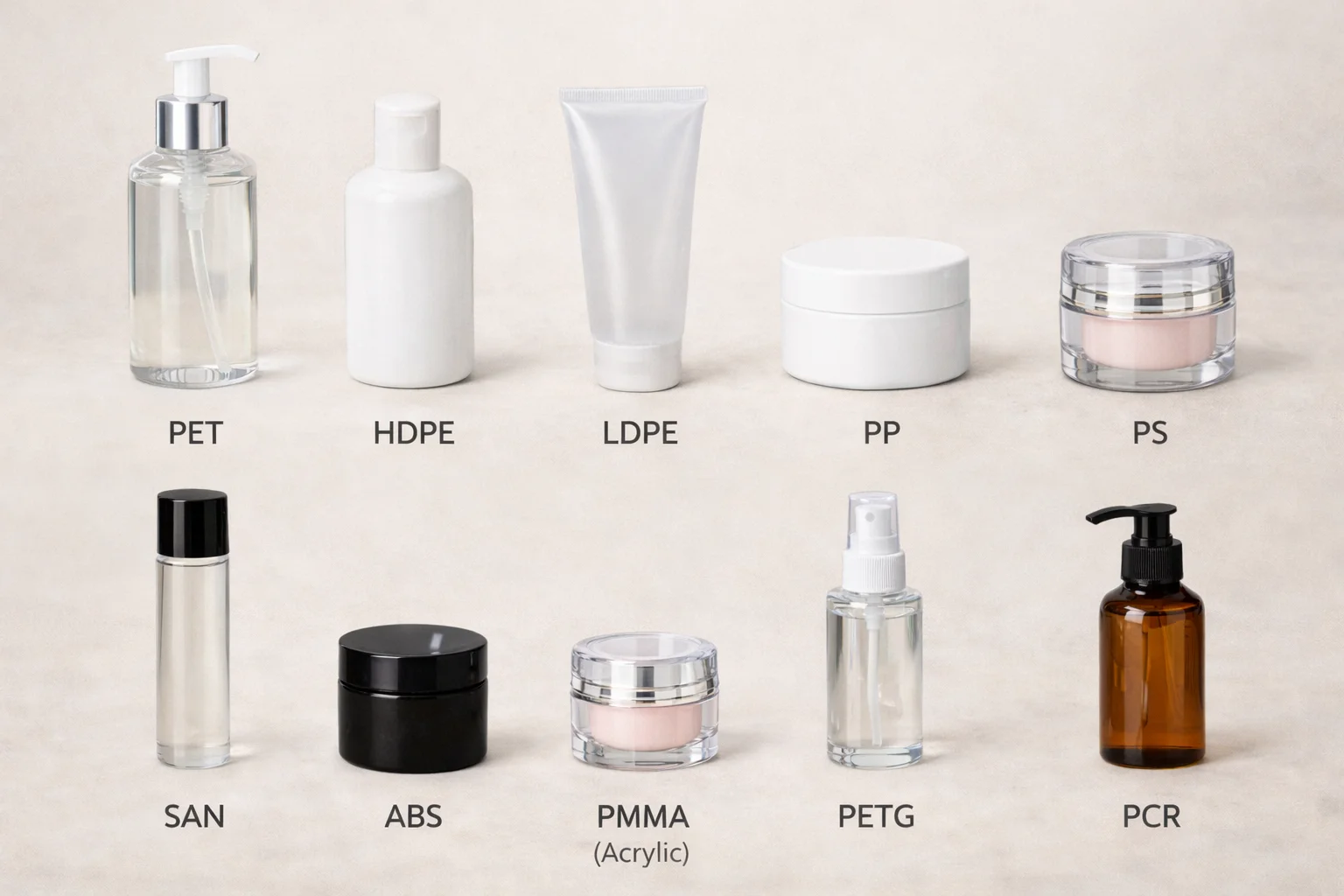
To really understand these materials, it helps to group them by their common traits. I think of them in terms of their everyday roles in the cosmetics world. Some are workhorses, some are for luxury, and others are specialists.
The Workhorses: PET[^4] & HDPE[^5]
PET[^4] is probably the most common plastic[^1] you see. Think of water bottles, but for cosmetics, it's used for serums, toners, and micellar waters. It's popular because it's crystal clear, lightweight, and has good chemical resistance to many common cosmetic ingredients. It provides a great barrier against oxygen, which helps preserve the product inside. HDPE[^5] is PET[^4]'s tougher, opaque cousin. It's not as pretty, but it's incredibly durable and cost[^2]-effective. It’s the standard for shampoo and conditioner bottles. Its chemical resistance is excellent, making it suitable for a very wide range of products, but its opaque nature means you can't show off the color of your formula.
The Flexible and Versatile: LDPE[^6] & PP[^7]
When you need a package that can be squeezed, you turn to LDPE[^6]. It’s soft and flexible, making it the perfect choice for face wash tubes or lotion bottles. It's not as chemically resistant as HDPE[^5], so compatibility testing is extra important. PP[^7] is the true all-rounder of the group. It’s used for everything from caps and closures to jars and airless pump bottles. It has a high melting point, which makes it great for products that are hot-filled. It has a natural "living hinge" property, meaning you can design a cap and container as one piece. PP[^7] is usually translucent or opaque and is one of the most cost[^2]-effective materials available.
The Premium and Clear: PMMA[^11] (Acrylic) & PETG[^12]](https://en.wikipedia.org/wiki/Polyethylene_terephthalate)[^4]G
When a brand wants the look and feel of glass without the risk of breakage, they choose PMMA[^11], better known as Acrylic. It's heavy, crystal clear, and feels substantial in the hand. This makes it the top choice for luxury cream jars and high-end packaging. However, it's also the most expensive and can be brittle if dropped. It's also prone to cracking if it comes into contact with certain oils or solvents. PETG[^12]](https://en.wikipedia.org/wiki/Polyethylene_terephthalate)[^4]G is like a premium version of PET[^4]. It offers exceptional clarity and gloss, and it's tougher than Acrylic. It can be molded into thick-walled containers that look and feel very luxurious. It's a great choice for brands that want a high-end look with better durability[^18] than acrylic, but it comes at a premium price.
How Do You Choose the Right Material for Your Product?
Now you know the materials, but how do you actually pick one? A wrong guess can lead to thousands of dollars in wasted inventory and a failed product launch. Let's create a simple process.
To choose the right material, you must evaluate four key areas: product formula[^14], brand positioning[^15], budget, and sustainability[^19]. The most critical step is performing a compatibility test between your formula and the potential packaging to prevent any negative reactions.
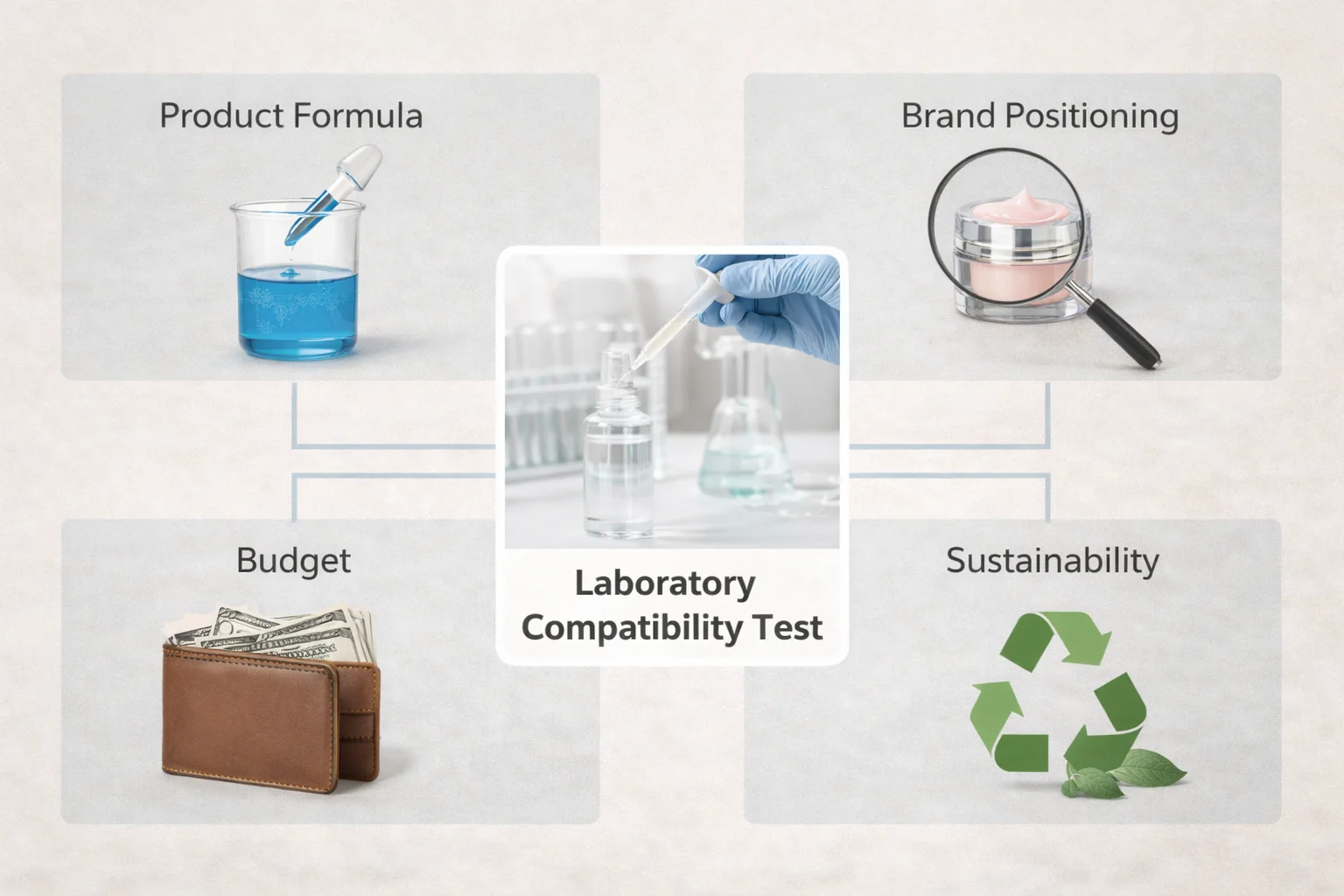
Over the years, I've developed a simple checklist to guide brands through this process. It's not magic, but it forces you to think about the most important factors before you fall in love with a specific look.
Step 1: Check Formula Compatibility
This is the number one, non-negotiable step. Your product will live inside this container for months or years. You must be sure they get along.
- Oil-based vs. Water-based: Some plastic[^1]s, like PET[^4], are great for water-based formulas but can struggle with certain oils.
- Alcohol or Essential Oils: These are aggressive ingredients. They can cause plastic[^1]s like PS[^8] or Acrylic to crack. You need to choose a more resistant material like PP[^7] or PETG[^12]](https://en.wikipedia.org/wiki/Polyethylene_terephthalate)[^4]G.
- Action: Get samples of the plastic[^1]s you're considering and fill them with your actual product. Let them sit for at least 4-6 weeks at different temperatures to check for any changes in the packaging or the product.
Step 2: Define Your Brand and User
Who are you selling to? The packaging must match their expectations.
- Luxury: Heavy-wall PETG[^12]](https://en.wikipedia.org/wiki/Polyethylene_terephthalate)[^4]G or PMMA[^11] (Acrylic) jars signal premium quality.
- Natural/Eco-Conscious: PCR[^13] (Post-Consumer Recycled) plastic[^1] or simple PP[^7]/HDPE[^5] packaging can communicate your brand values.
- Mass-Market: Cost-effective PET[^4] bottles or PP[^7] jars are the standard.
Step 3: Consider Functionality
How will your customer use the product?
- Squeezable: LDPE[^6] is your best bet.
- Sprayer or Pump: PET[^4] is ideal because it's rigid and clear.
- Dropper: A glass dropper is common, but the bottle itself is often PET[^4] or PETG[^12]](https://en.wikipedia.org/wiki/Polyethylene_terephthalate)[^4]G.
What are Common Mistakes When Choosing Plastic Packaging?
You want to avoid rookie errors that can cost[^2] you time and money. Simple mistakes during material selection can cause massive production delays and quality control nightmares down the road.
The most common mistakes include prioritizing appearance over function, skipping compatibility tests, ignoring the supply chain realities of shipping and filling, and choosing a material that is unnecessarily expensive or difficult to manufacture at scale.
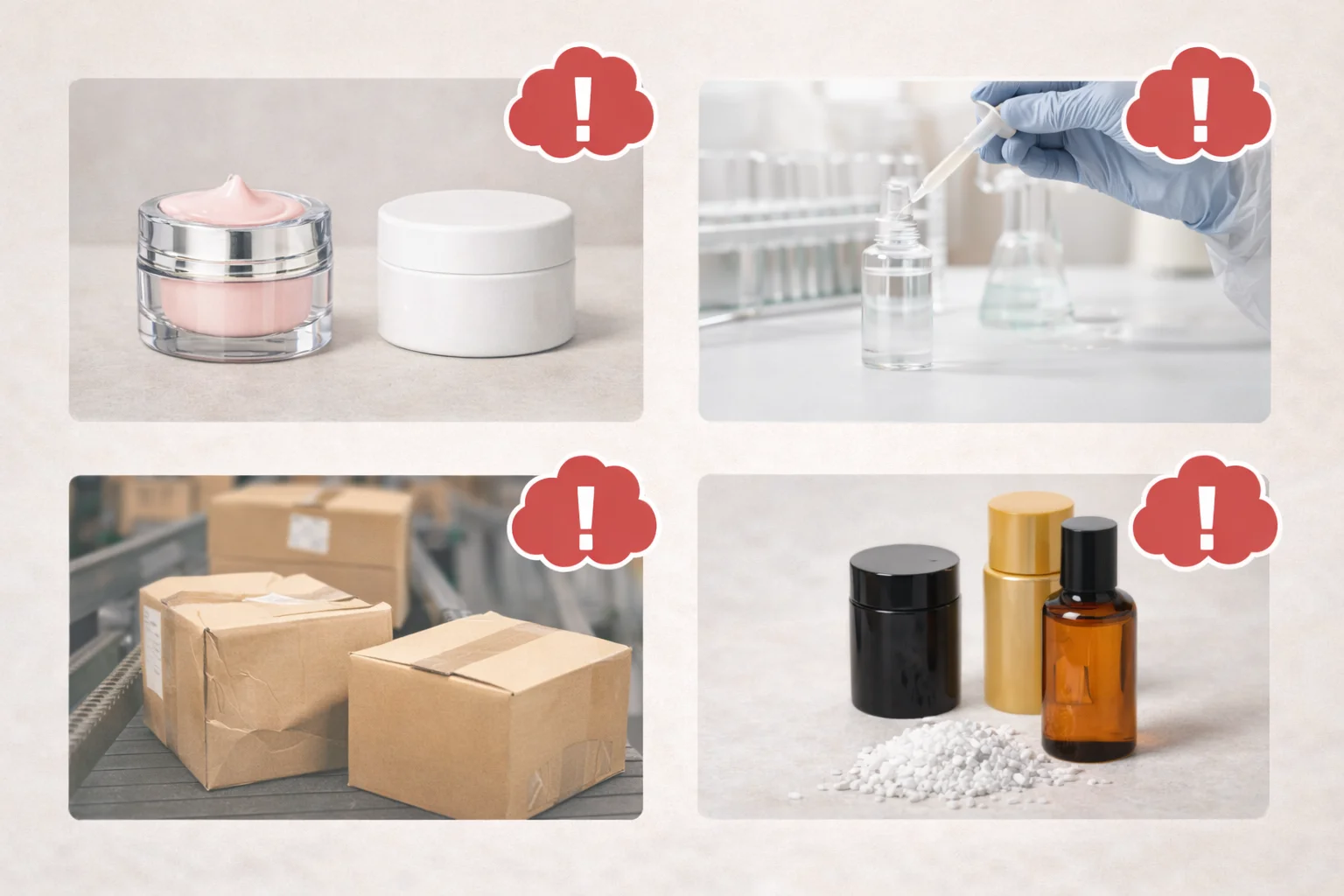
I see the same mistakes over and over. They are almost always avoidable with a little bit of foresight. Here are the top three I wish every brand knew about.
Mistake 1: Falling in Love with a Sample
A brand founder will hold a beautiful, heavy acrylic sample jar and say, "This is it! This feels so luxurious." What they don't see is how that material behaves in the real world. We once had a client who insisted on acrylic for their face oil. The samples looked stunning. But during the first production run, we saw a 10% failure rate from stress cracking caused by the formula. Then, another 5% were damaged during shipping because acrylic is brittle. They chose the material based on how it felt in a meeting room, not how it would perform in the supply chain. We could have achieved a similar premium feel with a thick-wall PETG[^12]](https://en.wikipedia.org/wiki/Polyethylene_terephthalate)[^4]G jar that was more durable and compatible, but by then it was too late.
Mistake 2: Skipping or Rushing Compatibility Tests
This is like playing Russian roulette with your product. A brand once rushed a launch and only did a two-week compatibility test. Everything looked fine. But six weeks after the product hit the shelves, customer complaints started rolling in. The color of the cream was turning yellow. The plastic[^1] they chose, a specific grade of PP[^7], was slowly reacting with a fragrance ingredient. The reaction wasn't visible in two weeks, but it was a disaster over two months. A full 8-week test would have caught this.
Mistake 3: Designing in a Vacuum
Your packaging doesn't just exist on a shelf. It has to be filled. Some products are "hot-filled," where the formula is poured at a high temperature. If you choose a material with a low melting point, like some grades of PET[^4], the container will deform on the filling line. You also need to think about decoration. Some materials are easy to print on, while others require special surface treatments, adding cost[^2] and complexity. You must think about the entire process, from molding to filling to shipping, when you choose your material.
Which Plastic is the Most Expensive?
You need to manage your budget carefully. The cost[^2] of plastic[^1] materials can be confusing, and the "most expensive" isn't always obvious because it's about more than just the raw material.
Generally, PMMA[^11] (Acrylic) and PETG[^12]](https://en.wikipedia.org/wiki/Polyethylene_terephthalate)[^4]G are the most expensive raw materials due to their glass-like clarity and premium feel. On the other end, HDPE[^5] and PP[^7] are typically the most affordable, making them ideal for mass-market products. But total cost[^2] also includes manufacturing complexity.
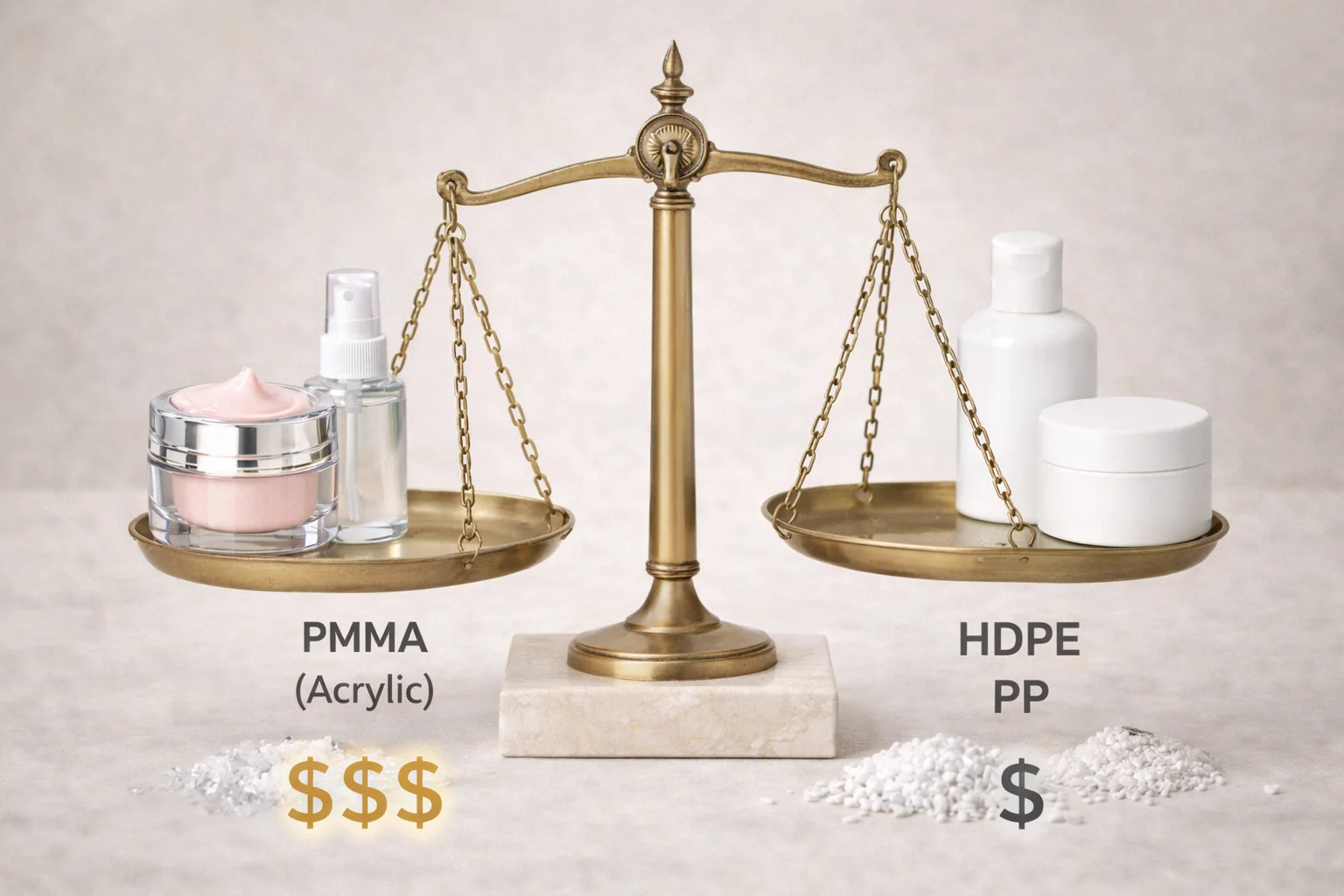
Let's break down the cost[^2] into tiers. This is a general guide, as market prices for raw materials can fluctuate, but the hierarchy usually stays the same.
Tier 1: The Premium Players (Most Expensive)
- PMMA[^11] (Acrylic): This is the king of cost[^2]. The raw material is expensive, and it requires slower, more precise injection molding processes to achieve that perfect, bubble-free clarity. Its weight also adds to shipping cost[^2]s.
- PETG[^12]](https://en.wikipedia.org/wiki/Polyethylene_terephthalate)[^4]G: Close behind acrylic, PETG[^12]](https://en.wikipedia.org/wiki/Polyethylene_terephthalate)[^4]G offers superior toughness but at a high price point. It's also a more specialized material, so production runs can be more expensive.
Tier 2: The Mid-Range Performers
- PET[^4] & SAN[^9]: Standard PET[^4] is a mid-range material that offers a fantastic balance of clarity, performance, and cost[^2]. It's why it's so popular. SAN[^9] is a stiffer, more brittle alternative to acrylic, offering great clarity at a slightly lower cost[^2], but with less impact resistance.
Tier 3: The Cost-Effective Workhorses (Most Affordable)
- PP[^7] & HDPE[^5]: These are commodity plastic[^1]s. They are produced in massive quantities globally, which keeps the raw material cost[^2] low. They are also very easy and fast to mold, which reduces manufacturing cost[^2]s. For caps, closures, and basic bottles and jars, these materials are the go-to for keeping cost[^2]s down.
It's important to remember that the final cost[^2] of your component isn't just the plastic[^1]. A complex design with a simple PP material can end up being more expensive than a simple design with a premium PETG material because of tooling costs and cycle times.
What is the Factory Insight Most Brands Don’t Know?
You want an insider's edge in a competitive market. Too many brands operate with major blind spots about how their products actually get made. Here is the single biggest thing we see from the factory floor.
The biggest secret is that early and open collaboration with your packaging supplier is your most powerful tool. Discussing your formula, target cost, and ideal user experience upfront allows the factory to suggest better, cheaper, or faster material options you hadn't even considered.
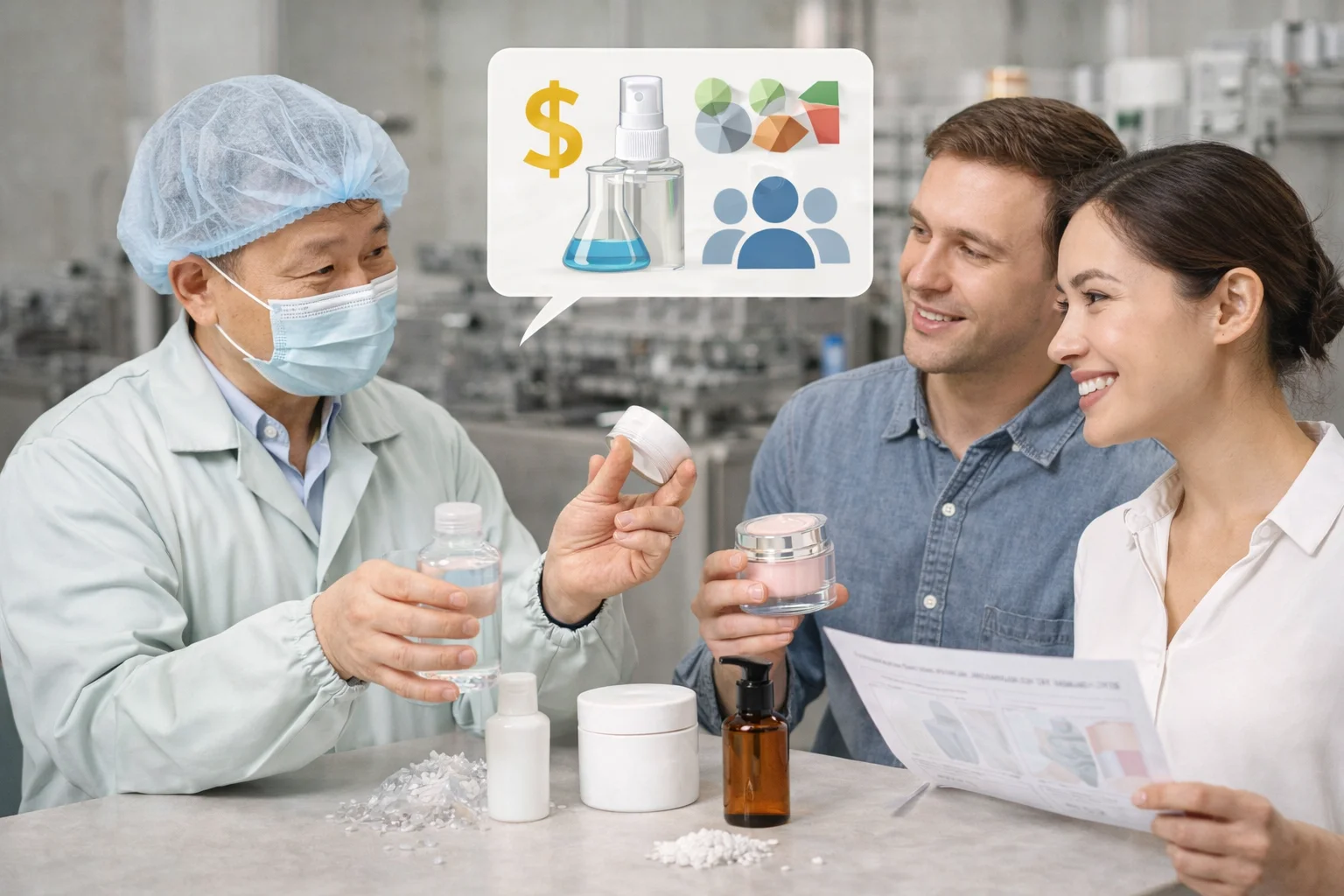
The most successful projects I've ever worked on were not with clients who came to us with a perfect, finished design. They were with clients who came to us with a problem. They would say, "Here is our formula. Here is our target customer. We want it to feel premium but need to hit a $1.50 cost per unit. What do you suggest?" This changes everything. It turns us from a simple manufacturer into a partner.
I remember a client who was set on a heavy glass jar for their new face cream. Their branding was all about luxury. But their shipping costs were going to be astronomical, and they were worried about breakage. They came to us with this problem. We showed them a new type of thick-wall PET jar. It was engineered to have the same visual weight and feel as glass, but it was a fraction of the weight and shatterproof. This simple change cut their packaging cost by 30% and their shipping cost by even more. They got the luxury feel without the logistical nightmare. They would have never found this option on their own.
This is the power of partnership. Small decisions, guided by manufacturing expertise, have a huge impact. Switching from a custom-shaped cap to a stock cap in the same material can save thousands in tooling. Adjusting the wall thickness of a jar by half a millimeter can reduce cycle time and material cost without the customer ever noticing. The best packaging isn't the most expensive one; it's the one that is perfectly aligned with your formula, your brand, and your supply chain. Don't just send your supplier a purchase order. Send them your vision and your challenges, and let them help you build it.
Conclusion
Choosing the right plastic is a crucial decision. It's a balance of matching your formula, brand message, and budget. Partnering with your supplier early is the key to avoiding mistakes and finding the best solution.
[^1]: Understanding the various types of plastic can help you make informed choices for your packaging needs.
[^2]: Learn strategies to manage packaging costs while maintaining quality and functionality.
[^3]: Explore the best materials for cosmetic packaging to ensure product safety and brand reputation.
[^4]: Learn about PET plastic, its properties, and why it's commonly used in packaging.
[^5]: Discover the advantages of HDPE for packaging and why it's a popular choice.
[^6]: Find out how LDPE is used in various applications and its benefits in packaging.
[^7]: Understanding PP's properties can help you choose the right material for your packaging.
[^8]: Explore the uses of Polystyrene in packaging and its advantages and disadvantages.
[^9]: Learn about SAN and its applications in packaging for better decision-making.
[^10]: Discover the unique characteristics of ABS and its suitability for various applications.
[^11]: Explore the benefits of PMMA in packaging and why it's chosen for luxury products.
[^12]: Learn about PETG's advantages and why it's a preferred choice for high-end packaging.
[^13]: Understand the importance of PCR plastic in sustainable packaging solutions.
[^14]: Understand the relationship between product formula and packaging material selection.
[^15]: Explore how brand positioning influences packaging design and consumer perception.
[^16]: Discover how packaging design influences user experience and customer satisfaction.
[^17]: Explore the significance of chemical compatibility in ensuring product safety.
[^18]: Learn how the durability of plastic impacts your packaging decisions and product safety.
[^19]: Explore sustainable packaging options to align your brand with eco-friendly practices.