Choosing the right plastic feels overwhelming. Make the wrong call, and you risk product failure and wasted money. This guide simplifies the process to help you choose with confidence.
Choosing the right thermoplastic[^1] means balancing performance[^2], cost, and your manufacturing process[^3]. It is not about finding the "best" material, but the right fit for your product's specific needs, like durability, chemical resistance[^4], clarity[^5], and your overall budget[^6].
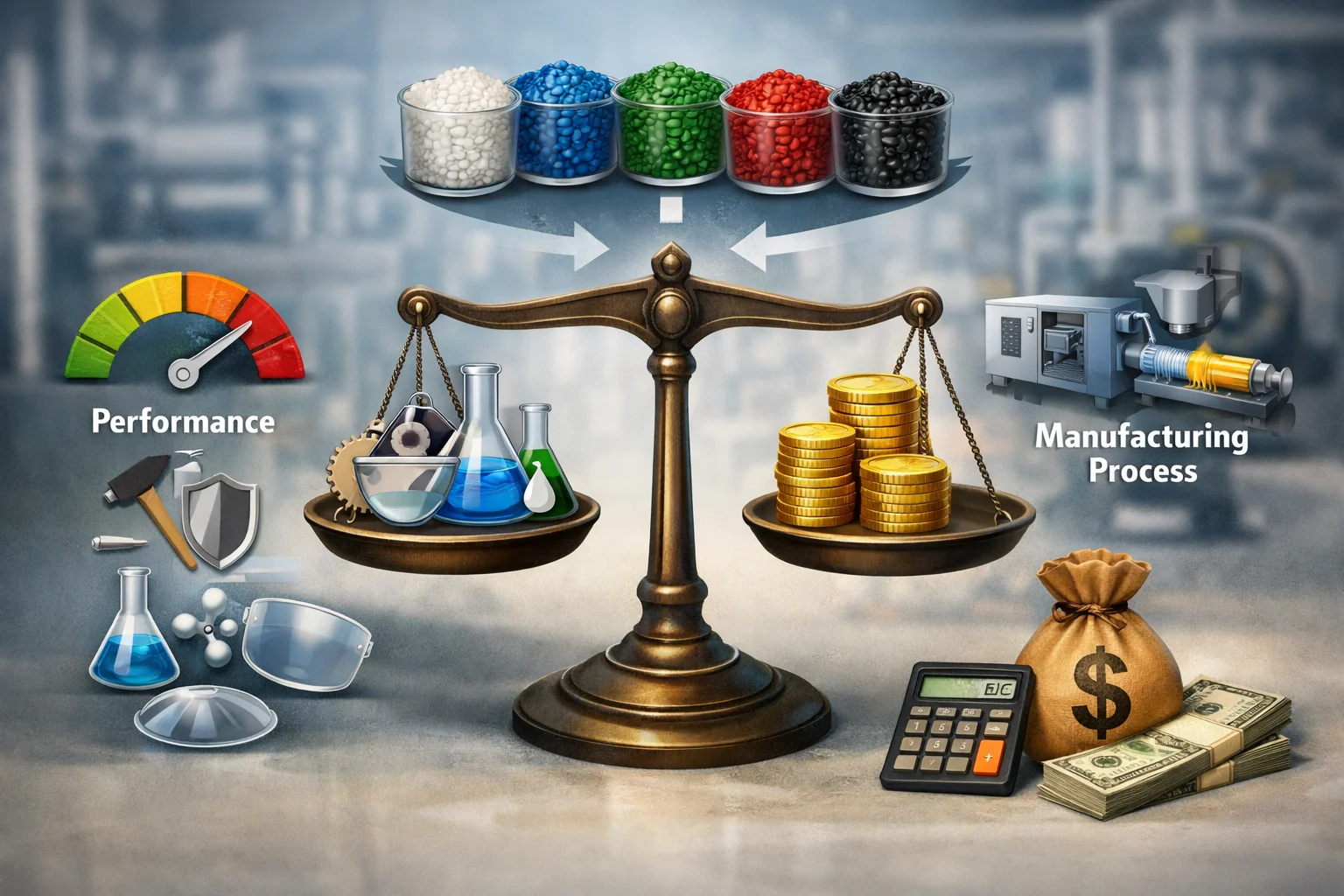
I have seen countless projects get delayed or fail because of a simple material choice made at the very beginning. It's a costly mistake, but it's also avoidable. To get it right, we need to start with the basics and understand what these materials actually are and why that matters for your business. Let's break this down so it doesn't happen to you.
What Are Thermoplastics, and Why Should You Care?
Struggling with complex plastic jargon? It often feels like a different language. I am going to explain thermoplastic[^1]s in simple terms that you can actually use for your business decisions.
Thermoplastics are plastics you can heat to soften and cool to harden, over and over again. Think of it like melting and re-freezing wax. This unique property makes them easy to mold into packaging and ideal for recycling into new products.
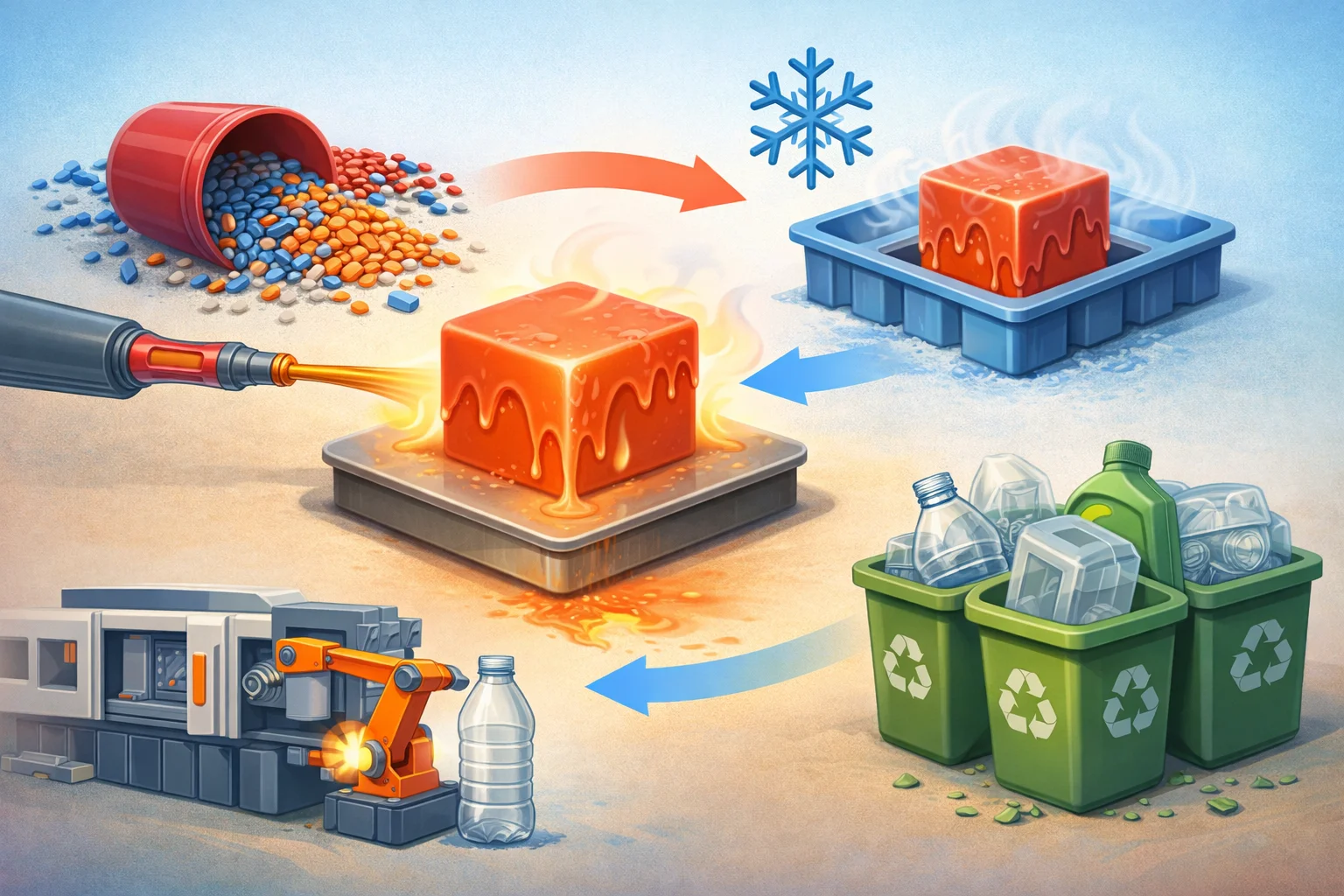
At their core, thermoplastic[^1]s are made of long chains of molecules called polymer[^7]s. When you heat them up, these chains can slide past each other, making the material soft and moldable, like a bowl of cooked spaghetti. When you cool it down, the chains lock back into place, and the material becomes solid again. This is very different from the other main category of plastics, called thermosets[^8]. Once you heat and shape a thermoset, that’s it. You cannot remelt it. I remember a client who confused the two and designed a product with a thermoset, thinking they could easily recycle the production waste. That was an expensive learning experience. Understanding this basic difference is the first step in choosing the right material family for your needs.
| Feature | Thermoplastics | Thermosets |
|---|---|---|
| Reaction to Heat | Soften when heated, harden when cooled | Permanently set after initial heating |
| Recyclability | Generally recyclable | Difficult or impossible to recycle |
| Common Examples | PET[^9] (water bottles), HDPE[^10] (milk jugs) | Epoxy, Silicone, Polyurethane |
| Molecular Structure | Long chains with weak bonds | Cross-linked chains with strong bonds |
Why Do Thermoplastics Matter More Than You Think?
Do you think one plastic is pretty much the same as another? This common mistake can cost your business dearly. The right material choice directly impacts your product's safety and your bottom line.
Thermoplastics are crucial because they directly affect product performance[^2], manufacturing costs, and how customers see your brand. The material determines if a container leaks, protects its contents, feels premium, or fits within your budget[^6]. Getting this wrong leads to failures.
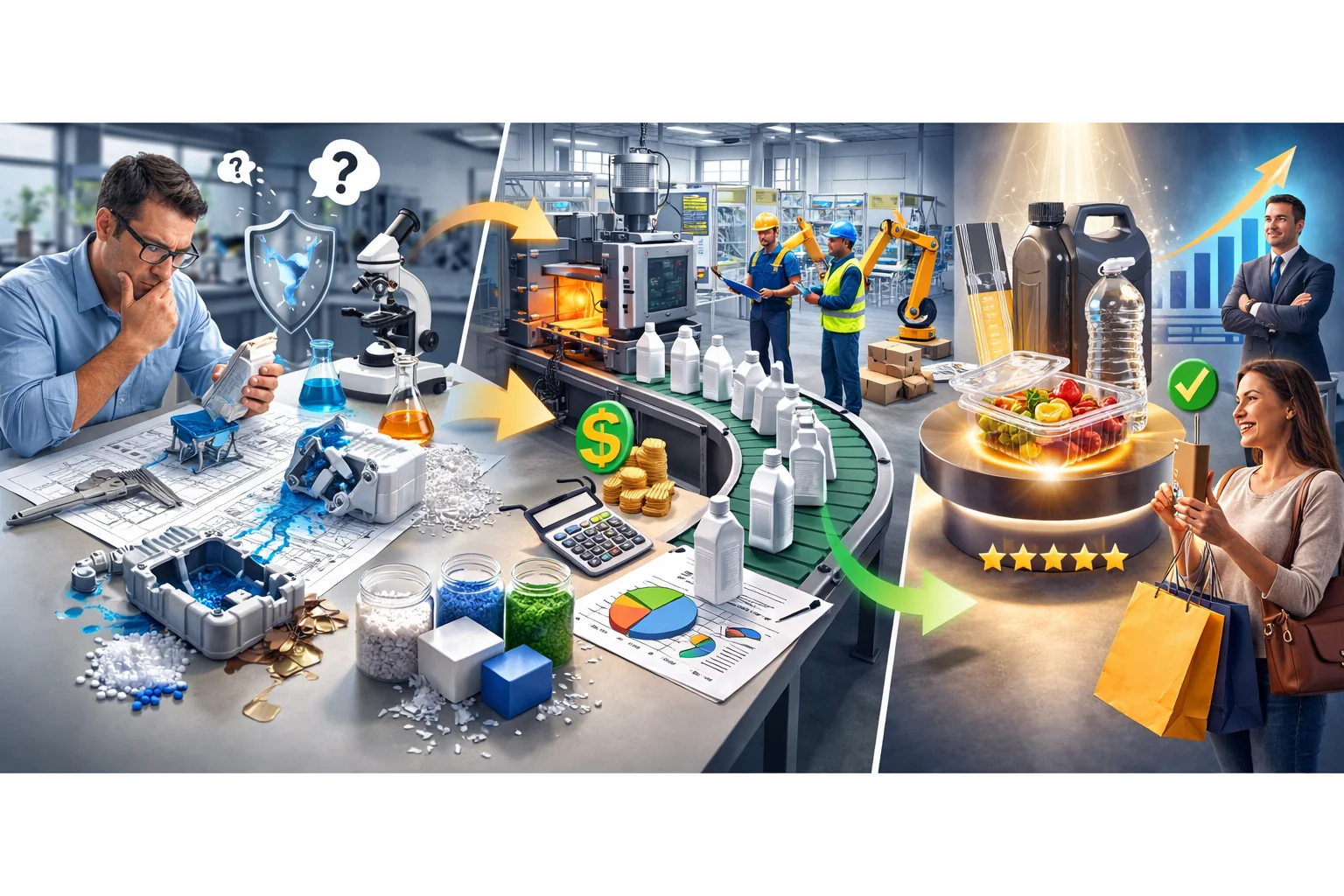
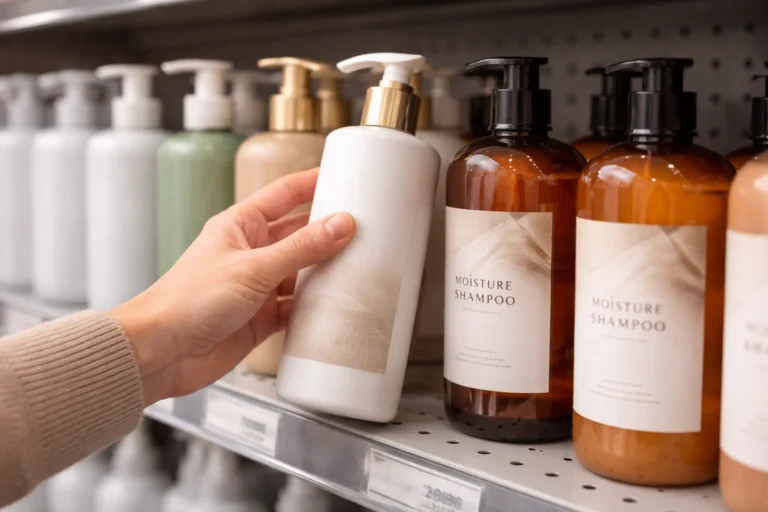
The plastic you choose is a huge part of the customer's experience. I once worked with a skincare brand that chose a bottle based on the lowest possible price. The plastic was thin and felt flimsy, which made their expensive lotion feel cheap. Worse, the material wasn't fully compatible with some of the oils in their formula, and after a few months, some bottles started to deform on the shelf. They saved a few cents per bottle but damaged their brand's reputation. Your packaging is the first physical interaction a customer has with your product. It needs to protect the contents, of course. But it also needs to reflect the quality inside. A good thermoplastic[^1] choice ensures product integrity, works efficiently in your supply chain[^11], and supports the premium feel you want to deliver.
What Are the Main Types of Thermoplastics and When Should You Use Each One?
Are you overwhelmed by all the plastic acronyms like PET[^9], HDPE[^10], and PP[^12]? It's easy to get lost. Choosing the wrong one is a common and costly pitfall. Let's simplify the main options.
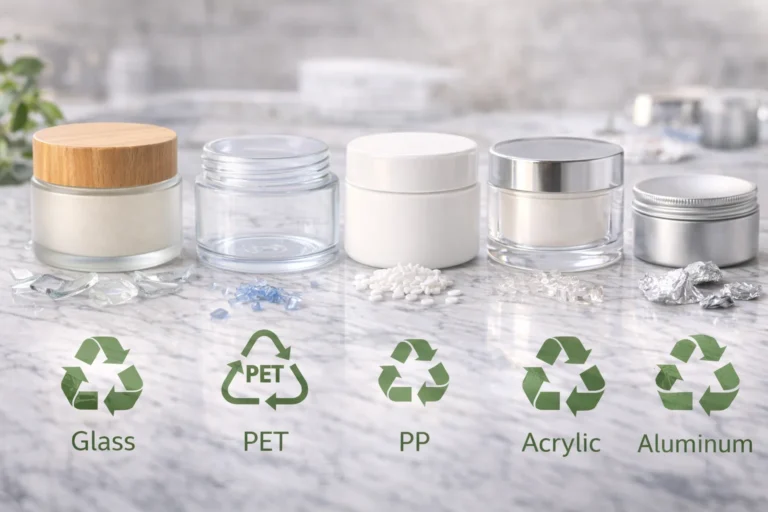
Common thermoplastic[^1]s include PET[^9] for clear bottles; HDPE[^10] for sturdy jugs; PVC[^13] for shrink wrap; LDPE[^14] for flexible films; PP[^12] for caps and hot-fill containers; and PS[^15] for rigid items. Each type has a specific job it does best.
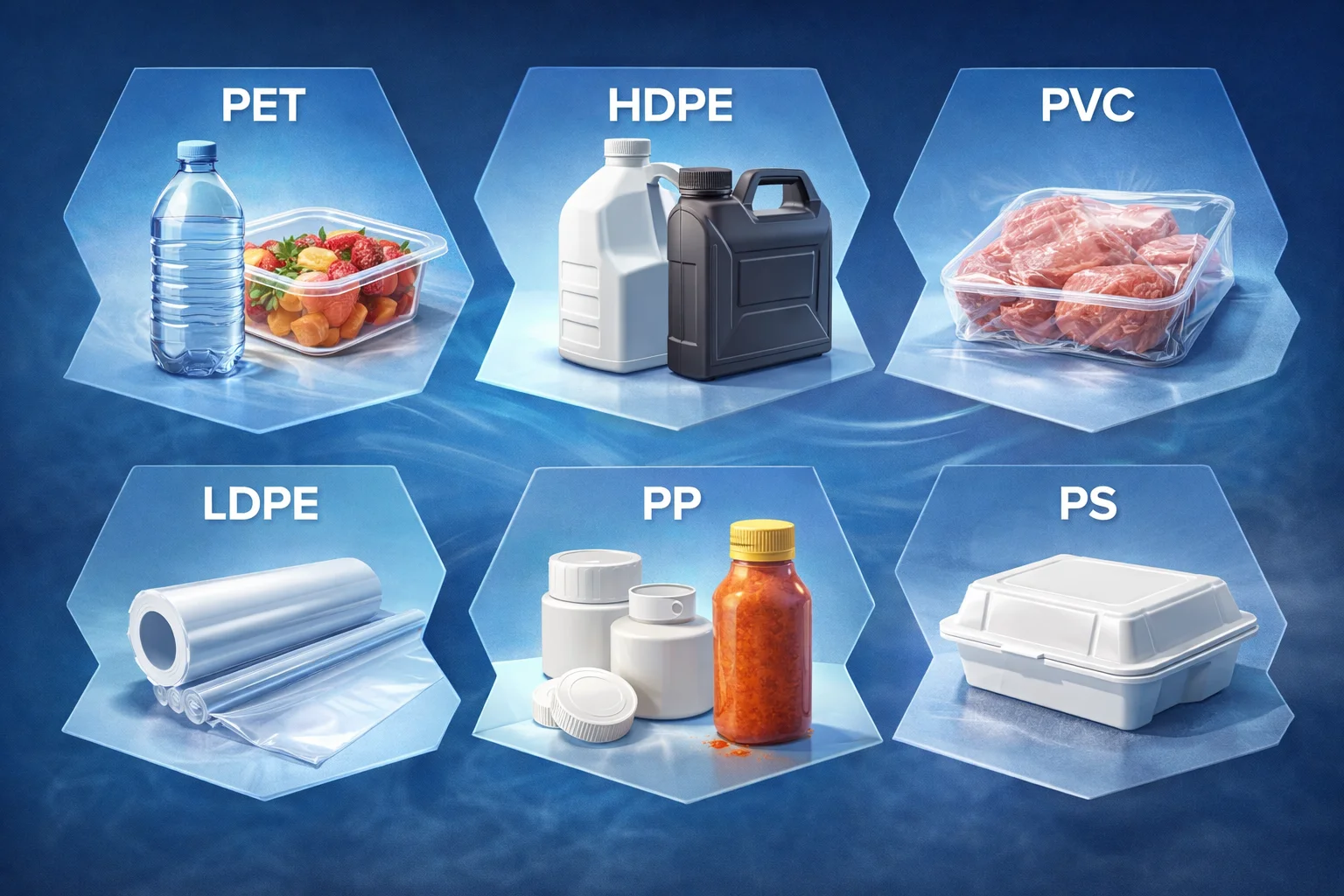
Choosing the right type is about matching the material's strengths to your product's needs. You wouldn't use the same plastic for a microwaveable soup container as you would for a water bottle. One needs to handle high heat, and the other needs to be crystal clear and strong. I've put together a simple table to help you see the differences at a glance. I tell my clients to use this as a starting point. We can always get into more specialized grades, but mastering these basics will help you avoid 90% of common material selection errors. Think about what your product absolutely needs to do, and find the material that checks those boxes without adding unnecessary cost for features you don't need.
| Acronym | Full Name | Common Uses | Key Properties | Potential Downsides |
|---|---|---|---|---|
| PET[^9] | Polyethylene Terephthalate | Soda/water bottles, jars | Excellent clarity[^5], good barrier | Poor high-heat resistance |
| HDPE[^10] | High-Density Polyethylene | Milk jugs, shampoo bottles | Strong, cheap, good chemical resistance[^4] | Usually opaque, not clear |
| PP[^12] | Polypropylene | Yogurt cups, caps, car parts | High melting point, tough | Can be brittle in cold temps |
| LDPE[^14] | Low-Density Polyethylene | Squeeze bottles, plastic bags | Very flexible, soft | Poor strength, poor gas barrier |
| PVC[^13] | Polyvinyl Chloride | Pipes, shrink wrap, siding | Durable, cheap, versatile | Environmental concerns (chlorine) |
| PS[^15] | Polystyrene | Disposable cups, foam packaging | Rigid, clear, good insulator | Brittle, poor chemical resistance[^4] |
How Do You Choose the Right Thermoplastic for Your Product?
Are you afraid of making a costly material mistake that will haunt your project? You are not alone in this. I'll give you a simple framework to guide your decision and bring clarity[^5].
To choose the right thermoplastic[^1], evaluate your product's needs. Consider chemical compatibility, temperature exposure, required flexibility or rigidity, clarity[^5], and your budget[^6]. Always balance these factors against your manufacturing process[^3] to find the most efficient solution for your application.
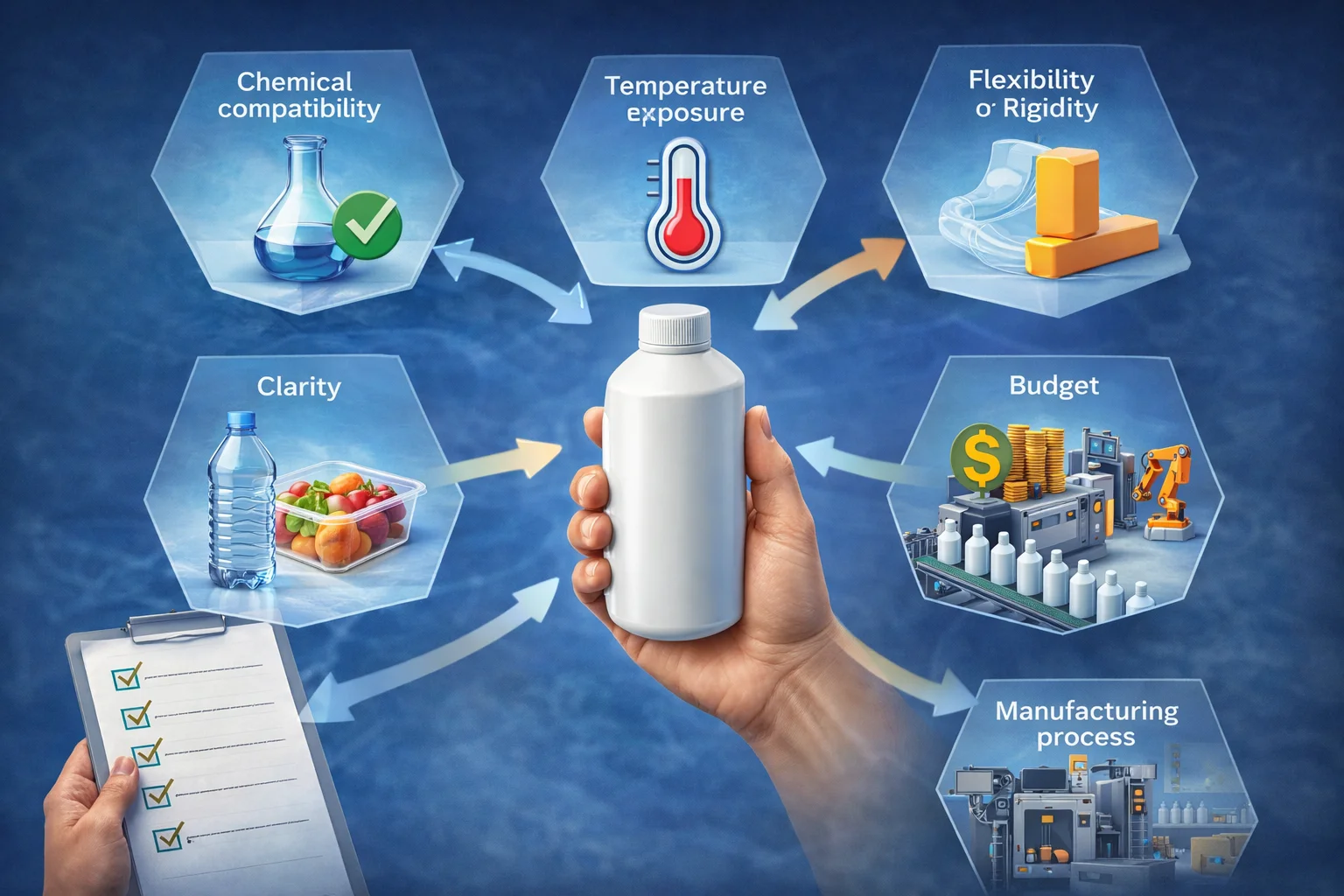
From my experience in manufacturing, the "best" material doesn't exist. There is only the "right fit" for your specific product and supply chain[^11]. To find it, you need to ask the right questions from the very beginning. Don't just ask, "What's the cheapest option?" Instead, create a checklist. What are you putting inside the container? Is it an aggressive chemical or a simple water-based formula? What journey will the product take? Will it be filled with hot liquid, frozen, or shipped across a desert? What should it look and feel like? Do you need perfect clarity[^5] to show off the product, or is an opaque color better? And finally, how will this be made? A material that is perfect on paper might be difficult to run in your specific mold, slowing down production and increasing costs. Answering these questions first will guide you to a smart, balanced choice that considers performance[^2], cost, and scalability all at once.
Where Do You See Thermoplastics in Real Packaging Applications?
Want to see how these materials work in the real world? Theory is one thing, but looking at practical examples from the grocery store shelf really makes the concepts click.
You see thermoplastic[^1]s everywhere. PET[^9] is your clear soda bottle. HDPE[^10] is your sturdy milk jug or shampoo bottle. PP[^12] makes up your yogurt cups and bottle caps. These materials are chosen for very specific performance[^2] reasons that match their function.
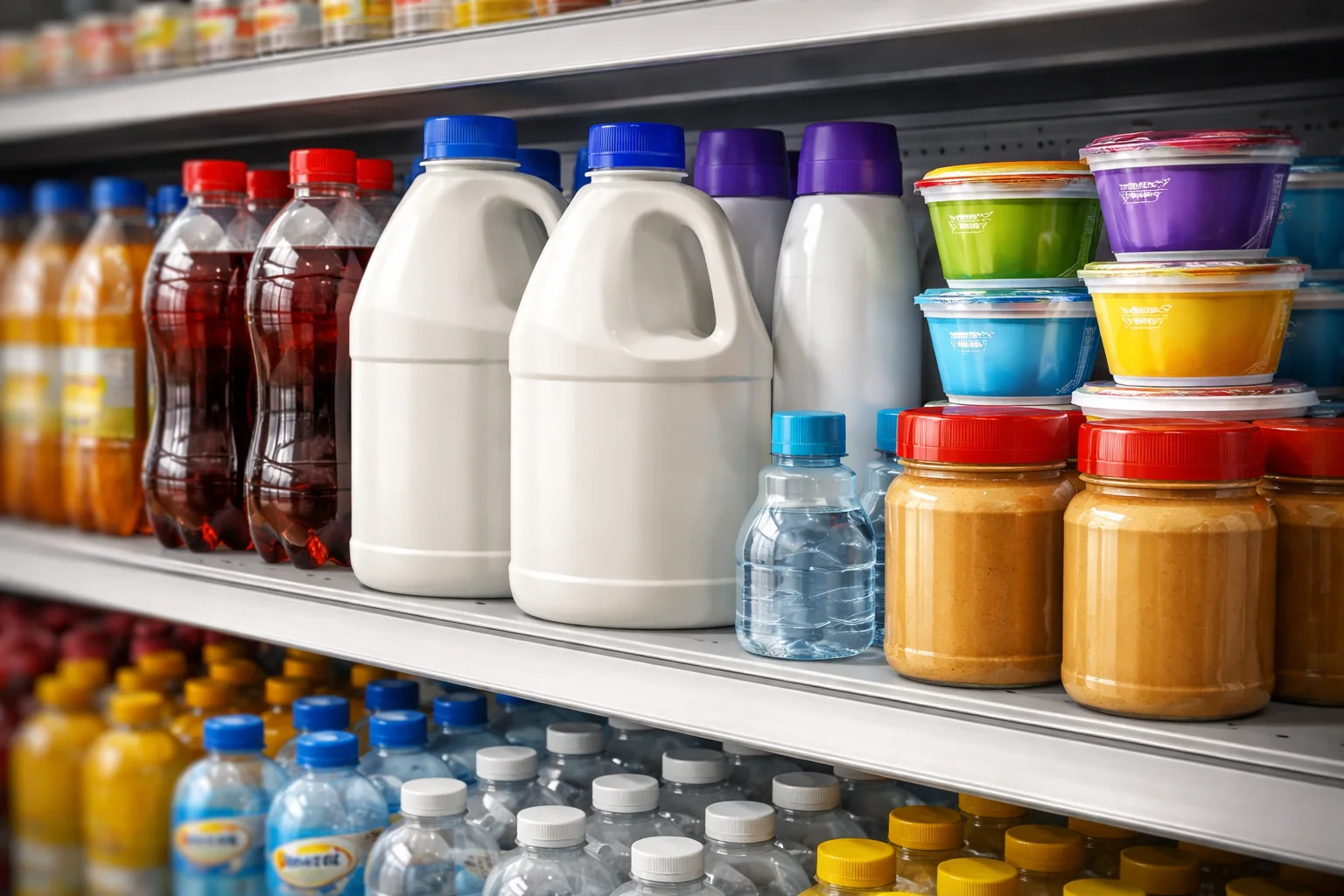
Let's walk through a few common examples to see why these choices are made.
- Case Study 1: The Soda Bottle. This is almost always made from PET[^9]. Why? First, PET[^9] has excellent clarity[^5], so you can see the drink inside. Second, it has a great gas barrier, which is crucial for keeping the carbonation from escaping. Finally, it's strong yet lightweight, which is perfect for shipping.
- Case Study 2: The Milk Jug. This is a classic application for HDPE[^10]. Milk doesn't need a gas barrier, and it doesn't need to be in a clear container. The top priorities are low cost, toughness to prevent leaks, and good resistance to the fats and acids in milk. Natural, unpigmented HDPE[^10] fits this perfectly.
- Case Study 3: The Microwaveable Cup. Many yogurt cups and microwave-safe containers are made from PP[^12]. The single most important property here is heat resistance. PP[^12] has a high melting point, so it won't warp or melt when you use it for hot-fill products or when a consumer puts it in the microwave.
Each of these choices is a deliberate engineering decision that balances performance[^2] and cost.
What Common Mistakes Do Buyers Make and How Can You Avoid Them?
We all want to avoid those expensive, time-consuming errors. I have seen smart companies make the same handful of plastic selection mistakes over and over again. Let's make sure you don't repeat them.
The biggest mistakes are choosing based only on price, ignoring material compatibility with the product, and not considering the manufacturing process[^3]. To avoid this, test thoroughly, consult with your manufacturer, and think about the product's entire lifecycle from the start.
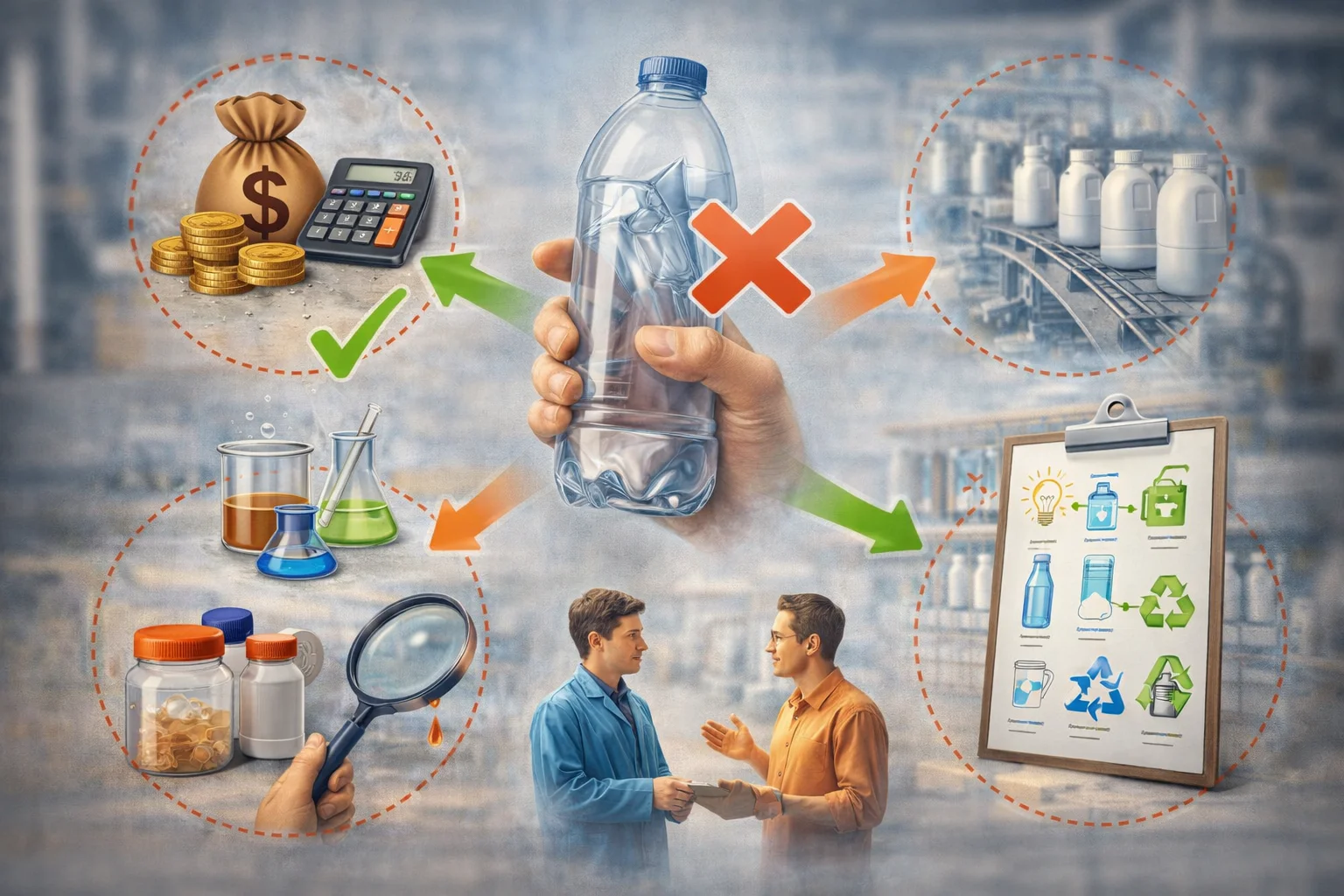
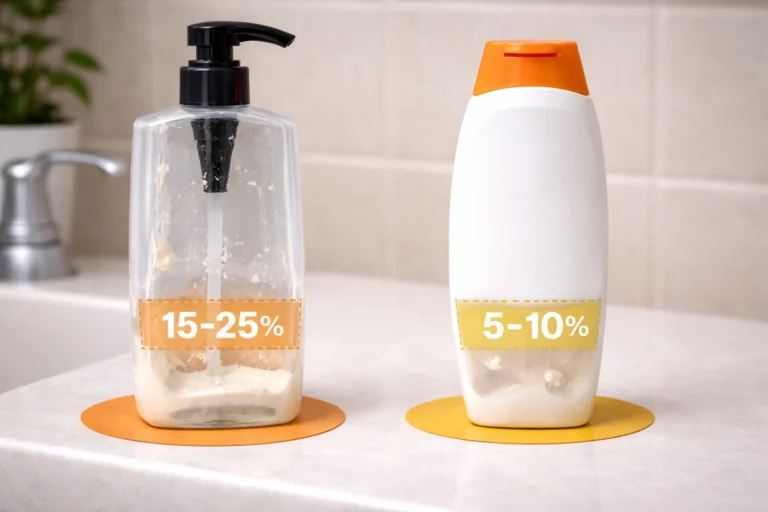
I cannot stress this enough: do not choose a material based on price alone. I once had a client who switched to a slightly cheaper HDPE[^10] for their detergent bottles. They saved about 5% on material costs. But the new material was less resistant to a specific chemical in their formula. Over six months, a small percentage of bottles developed tiny stress cracks and leaked during shipping. The cost of returns and damaged reputation was ten times what they "saved." This highlights the three big mistakes. First, they focused only on price. Second, they didn't do long-term compatibility testing. Third, they didn't fully consider the stress of the supply chain[^11] journey. The way to avoid this is simple: test your actual product in the final package. And talk to your manufacturing partner. They know how these materials behave in the real world and can help you avoid problems before they start.
Are Thermoplastics Sustainable, or Is That Just Greenwashing?
Is "sustainable plastic" a real thing, or is it just a marketing term? The answer is complicated, but it is important. Let's look at the real facts beyond the headlines.
Thermoplastics can be a part of a sustainable solution because many are highly recyclable, like PET[^9] and HDPE[^10]. Their ability to be remelted reduces the need for new raw materials. However, true sustainability[^16] depends heavily on consumer participation and robust recycling infrastructure.
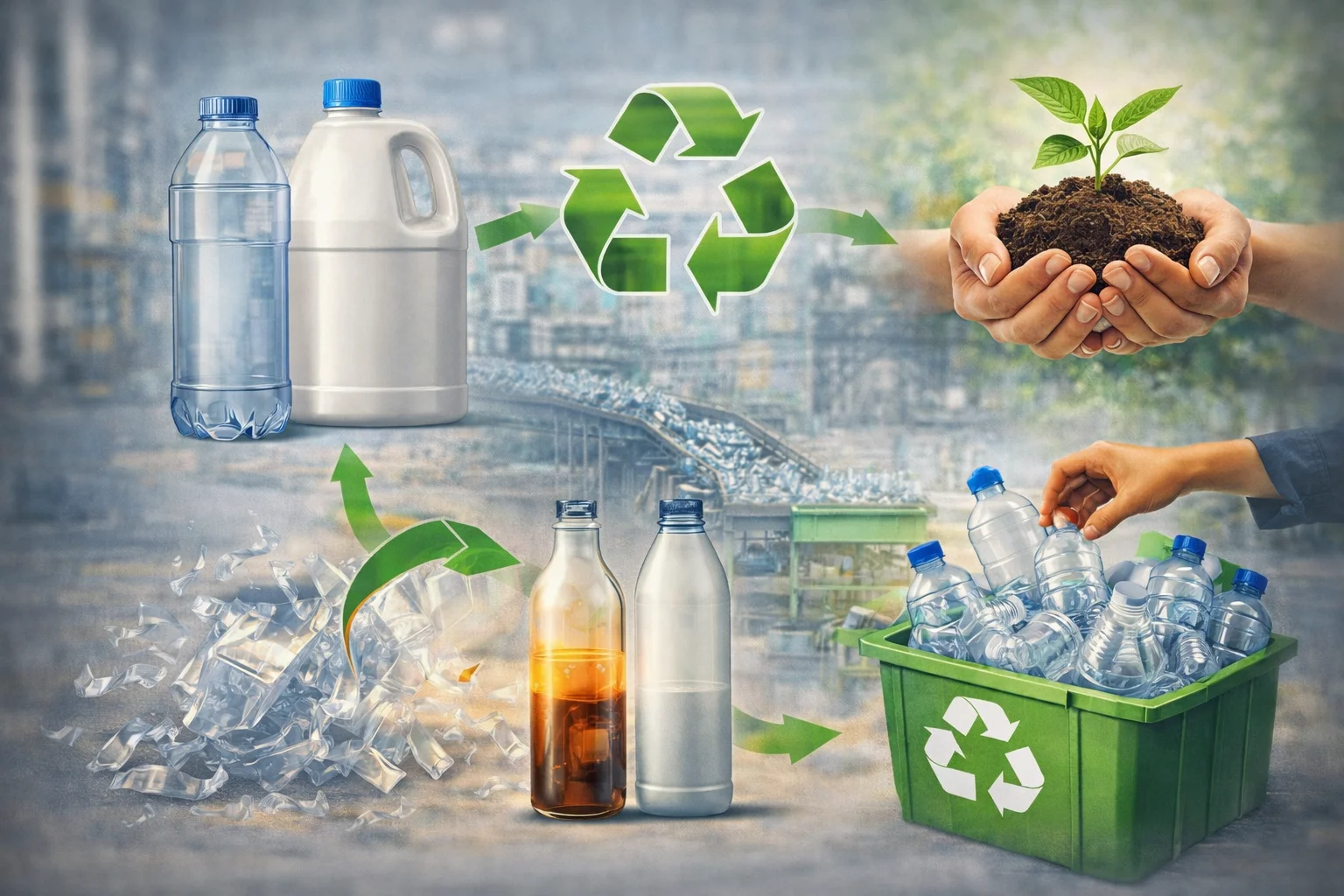
The key advantage of thermoplastic[^1]s is their recyclability[^17]. Unlike many other materials, you can melt them down and form them into new products, which is a huge environmental win. This process creates what we call PCR, or Post-Consumer Recycled, content. Many brands are now actively seeking to use bottles made with 50% or even 100% PCR plastic to reduce their reliance on virgin, petroleum-based materials. However, the system is not perfect. It relies on people actually putting the bottle in the recycling bin and on cities having the facilities to sort and process it. There is also a growing market for bio-based thermoplastics[^18]](https://en.wikipedia.org/wiki/Thermoplastic_elastomer)[^1]s, which are made from renewable resources like corn or sugarcane instead of oil. Each path—virgin, recycled, and bio-based—has its own set of pros and cons related to energy use, performance[^2], and cost. The most sustainable choice often depends on the specific product and the recycling systems available in the region where it will be sold.
How Are Thermoplastic Products Actually Made?
Have you ever wondered how a handful of tiny plastic pellets becomes a perfectly formed bottle? The manufacturing process[^3] is actually pretty straightforward in concept. Let me break down the simple version.
Most thermoplastic[^1] products are made using processes like injection molding[^19] or blow molding[^20]. In both, plastic pellets are melted down. The liquid plastic is then forced into a mold, where it cools and hardens into the final desired shape.
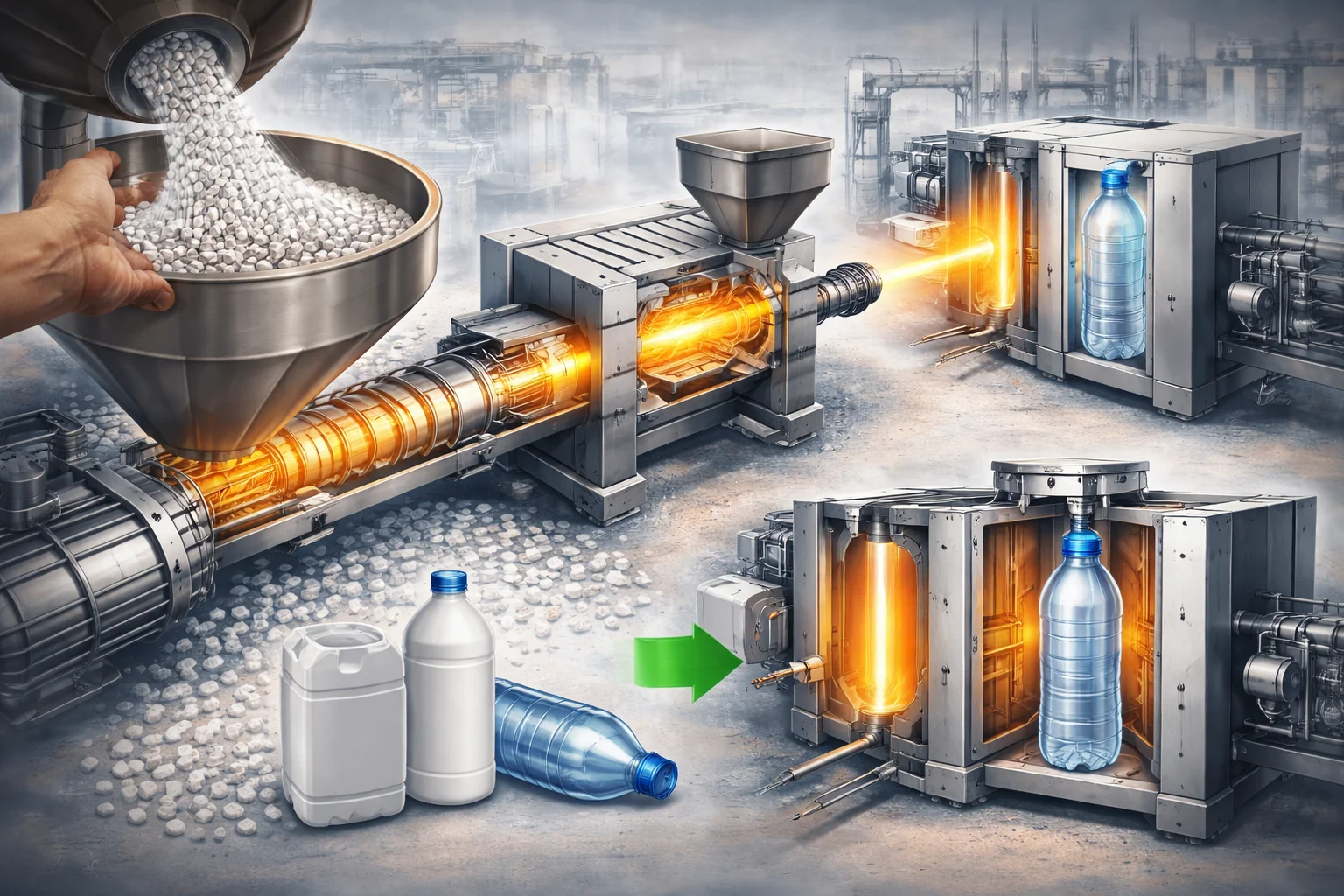
Let's look at the two most common methods for packaging.
- Injection Molding: Think of this like a very powerful, precise hot glue gun. It is used to make solid, detailed parts like bottle caps, jars, and lids. First, plastic pellets are melted in a barrel. Then, a screw pushes the liquid plastic at high pressure into a closed metal mold. Water circulates through the mold to cool the plastic rapidly. Once it's solid, the mold opens, and the finished part is ejected. The whole cycle can take just a few seconds.
- Blow Molding: This is how we make hollow items like bottles and jugs. It's a bit like blowing a bubble inside a mold. First, a small tube of hot, soft plastic (called a parison) is created. A two-part mold closes around this tube, pinching one end shut. Then, compressed air is blown into the parison, inflating it like a balloon until it presses against the cold walls of the mold. The plastic cools, the mold opens, and you have a bottle.
Understanding these basics helps you have a more intelligent conversation with your manufacturer about how your material choice will affect production speed and quality.
Conclusion
Choosing the right thermoplastic[^1] is a balance of performance[^2], cost, and your manufacturing process[^3]. Understand these basics, and you will make a smarter, safer choice for your product's success.
[^1]: Explore the advantages of thermoplastics to understand their unique properties and applications in manufacturing.
[^2]: Learn how material performance can affect the quality and durability of your products.
[^3]: Get insights into the manufacturing processes that shape thermoplastic products.
[^4]: Discover the importance of chemical resistance in selecting the right thermoplastic for your product.
[^5]: Understand how clarity affects consumer perception and product visibility.
[^6]: Find strategies to optimize your budget while ensuring quality in material choices.
[^7]: Explore the fundamental role of polymers in the properties of thermoplastics.
[^8]: Understand the key differences between thermoplastics and thermosets to make informed choices.
[^9]: Discover the various applications of PET and its benefits in packaging solutions.
[^10]: Learn about the benefits of HDPE and its common applications in packaging.
[^11]: Understand the impact of material selection on supply chain efficiency and costs.
[^12]: Explore the properties and applications of polypropylene in the packaging industry.
[^13]: Learn about the environmental impact of PVC and its alternatives in packaging.
[^14]: Understand the unique properties of LDPE and its applications in flexible packaging.
[^15]: Discover the applications of polystyrene and its properties in packaging.
[^16]: Explore the sustainability aspects of thermoplastics and their role in eco-friendly packaging.
[^17]: Learn about the recycling processes that make thermoplastics a sustainable choice.
[^18]: Learn about bio-based thermoplastics and their advantages for sustainable packaging.
[^19]: Get insights into the injection molding process and its significance in manufacturing.
[^20]: Discover how blow molding is used to create various thermoplastic packaging products.