You've created an amazing formula, but customer complaints[^1] are rolling in. What if the problem isn't the product, but the beautiful jar it comes in?
Choosing packaging like jars[^2] for their looks exposes sensitive ingredients[^3] to air, light, and bacteria. This degrades the formula, leading to customer complaints[^1], returns, and damage to your brand's credibility. Protective packaging like airless pumps[^4] is a safer choice for modern formulas.
From my experience in manufacturing, I've seen this happen too many times. A brand invests heavily in a cutting-edge formula, only to see it fail because of a poor packaging choice. It's a silent brand killer. We see the "product complaints" come through, and often, the root cause is the packaging, not the formula itself. It's frustrating for everyone. So, let's break down exactly why this happens and what you can do about it.
Does Packaging Really Matter More Than Brands Think?
You believe your formula is everything. But the wrong packaging can ruin it before it even reaches the customer. Good packaging is your formula's first line of defense.
Yes. Packaging is not just a container; it's a delivery and preservation system. It protects your formula from light, air, and contamination, ensuring it remains stable and effective from the first use to the last. Poor packaging choices can lead to product degradation[^5] and customer dissatisfaction.
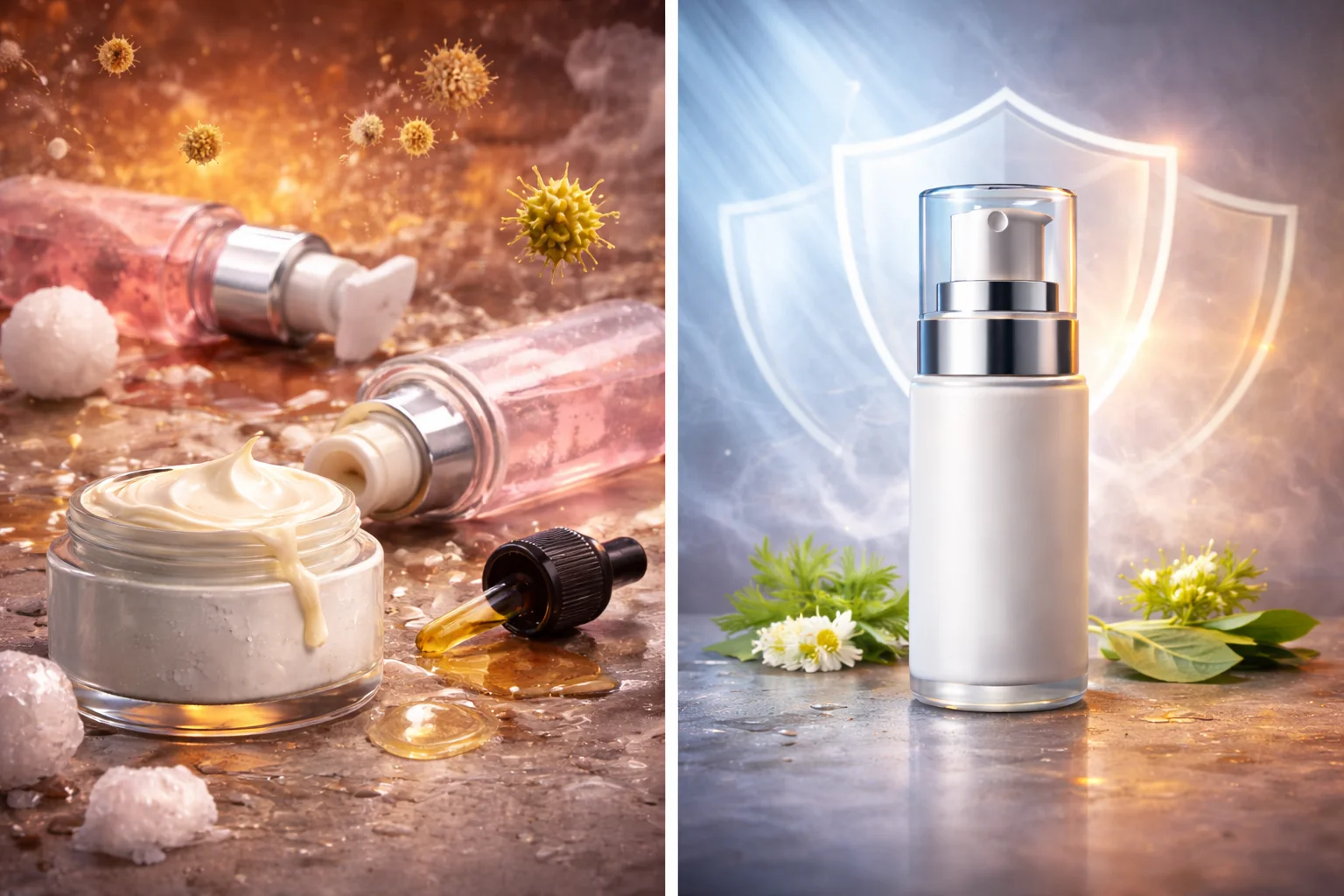
I think of it this way: packaging should protect your formula the same way a good formula protects the skin. It has a tough job to do long after it leaves our factory. Many brands focus only on how the package looks on a shelf. They want it to communicate luxury and catch the eye. That's important, but it's only one part of the story. The two most critical functions are often forgotten: containment and protection. Containment means the product doesn't leak during shipping. Protection means the formula inside stays exactly as we designed it. When you get a customer complaint about a product "going bad," it's almost always a failure of protection.
The Unseen Job of Packaging
Here’s a breakdown of what packaging really does, versus what many brands prioritize.
| Packaging Function | Brand Focus (Often) | Real-World Impact |
|---|---|---|
| Protection | Low Priority | Preserves ingredient stability & safety |
| Communication | High Priority | Conveys brand identity & looks good |
| Dispensing | Medium Priority | Controls dosage & user experience |
| Containment | Assumed | Prevents leaks & product loss |
Thinking about packaging this way changes everything. It shifts the focus from just marketing to product integrity[^6].
Are Jars a Real Risk for Modern Skincare Formulas?
Jars give your product a premium, classic feel. But with every use, your customer introduces air and contaminants, slowly destroying the formula you worked so hard on.
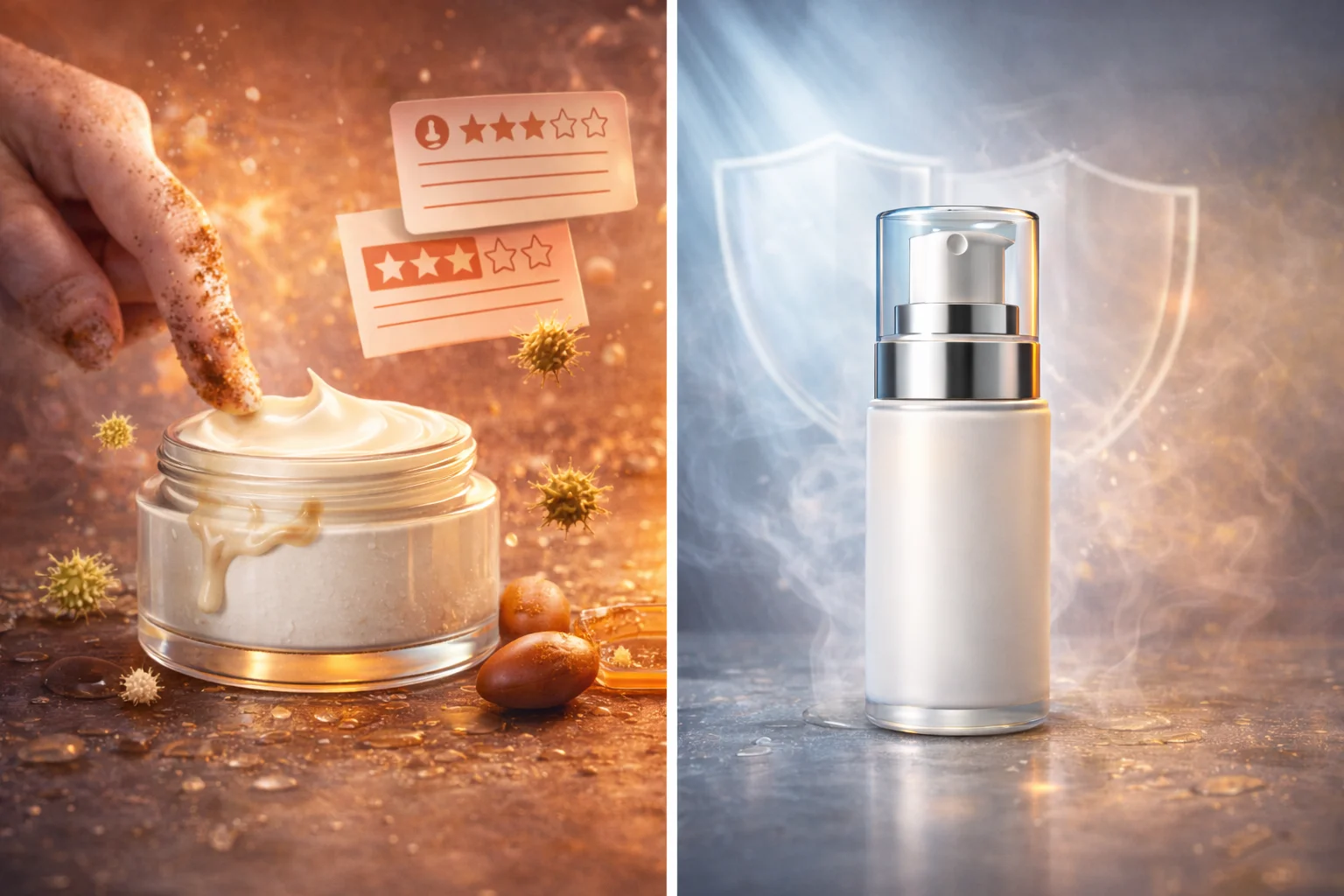
Yes, jars are a significant risk. The large surface area exposes the product to air and light with every use, causing oxidation[^7]. Repeatedly dipping fingers in introduces bacteria and other microbes, which can contaminate the formula, reduce its effectiveness, and even cause skin issues.
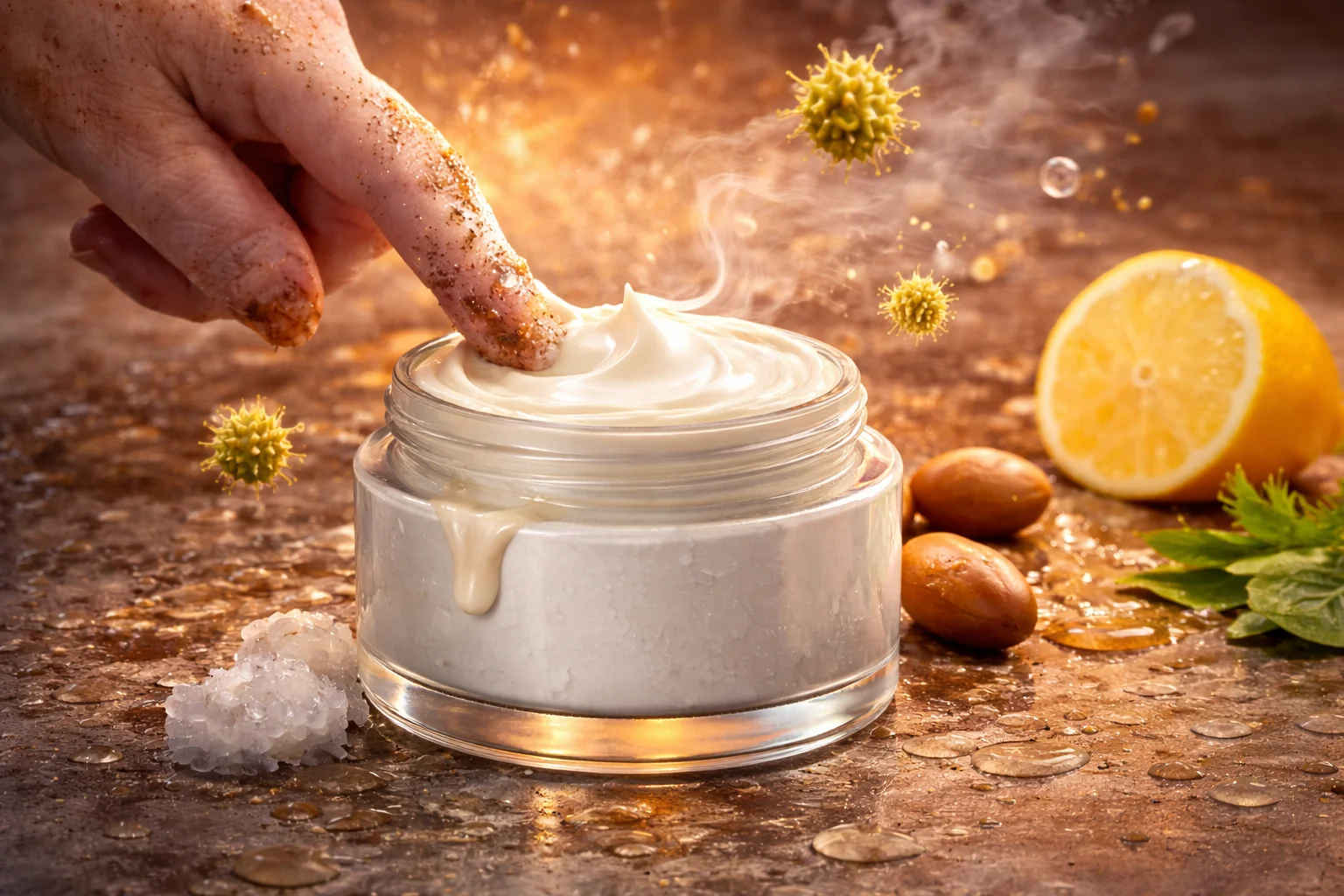
Your formula has three great enemies: air, light, and germs. A traditional screw-top jar is a welcome mat for all three. I've personally seen lab reports from stability testing where the same formula was placed in a jar and an airless pump. After three months of daily opening, the jar version showed significant degradation and higher microbial counts, while the airless pump version was nearly identical to the day it was made. This isn't a theory; it's a physical reality we deal with in the lab.
Enemy #1: Oxygen
Every time you open a jar, you expose the entire surface of the product to fresh oxygen. This causes oxidation[^7], which is the same process that turns a cut apple brown. For sensitive ingredients[^3] like antioxidants[^8], oxidation[^7] makes them completely useless.
Enemy #2: Light Exposure
Many jars are clear glass or plastic to show off the product's color and texture. But light, especially UV light, is a powerful energy source that breaks down active ingredients[^9]. Opaque or UV-coated packaging is essential for protecting light-sensitive molecules like retinol and Vitamin C[^10].
Enemy #3: Contamination
Even with clean hands, it is impossible not to introduce bacteria and yeast[^11] into a jar. These microbes then feast on the ingredients in your formula, compromising the preservative system and turning your beautiful cream into a petri dish. This is a primary cause of customer complaints[^1] about skin irritation or breakouts from a product they previously loved.
Which Ingredients Suffer the Most in Jar Packaging?
Your formula boasts high-performance actives like Vitamin C[^10] or antioxidants[^8]. In a jar, these expensive ingredients can degrade quickly, making your product's promises completely empty.
The most vulnerable ingredients are antioxidants[^8] like Vitamin C[^10] (Ascorbic Acid), Vitamin E, and Ferulic Acid. Retinoids (Retinol), certain peptides, and many plant extracts are also highly unstable. They degrade quickly when exposed to air and light, losing their potency and effectiveness in jar packaging.
You are paying a premium for these high-tech ingredients, so putting them in a jar is like buying a sports car and leaving it out in the rain to rust. It just doesn't make sense. You want your customer to get the full benefit of your amazing formula from the first pump to the last. That can only happen if the ingredients are protected. I remember a client who insisted on a jar for their expensive antioxidant serum. Within six months, they were dealing with widespread complaints that the product was turning brown and smelling "off." It was a classic case of oxidation[^7]. We switched them to an opaque airless bottle, and the complaints vanished overnight.
The Actives That Need Protection
Here is a quick reference for some of the most popular, and most fragile, ingredients in modern skincare.
| Ingredient | Why It's Unstable in a Jar | Best Packaging |
|---|---|---|
| Vitamin C[^10] (L-Ascorbic Acid) | Extremely prone to oxidation[^7] from air and light. Turns brown and becomes ineffective. | Opaque, airless pump. |
| Retinoids (Retinol) | Degrades rapidly with exposure to both light and air. Loses potency quickly. | Opaque, airless pump or aluminum tube. |
| Antioxidants (e.g., Green Tea, Resveratrol) | Neutralize free radicals by sacrificing themselves. Air exposure uses them up in the jar. | Airless pump or tube. |
| Peptides | Can be destabilized by microbial contamination or pH changes from exposure. | Airless pump or tube. |
Are There Better Packaging Options That Still Feel Premium?
You need to ditch the jar but fear losing that premium customer experience[^12]. You think pumps and tubes look basic. But there are protective options that feel just as luxurious.
Absolutely. Airless pump bottles and jars are the gold standard. They prevent air and contaminants from entering, protecting the formula. Opaque tubes with small orifices also work well. These options can be customized with high-end finishes, weights, and materials to maintain a premium, luxurious feel.
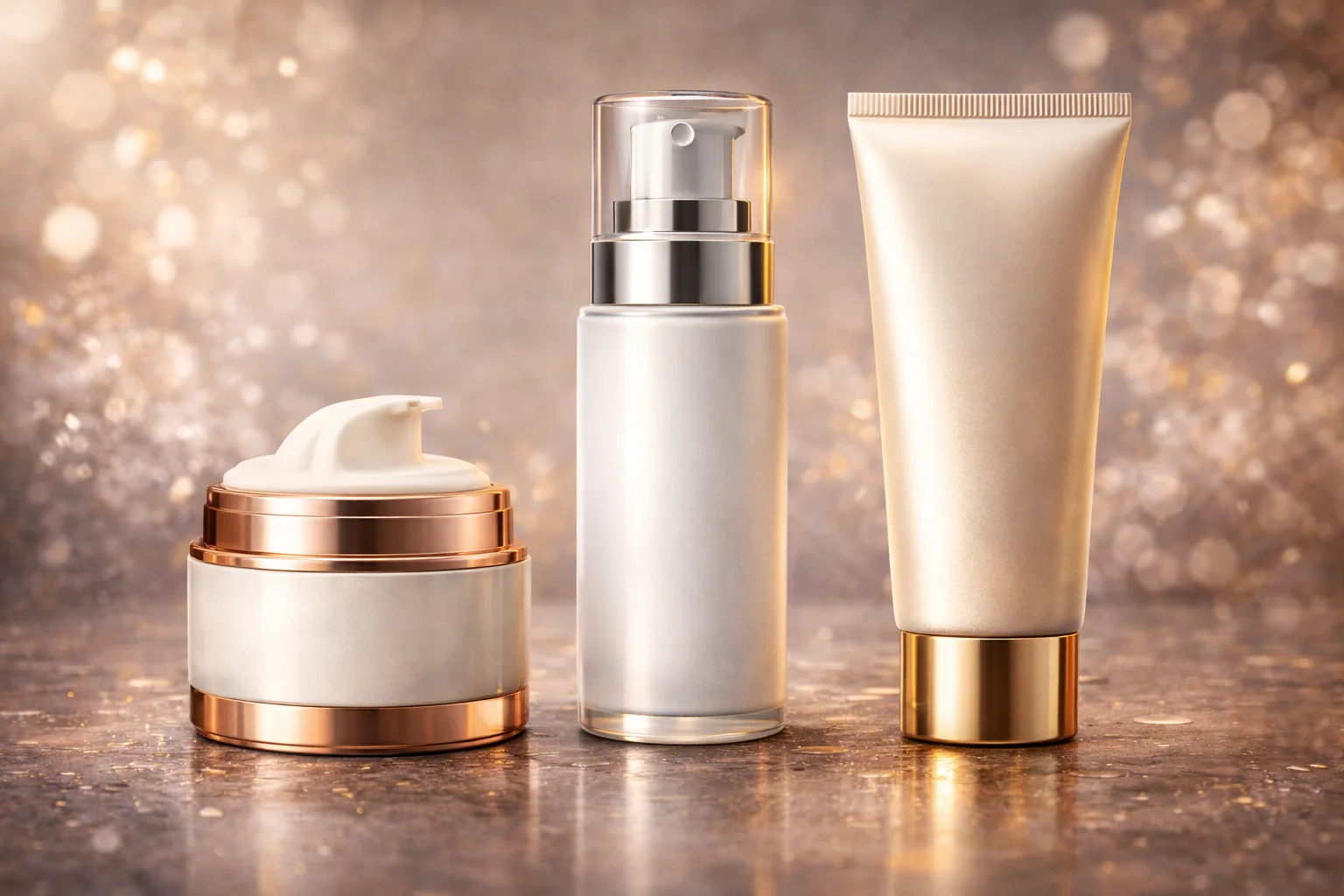
The idea that protective packaging has to look clinical is a thing of the past. Today's packaging suppliers offer stunning airless systems that feel just as heavy and substantial as glass jars. You can get them with metal accents, soft-touch finishes, and custom colors. When a customer uses a well-made airless pump, they get a perfect dose every time with a smooth, controlled action. That is a luxury experience[^13] in itself. It feels modern, clean, and effective.
The Gold Standard: Airless Systems
An airless pump doesn't use a dip tube. Instead, it has a piston at the bottom that pushes the product up as you pump. This means no air ever gets back into the container, keeping the formula completely protected. It also means the customer can use nearly 100% of the product, which reduces waste and feels like a better value. There are even "airless jars" that use a press-plate dispenser, giving you the shape of a jar with the protection of an airless system.
A Smart Compromise: Opaque Tubes
For thicker creams and cleansers, an opaque tube is an excellent and cost-effective option. The small opening limits how much of the product is exposed to air with each use. If you choose a multi-layer or aluminum tube, you get even better protection against light and air. They are less expensive than airless systems but offer a huge upgrade in protection over a standard jar.
How Should You Choose Packaging Based on Your Product Type?
You've got a whole product line, from thick balms to thin serums. You can't just put them all in the same type of packaging and expect it to work.
Match the packaging to the formula's sensitivity and viscosity. Use airless pumps[^4] for sensitive serums and lotions. Use tubes for creams and gels. Jars should only be for inert formulas like cleansing balms, thick masks, or body butters with few active ingredients[^9].
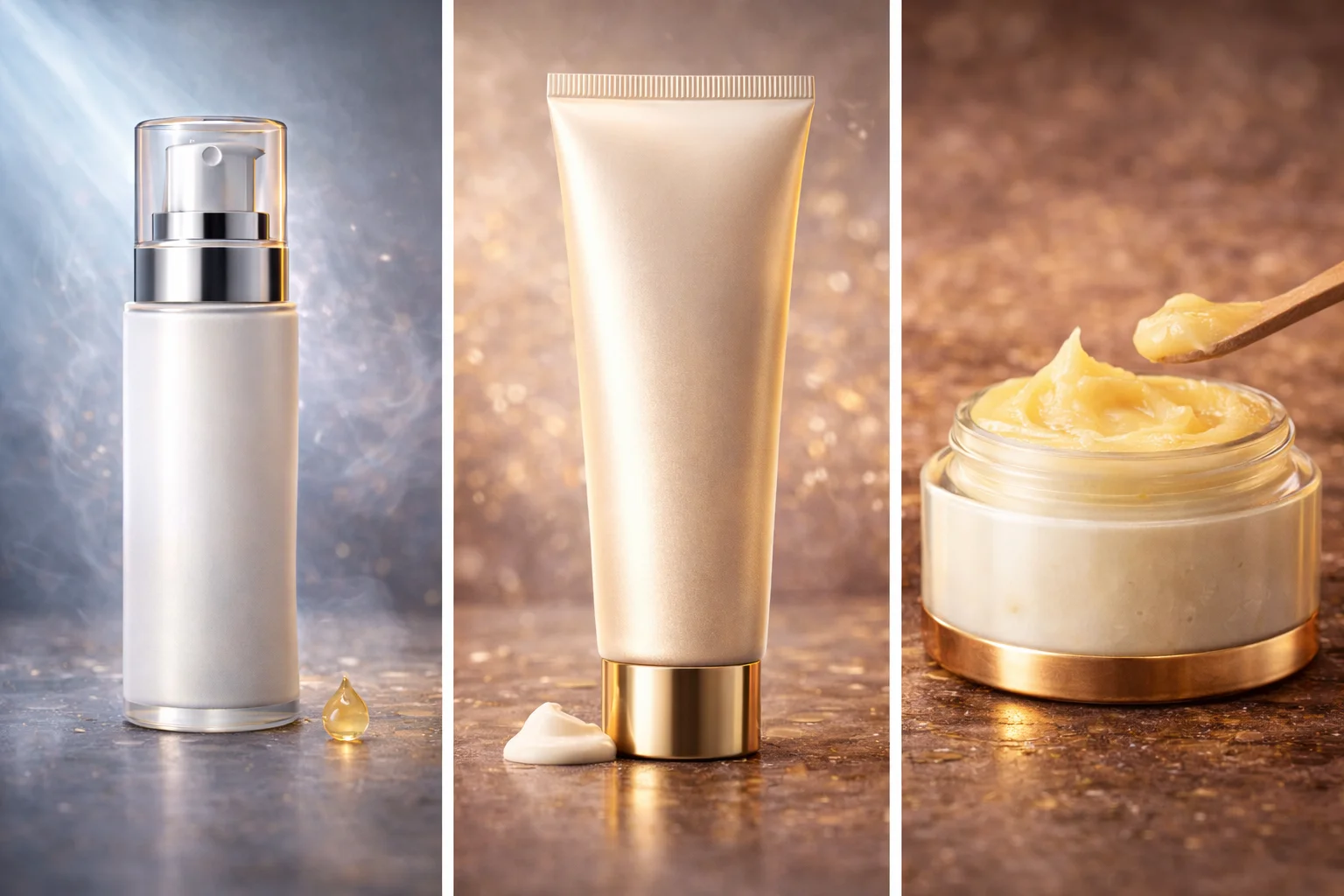
The key is to think about what you are trying to protect. A simple cleansing balm made of oils and butters has no water, so it's not a friendly environment for bacteria. It also doesn't contain fragile antioxidants[^8]. For a product like that, a jar is perfectly fine. But the moment you add water and sensitive actives like Vitamin C[^10], Retinol, or peptides, the rules change completely. Your number one job becomes protecting those ingredients. One of the first things we do with a new client is a compatibility test[^14]. We put their product in the proposed packaging and store it under stressed conditions (like high heat) to see if the package and formula react poorly. It's a critical step that prevents huge problems later.
A Quick Decision Guide
| Product Type | Key Consideration | Recommended Packaging | Packaging to AVOID |
|---|---|---|---|
| Active Serums (Vit C, Retinol) | Extreme sensitivity to air & light | Opaque Airless Pump | Clear Dropper, Jar |
| Moisturizers with Peptides | Sensitivity to air & contamination | Airless Pump, Airless Jar, Opaque Tube | Wide-Mouth Jar |
| Simple Hydrating Lotions | Moderate sensitivity | Airless Pump, Pump Bottle, Tube | Wide-Mouth Jar |
| Cleansing Balms or Body Butters | Low sensitivity (oil-based) | Jar, Tube | N/A |
| Clay or Exfoliating Masks | Low active sensitivity, high viscosity | Jar, Wide Tube | Pump (may clog) |
If Jars Are So Bad, Why Do Brands Still Use Them?
You see major brands using jars, so they must be okay, right? It makes you doubt the risks. But there are reasons they do it, and they aren't always good.
Brands use jars for several reasons: they are cheaper to source and much easier and faster to fill on a production line. They also have a traditional "premium" look that consumers recognize. For some brands, these manufacturing and marketing advantages unfortunately outweigh the need for formula protection.
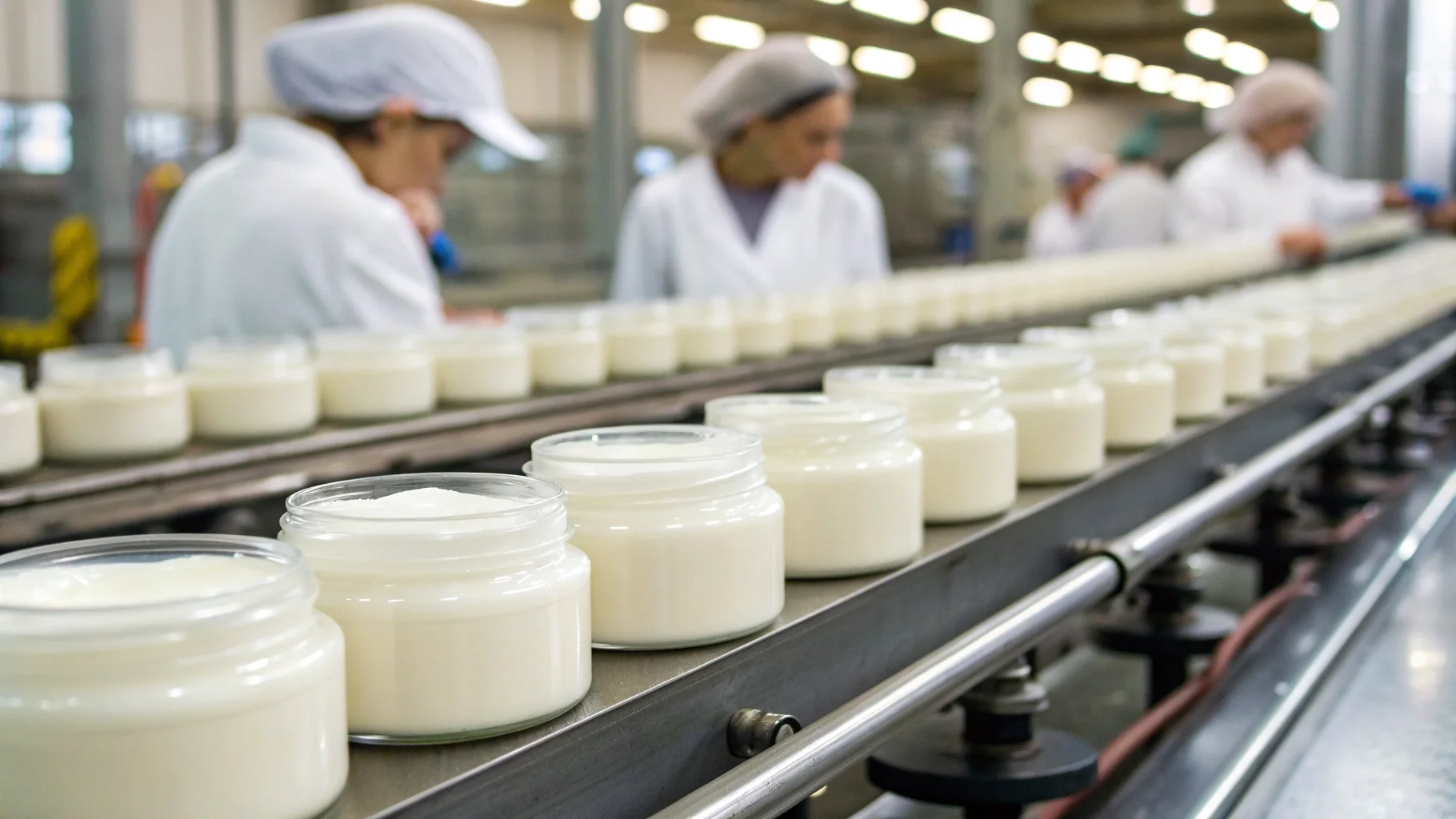
This is where my manufacturing background gives me a different perspective. On a production line, filling jars is simple. You have a big, open target, and you can fill them very quickly. Airless pumps, on the other hand, are more complex. They have to be primed, and the filling process is slower and requires more specialized equipment. So, from a pure cost-per-unit and speed-of-production standpoint, jars are very attractive. It's a business decision.
The Manufacturing Reality
The simple truth is that jars are easy. They are often the cheapest and fastest option to get a product to market. For brands that are trying to keep costs as low as possible, this is a powerful incentive. They might accept the trade-off, hoping that their preservative system is strong enough to handle the contamination and that most customers won't notice the ingredient degradation. It's a gamble with their product's performance and their brand's reputation.
The Marketing Illusion
There is also a strong marketing tradition behind jars. For decades, a heavy glass jar has signaled "luxury" and "rich cream." Brands lean on this consumer psychology. They create a "scooping ritual" as part of the experience. But I believe modern, educated consumers are starting to see through this. They understand hygiene and ingredient stability. They are beginning to see an airless pump not as clinical, but as a sign that the brand cares about the formula inside.
Conclusion
Choosing packaging is a scientific decision, not just an aesthetic one. Prioritize protecting your formula with options like airless pumps[^4] to ensure efficacy, reduce complaints, and build long-term brand trust.
[^1]: Understand the link between packaging choices and customer dissatisfaction.
[^2]: Explore the risks associated with jar packaging and how it can affect product integrity.
[^3]: Learn about the impact of packaging on sensitive ingredients and their effectiveness.
[^4]: Discover why airless pumps are considered a superior choice for preserving skincare formulas.
[^5]: Find out how packaging can lead to the degradation of skincare products over time.
[^6]: Discover the importance of packaging in maintaining the integrity of skincare formulations.
[^7]: Explore the process of oxidation and its detrimental effects on skincare ingredients.
[^8]: Explore which antioxidants are vulnerable to degradation in jars and why.
[^9]: Learn about the active ingredients that require special attention in packaging choices.
[^10]: Understand the instability of Vitamin C in jars and the importance of protective packaging.
[^11]: Discover how contamination can compromise skincare formulas and lead to customer issues.
[^12]: Explore ways to deliver luxury experiences while prioritizing product protection.
[^13]: Learn how modern airless pumps can enhance the user experience while protecting formulas.
[^14]: Understand the significance of compatibility tests in ensuring product and packaging harmony.