Struggling to pick the right cosmetic jars[^1]? A wrong choice can lead to wasted money, damaged products, and a brand image[^2] that doesn't shine. You need a packaging strategy[^3] that grows with you.
To choose the right cosmetic jars[^1], focus on compatibility, scalability, and supplier reliability[^4]. Start by testing your formula with different materials like glass, PP, or PET. Select a standard size and simple design that a dependable supplier can consistently provide as your brand grows, avoiding costly initial customizations[^5].
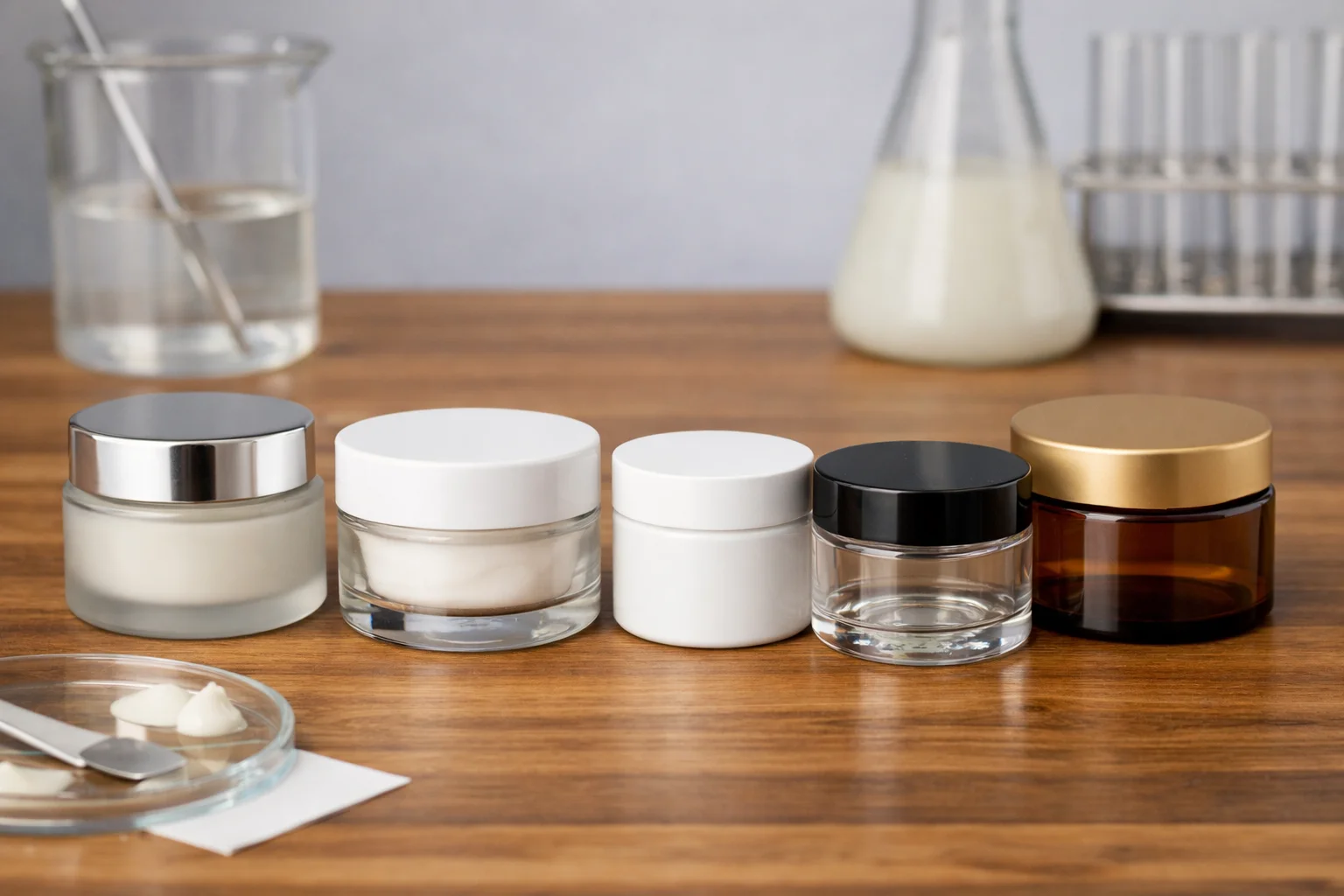
Picking the right container for your skincare products feels like a huge decision, and it is. I've seen so many brands get stuck here, overwhelmed by the sheer number of options. But I've also learned that the secret isn't finding the "perfect" jar right away. It's about making a smart choice for today that won't hold you back tomorrow. Let's walk through how to do just that, breaking it down step-by-step so you can move forward with confidence and avoid those expensive pitfalls I know all too well.
Why Does Cosmetic Jar Choice Matter More Than You Think?
Worried your packaging doesn't reflect your brand's quality? The right jar protects your formula, but the wrong one can undermine customer trust[^6] and lead to negative reviews before they even try your product.
Your cosmetic jar is your product's first impression and its primary protector. It communicates your brand's value, preserves the formula's integrity, and ensures a good user experience[^7]. A poor choice can lead to product spoilage[^8], customer complaints, and damage to your brand's reputation.
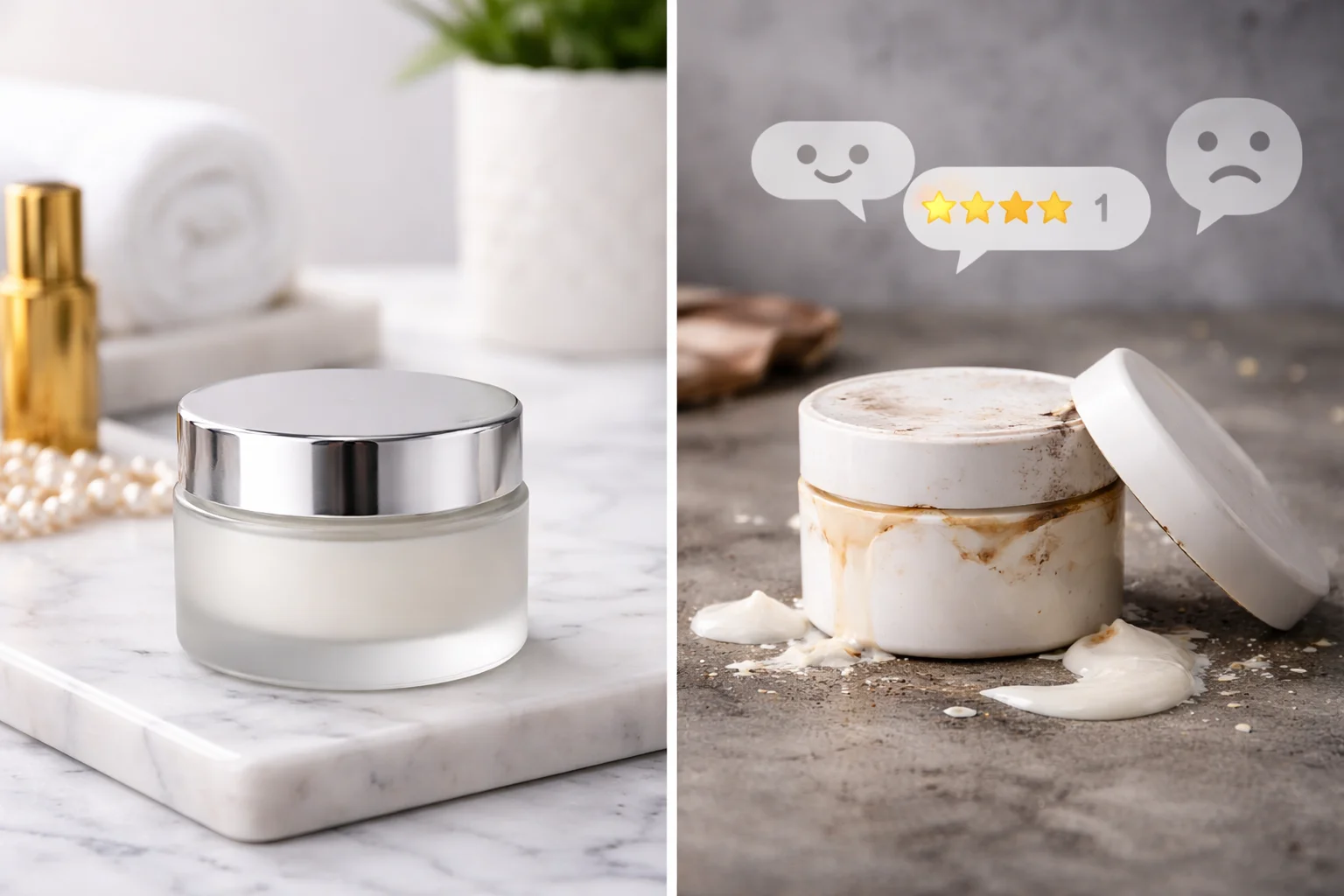
When I first started, I thought the product inside was all that mattered. I quickly learned that the jar is part of the product. It’s the first thing your customer touches and sees. It has to do more than just hold cream; it has to tell a story about your brand. More importantly, it has a technical job to do. It must protect your carefully crafted formula from air, light, and bacteria. A jar that doesn't seal properly can ruin a whole batch, costing you money and customers. I learned the hard way that skimping on packaging is one of the most expensive mistakes a new brand can make. The jar is a silent salesperson and a guardian for your product. Choosing it wisely is not just a detail; it's a foundational business decision that sets the stage for customer loyalty and long-term success.
What Do Growing Skincare Brands Really Need From Cosmetic Jars?
Feeling overwhelmed by fancy jar options that might break your budget? Many brands think they need complex, custom packaging from day one. This often leads to overspending and supply chain headaches[^9].
Growing skincare brands need cosmetic jars[^1] that are readily available, compatible with their products, and scalable. The focus should be on a reliable supply of standard, high-quality jars that protect the formula and present a clean, professional look, allowing for branding through labels and boxes.
From my experience working with countless brands, the ones that scale successfully don't start with the fanciest, most unique jar. They start with a smart, simple choice. What does that mean?
- Availability: They need a jar that is always in stock. Chasing a unique jar that has a 6-month lead time is a recipe for disaster. You can't sell products you can't package.
- Stability: The jar must be from a reliable supplier who can guarantee consistent quality and supply. A stable supply chain is worth more than a slightly lower price per unit.
- Simplicity: They choose a simple, classic design. This allows them to build their brand through great labels, boxes, and marketing, not through a custom-molded jar that costs a fortune in setup fees.
The goal at the growth stage is to get a great product into customers' hands reliably. The packaging needs to support that mission. It should be a dependable workhorse, not a high-maintenance showpiece. You can always introduce more complex packaging later when your volume is higher and your cash flow is stronger.
Glass vs Plastic vs PET: Which Jar Fits Your Brand Stage?
Confused about whether to use glass, plastic, or another material? Each has pros and cons, and choosing the wrong one can affect your product's stability, your shipping costs[^10], and your brand's eco-credentials.
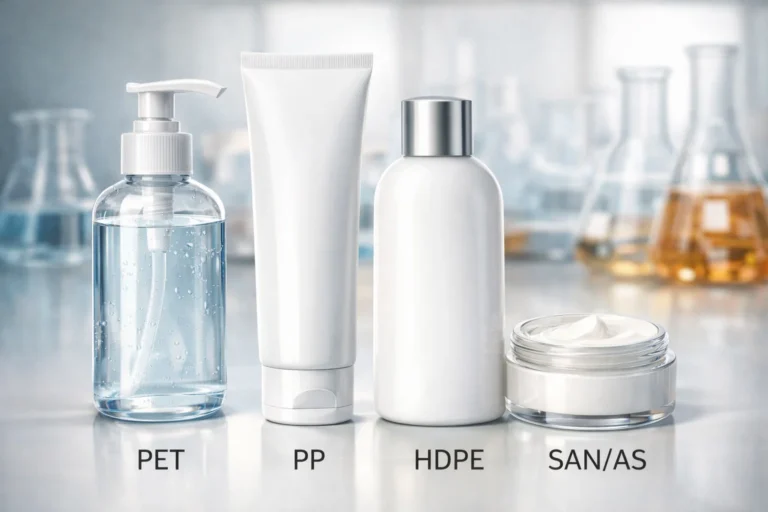
For most growing brands, PET or PP plastic[^11] jars offer the best balance of cost, durability, and a premium feel. Glass is great for a luxury image but is heavy and fragile. Choose the material based on your formula's needs, your brand's positioning, and your operational capacity.
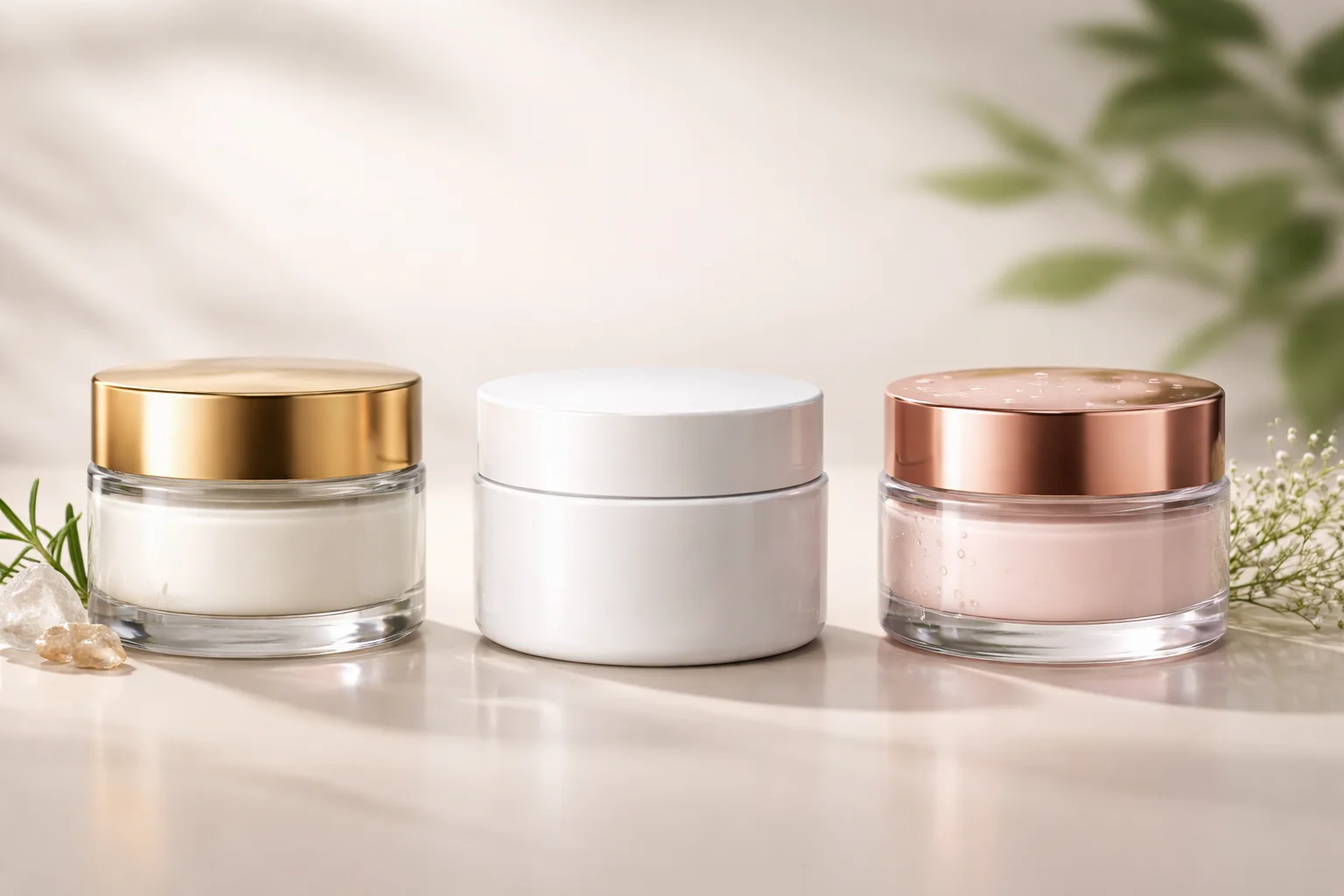
Choosing the right material is a big decision that impacts everything from cost to customer perception. There is no single "best" material; there's only the best material for your brand at its current stage. Let's break down the most common options to help you decide.
| Material | Pros | Cons | Best For |
|---|---|---|---|
| Glass | - Looks premium and high-end<br>- Inert (doesn't react with ingredients)<br>- Recyclable | - Heavy (increases shipping costs[^10])<br>- Fragile (risk of breakage)<br>- More expensive | Luxury brands with a higher price point and stable, non-reactive formulas. |
| PP Plastic | - Lightweight and durable<br>- Cost-effective<br>- Good chemical resistance | - Can feel less premium than glass<br>- Clarity can vary | Start-ups and growing brands needing a versatile, affordable, and shatterproof option. |
| PET Plastic | - Glass-like clarity<br>- Lightweight and shatterproof<br>- Good barrier properties | - Can be less resistant to some chemicals<br>- Scratches more easily than glass | Brands wanting the look of glass without the weight and breakage risk. Great for creams and gels. |
From what I've seen, the fastest-growing brands often start with high-quality PP or PET. They get a great look without the logistical headaches of glass. This allows them to focus their budget on the formula and marketing. Once they are established, they might introduce a specific product in a glass jar as a premium offering.
What Are Common Cost Mistakes Brands Make When Ordering Jars?
Afraid of hidden costs that could sink your budget? Ordering jars isn't just about the price per unit. Many brands get hit with unexpected fees for shipping, molds, and minimum orders that they didn't plan for.
The most common cost mistakes[^12] are ignoring Minimum Order Quantities[^13] (MOQs), underestimating shipping and import duties, and paying for complex customizations[^5] too early. Brands should start with stock jars from a reliable supplier to control costs and test the market before committing to large, custom orders.
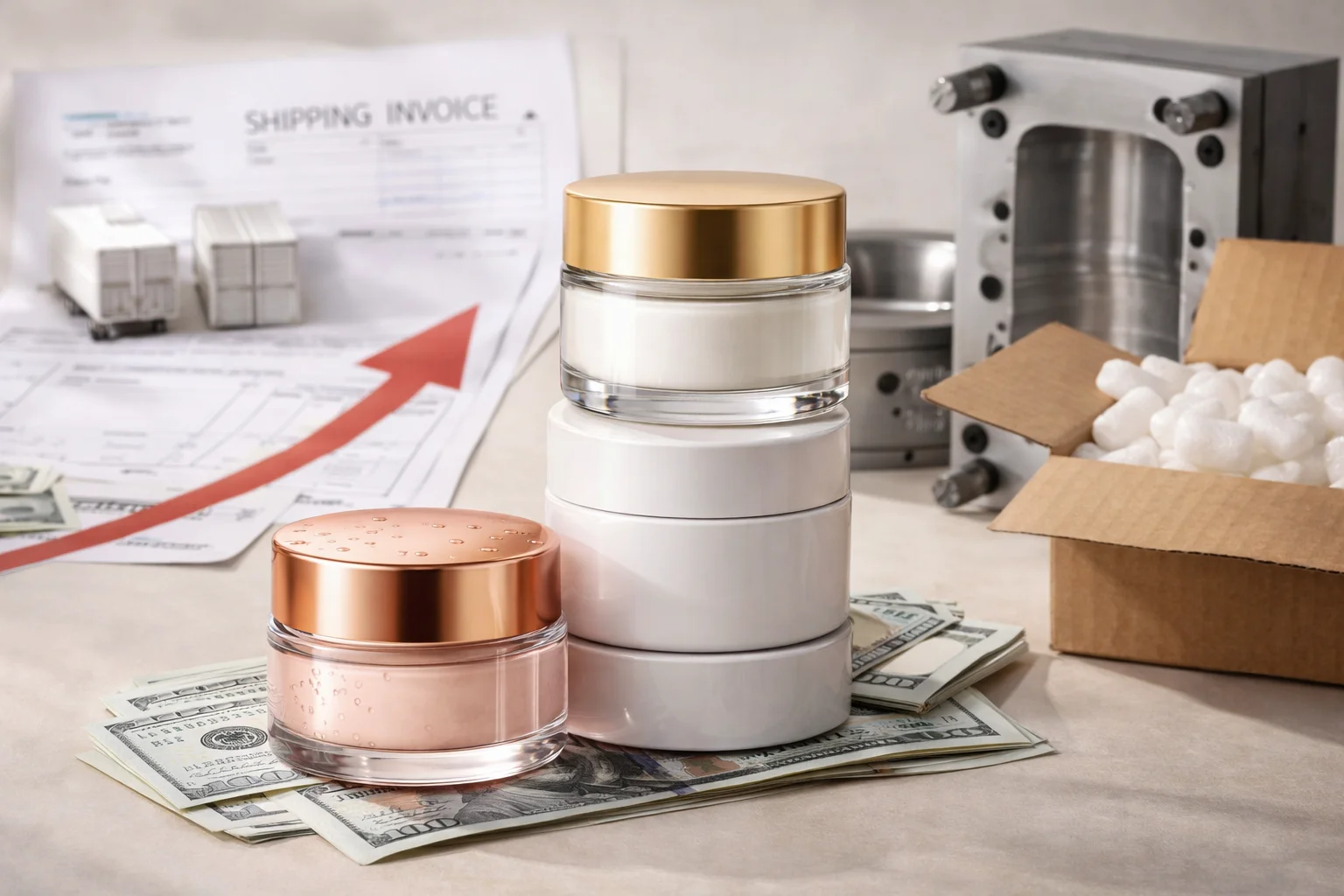
I wish someone had explained this to me when I started. The price list is just the beginning of the story. Here are the real-world cost traps you need to watch out for to protect your bottom line.
- The MOQ Trap: You find a jar for a great price, but the Minimum Order Quantity (MOQ) is 50,000 units. For a new brand, that’s a massive cash outlay and a huge storage problem. Always ask for the MOQ first. It's better to pay a little more per unit for a 1,000 MOQ than to tie up all your cash in packaging you can't use for years.
- Shipping & Duties Shock: That great price from an overseas supplier can double or triple once you factor in shipping, port fees, and import taxes. Always get a "landed cost" quote, which includes all expenses to get the jars to your door.
- The Customization Dream: A unique custom-colored jar sounds amazing, but it comes with high mold fees and even higher MOQs. Start with a stock jar in a standard color (like white, black, or clear). Use your label and box to create a unique brand identity. This approach is faster, cheaper, and much less risky.
The smart move is to prioritize cash flow and flexibility. Don't spend all your money on packaging. Spend it on acquiring customers.
How Do You Choose the Right Jar Size for Your Products?
Are you unsure if you should offer a 30ml, 50ml, or 100ml jar? Choosing the wrong size can affect your product's price perception, its shelf life after opening, and how customers feel about its value.
Choose a jar size[^14] based on your product's price point, usage, and market standards[^15]. A 50ml (1.7 oz) jar is a common and safe standard for face creams, while 30ml is typical for eye creams. Offer a smaller size to lower the barrier to entry for new customers.
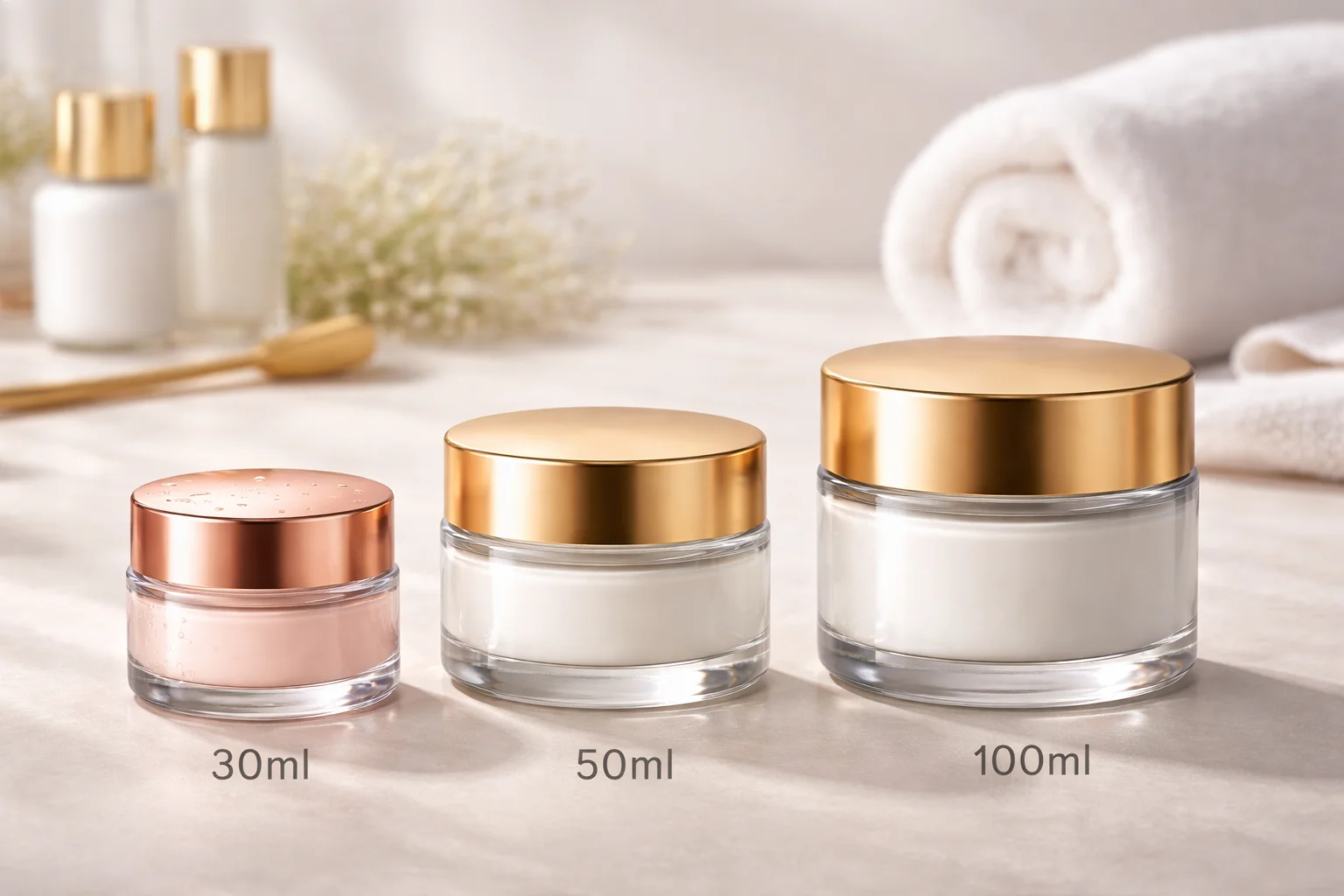
The size of your jar sends a powerful message to your customers. It's not just a measure of volume; it's a statement of value. Here’s how I think about it:
Analyze Market Standards
Look at your direct competitors. What are the common sizes for similar products? For a daily face cream, 50ml is a global standard. Customers are used to this size and its corresponding price range. Deviating too far from this can confuse them. If your jar is much smaller for the same price, they might feel it's a bad value. If it's much larger, they might question the quality of the ingredients.
Consider Product Usage and Stability
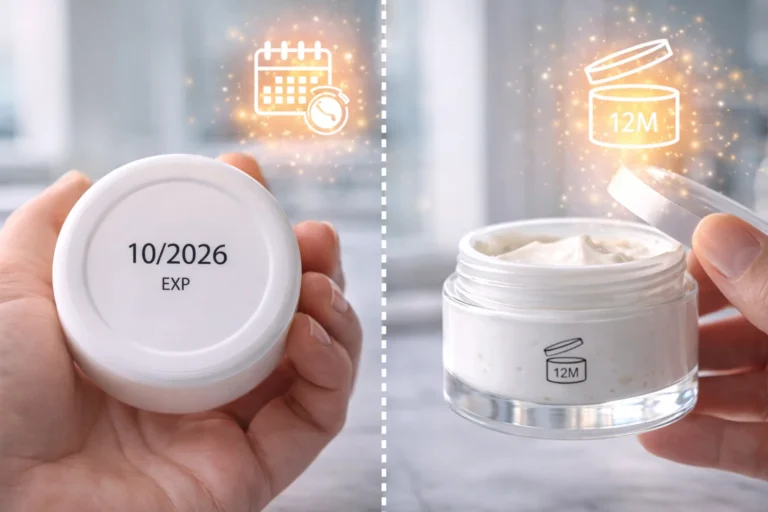
How much product will a customer use per day? A face cream used twice daily will run out faster than an eye cream used sparingly. The size should provide about 2-3 months of use. This encourages re-purchasing. Also, consider the "period after opening" (PAO). If your formula uses natural preservatives and has a 6-month PAO, selling it in a huge 200ml jar that takes a year to use is a bad idea. The product could spoil before the customer finishes it, leading to a bad experience.
Use Size to Guide Pricing Strategy
A smaller size, like 15ml or 30ml, can be a great entry point. It's a lower-risk purchase for a new customer. You can sell it as a "travel size" or "discovery size." This allows you to capture customers who aren't ready to commit to a full-size, full-price product yet.
What Makes a Cosmetic Jar Look Premium to Customers?
Do you believe a premium look[^16] requires a huge budget? Many brands think "premium" means expensive materials or complex designs. But often, it's the simple details that create a high-end feel.
A cosmetic jar looks premium through a combination of weight, a clean finish, minimalist design, and quality printing on the label. A heavier feel, smooth surfaces, simple colors like white or black, and crisp, well-aligned branding signal quality to customers, regardless of the material.
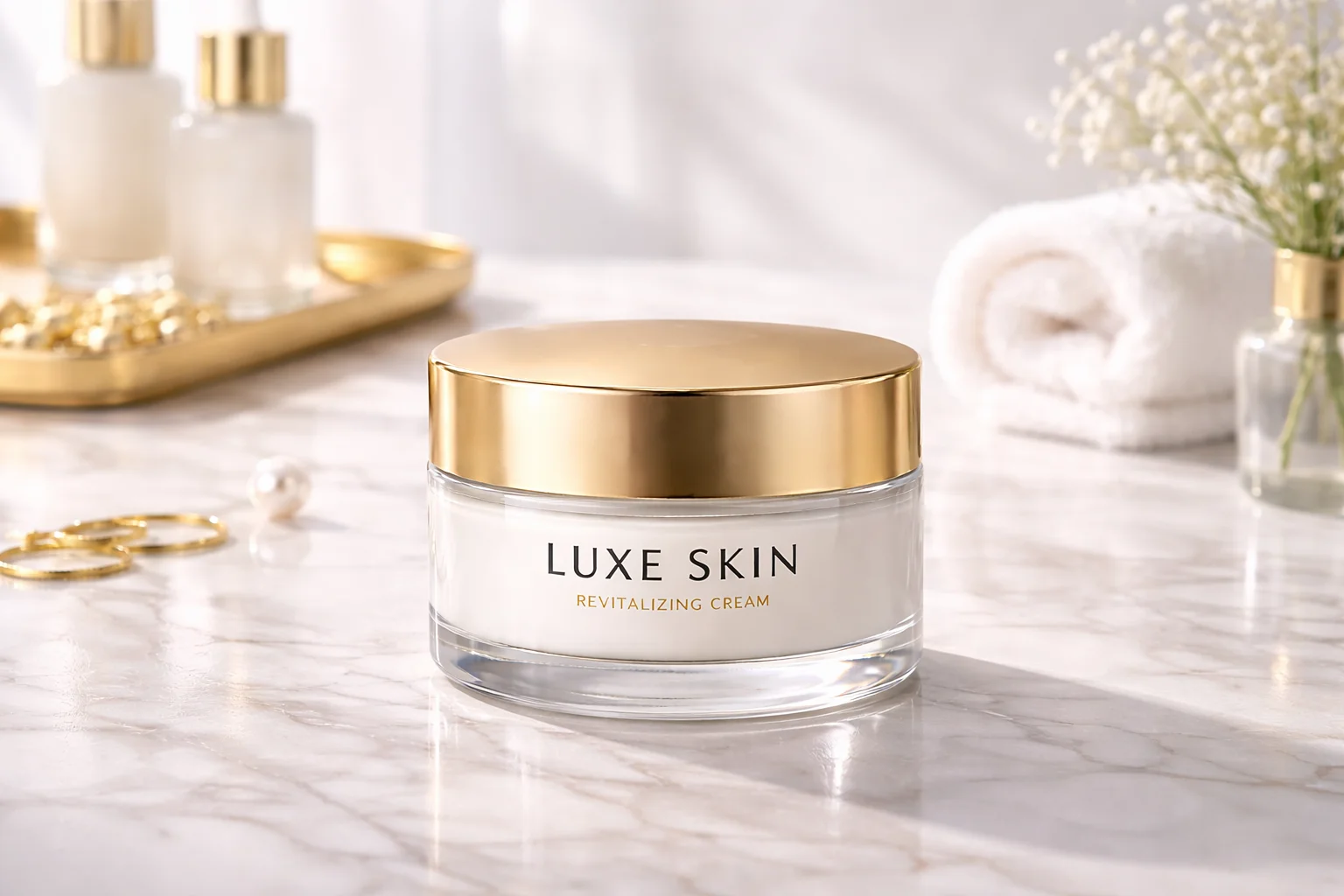
I've held thousands of jars in my hands, and I can tell you that "premium" is a feeling, not a price tag. You can achieve a high-end look without breaking the bank by focusing on the right details. It's not about being flashy; it's about being intentional.
- Weight and Feel: Even with plastic jars, there's a difference between thin, flimsy walls and thick, substantial ones. A jar with a bit of heft feels more valuable. A double-walled jar, for example, feels much more luxurious than a single-walled one, even if they're both made of PP plastic[^11].
- Clean, Simple Design: Less is more. A simple, cylindrical or square jar with clean lines looks more modern and sophisticated than an overly ornate one. The top brands often use very simple shapes. Their confidence is in the product, not the wild shape of the container.
- Finish and Color: A smooth, matte finish can feel more premium than a cheap-looking glossy one. Sticking to a monochrome palette—like all white, all black, or a frosted clear—creates a sense of cohesion and elegance.
- The Details: Pay attention to the "click" when the cap closes. A tight, secure closure feels well-made. Ensure your label is perfectly centered and made of high-quality, waterproof material. A crooked, peeling paper label screams "amateur." The quality of the typography and printing on your label is just as important as the jar itself.
How Do You Choose a Reliable Cosmetic Jar Supplier?
Worried about a supplier disappearing or sending you a bad batch? A cheap price is tempting, but an unreliable supplier can destroy your business with delays, quality issues, and poor communication.
To choose a reliable supplier, prioritize communication, quality control[^17], and a proven track record over the lowest price. Ask for samples, check their certifications (like ISO), and see them as a long-term partner[^18], not just a vendor. Their ability to scale with you is crucial.
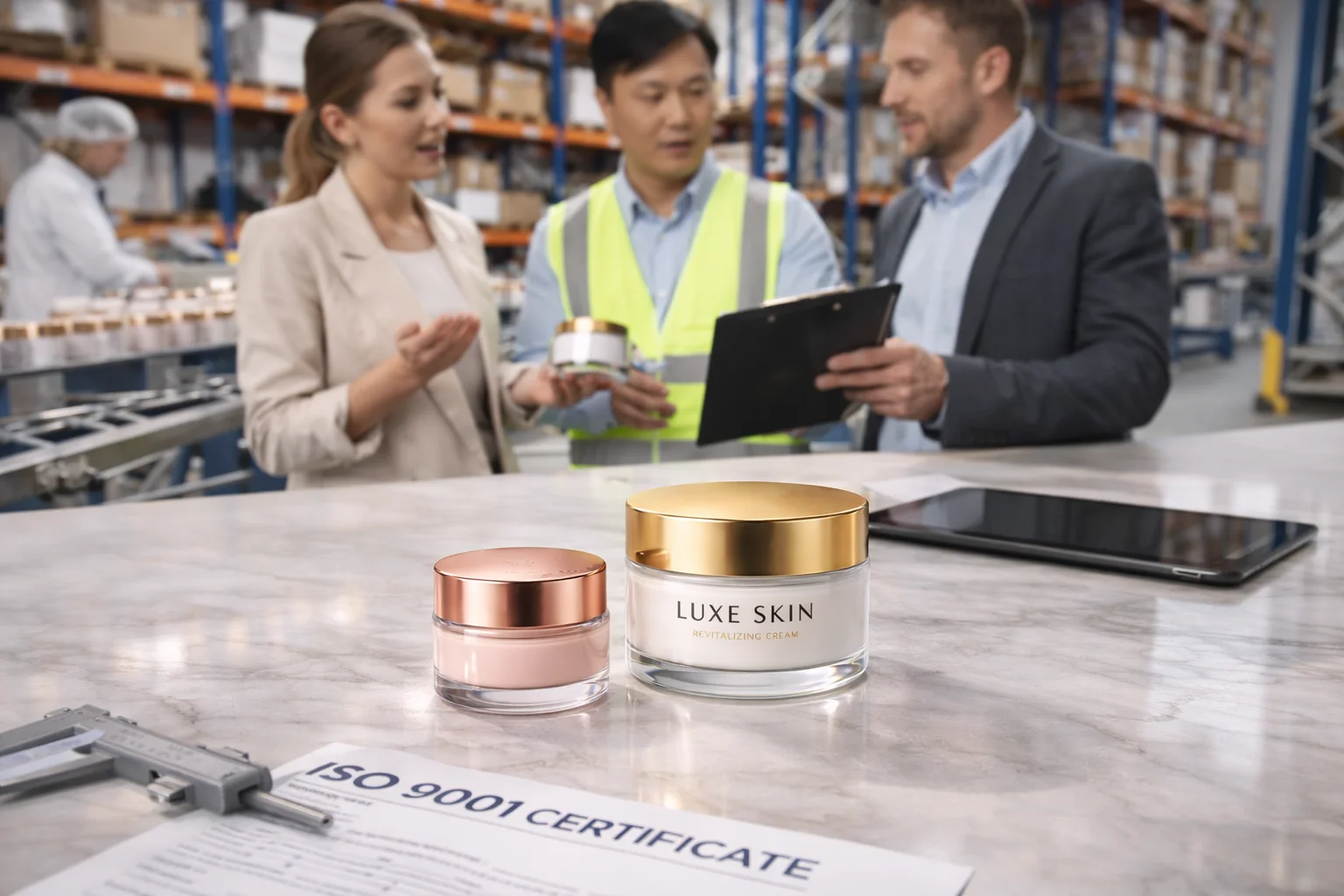
This might be the most important decision you make. Your supplier is your partner. Their failures become your failures. I've learned to look for signs of a good partner, not just a good price.
Communication is Key
How quickly and clearly do they respond to your emails? Do they understand your questions? A good supplier is easy to communicate with. Send them a technical question or a specific request and see how they handle it. If they are slow, vague, or evasive before you've even placed an order, imagine how they'll be when there's a problem.
Ask for Samples (and Test Them!)
Never, ever place a bulk order without getting samples first. And don't just look at them. Test them. Put your actual product in the sample jar and leave it for a few weeks. Check for leaks, discoloration, or any reaction between your formula and the plastic. Does the cap still screw on tightly? This single step can save you from a catastrophic, brand-killing mistake.
Look for a Partner, Not a Vender
A good supplier will offer advice. They might suggest a different, more suitable material or a more cost-effective way to achieve your desired look. They see your success as their success because a growing brand means more orders for them. I always favor the supplier who asks smart questions about my product and my brand over the one who just sends a price list. They are invested in a long-term relationship. This is the partner you want.
Conclusion
Choosing the right cosmetic jar is about making smart, strategic decisions. Focus on a simple, scalable solution from a reliable partner to protect your product, your budget, and your brand's future.
[^1]: Explore this link to discover a variety of cosmetic jars that suit different skincare needs and enhance your brand's image.
[^2]: Explore how effective packaging can enhance your brand's image and market positioning.
[^3]: Learn about effective packaging strategies that can elevate your brand and protect your products.
[^4]: Understanding supplier reliability is crucial for maintaining product quality and consistency.
[^5]: Understand the potential pitfalls of early customizations and how to avoid them.
[^6]: Understand the relationship between packaging choices and customer trust in your brand.
[^7]: Discover how packaging design impacts the overall user experience with your products.
[^8]: Learn about factors that can lead to product spoilage and how to prevent them.
[^9]: Find strategies to streamline your supply chain and ensure consistent product availability.
[^10]: Get insights on how to accurately estimate shipping costs to avoid budget surprises.
[^11]: Find out why PP plastic jars are a popular choice for many skincare brands.
[^12]: Learn about the hidden costs associated with ordering jars and how to avoid them.
[^13]: Learn about MOQs and how they can impact your budget and inventory management.
[^14]: Discover tips for selecting the ideal jar size that aligns with customer expectations.
[^15]: Get insights into common market standards for jar sizes to align with customer expectations.
[^16]: Explore the elements that contribute to a premium appearance in cosmetic packaging.
[^17]: Learn why quality control is essential for maintaining product integrity and customer satisfaction.
[^18]: Find out what to look for in a supplier to ensure a successful long-term partnership.