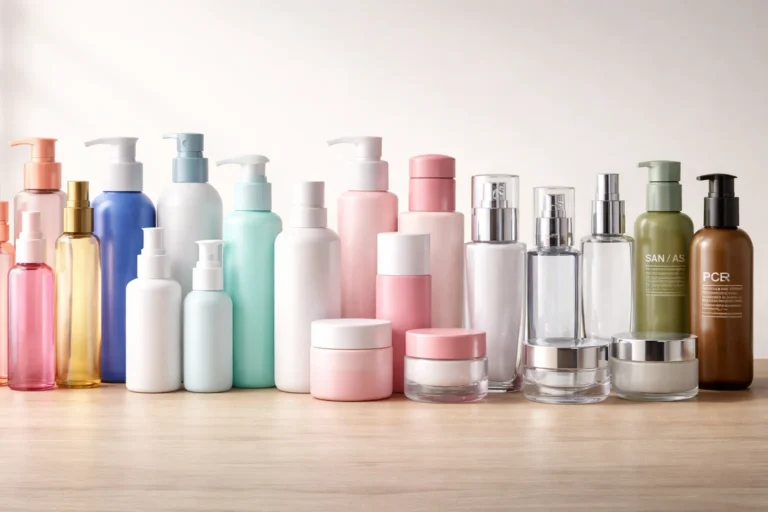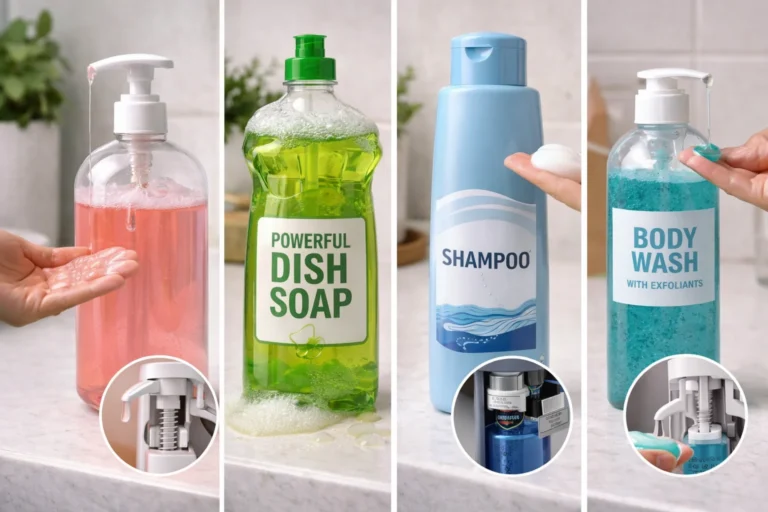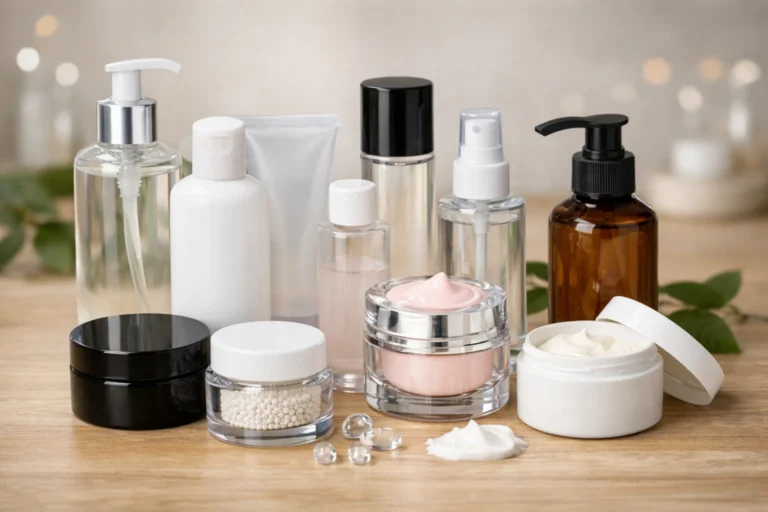
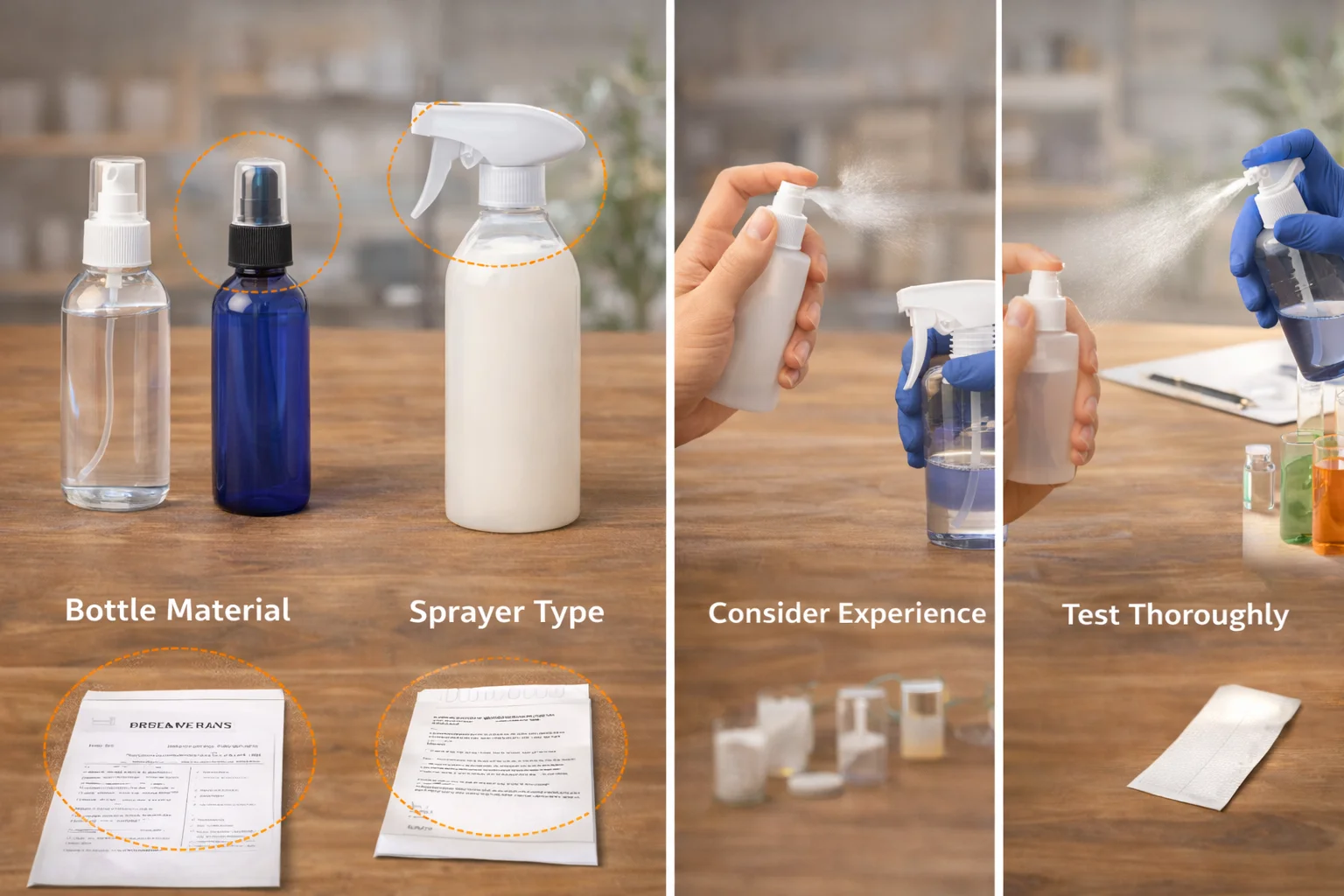
Your product is perfect, but the wrong spray bottle[^1] leaks and frustrates customers. This damages your brand. Choosing the right one ensures a great experience from start to finish.
To choose the right spray bottle[^1], you must match the bottle material[^2], like PET or glass, and the sprayer type[^3], like fine mist[^4] or trigger, to your product's formula. Also, consider your customer's experience and your brand's image. Testing is always the most important step.
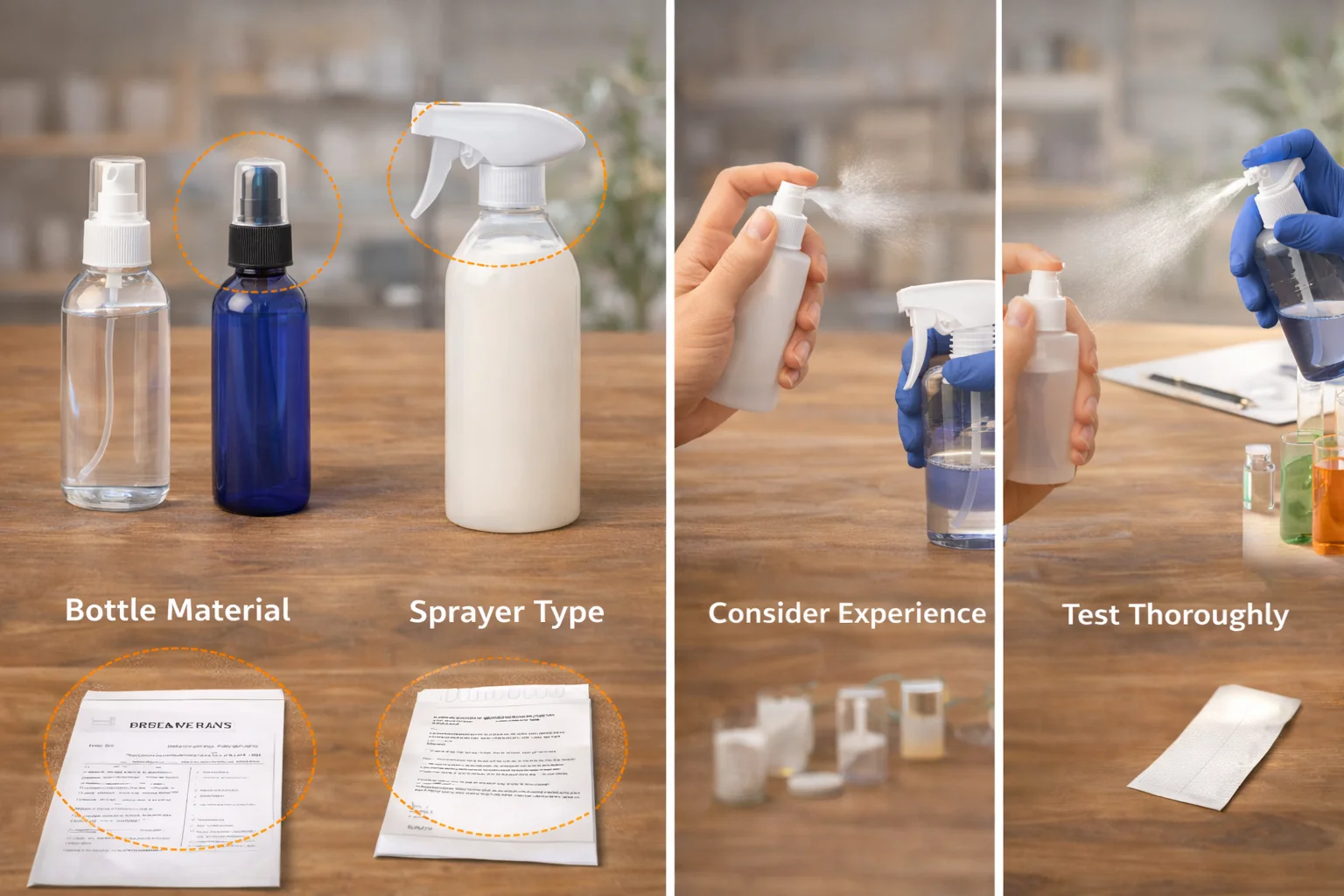
Choosing the right spray bottle[^1] seems simple on the surface. But as a factory that produces millions of them, I've seen how small choices can lead to big problems or huge successes. It's more than just a container; it's the first physical interaction a customer has with your product. So, let's break down everything you need to know, starting with the very basics.
What Is a Spray Bottle and Why Does It Matter for Your Brand?
You see spray bottle[^1]s everywhere, so you might think they are all the same. But choosing the wrong one can lead to product failure[^5] and unhappy customers.
A spray bottle[^1] is a container with a pump mechanism that turns liquid into a spray or mist. It matters because it directly impacts product performance, user experience[^6], and brand perception[^7]. A good bottle protects your formula and delivers it perfectly.
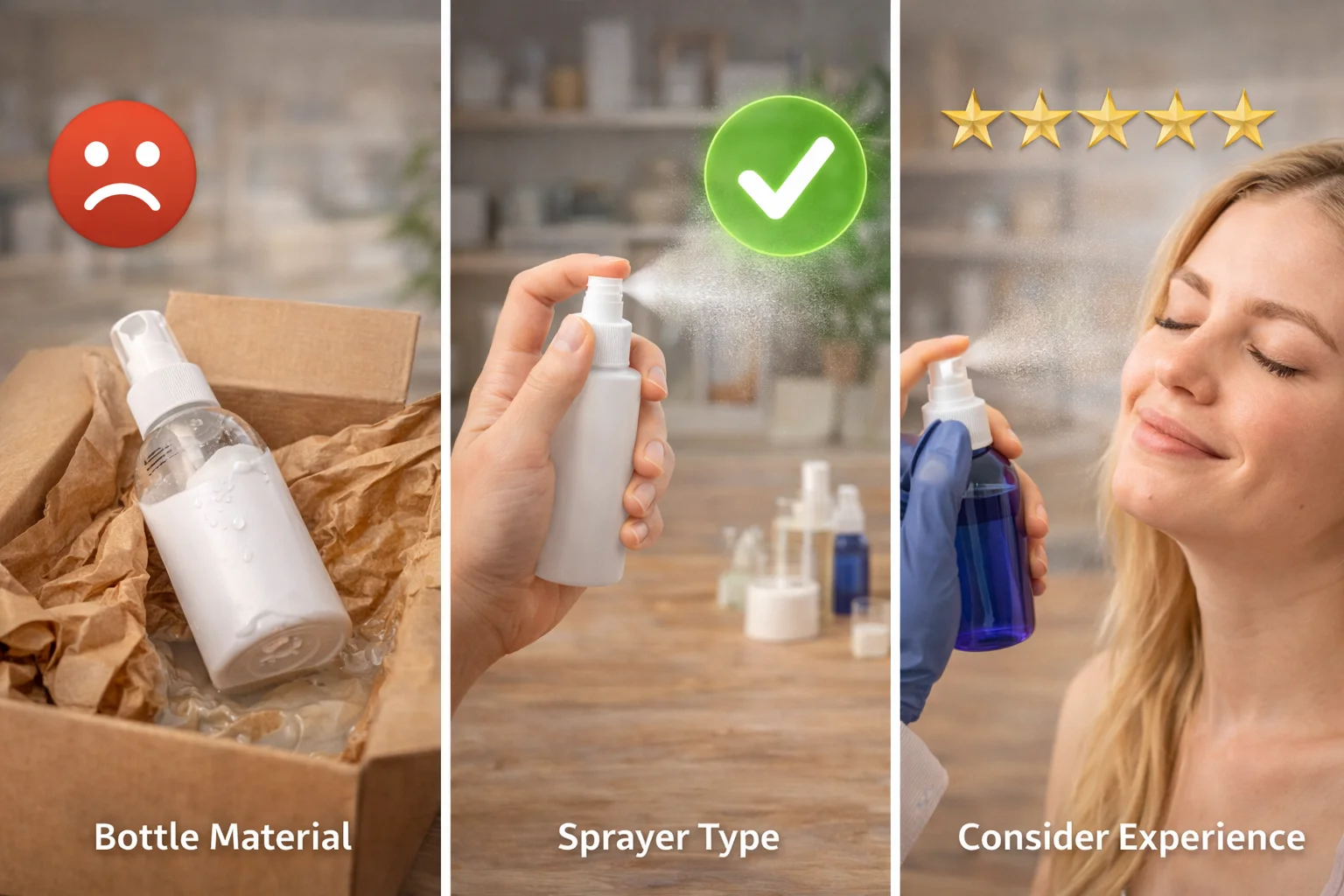
A spray bottle[^1] is the bridge between your product and your customer. When it works well, no one notices it. But when it fails, it's the only thing they remember. From our experience on the factory floor, the packaging is just as important as the formula inside.
The First Impression
The bottle is part of your brand's story. A heavy glass bottle can feel luxurious and high-end. A sleek, ergonomic plastic bottle can communicate efficiency and modernity. The first time a customer holds your product, the bottle makes an instant impression. A cheap, flimsy bottle suggests a cheap, flimsy product, no matter how great the formula is.
Product Integrity
The bottle's main job is to protect what's inside. The right material will prevent your formula from degrading due to light exposure or chemical reactions[^8]. A secure seal prevents leaks and contamination. We have seen products recalled simply because the bottle material[^2] reacted poorly with the liquid, changing its color or effectiveness.
The User Experience
How the product is dispensed is key. Does the sprayer deliver a fine, even mist or a sputtering stream? Is the trigger hard to press? A smooth spray action feels premium and makes the product easy to use. A clogged or leaking sprayer frustrates the user and can lead to negative reviews.
What Are the Different Types of Spray Bottles and When Should You Use Each One?
Confused by terms like "fine mist[^4]" and "trigger sprayer[^9]"? Choosing the wrong type can ruin your product's application. Let's make sure you pick the perfect one.
The main types are fine mist[^4] sprayers for cosmetics, trigger sprayer[^9]s for cleaning products, and mini sprayer[^10]s for samples. Choose a fine mist[^4] for even coverage, a trigger for a powerful stream, and a mini sprayer[^10] for travel-size convenience.
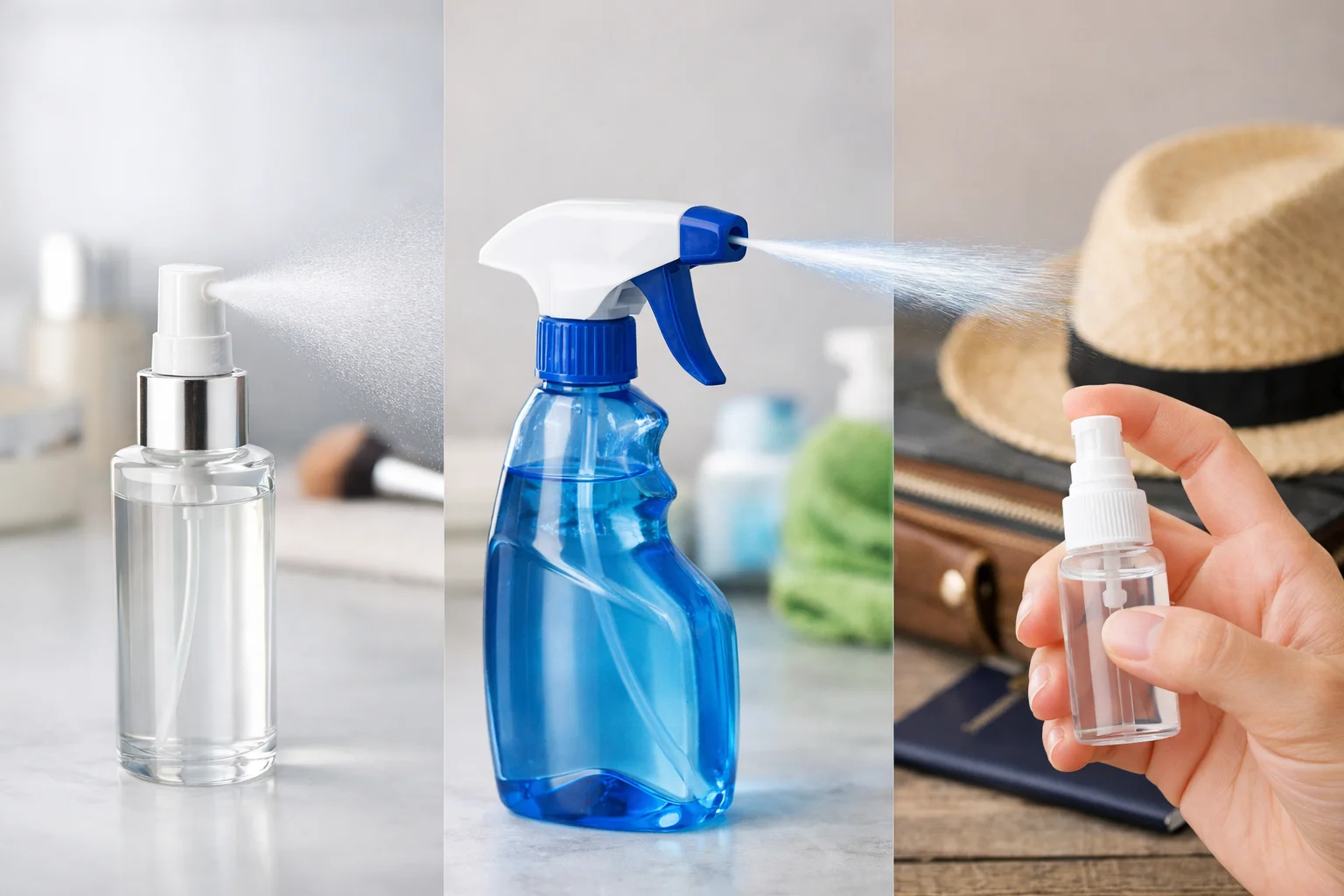
The sprayer mechanism is the engine of your package. Matching the engine to the liquid and the intended use is critical for performance. A sprayer designed for water will clog with an oil-based serum. Here’s a simple breakdown of the most common types we manufacture.
| Sprayer Type | Best For (Formula) | Common Products | Why It Works |
|---|---|---|---|
| Fine Mist Sprayer | Water-based, thin liquids | Face mists, hairspray, body sprays | Creates a wide, gentle, and even application perfect for covering a surface area on the skin or hair. |
| Trigger Sprayer | Low to medium viscosity liquids | All-purpose cleaners, plant sprays | The piston mechanism provides more power, allowing for a stream or a wider spray pattern. It's easy to use repeatedly. |
| Mini Sprayer | Thin liquids, alcohol-based | Perfume samples, hand sanitizer, travel products | Small and portable, it delivers a controlled, small dose of liquid. It's designed for on-the-go use. |
| Foaming Sprayer | Specific foaming formulas | Foaming hand soap, facial cleansers | It has a special chamber that mixes air with the liquid to create foam without needing chemical propellants. |
Understanding these basic types is the first step. The right choice depends entirely on what you want the customer to experience when they use your product.
Where Are Spray Bottles Commonly Used Across Different Industries?
Think spray bottle[^1]s are just for cleaners? This limited view might be holding back your product's packaging potential[^11]. See how versatile they really are.
Spray bottles are used everywhere. In cosmetics for hairsprays and face mists. In household cleaning[^12] for disinfectants. In gardening for watering plants. And even in food for oil sprays. The application determines the type of sprayer needed.

Spray bottles are one of the most versatile packaging formats available. Their ability to dispense liquid in a controlled manner makes them useful in almost every industry. I've seen our bottles used for things I never would have imagined. Here are a few key examples.
Personal Care and Cosmetics
This is a huge market for spray bottle[^1]s. Fine mist sprayers are essential for products like setting sprays, toners, and leave-in conditioners. The goal is a delicate, even application that doesn't drench the user. The look and feel of the bottle are also very important here, as it needs to reflect the brand's premium or natural image.
Household and Cleaning
Trigger sprayers are the standard for household cleaners, disinfectants, and air fresheners. They need to be durable, chemically resistant, and easy to grip and use for extended periods. The spray pattern can often be adjusted from a direct stream to a wide mist.
Food and Beverage
Food-grade spray bottle[^1]s are used for things like cooking oils, vinegar, and flavor enhancers. The materials must be safe for contact with food, and the sprayer must be able to handle different viscosities without clogging.
Automotive and Industrial
In these sectors, durability and chemical resistance are everything. Spray bottles are used for degreasers, brake cleaners, and lubricants. The bottles are often made from heavy-duty HDPE plastic, and the trigger mechanisms are built to withstand harsh chemicals and repeated, heavy use.
How Can You Choose the Right Spray Bottle in a Few Simple Steps?
Feeling overwhelmed by all the options for spray bottle[^1]s? This uncertainty can lead to costly mistakes. Here is a simple guide to get it right every time.
First, define your product's formula and viscosity. Second, select the right material (plastic or glass). Third, choose the sprayer type[^3] (mist, trigger). Fourth, determine the dosage you need per spray. Finally, always test your product with the bottle.
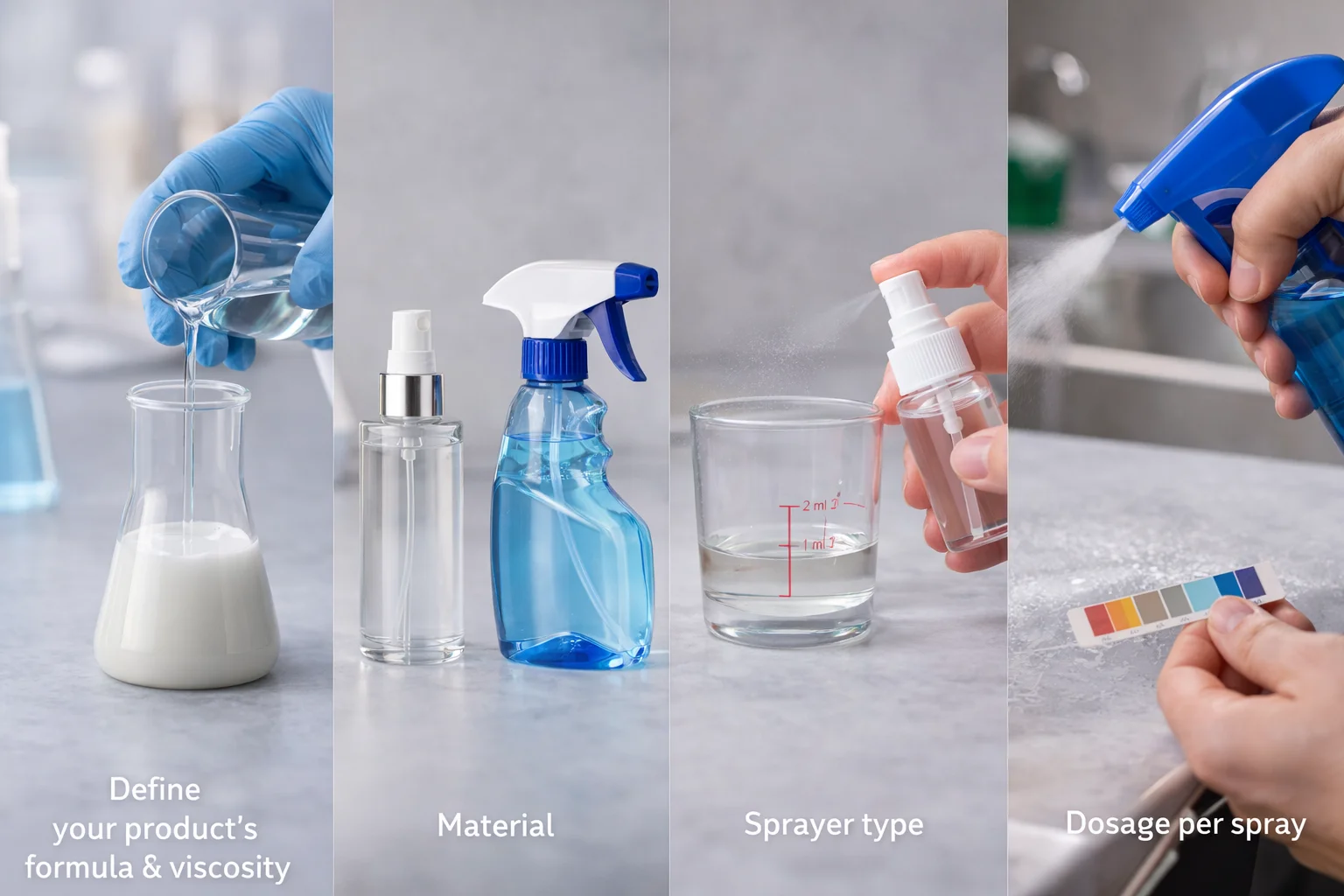
As a manufacturer, I want my clients to succeed. The best way to do that is to make a smart choice from the start. Follow these steps to narrow down your options and find the perfect package for your product.
Step 1: Analyze Your Formula
What is your product made of? Is it water-based, oil-based, or alcohol-based? Is it thin like water or slightly thicker? The chemical makeup and viscosity of your formula will immediately rule out certain materials and sprayer type[^3]s. For example, some essential oils can degrade certain types of plastic over time.
Step 2: Match the Material
Based on your formula, choose a material. Glass is inert and offers a premium feel, making it great for sensitive oils and luxury products. For plastics, PET is clear and lightweight, good for many cosmetics. HDPE is more opaque and rigid, offering better chemical resistance for cleaners and industrial products.
Step 3: Select the Sprayer Mechanism
How should the product feel when applied? A face mist needs a gentle, fine cloud from a mist sprayer. A stain remover needs a powerful jet from a trigger sprayer[^9]. Also, consider the dosage. Sprayers have different outputs, measured in microliters (mcl) or milliliters (ml) per spray. You need to choose one that delivers the right amount of product.
Step 4: Test, Test, Test
This is the most critical step. Never go into mass production without testing[^13] your final product in the final packaging. Fill some bottles and let them sit for several weeks. Check for leaks, clogs, discoloration, or any warping of the bottle. Use them as a customer would. This step catches problems before they cost you thousands.
What Are the Biggest Mistakes People Make When Choosing Spray Bottles?
You think you found the perfect bottle, but it fails after launch. This common nightmare is avoidable. Learn the biggest mistakes so you don't repeat them.
The biggest mistakes are choosing based on price alone, not testing[^13] the formula with the packaging, using the wrong material for the liquid, and providing unclear specifications to the manufacturer. These errors lead to leaks, clogs, and product failure[^5].
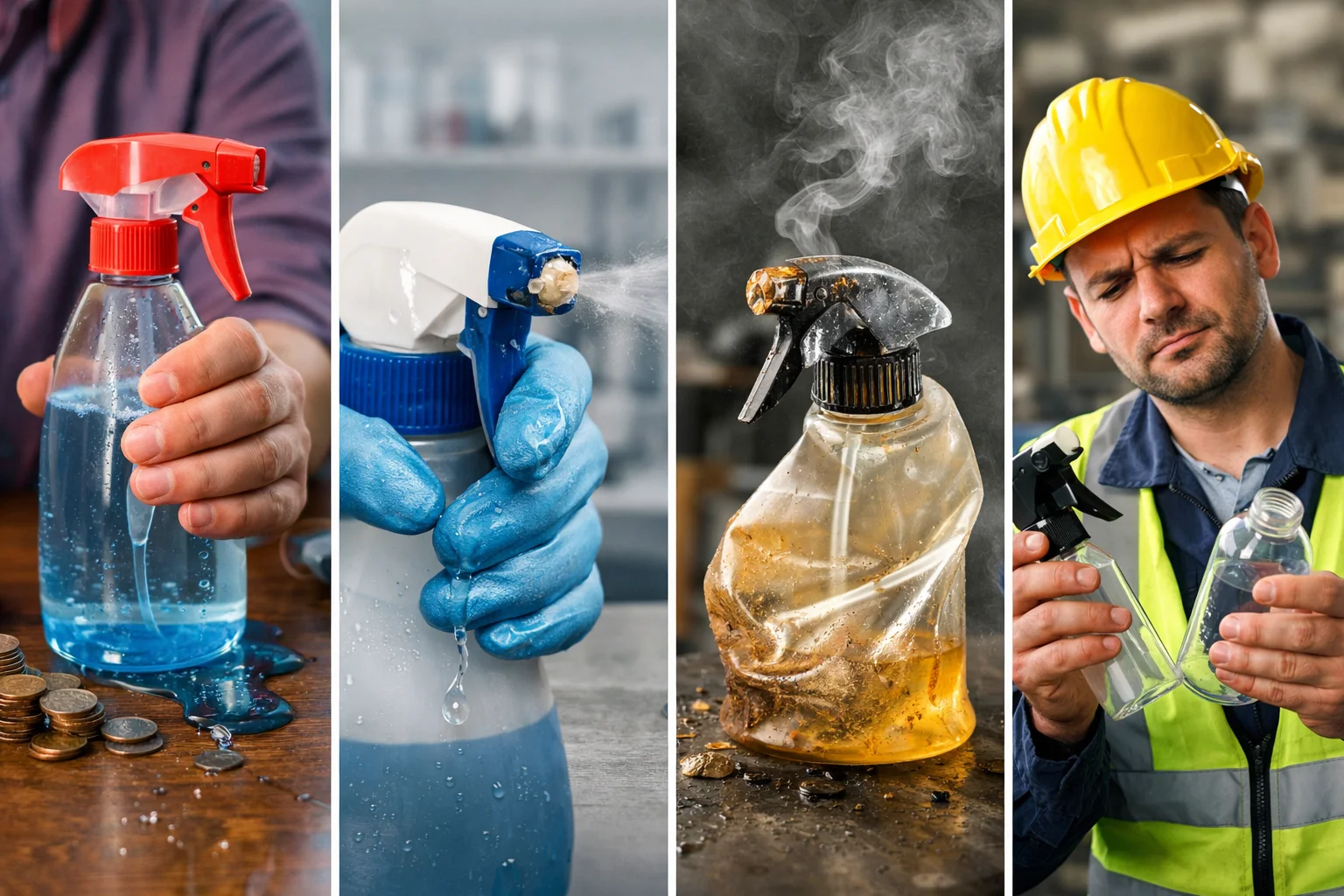
Over the years, I've seen brands make the same few mistakes over and over. These mistakes are often born from a desire to save time or money, but they almost always end up costing more in the long run. Avoiding them is simple if you know what to look for.
Mistake 1: The "Cheapest is Best" Mentality
Choosing the cheapest bottle and sprayer is a massive risk. A low-quality pump might fail after a few uses, or the bottle plastic might be too thin and deform. I once saw a brand save a few cents per bottle, only to have to refund thousands of orders because the sprayers broke. The cost of a damaged brand reputation is far higher than the initial savings.
Mistake 2: Skipping Compatibility Testing
This is non-negotiable. I can't count how many times a brand has come to us with a product that is literally eating through its packaging. An acidic formula in the wrong plastic bottle can cause it to warp or leak on store shelves. You must test your specific formula with the specific bottle you plan to use.
Mistake 3: Ignoring the User Experience
A beautiful bottle is useless if it's frustrating to use. Is the trigger too stiff? Does the sprayer dribble instead of mist? Does the bottle tip over too easily? These small details make a big difference in how customers perceive your product's quality. A product that is a joy to use will get repeat purchases.
Mistake 4: Poor Communication with the Factory
We can only make what you ask for. If your specifications are vague, you leave room for error. Be specific about the material, color, sprayer output, and especially the dip tube length[^14]. Clear communication and a detailed spec sheet prevent misunderstandings and ensure you get exactly what you envisioned.
Plastic vs. Glass Spray Bottles: Which One Is Actually Better for Your Product?
Choosing between plastic and glass feels like a simple choice. But the wrong material can compromise your product's safety and effectiveness. Let's settle the debate.
Neither is universally "better." Glass is great for a premium feel and protecting sensitive formulas like essential oils. Plastic, like PET or HDPE, is more durable, lighter, and often cheaper. The best choice depends on your product, brand, and budget.
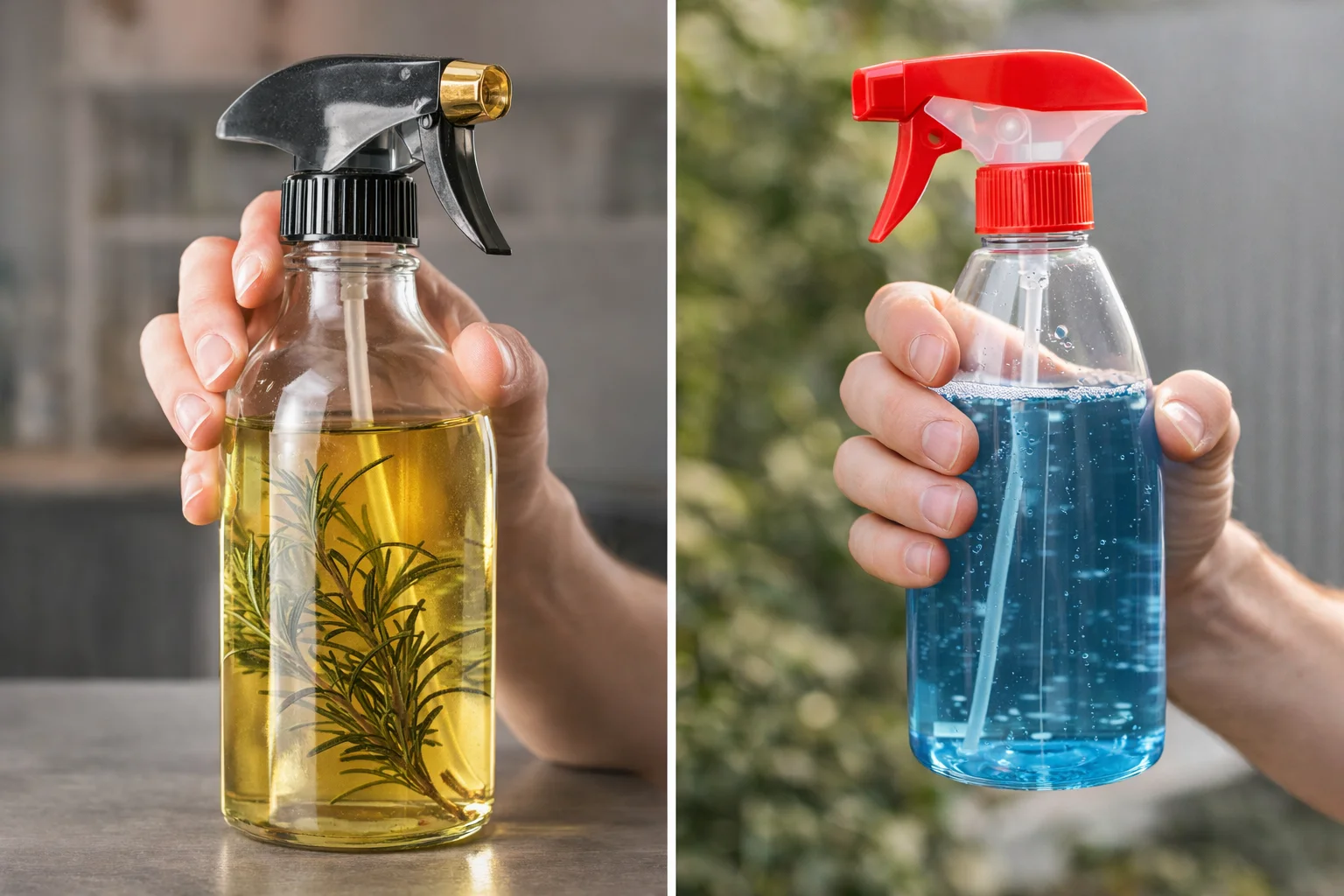
The "plastic vs. glass" question is one I get all the time. The truth is, both have significant advantages and disadvantages. The "better" option is the one that best fits your product, your brand identity, and your supply chain. Let's compare them directly.
| Feature | Glass | Plastic (PET, HDPE) |
|---|---|---|
| Brand Perception | Premium, luxurious, sustainable | Practical, modern, versatile |
| Chemical Compatibility | Excellent; very inert and non-reactive | Good to excellent; depends on the plastic type (HDPE is very resistant) |
| Durability | Fragile; can break if dropped | Excellent; shatter-resistant and durable |
| Weight | Heavy | Lightweight |
| Cost | Generally higher | Generally lower |
| UV Protection | Poor (unless colored, e.g., amber or cobalt) | Can be manufactured with UV inhibitors |
| Shipping | More expensive and requires more protective packaging | Cheaper and easier to ship |
I often advise clients to think about their end user. If you are selling a high-end aromatherapy mist with delicate essential oils, the weight and protective qualities of amber glass reinforce the product's value. If you are selling a household cleaner that needs to survive being dropped and used daily, a lightweight and durable HDPE bottle is the logical choice. The material is a key part of your product's story.
What Is the One Factory Secret Most Brands Don’t Know About Spray Bottles?
You've designed your product and chosen a bottle. But there are hidden details that only manufacturers know. Ignoring them can lead to unexpected production delays and issues.
Most brands don't know that the dip tube length[^14] is critical and must be specified. A tube that's too short wastes product, while one that's too long can get blocked. Also, the quality of the internal spring and gasket is crucial for preventing leaks.
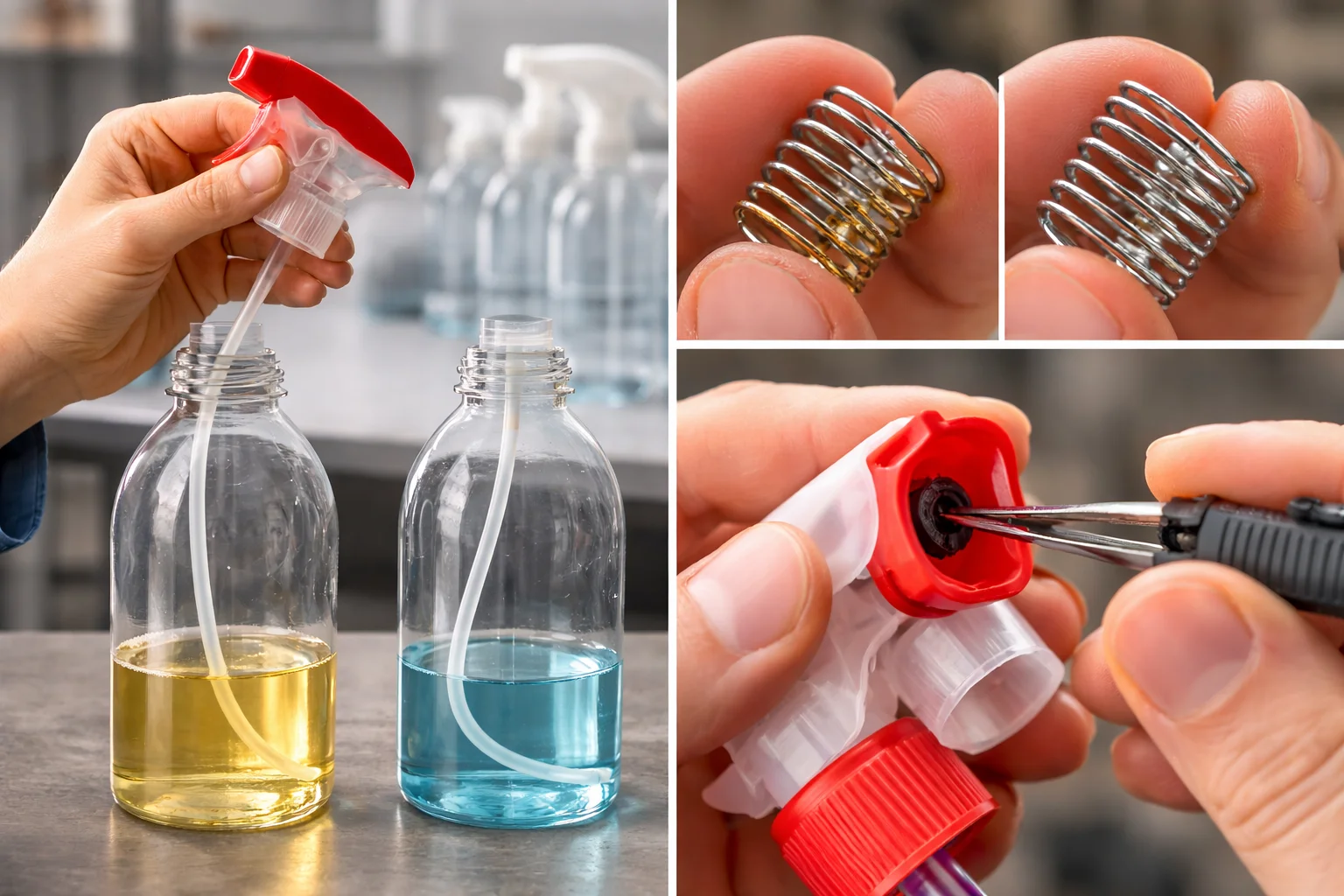
From our factory floor, I can tell you that the most successful brands are obsessed with the small details. These are the things that separate a good product from a great one. Here are the secrets that can make or break your packaging.
The Importance of the Dip Tube
The dip tube is the thin plastic straw that goes from the sprayer down into the liquid. Its length is critical. If it’s too short, it will leave a frustrating amount of product at the bottom of the bottle. If it’s too long, it will bend and seal itself against the bottom, preventing the product from being sprayed. We can cut dip tubes to the exact length needed for your bottle, but you have to tell us what that length is. Always specify that the tube should be cut to just reach the bottom corner of the bottle.
The Unseen Parts: Gaskets and Springs
Inside every sprayer pump is a small spring and a gasket. You never see them, but they are essential. The spring provides the force for the pump to return to its position. The gasket creates the seal that prevents leaks. For corrosive formulas, you need a high-grade stainless steel spring (like 316 instead of 304) to prevent rust. The gasket material must also be compatible with your formula to avoid swelling or degrading. These are small details that we can help with, but you have to start the conversation.
Why Clear Specifications Matter Most
The biggest issues we see come from unclear specifications. When a brand simply orders a "standard trigger sprayer," there is too much room for interpretation. A successful partnership starts with a detailed tech pack. Specify the materials, the output dosage, the dip tube length, and the color. The more details you provide upfront, the smoother the production process will be.
Conclusion
Choosing the right spray bottle is vital for your product's success. By matching the material and sprayer to your formula and testing properly, you protect your brand and delight customers.
[^1]: Understanding the role of spray bottles can enhance your product's appeal and customer satisfaction.
[^2]: Choosing the right material is crucial for product integrity and customer experience.
[^3]: Learn about sprayer types to ensure optimal product application and user satisfaction.
[^4]: Discover how fine mist sprayers can enhance the application of cosmetic products.
[^5]: Identifying potential pitfalls can help you avoid costly mistakes.
[^6]: Enhancing user experience can lead to positive reviews and repeat purchases.
[^7]: Effective packaging can enhance your brand's image and customer loyalty.
[^8]: Understanding chemical compatibility can prevent product failures and recalls.
[^9]: Understanding trigger sprayers can improve the effectiveness of cleaning products.
[^10]: Explore the convenience of mini sprayers for travel-sized products.
[^11]: Explore the versatility of spray bottles in various applications and industries.
[^12]: Choosing the right spray bottle can enhance the effectiveness of cleaning solutions.
[^13]: Testing ensures that your product performs well and meets customer expectations.
[^14]: The right dip tube length ensures efficient product use and minimizes waste.