You spent months perfecting your formula. But now, customers complain it's going bad too fast. The problem isn't your ingredients; it's the packaging you chose to put them in.
Cosmetic containers[^1] are your formula’s first line of defense. They protect it from air, light, and bacteria that cause spoilage. The right material, seal, and dispenser type directly prevents degradation, contamination, and moisture loss, preserving the product's quality and extending its shelf life[^2].
I've seen so many incredible formulas fail in the market, not because they were bad, but because of a simple packaging mistake[^3]. A brand owner picks a beautiful jar, but the formula inside has sensitive oils that need protection from air. After a few weeks on the shelf, the product goes rancid. This is a costly and completely avoidable problem. Let's break down exactly how your container choices are secretly controlling your product's success and how you can get it right from the start.
Why can packaging make or break your product's shelf life[^2]?
Your formula is perfect on paper. But customers say it separates or smells off after a month. You blame the ingredients, but the real culprit is often the packaging.
Packaging acts as a critical barrier against oxygen, UV light[^4], and microbes. A poorly sealed jar or a container made from the wrong material exposes the formula to these elements. This exposure accelerates oxidation[^5], degrades active ingredients, and spoils the product long before its expiration date.
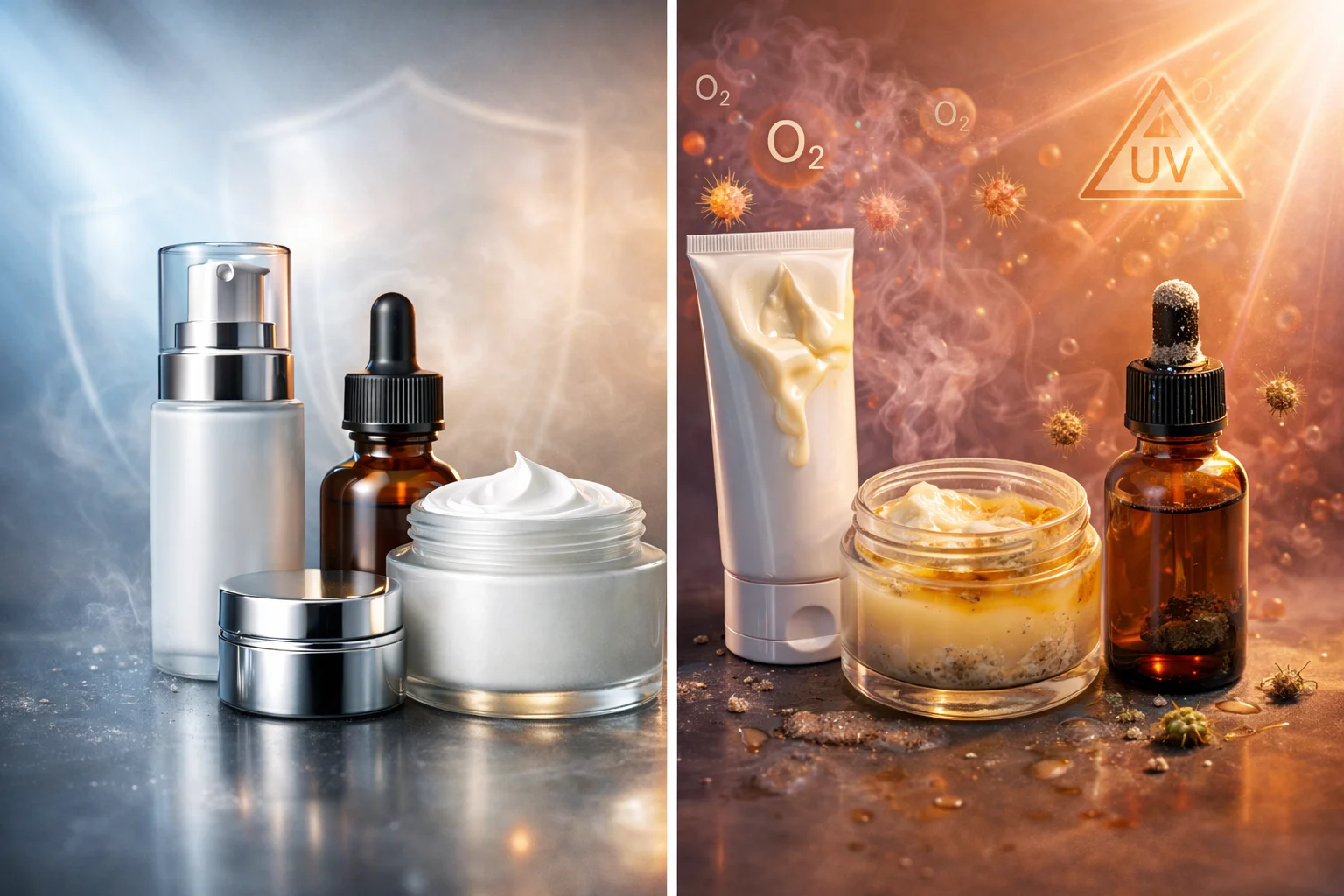
From my factory perspective, a container is not just a bottle. It's a complete defense system for the formula inside. When we talk about packaging, we see it as the primary guardian of the product's integrity. Its main job is to create a stable environment where your formula can live out its intended shelf life[^2] without degrading. Think of it this way: you wouldn't leave food out on the counter and expect it to stay fresh. The same logic applies to cosmetics.
The Oxygen Barrier
Oxygen is the enemy of many active ingredients, especially natural oils, antioxidants, and vitamins. When exposed to air, these ingredients oxidize. This can cause them to become less effective, change color, or develop an "off" smell. Airless pumps are fantastic because they prevent air from ever touching the product.
The Light Barrier
UV light[^4] from the sun or even store lighting can break down sensitive ingredients[^6]. Vitamin C serums, for example, can lose their potency very quickly when exposed to light. This is why you often see them in dark, opaque containers. Amber or cobalt blue glass and fully opaque plastics are excellent choices for light-sensitive formulas[^7].
The Contamination Barrier
Every time a customer dips their fingers into a jar, they introduce bacteria. This can compromise the preservative system and lead to microbial growth. Packaging like tubes and pumps minimizes this risk by dispensing the product without direct contact.
What are the four main reasons cosmetics go bad faster?
You follow all the rules for a stable formula. Still, your product's shelf life[^2] is shorter than you expected. The reason is usually one of four environmental factors[^8] your packaging fails to control.
Cosmetics spoil faster due to four main factors: microbial contamination[^9] from user contact, oxidation[^5] from air exposure, degradation from light, and chemical reactions with the container material. The right packaging directly mitigates all four of these risks, acting as the first line of defense for your formula.
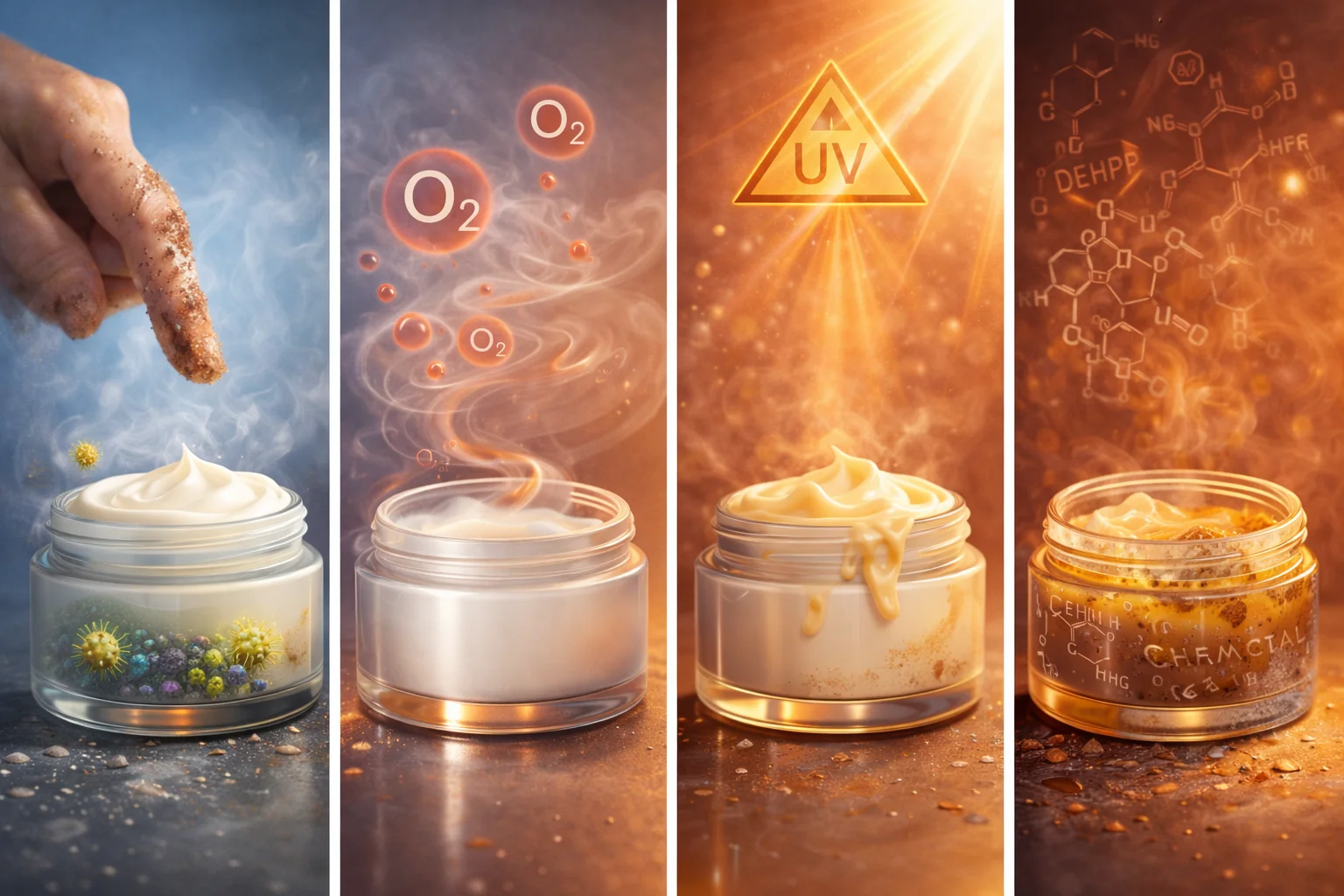
I often see brands focus 100% on perfecting the formula inside the bottle, and they forget that the bottle itself plays an equal role in the product's stability. A million-dollar formula can be ruined by a ten-cent container that doesn't address these four external factors. Protecting against them is non-negotiable for any brand that wants to avoid customer complaints, returns, and damage to its reputation. We always advise our clients to think of packaging as an active ingredient—it’s that important.
Here is a simple breakdown of these four problems and the packaging solutions[^10] for each.
| Reason for Spoilage | What Happens to the Product | The Packaging Solution |
|---|---|---|
| Microbial Growth | Bacteria and mold from fingers or air contaminate the product, causing it to spoil and become unsafe. | Use airless pumps[^11], tubes, or dispensers that prevent direct user contact. Ensure a tight seal. |
| Oxidation | Air gets into the container and degrades sensitive oils, vitamins, and antioxidants, causing color/smell changes. | Choose airless containers or bottles with treatment pumps that minimize air exposure. |
| UV Degradation | Sunlight or artificial light breaks down light-sensitive active ingredients, making them ineffective. | Use opaque materials like colored glass (amber, cobalt) or plastics that block UV rays. |
| Material Incompatibility | The formula reacts with the plastic or the cap liner, causing the container to warp or the product to spoil. | Test the formula with the specific container material (e.g., PET, Glass) to ensure there is no chemical reaction. |
Which container types protect products the best?
Jars are popular, but are they safe for your formula? Pumps seem modern, but are they all effective? Choosing the right container type feels overwhelming, but it's crucial for product stability.
Airless pumps and squeezable tubes generally offer the best protection. They minimize both air exposure and direct finger contact, dramatically reducing contamination and oxidation[^5] risks. Open-mouth jars offer the least protection. The best choice always depends on your formula's sensitivity and viscosity.
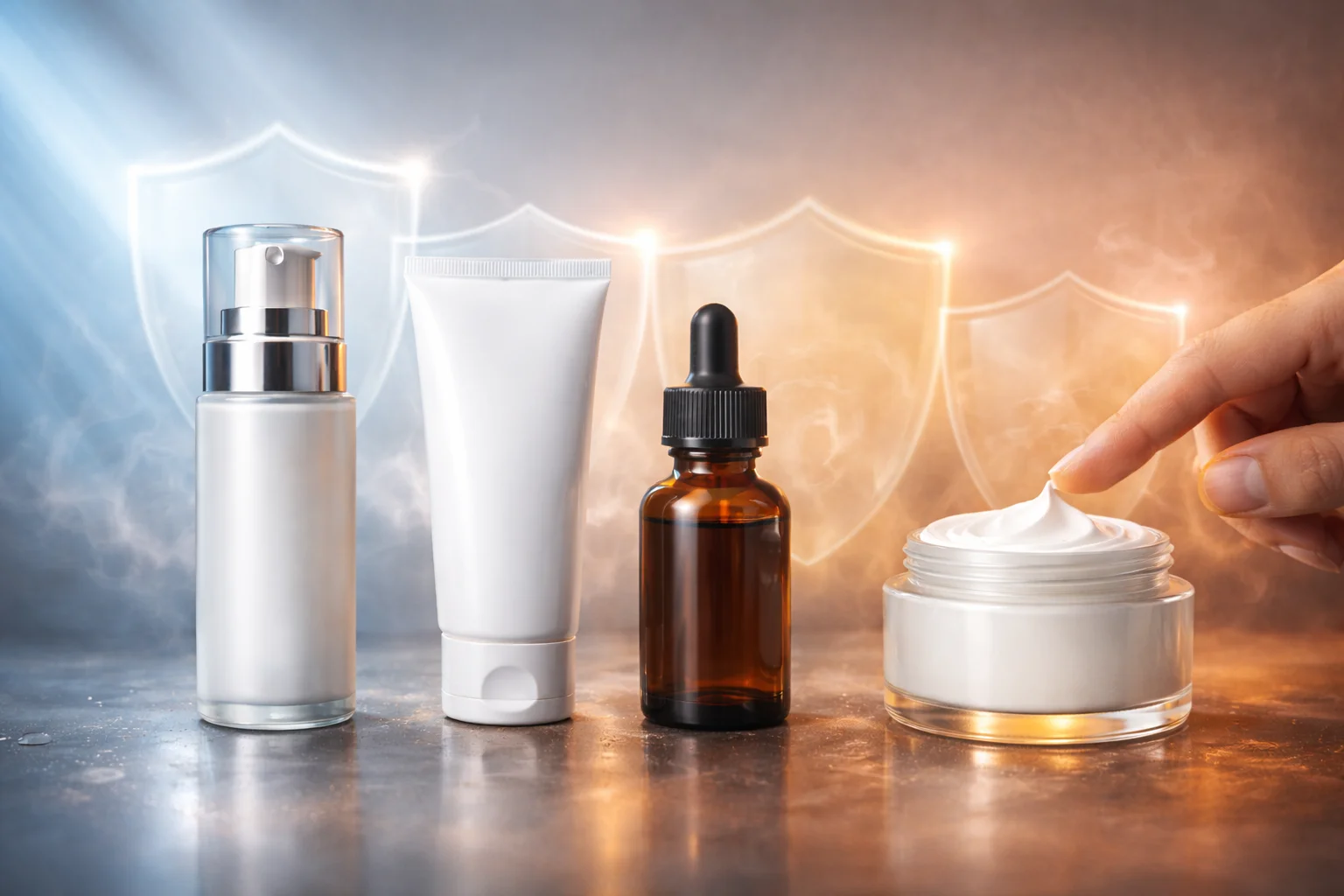
When a new brand comes to us, one of the first questions we ask is, "How sensitive is your formula and how thick is it?" The answer immediately narrows down the packaging options. You can't put a watery serum in a jar, and you can't put a thick balm in a pump. It's about matching the product to the right delivery system. A high-tech serum with Vitamin C and peptides needs an airless container to protect that investment. A simple, robust body butter, on the other hand, can do just fine in a well-sealed, wide-mouth jar.
Jars
These are best for very thick products[^12] like balms, masks, and heavy creams. They are easy for customers to use and get every last bit of product. However, they have the highest risk of contamination from fingers and maximum exposure to air every time they are opened.
Tubes
Tubes are great for lotions, gels, and creams. They are hygienic because they prevent finger-dipping, and they protect the product well from light and air. They are also durable and great for travel.
Bottles with Pumps or Droppers
These are ideal for serums, lotions, and liquid foundations. Pumps offer controlled, hygienic dispensing. Droppers are excellent for low-viscosity oils and serums, allowing for precise application. They offer much better protection than jars.
Airless Containers
This is the gold standard for protecting sensitive, high-tech formulas. The internal piston system pushes the product up without letting any air in. This prevents oxidation[^5] and contamination, keeping active ingredients potent for much longer.
When it comes to materials, what really matters between glass and plastic?
Glass feels premium, and plastic is practical. Brands often choose based on looks and feel alone. But the material's chemical inertness and protective properties are what truly matter for your product.
The most important factor is compatibility with your formula. Glass is inert and impermeable, making it a safe, premium choice for almost any product, especially oils. Plastics like PET and PP are lighter and more durable, but you must test them to prevent chemical leaching or container damage.
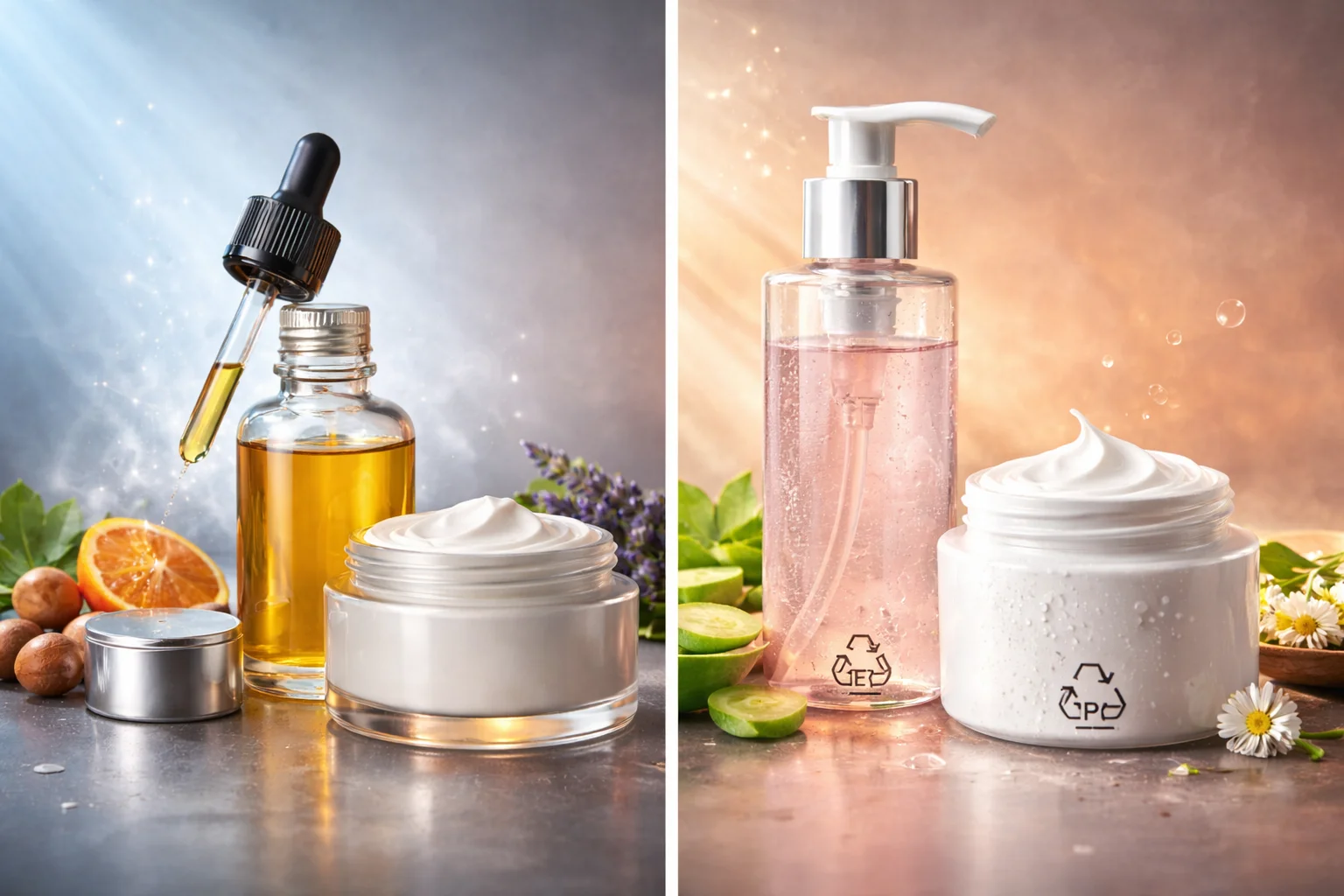
Many brands come to me assuming glass is always the superior choice. It's not that simple. I've seen a high-quality, opaque, airless plastic pump protect a serum far better than a clear glass jar with a simple screw cap. The best choice is not about "glass versus plastic" in general. It is about choosing the right material for your specific formula and pairing it with the right dispensing system. It's always about the complete package, not just one component. Shipping is also a major factor; plastic is much lighter and more durable, which can significantly reduce shipping costs[^13] and breakage rates, especially for e-commerce brands.
| Feature | Glass | Plastic (PET, PP, HDPE) |
|---|---|---|
| Compatibility | Excellent. Very inert and does not react with ingredients. | Good, but requires testing. Some plastics can react with certain oils or solvents. |
| UV Protection | Excellent when colored (amber, cobalt, violet). Clear glass offers no protection. | Excellent when opaque or treated with UV inhibitors. Clear plastic offers little protection. |
| Durability | Fragile. Can break easily during shipping or if dropped by the customer. | Excellent. Shatter-resistant and very durable, making it ideal for e-commerce and travel. |
| Weight | Heavy. This increases shipping costs[^13]. | Lightweight. This significantly reduces shipping costs[^13] and environmental impact. |
| Aesthetic | Perceived as luxurious and premium. | Can be customized to look very high-end. Offers more flexibility in shape and design. |
Are closures and pumps[^14] the number one failure point brands overlook?
Your bottle is perfect. Your formula is stable. But customers complain about leaks during shipping or a pump that stops working. The closure is the most common, and most overlooked, point of failure.
Yes, absolutely. A small mismatch between the bottle's neck, the cap's liner, or the pump's engine causes most leaks and product failures. The closure is a precision system. Even a tiny incompatibility can compromise the seal, leading to contamination, evaporation, and costly shipping disasters.
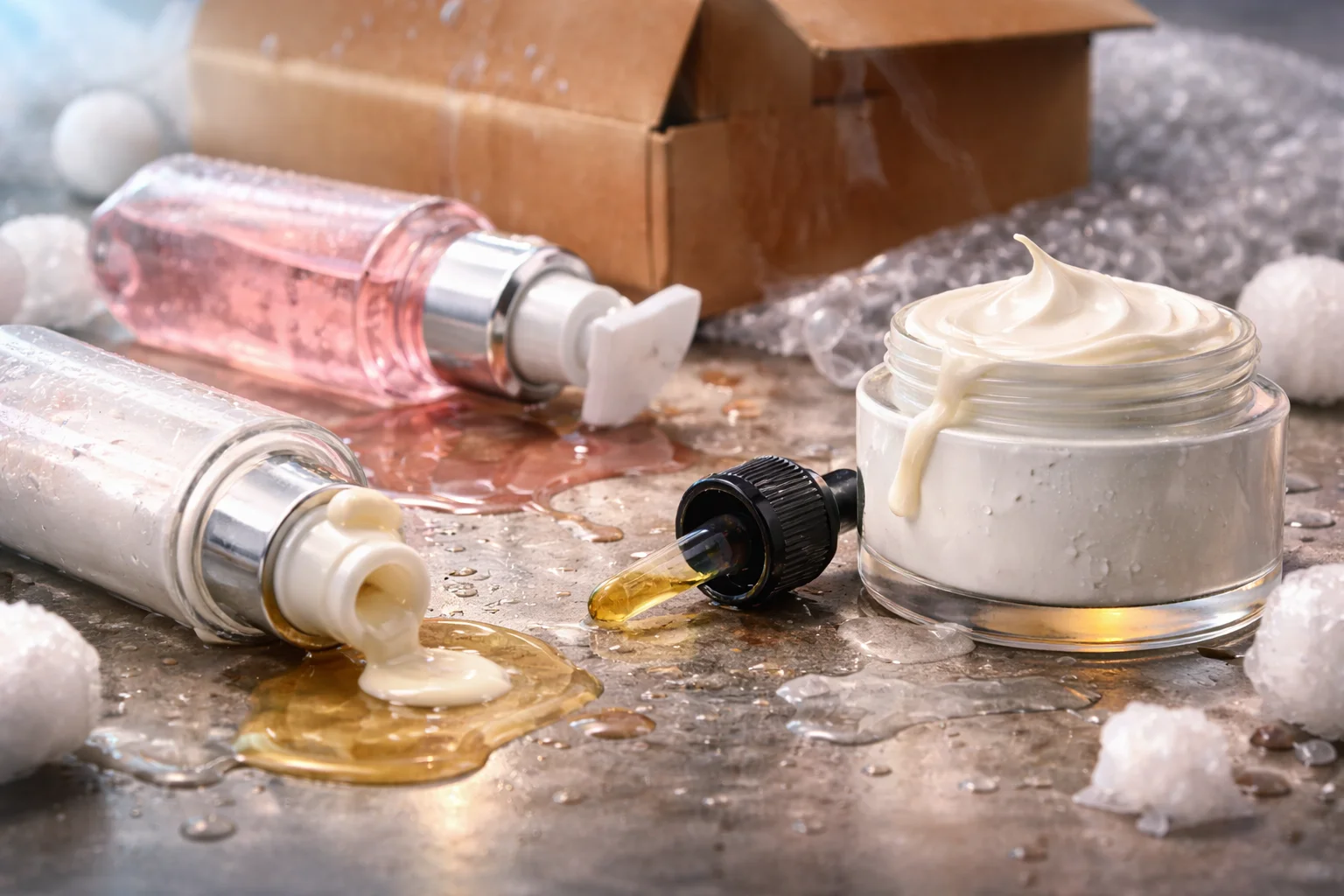
This is the part that I see new brands get wrong most often. They order bottles from one supplier and caps or pumps from another to save a few cents, assuming they will fit because they have the same "neck size." But there are subtle differences in thread design and sealing surfaces that cause major problems. A cap might screw on, but it won't create a perfect seal. In our factory, we always emphasize that the bottle, pump, and cap are one single system. They must be designed and tested to work together perfectly.
The Neck Finish
The threads on a bottle neck (e.g., 24/410) must perfectly match the threads on the cap. Even a small variation can lead to a weak seal that leaks under pressure during shipping.
The Cap Liner
The small disc inside a cap is called a liner. It's essential for creating an airtight seal. The liner material must be compatible with your formula. For example, an oil-based product can degrade the wrong type of foam liner, causing it to fail.
The Pump Engine
The internal spring and piston mechanism in a pump is its "engine." This engine must be strong enough for your formula's viscosity. Using a watery toner pump for a thick lotion will cause it to clog or fail to dispense, frustrating your customers. This is why we insist on testing the complete packaging set with the final formula before a brand commits to mass production.
How can you choose the right container with a quick checklist?
Feeling overwhelmed with all the options from jars to airless pumps[^11]? Don't guess and hope for the best. Use this simple checklist to make a smart, informed decision for your cosmetic packaging.
First, analyze your formula's sensitivity to air and light. Second, consider its viscosity. Third, match the container to the user experience[^15]. Finally, test the complete packaging system—bottle, cap, and dispenser—with your product to ensure total compatibility and prevent leaks before production.
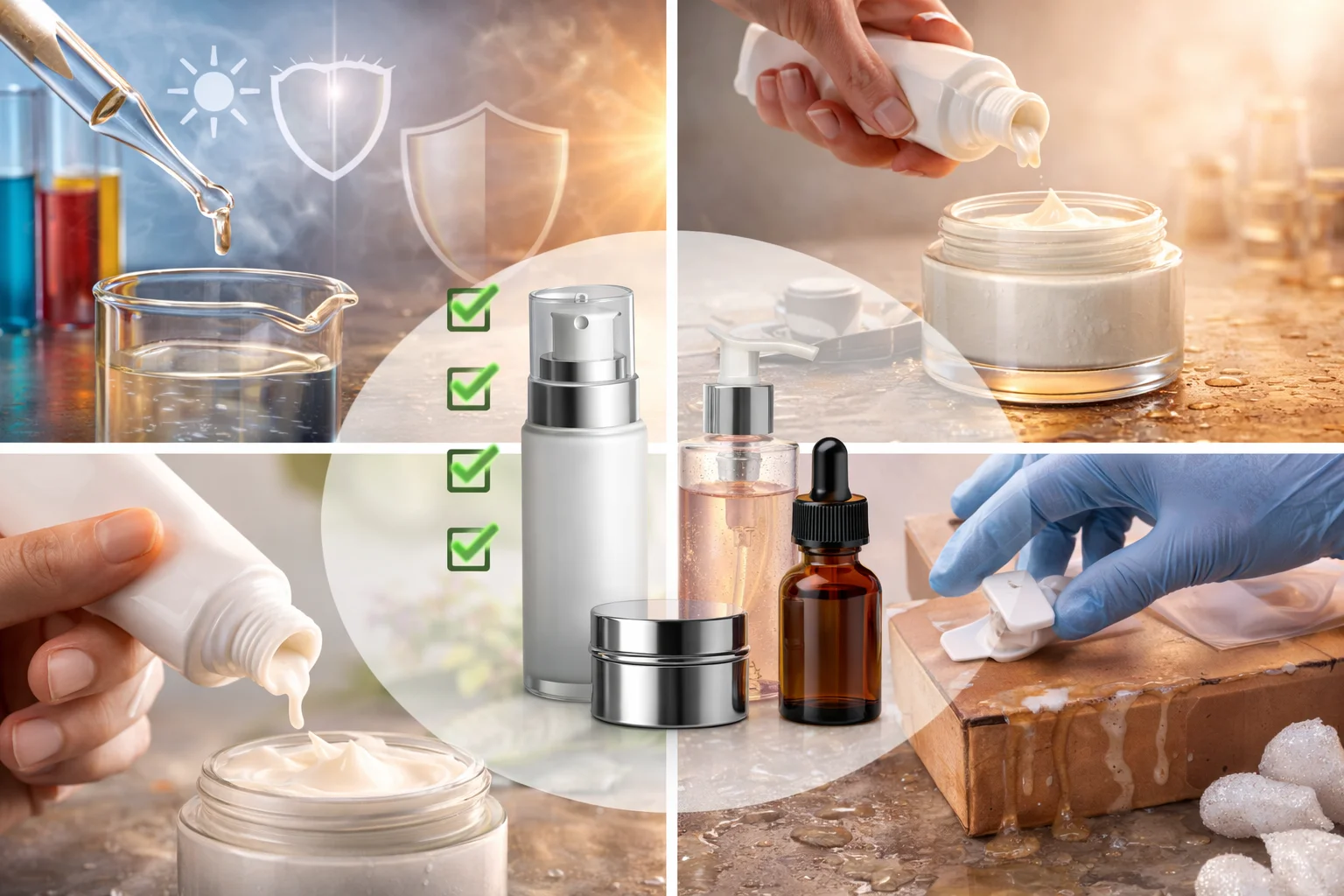
Going through a structured process like this removes the guesswork. It forces you to think about packaging from a technical standpoint, not just an aesthetic one. I tell my clients that this five-step check is the most important part of their packaging development[^16]. Doing this work upfront will save you thousands of dollars and countless headaches down the road from product recalls[^17], customer complaints, and rework. It's the difference between a successful launch and a costly failure.
- Analyze Your Formula: Does it contain sensitive active ingredients like Vitamin C, retinol, or natural oils? If yes, you need protection from air and light. An airless or opaque container is a must.
- Match Viscosity to Dispenser: How thick is your product?
- Thick Creams/Balms: Wide-mouth jars or large tubes.
- Lotions/Creams: Pumps or tubes.
- Serums/Oils: Droppers or treatment pumps.
- Watery Liquids/Toners: Sprayers or bottles with orifice reducers.
- Consider the User Experience: Where will the customer use this? In a wet shower environment (avoid glass)? For travel (choose durable plastic tubes)? On a vanity (a glass dropper bottle might feel luxurious)?
- Align with Your Brand: Does heavy glass fit your luxury brand image? Does post-consumer recycled (PCR) plastic align with your eco-friendly values? The material and design should tell your brand's story.
- Test the Complete System: This is the most critical step. Get samples of the bottle, cap, and pump together. Fill them with your final formula. Let them sit for several weeks. Ship them to yourself. Check for leaks, discoloration, pump failure, or any changes.
FAQ: Short answers that brand owners want?
What is the average shelf life[^2] of cosmetics?
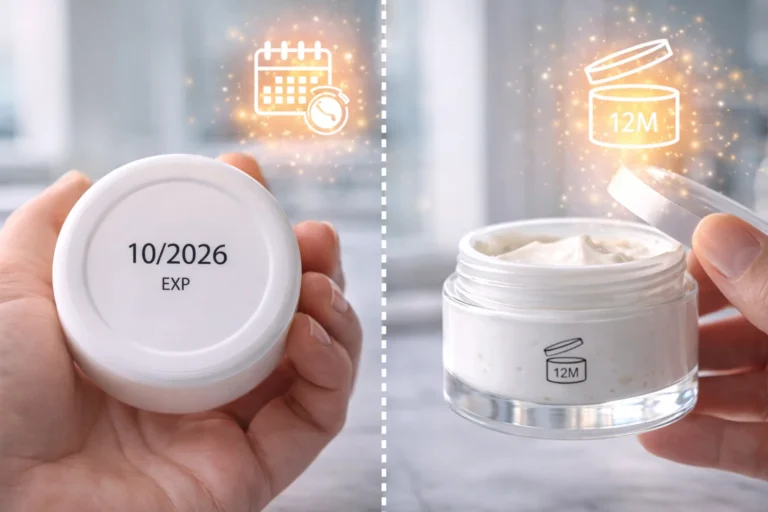
Typically, unopened cosmetics last for 24-36 months. Once opened, the "Period After Opening" (PAO) is usually 6-12 months. Excellent packaging, like an airless system, is key to ensuring the product reaches its maximum potential shelf life[^2].
Does airless packaging really extend shelf life[^2]?
Yes, significantly. By creating a vacuum that prevents air from ever touching the product, it dramatically slows down the oxidation[^5] process. This keeps sensitive ingredients stable and potent for much longer than a product in a standard jar or pump bottle.
Is clear packaging bad for all products?
No, not for all products. It is bad for any formula with light-sensitive ingredients like Vitamin C, retinol, essential oils, or certain plant extracts. For simple products without these ingredients, like a basic hyaluronic acid serum or a simple cleanser, clear packaging can be perfectly fine.
How do I test for packaging compatibility?
The best way is a stability test. Fill your final, complete packaging unit with your final formula. Store these samples under various conditions (e.g., room temperature, elevated temperature like 40°C) for at least 4-12 weeks. Check regularly for any changes like leaks, product discoloration, changes in smell or texture, and any warping or paneling of the container itself.
Conclusion
Choosing the right container is not an expense; it's an investment in your product's quality and your brand's reputation. Always test the complete bottle, cap, and pump system together.
[^1]: Explore this link to learn how cosmetic containers protect your products from spoilage and enhance their shelf life.
[^2]: Discover the critical role packaging plays in extending the shelf life of your cosmetic products.
[^3]: Learn about common packaging mistakes that can ruin even the best formulas and how to avoid them.
[^4]: Understand the impact of UV light on cosmetic ingredients and how to protect them effectively.
[^5]: Learn about oxidation and its effects on cosmetic products, and how to prevent it.
[^6]: Understand which sensitive ingredients need special packaging considerations to maintain their effectiveness.
[^7]: Learn how to package light-sensitive formulas to protect their efficacy and quality.
[^8]: Learn about the environmental factors that can compromise cosmetic product stability and how to address them.
[^9]: Explore the dangers of microbial contamination and how proper packaging can mitigate these risks.
[^10]: Discover various packaging solutions that can help maintain the integrity of your cosmetic products.
[^11]: Find out why airless pumps are considered the gold standard for protecting sensitive formulas.
[^12]: Find out the best packaging options for thick products to ensure proper dispensing and usability.
[^13]: Discover how the choice of packaging can significantly impact shipping costs and logistics.
[^14]: Learn about the importance of closures and pumps in ensuring product safety and effectiveness.
[^15]: Explore how thoughtful packaging design can enhance the user experience and customer satisfaction.
[^16]: Explore the essential steps in packaging development to ensure product stability and success.
[^17]: Understand the common causes of product recalls and how proper packaging can prevent them.