Are you worried your favorite beauty product's packaging is hurting the planet? You see so much waste. It's time for brands to make better, greener choices for our future.
Brands choose sustainable packaging[^1] by balancing eco-friendly materials[^2], cost, and scalability. They consider the entire lifecycle, from sourcing to disposal. The best choices combine recyclable materials[^3], smart design, and a reliable supply chain[^4] to reduce environmental impact[^5] while protecting the product effectively.
This seems simple, but there is a lot to unpack. We need to look at what's really happening behind the scenes in the beauty industry. Let's start with the basics and see why this conversation is so important today. This journey will show you the real challenges and opportunities brands face.
Why Does Sustainable Cosmetic Packaging Matter So Much?
The beauty industry creates tons of plastic waste every year. This pollution clogs our oceans and landfills. We need a change before the problem gets even worse for everyone.
Sustainable packaging matters because it reduces waste, lowers carbon footprints[^6], and meets growing consumer demand[^7] for eco-friendly products. It is not just about being green. It is about building a responsible brand image[^8] and ensuring a healthier planet for everyone.
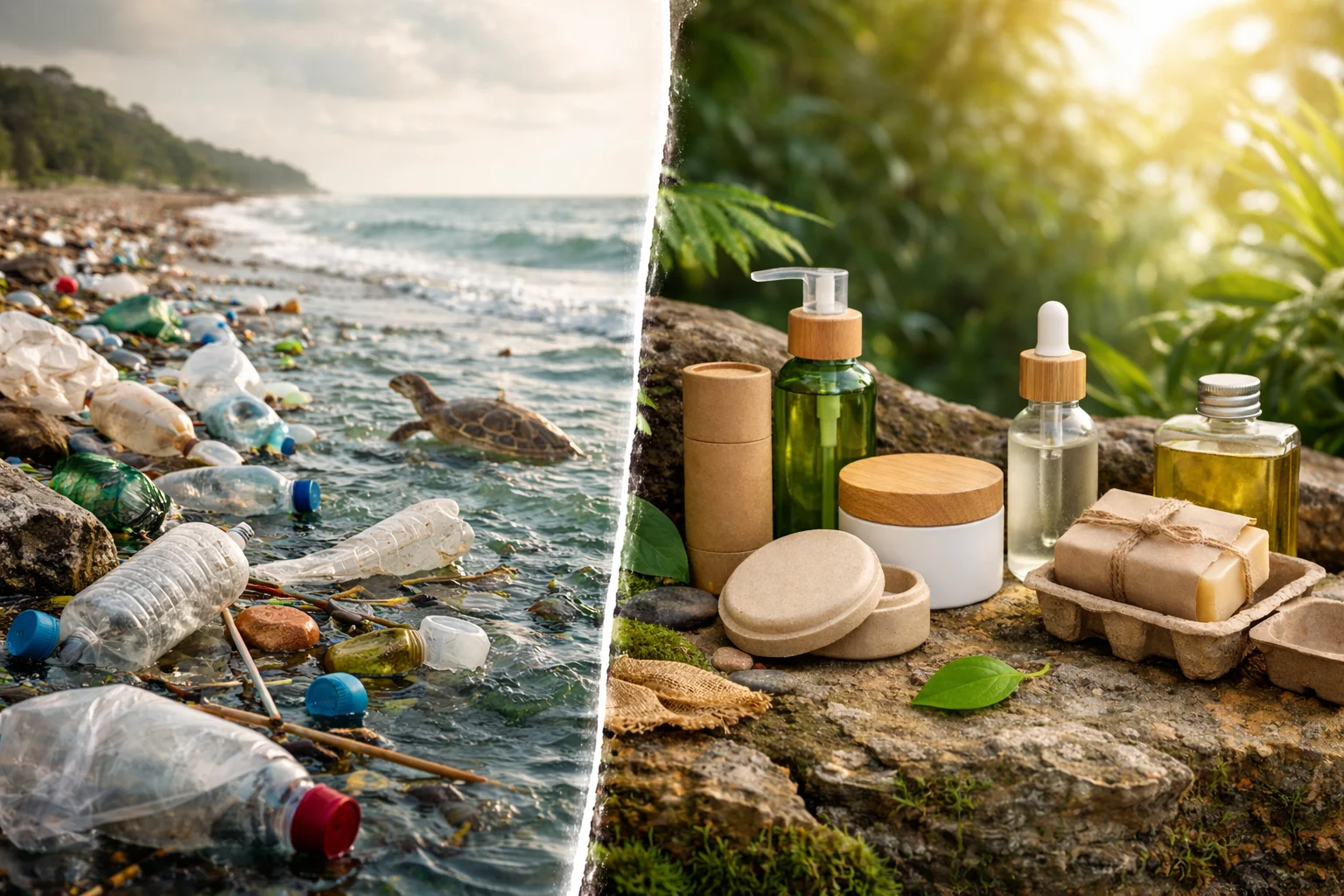
I remember standing in a store and watching a customer choose between two similar face creams. She picked the one in the simple glass jar over the one in a complex plastic container. She told her friend, "I just feel better about this one." That moment stuck with me. It showed me that customers are paying attention. They want to support brands that care. This is not a small trend. It is a major shift in how people shop. Brands that ignore this will be left behind. The impact goes beyond just sales. It is about building trust and a brand that people are proud to use.
The Triple Impact of Greener Choices
Sustainable packaging affects three key areas. It helps the environment, the customer, and the brand itself.
| Area of Impact | Traditional Packaging's Effect | Sustainable Packaging's Effect |
|---|---|---|
| Environment | Creates landfill waste[^9] and ocean pollution. Uses virgin resources. | Reduces waste. Conserves natural resources. Lowers carbon emissions. |
| Consumer Trust | Can cause guilt and lead to brand avoidance. | Builds loyalty. Attracts customers who share similar values. |
| Brand Image | Seen as outdated or irresponsible. Risks negative publicity. | Positions the brand as a modern, responsible leader. |
What Really Is Sustainable Cosmetic Packaging?
You hear "sustainable" and "eco-friendly" everywhere. But what do these words actually mean for packaging? It can be confusing and misleading for many people, including brands trying to do the right thing.
Sustainable cosmetic packaging is designed to be safe for people and the environment throughout its entire life. This includes using recycled or renewable materials, minimizing waste during production, and ensuring the packaging is easily recyclable, compostable, or reusable by the consumer.
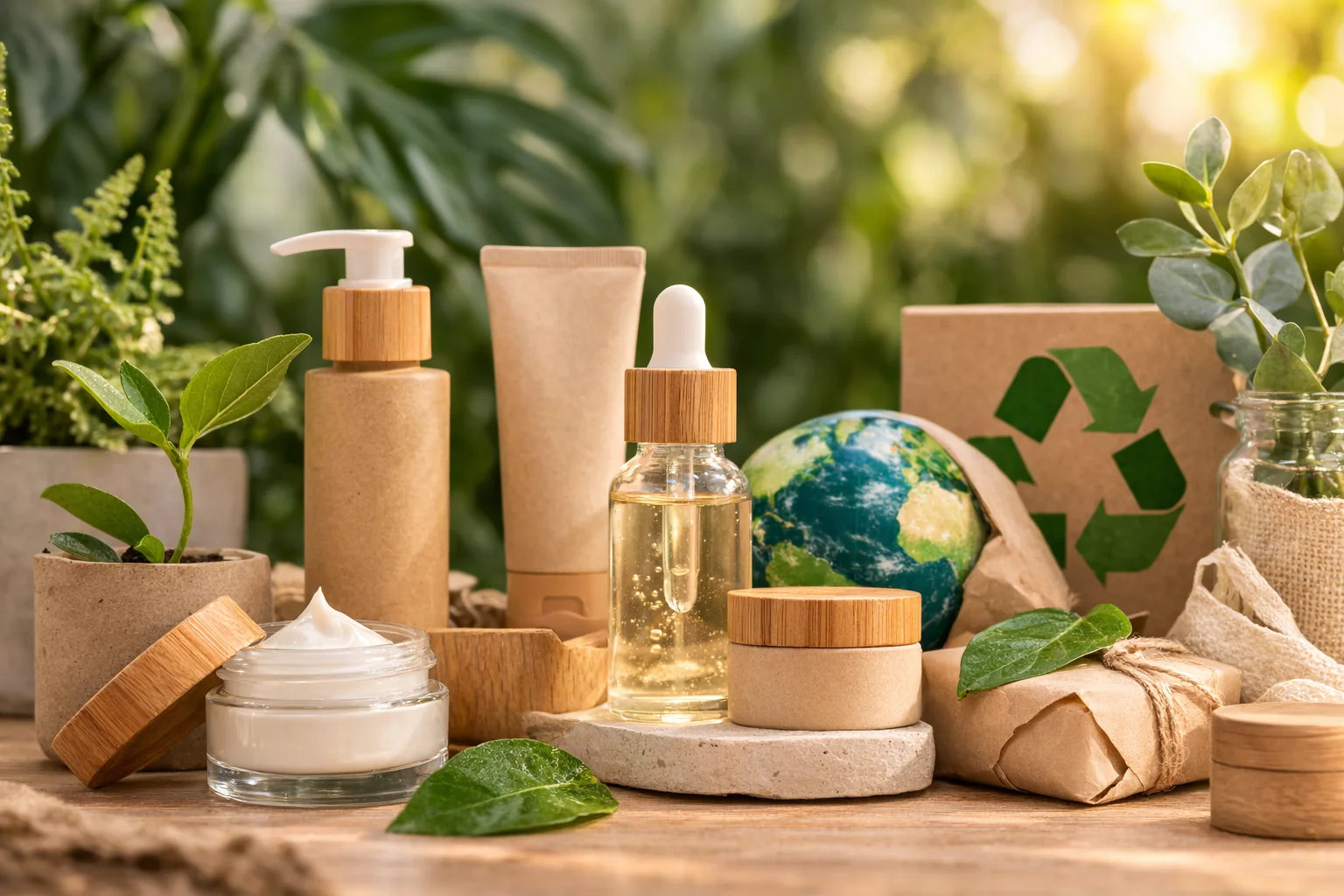
The core idea is to move away from a "take, make, dispose" model. For years, my industry just took new materials, made a package, and then everyone threw it away. This is a one-way street to a landfill. Sustainable thinking creates a circle instead. We should use materials that are already here, like recycled plastic. Or we can use materials that grow back, like bamboo. Then, we need to make sure that after the product is used, the package can go back into the circle. It can be refilled, recycled into something new, or returned to the earth as compost. It is a whole-life-story approach, not just a single-use snapshot. This way of thinking changes everything about how we design and produce our products.
The Lifecycle of a Package
Thinking sustainably means looking at the entire journey of the package.
- Sourcing: Are the materials from recycled sources or responsibly managed forests?
- Manufacturing: Is the production process energy-efficient and does it minimize water use?
- Use: Does the package effectively protect the product without being excessive?
- End-of-Life: Can the customer easily reuse, recycle, or compost it?
What Are The Common Materials Used in Sustainable Beauty Packaging?
Glass feels premium, but is it always the greenest choice? Plastic is bad, right? The truth about materials can be surprising and complex for many brands and the people who buy them.
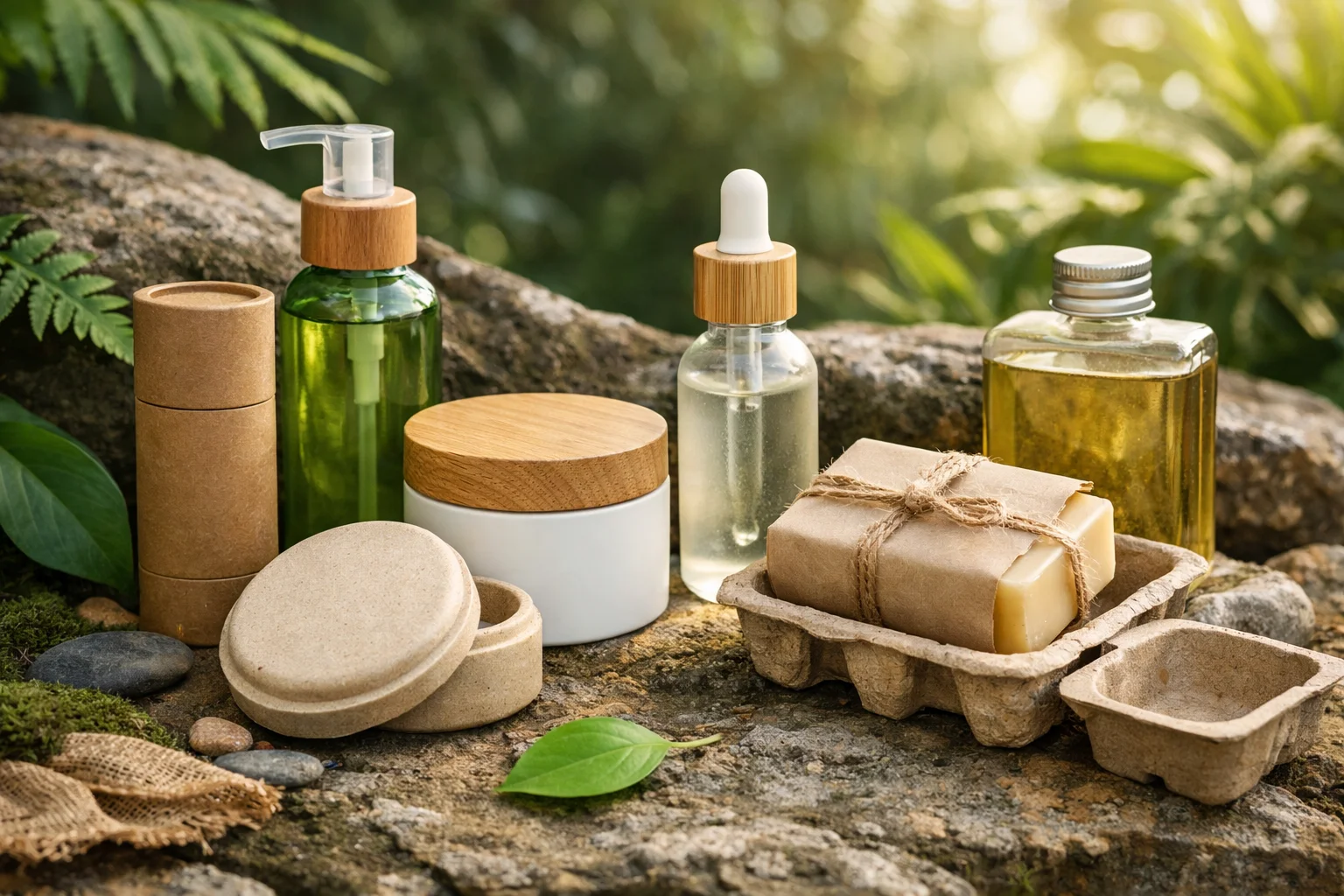
Common materials include post-consumer recycled (PCR) plastics, glass, aluminum, and paper or cardboard. Newer options are bioplastics[^10] from cornstarch or sugarcane, and innovative materials like mushroom or seaweed packaging. Each has its own benefits and drawbacks depending on the product.
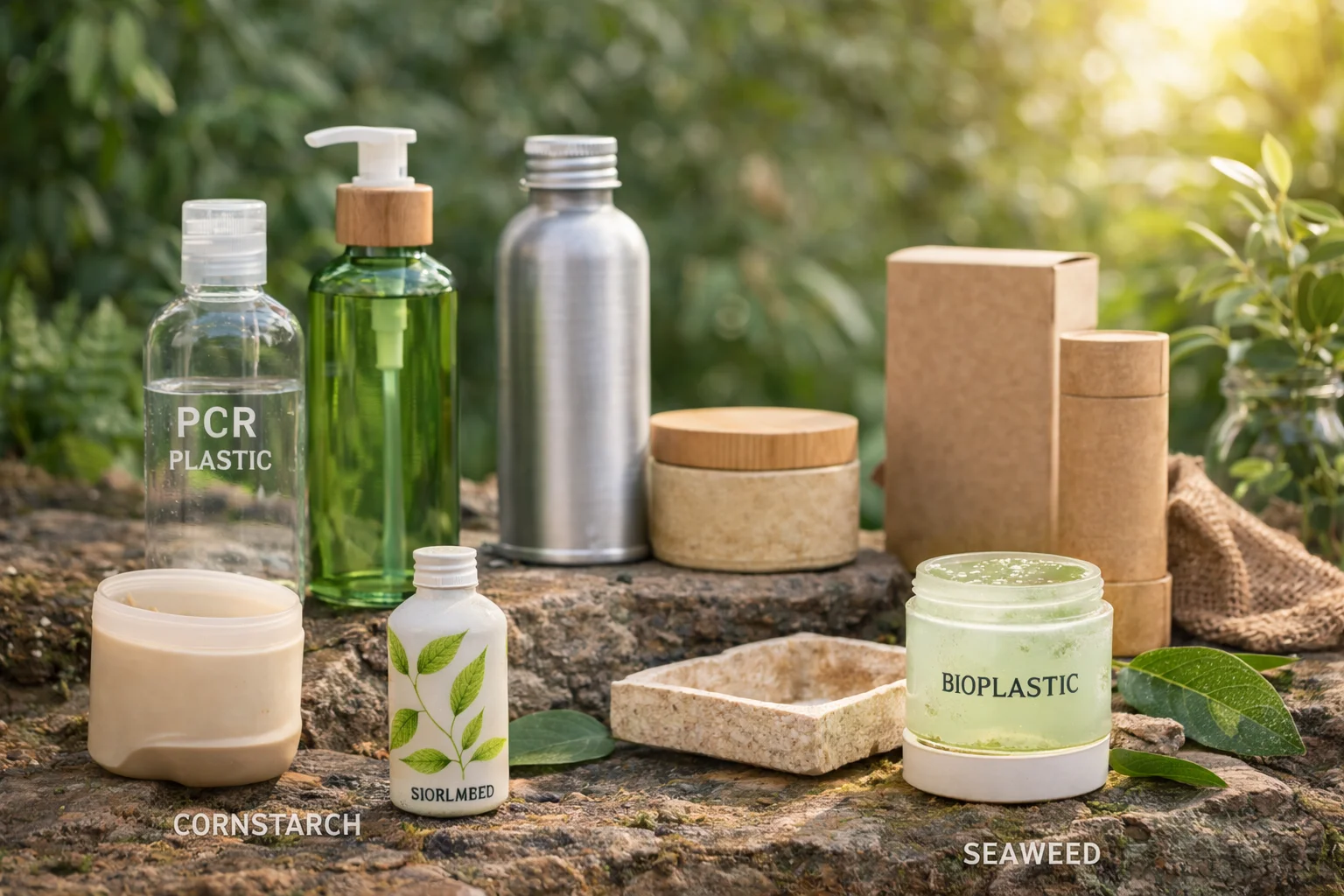
Choosing a material is a huge decision. I once worked with a small skincare brand that was determined to avoid plastic. They chose beautiful, heavy glass jars for their entire line. They thought they were making the most eco-friendly choice. But they did not think about shipping. Their shipping costs went up, and so did their carbon footprint from transporting the heavy packages. They learned a tough lesson. The "greenest" material is not always obvious. It depends on the product's weight, the shipping distance, and what recycling facilities are available to the customer. It is a puzzle with many moving pieces, and you have to look at the whole picture to solve it.
Comparing Your Options
| Material | Pros | Cons | Best For |
|---|---|---|---|
| PCR Plastic | Lightweight, uses existing plastic waste | Can be hard to source, not infinitely recyclable | Lotions, shampoos, liquid products |
| Glass | Infinitely recyclable, feels premium | Heavy, breakable, energy-intensive to make | Creams, serums, foundations |
| Aluminum | Lightweight, infinitely recyclable | Can be easily dented, mining has an impact | Deodorants, dry shampoos, tubes |
| Paper / Cardboard | Biodegradable, lightweight, from renewable sources | Not suitable for wet products, can be weak | Secondary packaging (boxes), powders, balms |
| Bioplastics | Made from renewable resources (plants) | Often needs industrial composting, can contaminate plastic recycling | Single-use items, samples |
What Types of Eco-Friendly Cosmetic Packaging Are There?
You want to choose green products, but the packaging options are overwhelming. Refillable? Compostable? Recyclable? It is hard to know which is the best choice for you or the planet.
Types include recyclable packaging like glass jars and aluminum tubes, which can be reprocessed into new materials. There is also reusable or refillable packaging[^11], designed to be used many times. And there is compostable packaging[^12], which breaks down into natural elements.
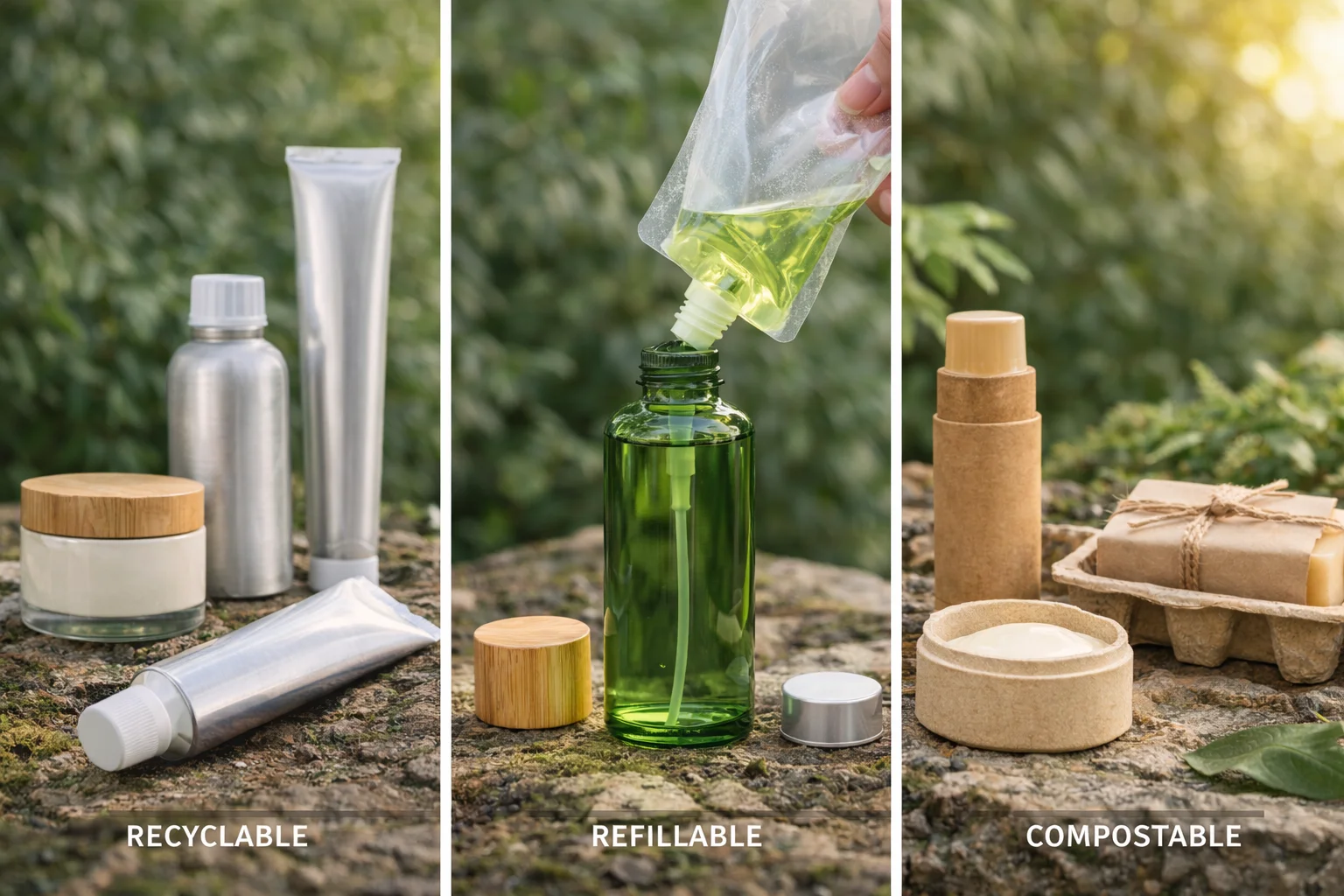
The different types of sustainable packaging[^1] are not in competition. They are different tools for different jobs. A brand might use a recyclable glass jar for a face cream and a refillable system for a liquid foundation. I am personally very excited about refillable systems. I recently started using a refillable deodorant. I keep the nice outer case and just buy the small refills. It feels smart and reduces so much waste over time. The key is for brands to choose the right system for their product and to make it very clear to customers how to use it. Clear instructions are just as important as the package itself. Confusion leads to good intentions ending up in the wrong bin.
Understanding the Categories
- Recyclable: This is the most common type. The goal is to turn an old package into a new one. But it only works if the package is made from a single material (like PET plastic or aluminum) and the customer cleans it and puts it in the right recycling bin.
- Refillable: This is a fantastic way to reduce waste. Customers buy a durable main container once and then purchase refills, which often come in simpler, smaller packaging. This system builds a long-term relationship with the customer.
- Compostable: This sounds great, but it can be tricky. Most "compostable" plastics need a special industrial composting facility to break down. They will not break down in a landfill or a home compost bin. So, this option is only good if the right facilities are widely available.
How Does Sustainable Packaging Compare to Traditional Packaging?
Brands are used to cheap, traditional packaging. Switching to sustainable options seems expensive and difficult. This fear often stops them from making a necessary change that customers are asking for.
Sustainable packaging aims for a circular lifecycle, using renewable or recycled materials that can be reused or returned to the earth. Traditional packaging follows a linear "take-make-dispose" model, using new materials like virgin plastic that end up in landfills after one use.
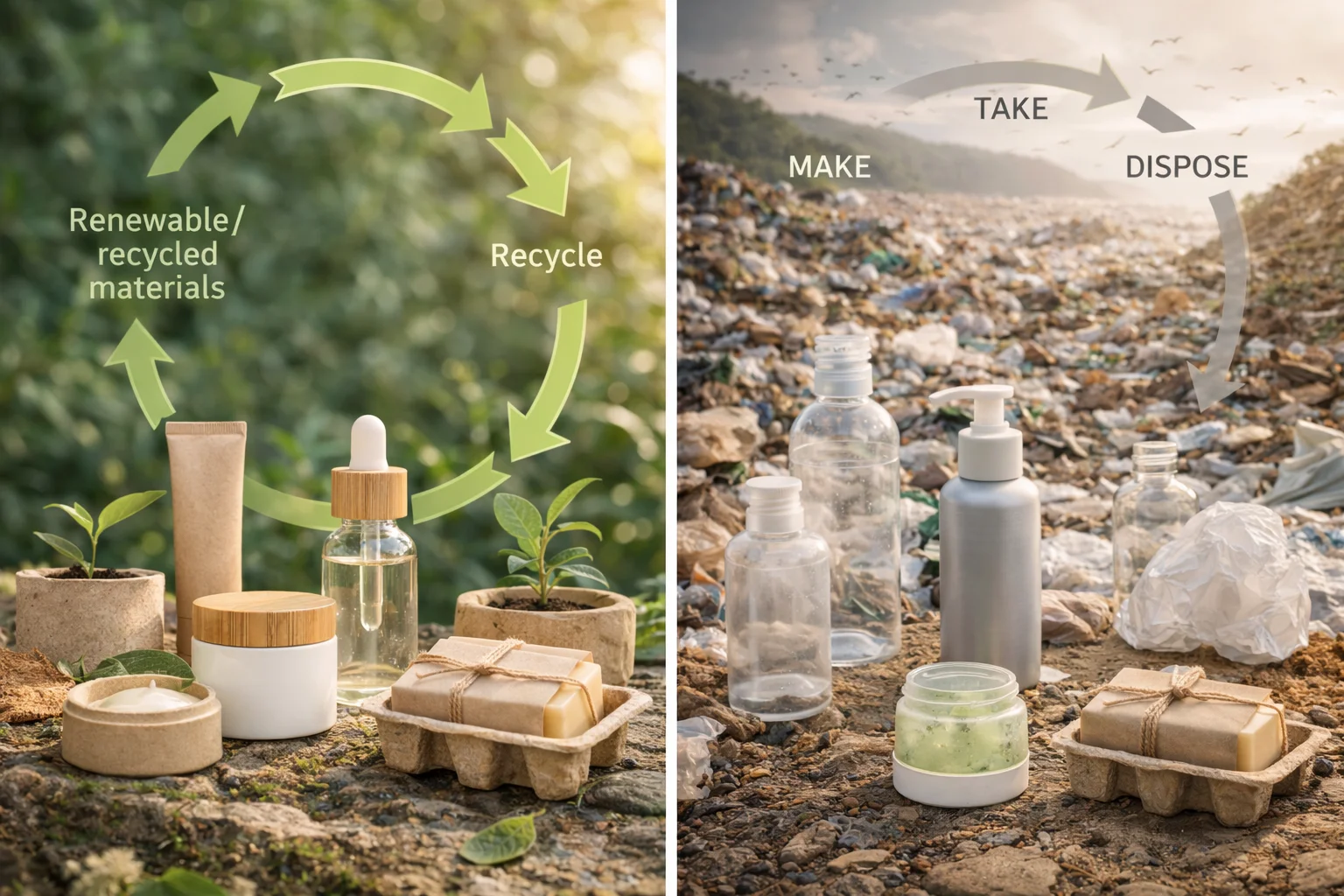
The biggest difference is the mindset. Traditional packaging focuses only on the start of the journey: how to get the product to the customer cheaply and safely. I have been in meetings where the end-of-life of the package was never even discussed. It was just not part of the plan. Sustainable packaging forces you to think about the end from the very beginning. How will the customer dispose of this? Can we get this material back? Can we design it so it uses less material in the first place? It is a more responsible and complete way of thinking. It changes the design process from a straight line into a circle, which is a much healthier shape for our planet.
A Head-to-Head Comparison
| Feature | Traditional Packaging | Sustainable Packaging |
|---|---|---|
| Material Source | Often virgin, non-renewable resources (e.g., crude oil) | Recycled, renewable, or responsibly sourced materials. |
| Lifecycle | Linear: Take -> Make -> Dispose | Circular: Make -> Use -> Reuse/Recycle/Compost |
| Environmental Impact | High. Contributes to landfill waste[^9] and pollution. | Low. Aims to reduce waste and conserve resources. |
| Consumer Perception | Increasingly seen as wasteful and irresponsible. | Seen as modern, ethical, and desirable. Builds brand loyalty. |
| Initial Cost | Generally lower due to established supply chain[^4]s. | Can be higher initially due to new materials or processes. |
How Do Beauty Brands Actually Choose Their Sustainable Packaging?
You see a "green" package and assume it was a simple choice. But behind the scenes, it is a huge challenge. Brands struggle with cost, function, and the realities of the supply chain[^4].
Brands choose by balancing three key factors: sustainability goals, cost, and scalability. They analyze the product's needs, like protection and compatibility. They also check the supply chain[^4]'s reliability to ensure they can produce the packaging consistently and affordably.
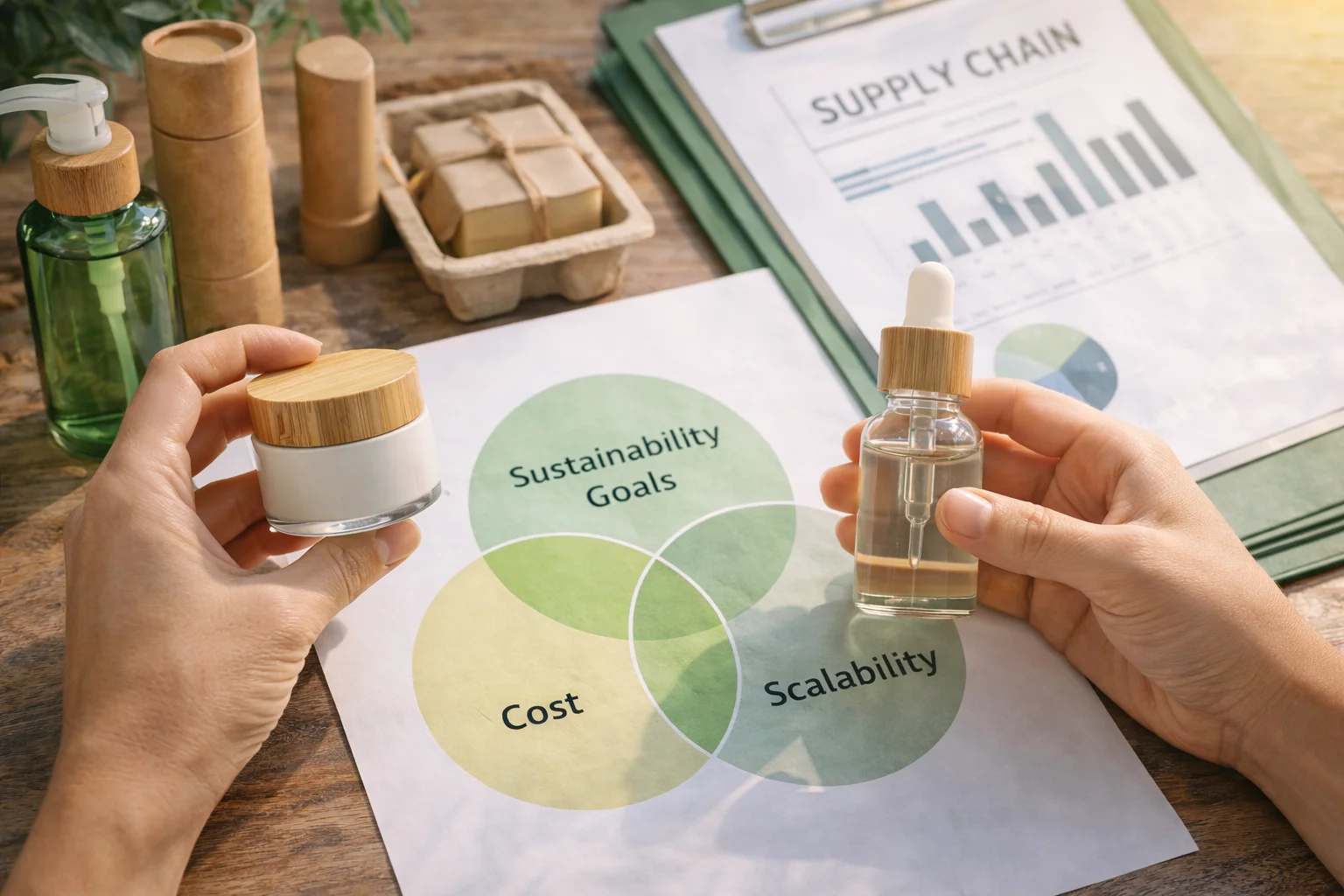
This is where my own experience comes in. The real challenge is not just picking a "green" material. The real challenge is making it work in the real world. A material might sound amazing, but if I cannot get a steady supply of it, I cannot sell my product. Or if it costs three times as much, I might have to raise my prices so high that my customers cannot afford it. I once explored using a new type of plant-based plastic. It was a fantastic idea. But we found out we could only get enough to produce a small batch. We could not scale it up for a full launch. It was a hard lesson. The best solution is often a practical one that balances our green goals with the reality of running a business.
The Three-Legged Stool of Decision-Making
A brand's decision rests on three crucial supports. If one is weak, the whole thing falls over.
- Sustainability: Does the choice align with our environmental goals? Does it genuinely reduce our impact? We have to be honest with ourselves here.
- Cost & Performance: Can we afford it? And more importantly, does it protect the product inside? A sustainable package is useless if it leads to spoiled products and more waste.
- Scalability & Supply Chain: Can we get this material consistently? Can our machines handle it? Can we produce hundreds of thousands of units, not just a few hundred?
What Common Mistakes Do Brands Make With Sustainable Packaging?
A brand proudly launches a "compostable" bottle. But customers do not have industrial composters. The good intention backfires and creates more problems than it solves for everyone.
A common mistake is "greenwashing[^13]," where claims are misleading. Another is choosing a material that is not practical for the consumer, like packaging that requires special disposal. Brands also often forget to consider the entire supply chain[^4], leading to higher costs or production issues.
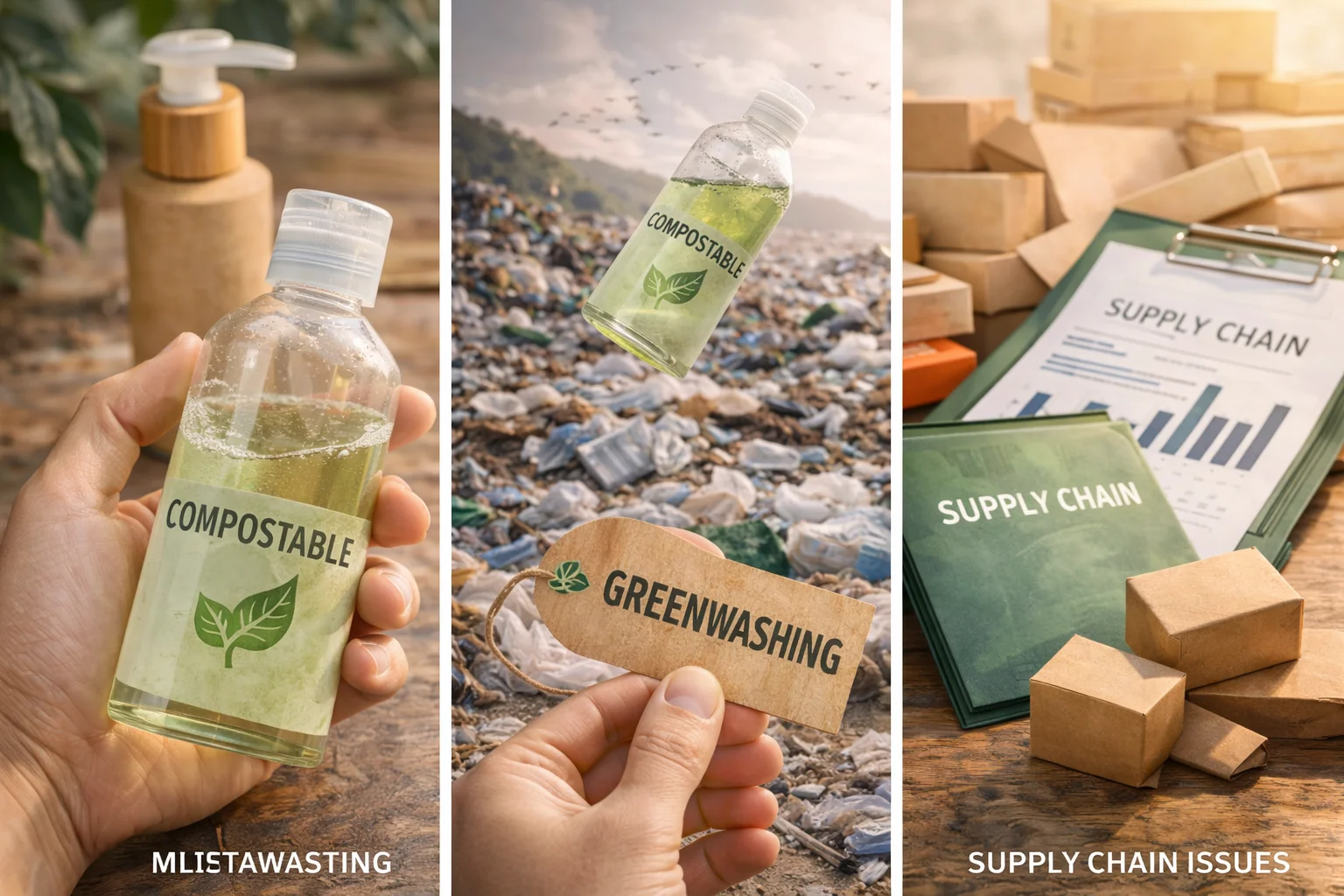
I have seen so many brands make the same mistakes. The biggest one is not thinking about the customer's real life. I saw a brand use a new "compostable" plastic for their tubes. They put a big "Compost Me!" message on it. The problem was, this material needed an industrial composting facility, and less than 5% of their customers had access to one. So, where did the tubes go? In the trash. Or worse, into the recycling bin, where they contaminated the whole batch of real plastic. The brand's good intentions actually created a bigger mess. It is so important to choose solutions that fit into people's existing habits or to provide very clear education on how to create new ones.
Top Mistakes to Avoid
- Greenwashing: Using vague words like "eco-conscious" or "earth-friendly" without any proof. This destroys trust when customers find out the truth.
- Ignoring the Consumer: Choosing a package that is difficult for the customer to actually recycle, refill, or compost correctly.
- Focusing Only on Material: Forgetting that things like weight, shape, and transport have a huge environmental impact. A lightweight, recycled plastic bottle shipped across a short distance can be better than a heavy glass jar shipped across the country.
- Not Communicating Clearly: Assuming customers will know what to do with the packaging after use. Brands must provide simple, direct instructions.
What Are The Future Trends in Sustainable Cosmetic Packaging?
The world of sustainable packaging is changing fast. What seems innovative today will be standard tomorrow. Staying ahead of these trends is key for every brand that wants to succeed.
Future trends include "waterless" or solid product formats that need less packaging. We will also see more smart packaging with QR codes for disposal info. And material innovation will continue, with things like carbon-capture plastics and even edible packaging on the horizon.
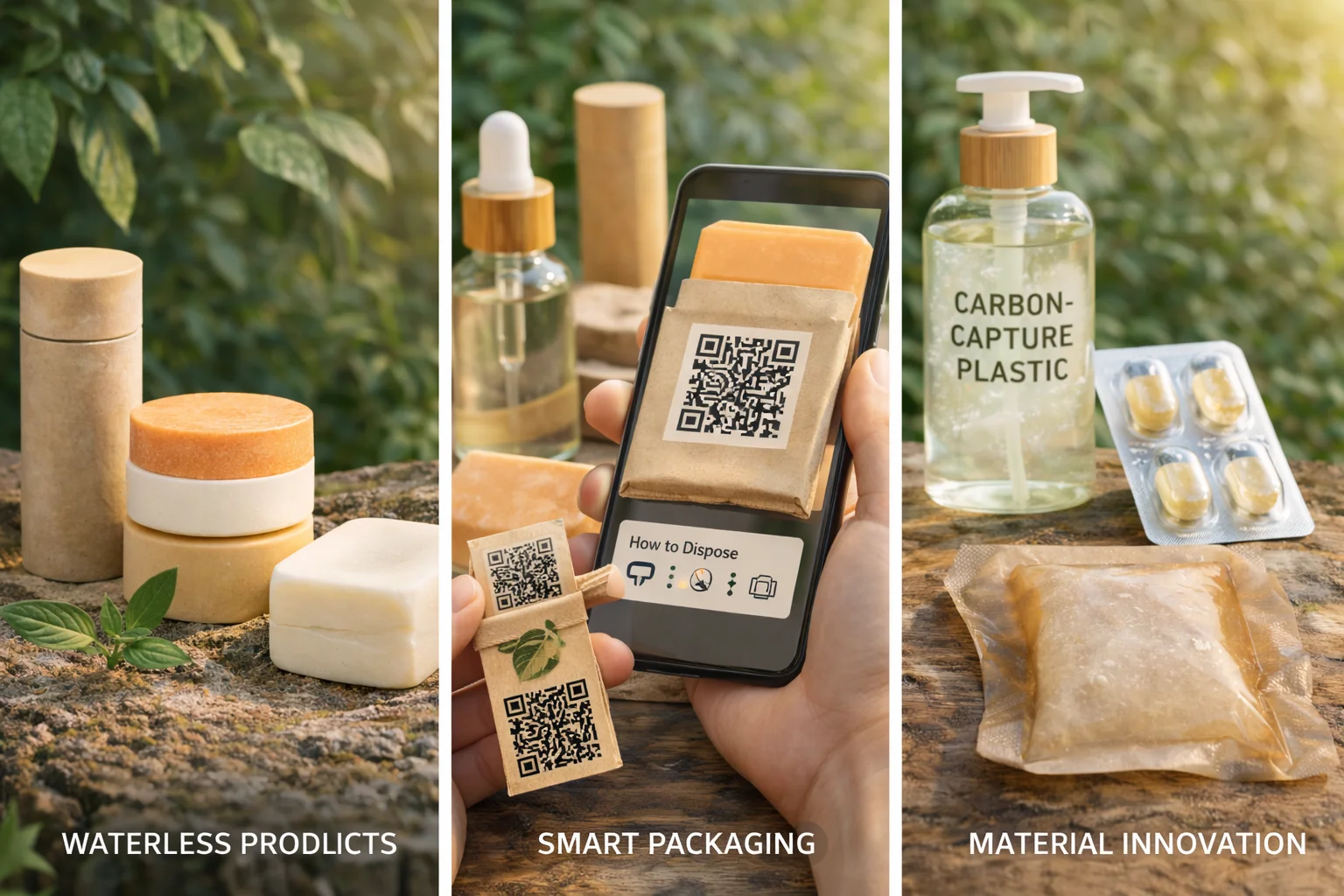
I am most excited by the move to solid products. Think about shampoo bars, conditioner bars, and solid perfumes. These products contain very little or no water. This means they are smaller, lighter, and need much less packaging, often just a simple paper box. This is a brilliant way to reduce waste from the very start. It changes the product itself to solve the packaging problem. This is the kind of smart, creative thinking that will define the future of the beauty industry. We are also going to see more technology. Imagine scanning a QR code on a jar and your phone tells you exactly how to recycle it in your specific town. That is the kind of helpful innovation that makes sustainability easy for everyone.
What to Watch For
- Waterless & Solid Forms: Less water means less volume, less weight, and less packaging. This is a huge win for the environment.
- Refill Revolution: More brands will offer easy and affordable refill options, both online and in stores.
- Smarter Packaging: Technology will be used to educate and guide consumers on proper disposal, closing the gap between intention and action.
- Next-Gen Materials: Scientists are working on amazing new materials, like plastics made from captured CO2 or packaging that dissolves safely in water.
Conclusion
Choosing sustainable packaging is a complex journey. It requires balancing our ideals with reality. The best brands are honest, practical, and always looking for better solutions for our planet.
[^1]: Explore how sustainable packaging can reduce waste and enhance brand image in the beauty sector.
[^2]: Learn about innovative materials that can help brands reduce their environmental impact.
[^3]: Discover the importance of recyclable materials in creating a sustainable beauty brand.
[^4]: Discover the role of supply chain management in implementing sustainable packaging solutions.
[^5]: Compare the ecological effects of traditional packaging with sustainable alternatives.
[^6]: Find out strategies for brands to minimize their carbon footprints with sustainable packaging.
[^7]: Understand the growing consumer preference for sustainable products in the beauty market.
[^8]: Explore the connection between sustainable practices and positive brand perception.
[^9]: Learn about the environmental consequences of landfill waste generated by beauty products.
[^10]: Explore the potential of bioplastics as a sustainable alternative in cosmetic packaging.
[^11]: Learn how refillable packaging can reduce waste and enhance customer loyalty.
[^12]: Understand the benefits and challenges of using compostable packaging in beauty products.
[^13]: Learn how to spot misleading claims in sustainable packaging and make informed choices.