Your packaging feels basic. Competitors look more premium, stealing customers. Amber glass jars can instantly elevate your brand's look and feel without complex, expensive decoration.
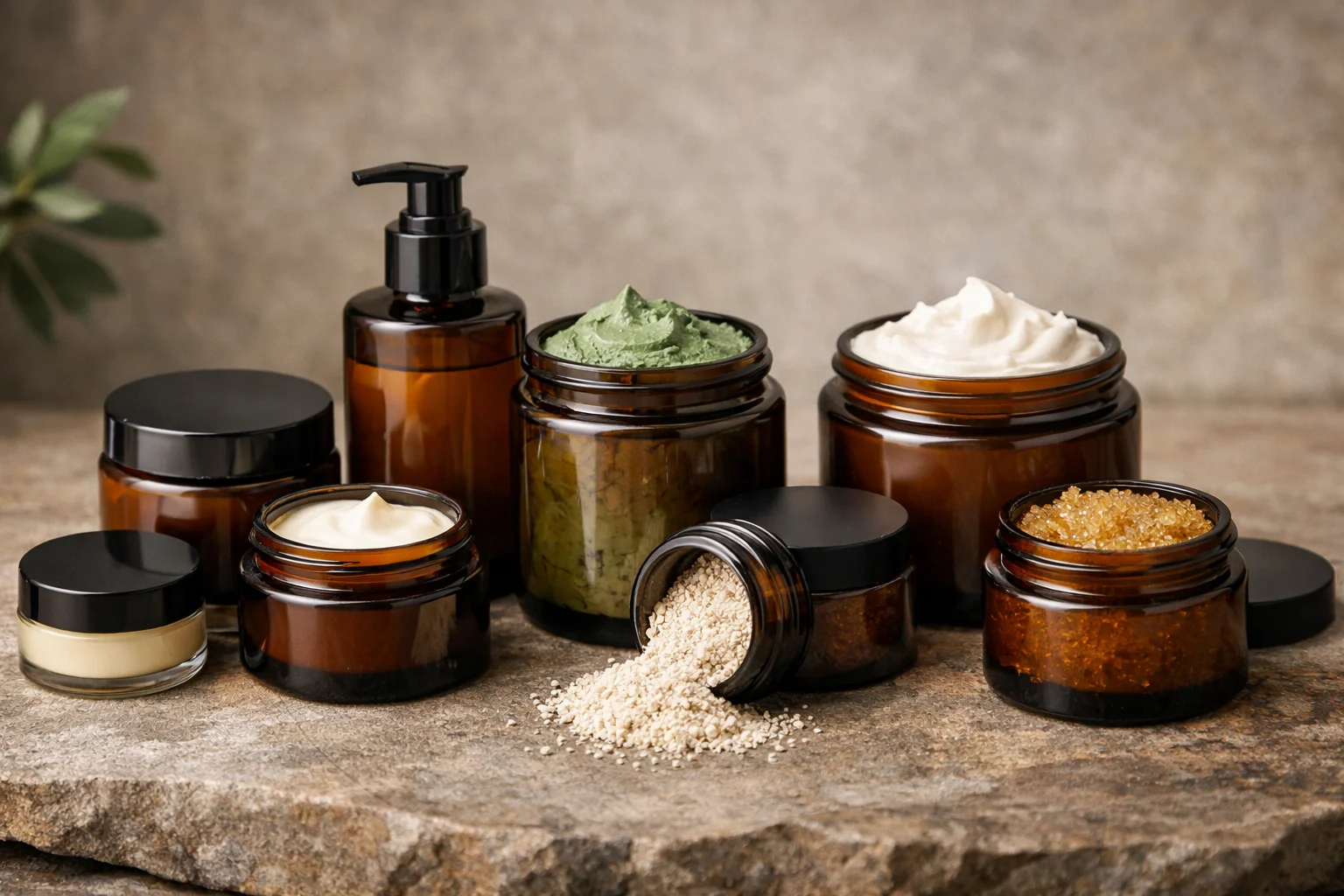
Brands use them for more than just creams. They package face masks, cleansing balms, body butters, powdered exfoliants, and even solid perfumes. The key is matching the jar's size and lid to the specific product type for a perfect user experience[^1].
I've seen countless brands transform their product line[^2] with this simple switch. But it's not just about pouring your cream into a brown jar. The real magic is in the details, and getting them right is what separates a good product from a great one. Let's look at why these jars are so popular and how you can use them to make your products stand out.
Why Are Amber Glass Jars Trending Again in Skincare Packaging?
You see amber glass everywhere and wonder if it's just a fleeting trend. Investing in a trend that dies quickly is a waste of money and inventory. It's not just a trend. Amber glass combines timeless aesthetics with practical benefits that modern consumers and brands value.
They are trending because they offer UV protection[^3], which preserves natural and active ingredients[^4]. They also have a premium, eco-friendly look that appeals to today's conscious consumers. This mix of function and style makes them a smart choice for modern brands.
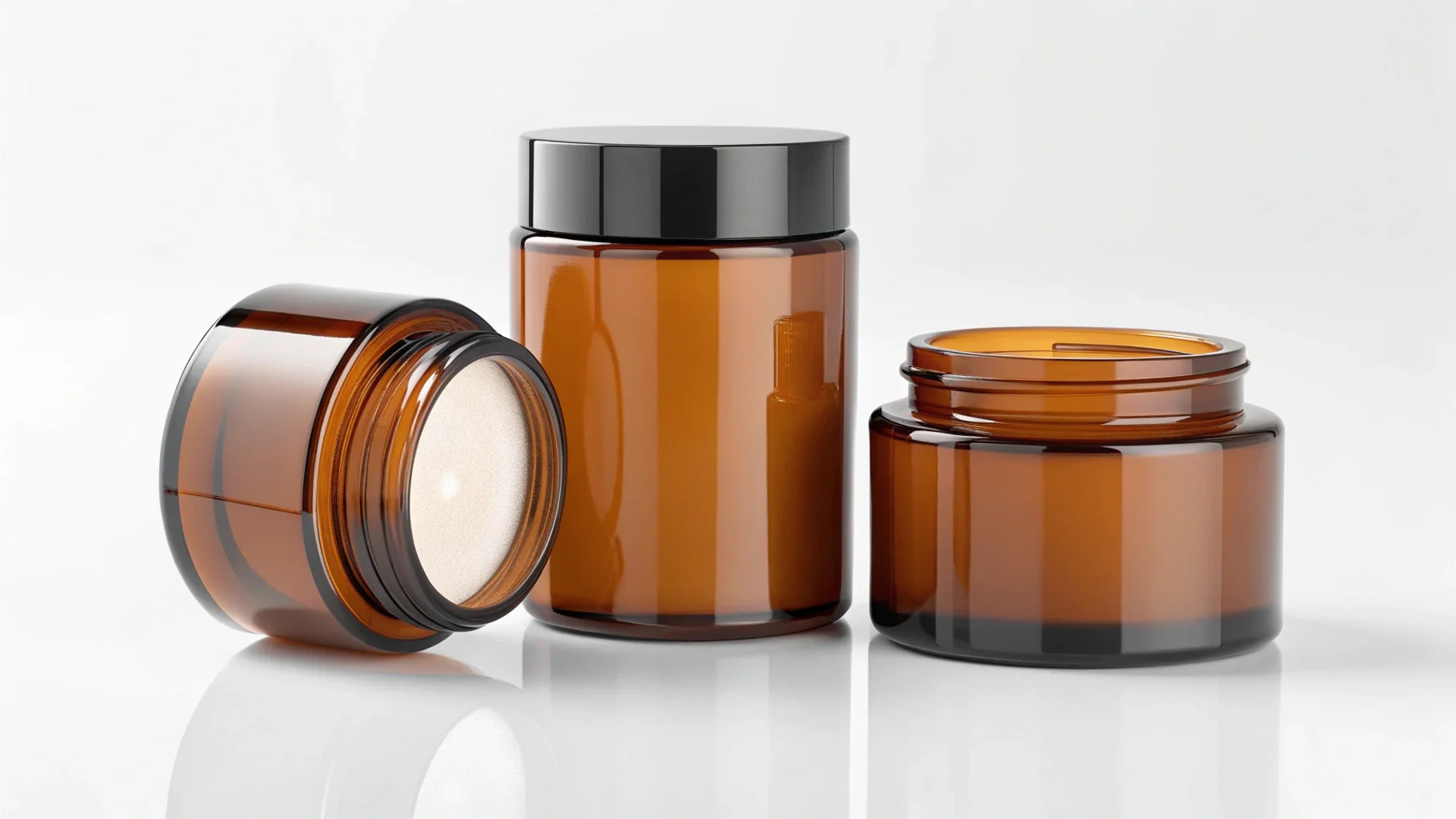
The Three Pillars of the Amber Glass Trend
The comeback of amber glass is not an accident. It’s driven by three powerful forces in the beauty industry. First is the "clean beauty" movement. Brands are using more natural, active ingredients[^4] that are sensitive to light. Amber glass provides built-in UV protection[^3], acting like sunglasses for your formula. This keeps ingredients like Vitamin C, retinol, and essential oils stable for longer. Second is the push for sustainability[^5]. Glass feels more permanent and is endlessly recyclable, which resonates with eco-conscious shoppers. It feels like a responsible choice compared to single-use plastic. Finally, there is the aesthetic. The apothecary, lab-chic look of amber glass communicates that a product is serious, effective, and high-quality. From my factory floor, I can tell you it’s one of the fastest ways to make a product look more expensive.
| Trend Driver | Why It Matters for Brands |
|---|---|
| Ingredient Protection | Preserves the efficacy of active and natural formulas. |
| Sustainability | Appeals to eco-conscious consumers and is highly recyclable. |
| Premium Aesthetic | Creates a high-end, trustworthy look with minimal effort. |
What Makes Amber Glass Jars Different from Clear Glass or Plastic Jars?
Clear glass or plastic seems cheaper and easier. So why bother with amber? But formulas with active ingredients[^4] can degrade in clear packaging, leading to unhappy customers and a damaged reputation. Amber glass offers superior protection that clear glass and most plastics can't match.
The main difference is UV light protection. The amber color filters out damaging blue and ultraviolet light, protecting sensitive ingredients. It's also heavier, feels more luxurious than plastic, and is non-porous, meaning it won't interact with your formula.
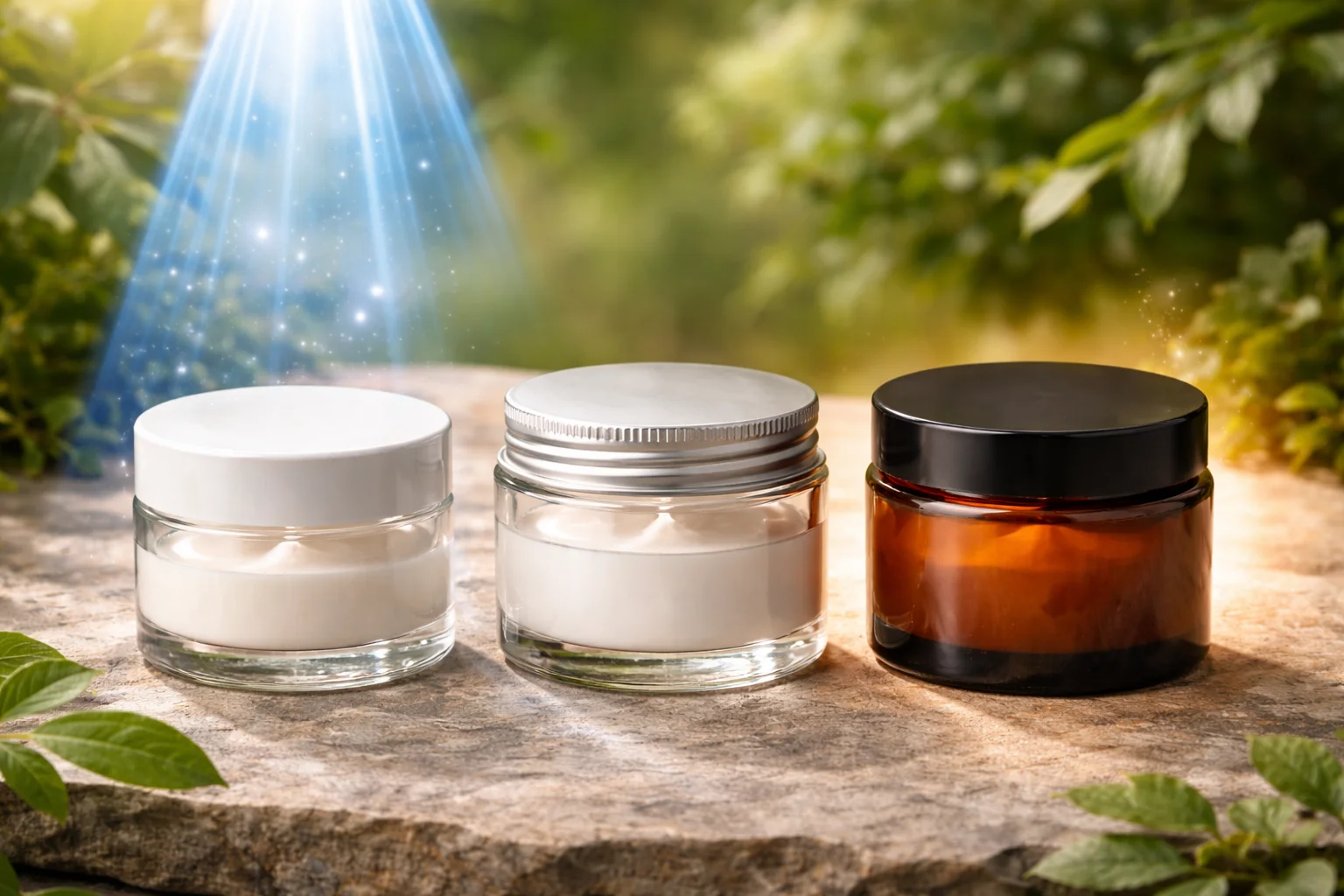
A Head-to-Head Comparison: Materials Matter
When you're choosing packaging, the material is one of the most important decisions you'll make. It affects your product's stability, your brand's perception, and your customer's experience. A common misconception I hear is that the amber color is just a coating. That's not true for quality jars. The color is mixed into the glass itself, so it will never scratch or fade. This makes it fundamentally different from other options. Plastic jars can be great for some products, like shower gels, but they can sometimes be porous and interact with certain oils or potent ingredients over time. Clear glass looks clean, but it offers zero protection from light degradation. The weight of glass also plays a big role in perceived value. When a customer picks up a heavy glass jar, it feels substantial and luxurious. Plastic just doesn't have that same premium feel.
| Feature | Amber Glass | Clear Glass | Plastic (PP/PET) |
|---|---|---|---|
| UV Protection | Excellent | None | None (unless treated) |
| Chemical Inertness | Excellent | Excellent | Good to Very Good |
| Perceived Value | High | Medium-High | Low-Medium |
| Weight & Feel | Heavy, premium | Heavy, premium | Lightweight, functional |
| Recyclability | High | High | Varies by type |
12 Practical Applications for Amber Glass Jars (That Brands Actually Sell)?
You might think amber glass jars[^6] are only for thick face creams. This thinking limits your creativity and you could miss a perfect packaging opportunity for your other products. I've manufactured jars for many innovative uses. Let me show you twelve real-world examples.
Brands use them for everything from oil-based cleansing balms and thick hair masks to dry products like clay powders and bath salts. They are also perfect for solid perfumes, lip scrubs, body butters, and even concentrated treatment capsules.
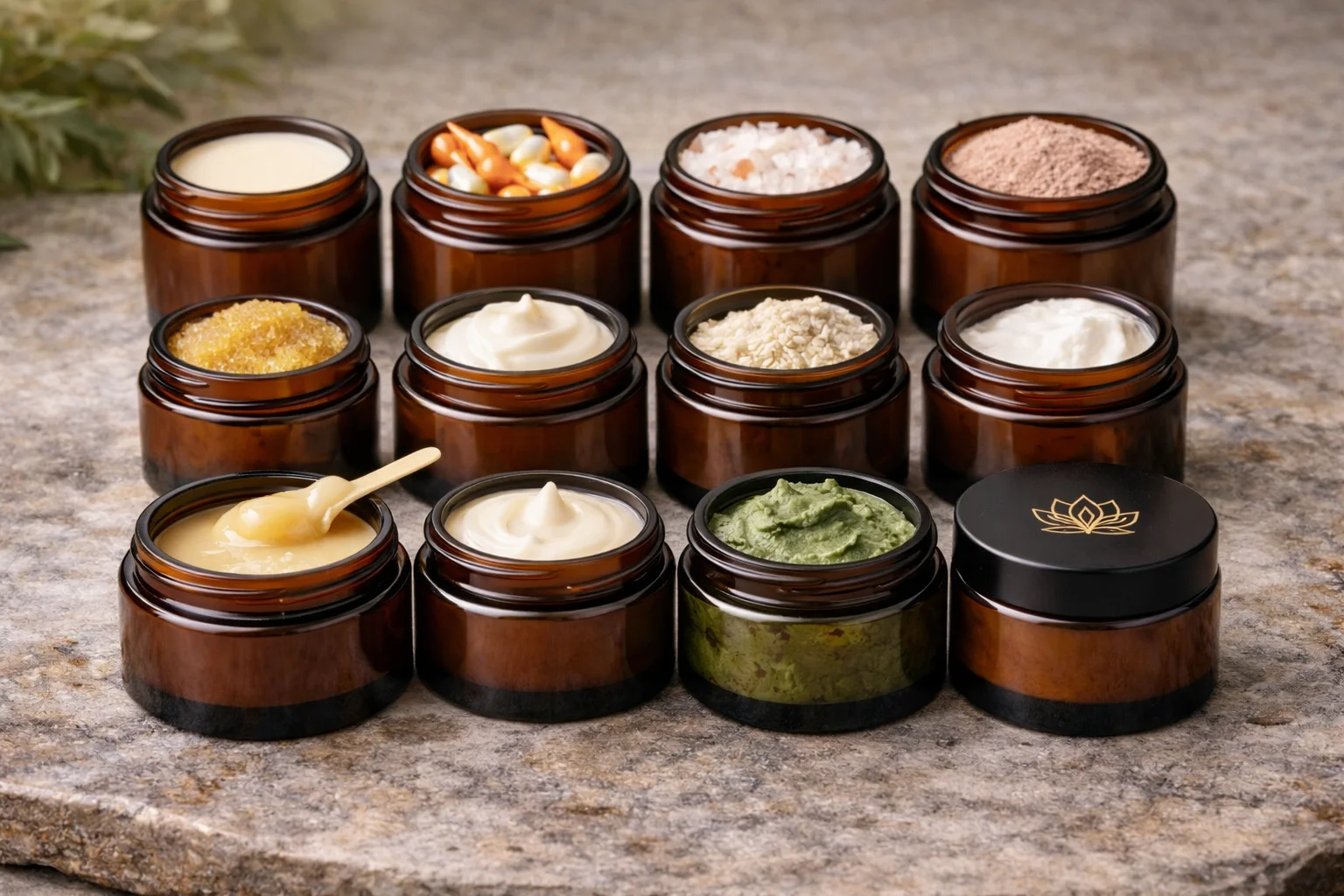
From Balms to Powders: A Versatile Lineup
The wide mouth and protective nature of amber glass jars[^6] make them incredibly versatile. It's not just about one type of product. A well-chosen jar can be the foundation for an entire product line[^2]. The key is to think about the product's texture and how a customer will use it. For example, a wide-mouth jar is essential for any product that the user needs to scoop with their fingers. A good, tight-sealing lid is critical for powders to prevent moisture from getting in and causing clumps. I've worked with brands that use the exact same jar for three different products—a balm, a scrub, and a mask—just by changing the label and lid. This simplifies inventory and creates a cohesive brand look. Here are twelve applications I see most often in production.
| Product Type | Why It Works in an Amber Jar |
|---|---|
| 1. Face Cream | The classic use; protects active ingredients[^4]. |
| 2. Cleansing Balm | The wide mouth allows for easy scooping[^7] of solid oil formulas. |
| 3. Body Butter | Perfect for thick, rich textures that need to be scooped. |
| 4. Clay Face Masks (Powder) | The tight seal keeps moisture out of dry powder formulas. |
| 5. Lip Scrub | A small jar is perfect for this targeted treatment. |
| 6. Hair Mask / Pomade | Easy access for scooping[^7] out thick hair products. |
| 7. Bath Salts | Looks beautiful and protects any added essential oils. |
| 8. Solid Perfume | A small, elegant container for a concentrated wax-based scent. |
| 9. Loose Setting Powder | A sifter fitment can be added for controlled dispensing. |
| 10. Treatment Capsules | A luxurious way to store single-use ampoules or capsules. |
| 11. Exfoliating Powders | Protects enzyme or acid powders from humidity and light. |
| 12. Eye Cream | Smaller 15ml or 30ml jars feel precious and protective. |
How to Choose the Right Amber Glass Jar for Your Formula?
You found a nice-looking amber jar online. You're ready to order 10,000 units. But wait. If the mouth is too narrow or the walls are too curved, it could be a disaster. Choosing the right jar involves checking a few key specs before you commit.
Consider three things: formula viscosity[^8], user experience[^1], and volume. A thick balm needs a wide-mouth jar for easy scooping[^7]. A travel-size product needs a smaller volume. Always test your formula with a sample jar to ensure it works perfectly.
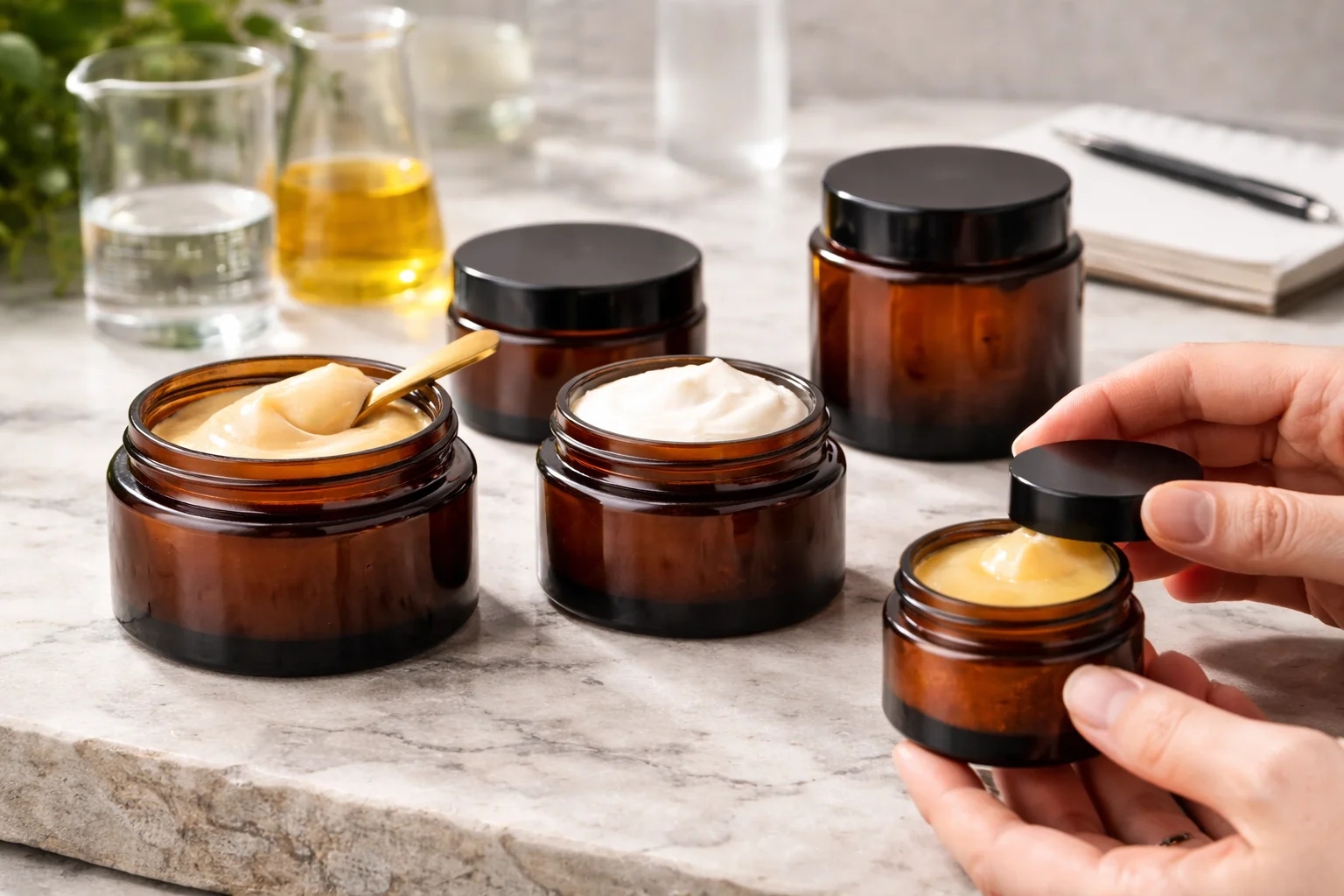
The Jar Selection Checklist
From a factory perspective, most product failures are not dramatic. They are small details that were missed in the beginning. I once had a client who chose a beautiful jar with a slightly tapered inner wall. Their formula was a very thick balm, and customers complained that they couldn't get the last 20% of the product out of the bottom edge. We had to switch to a straight-sided jar. That's a costly mistake that could have been avoided by testing[^9]. Before you finalize your jar, go through this checklist. It will save you time and money. Thinking about these details early is the key to scaling up smoothly later.
- Viscosity & Mouth Diameter: How thick is your product? Liquid-like serums don't belong in a jar. Thick creams and balms need a wide-mouth jar (e.g., 58mm, 63mm, or 70mm neck finish) so fingers can fit easily.
- Volume & Fill Point: A "60ml" jar might have a total overflow capacity of 65ml. You need to account for headspace. Test how much of your specific formula (e.g., a whipped mousse vs. a dense balm) fits comfortably below the threads.
- Jar Shape & Scooping: Straight-sided jars are almost always better for user experience[^1]. They allow the customer to use every last bit of the product they paid for. Avoid jars with a deep curve at the inner base.
- Glass Weight: Heavier glass often feels more luxurious, but it also increases your shipping costs. You need to find the right balance for your brand and budget.
Lid Options That Upgrade the Look Instantly (Without Changing the Jar)?
All amber jars can start to look the same. So how do you make yours stand out? You don't want your premium product to look like a generic brand from the health food store. The secret is the lid. A simple lid change can completely transform the jar.
Common plastic screw caps are standard. For a premium look, consider heavy thermoset (Bakelite-style) caps, real wood caps, or metal-shelled caps in matte black, gold, or silver. The right lid makes the entire package feel more intentional.
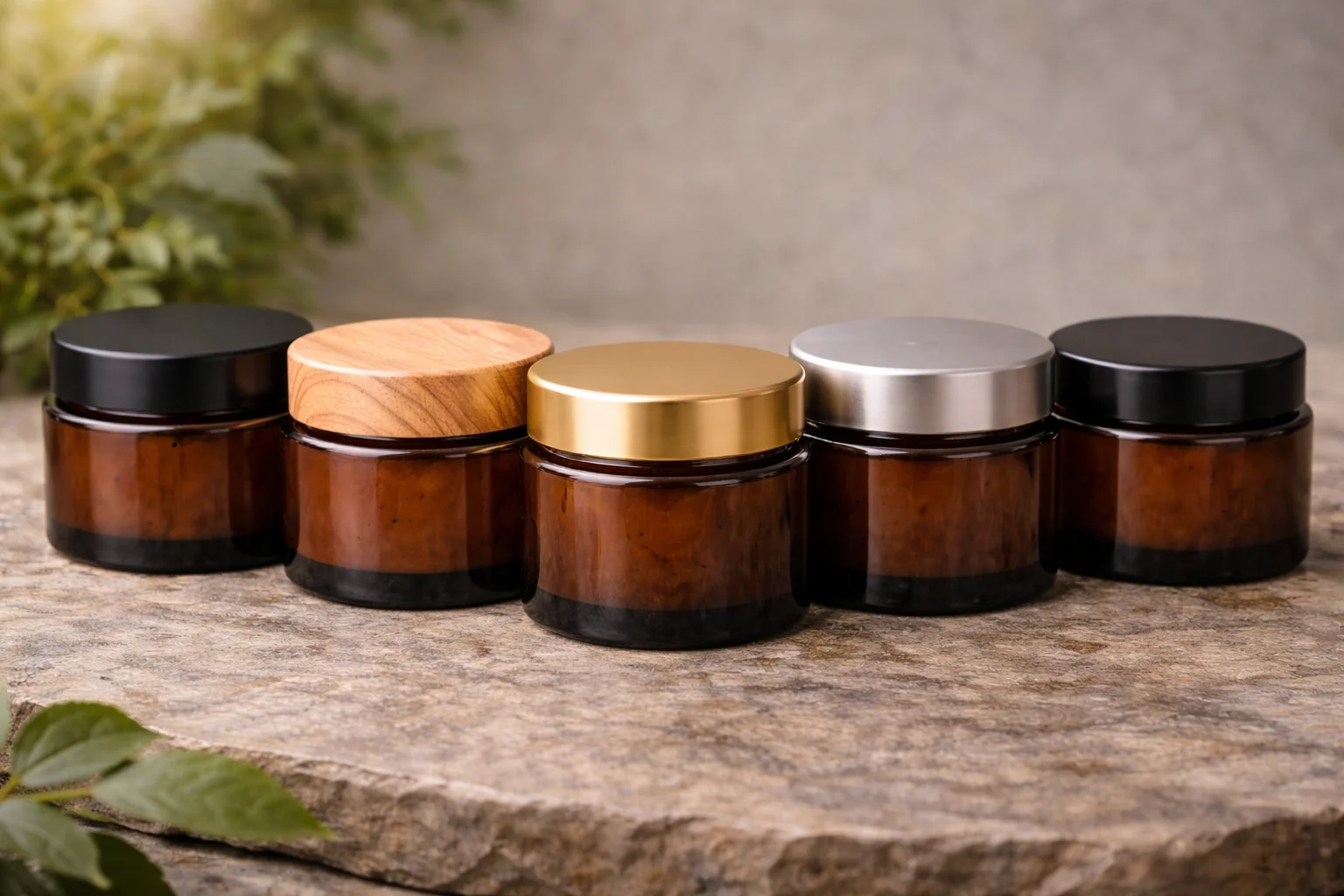
Beyond the Basic Black Cap
The lid is the first thing your customer touches. It's a small part of the package, but it has a huge impact on perception. A cheap, thin plastic lid can make a heavy glass jar feel unbalanced. Upgrading the lid is one of the most cost-effective ways to increase the perceived value of your product.
- Standard PP (Polypropylene) Lids: These are the most common and affordable. They are functional but don't feel special. They come in black or white.
- Thermoset (Urea/Bakelite) Lids: These are my personal favorite for a vintage, apothecary look. They are heavier, harder, and more scratch-resistant than standard plastic. They have a satisfying, high-quality feel.
- Aluminum-Shelled Lids: These have a plastic base with a metal sheet wrapped around the outside. They offer a modern, sleek look and can be finished in shiny or matte gold, silver, rose gold, or black.
- Wood & Bamboo Lids: These are perfect for natural or eco-luxe brands. The natural grain of the wood means every lid is slightly unique.
Don't Forget the Liner!
Inside every good lid is a liner. It’s the small foam or foil disc that presses against the jar's rim. Its job is critical: to create an airtight seal and prevent leaks. Choosing the wrong one is a common source of problems. For most creams, a standard PE foam liner is fine. But if your formula is very oily, the oil can degrade the liner over time, causing leaks. In that case, you need a liner with a special chemical-resistant layer. An induction seal, which is a foil liner that is heat-sealed to the jar, offers the best protection and provides a tamper-evident seal.
Decoration Ideas for Amber Glass Jars (Simple but High-End)?
You want custom branding, but complex, multi-color printing seems expensive and slow. High minimum order quantities (MOQs) for fancy decoration can kill your budget before you even launch. You don't need it. A few simple techniques can look incredibly high-end.
A well-designed paper label is the most cost-effective method. For a more premium feel, consider screen printing directly on the glass with one or two colors. A simple hot-stamped logo on the lid also adds a touch of luxury.
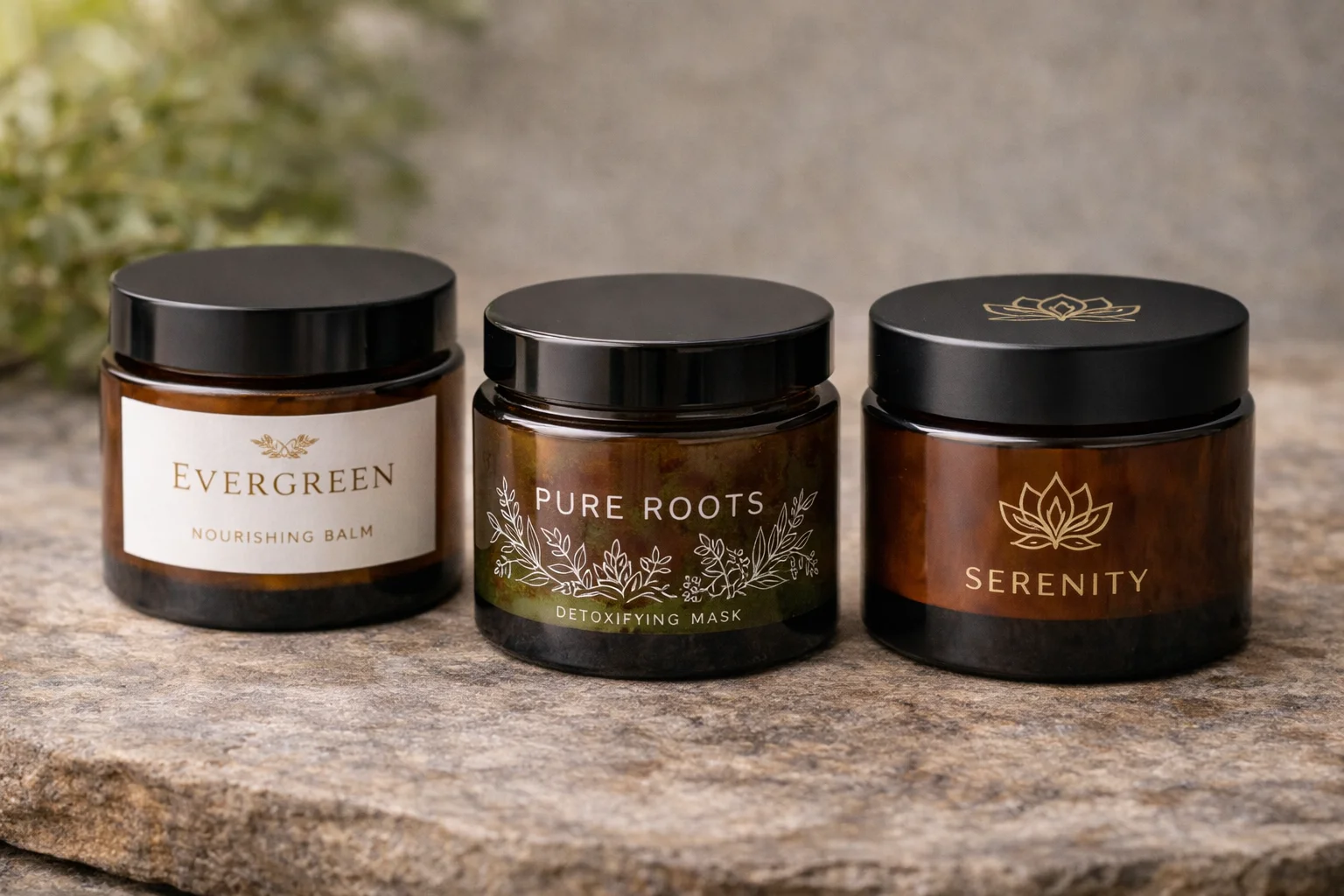
Elevating Your Jar with Minimalist Decoration
With amber glass, less is often more. The beautiful color of the glass is already a design element. Your goal should be to complement it, not cover it up. Overly complex designs can cheapen the look. I always advise new brands to start simple. It's more affordable, has lower MOQs, and often looks more sophisticated.
- The Power of the Label: This is the most flexible option. You can print small batches and change designs easily. The key to a premium look is the material. Choose a textured paper, a matte waterproof vinyl, or a simple craft paper. A minimalist design with beautiful typography on a high-quality label stock looks fantastic.
- One-Color Screen Printing: This involves applying ink directly to the glass surface and then curing it. It's very durable and looks incredibly clean and professional. A simple white or black print on an amber jar is a timeless, classic look that we produce all the time.
- Lid Decoration: Don't forget the top of the jar. We can easily hot-stamp a simple logo or icon onto the lid in a metallic foil (gold, silver) or a matte color. When the customer unscrews the lid, this small detail makes a big impression.
- The "Naked" Approach: Sometimes, the best choice is to let the packaging speak for itself. Use a beautiful amber jar with a premium thermoset or wood lid, and put all the product information on the outer box. It's a confident, minimalist statement.
Common Mistakes Brands Make with Amber Glass Jars (And How to Avoid Them)?
You've chosen your jar, lid, and design. You're ready to place your order. But a few common, overlooked mistakes can lead to leaks, customer complaints[^10], and wasted money. I've seen these mistakes happen again and again. Here is how you can avoid them.
The biggest mistakes are mismatching the jar and lid threads, choosing the wrong liner for the formula, and not doing compatibility testing[^9]. This can cause leaks. Another mistake is ignoring shipping tests, which can lead to breakage in transit.
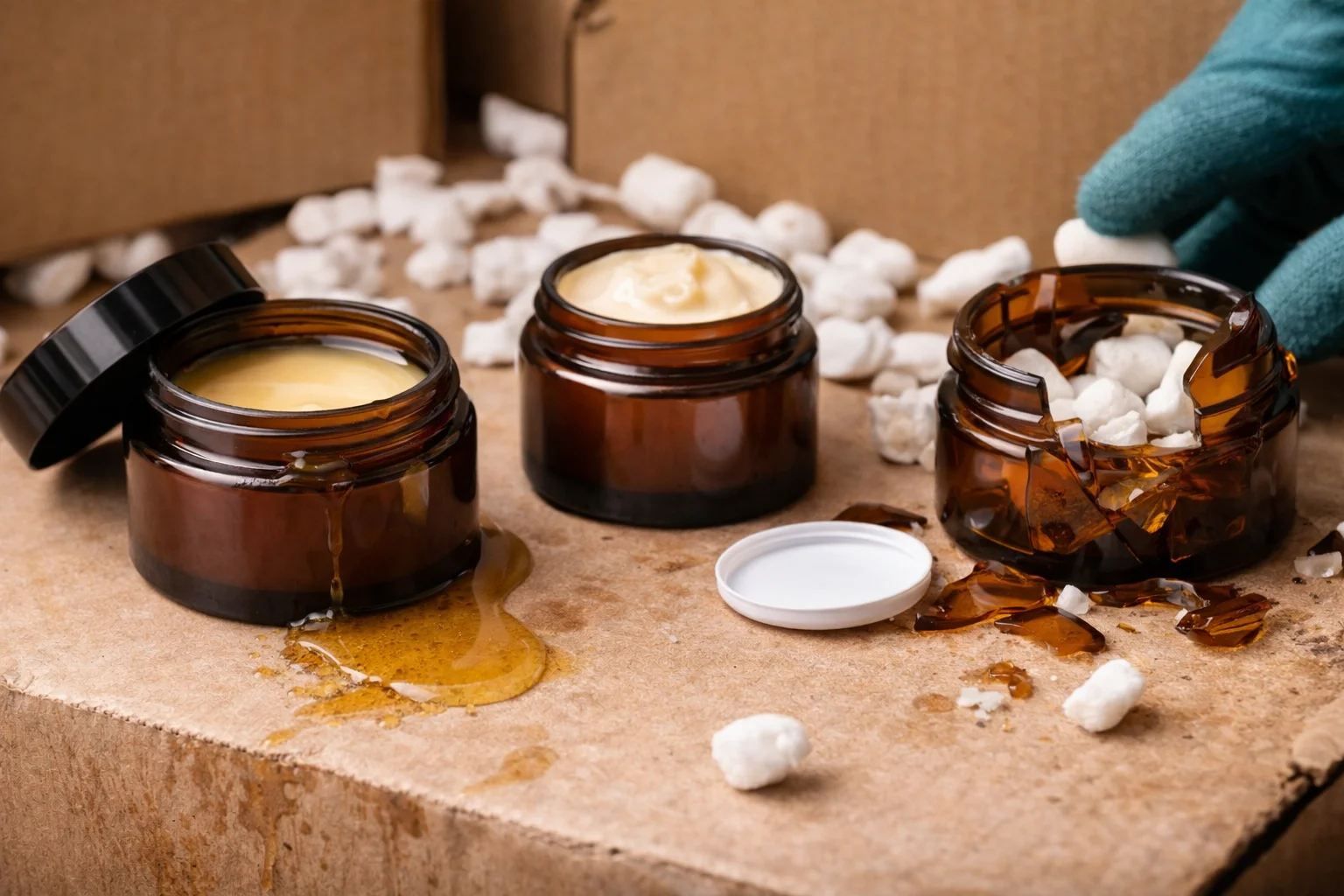
Production Pitfalls and How to Sidestep Them
From my experience in the factory, the costliest problems always come from a lack of planning and testing. A brand gets excited about a launch and rushes the packaging decision. Taking a few weeks at the beginning to test everything will save you months of headaches and thousands of dollars later. Here are the most common pitfalls I see.
- Mismatching Threads: A jar neck has a specific size, like "58-400". The "58" is the diameter in mm, and the "400" refers to the thread style. The lid must also be "58-400". If you try to put a 58-410 lid on a 58-400 jar, it might seem to screw on, but it won't seal properly. It will leak. Always confirm the neck finish of the jar and lid are an exact match.
- Skipping Compatibility Testing: This is the single most important step. You must get final samples of your chosen jar, lid, and liner. Fill them with your actual product. Let them sit for 4-6 weeks. Store them in different conditions—sideways, upside down, in a warm place. Check for leaks, any change in the product's color or smell, or any warping of the plastic lid.
- Forgetting Transit Tests: Once you have your final filled package, put it in your planned shipping box and mail it across the country and back. Does it leak? Does the glass break? This simple test will reveal any weaknesses in your packaging or shipping materials before you send them to paying customers.
Do You Have More Questions About Amber Glass Jars?
You might still have some specific questions floating in your head. Uncertainty can stop you from making a decision, which can delay your product launch. Let's clear up some of the most common questions I get from brands about using these jars.
Brands often ask about MOQs, recyclability, and if the amber color can vary. Yes, the color can have slight variations between batches. MOQs depend on the supplier and decoration. And yes, glass is highly recyclable, which is a great marketing point.
Your Questions, Answered
Here are quick, direct answers to the questions I hear most often.
1. Are amber glass jars 100% UV-proof? No, they are not 100% blocking, but they are very effective. They block nearly all harmful UV-B rays and blue light, which are the primary causes of photo-oxidation in cosmetic formulas. It's the best practical protection you can get from a standard packaging material.
2. What are typical MOQs (Minimum Order Quantities)? This varies a lot. For plain, stock jars and lids that a supplier has in their warehouse, you can often buy them by the case (which could be 48 or 96 units). If you want any kind of decoration like screen printing, the MOQ usually starts around 5,000 to 10,000 pieces. For a completely custom-molded jar shape, MOQs can be 50,000 units or more.
3. Is the amber color a coating? No. For any quality glass jar, the amber color is created by adding iron, sulfur, and carbon to the molten glass mixture. The color is part of the glass itself, so it cannot be scratched off or fade over time.
4. Can I get custom jar shapes? Yes, but it's a very advanced and expensive step. It requires creating a custom steel mold, which can cost tens of thousands of dollars. This is typically only an option for very large, established brands. For 99% of brands, sticking with the wide variety of available stock shapes is the smartest and most economical choice.
Are You Ready to Customize Amber Glass Jars for Your Brand?
You have the knowledge now. You're feeling inspired to create your packaging. But finding a reliable supplier who understands all these small but critical details can be overwhelming. I can help. My team specializes in guiding brands through this exact process.
The first step is to define your needs: product type, volume, and desired aesthetic. Then, request samples of jars and lids to test with your formula. This simple step is the most important part of the entire process for a successful launch.
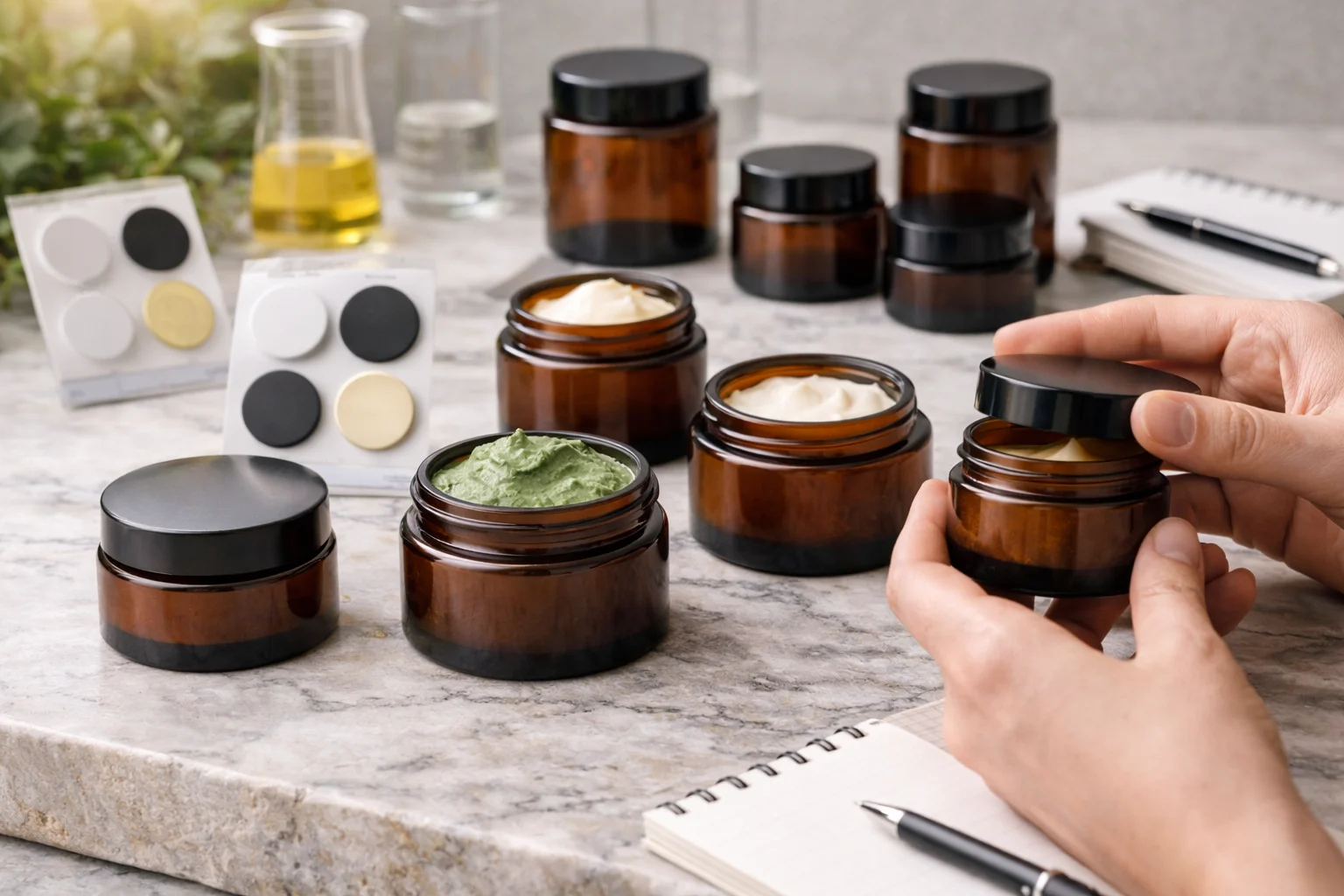
Your Path from Idea to Production
A well-matched jar, lid, and liner system is the key to success. It ensures a great customer experience and makes your life easier when you need to scale up production. When you plan properly from the start, moving from a small batch of 1,000 units to a mass-production run of 50,000 units is a smooth and predictable process. Here is the simple path we guide our clients on.
- Consultation & Sampling: We start by talking about your product, your brand, and your vision. Based on that, my team will recommend a few options for jars, lids, and liners. We then send you physical samples. This is not optional. You must see and feel the components and, most importantly, have them for testing.
- Testing & Finalizing: You take the samples and conduct your compatibility and transit tests with your real formula. Based on the results, you can confidently choose your final package. We then lock in all the specifications—the exact jar model, the lid material and color, and the liner type.
- Production & Scaling: With all details confirmed, we move to production. Because we did the work upfront, there are no surprises. The system works. When your brand takes off and you need to increase your order size, you can do so with confidence, knowing the packaging is already proven.
Conclusion
Choosing amber glass is a smart move. When you get the details right—the jar, the lid, the liner—you create a premium product that customers love and trust.
[^1]: Explore how packaging design influences customer satisfaction and product usability.
[^2]: Explore how switching to amber glass can enhance your entire product range.
[^3]: Learn about the importance of UV protection in preserving the efficacy of skincare ingredients.
[^4]: Understand the importance of proper packaging for preserving active ingredients.
[^5]: Understand the growing demand for sustainable packaging and its impact on brand perception.
[^6]: Explore how amber glass jars can enhance your product's appeal and protect its ingredients.
[^7]: Find out how to design jars that make it easy for customers to access their products.
[^8]: Learn why understanding product viscosity is crucial for selecting the right packaging.
[^9]: Understand the significance of testing to ensure compatibility and prevent issues.
[^10]: Learn how to address and prevent customer complaints related to packaging issues.