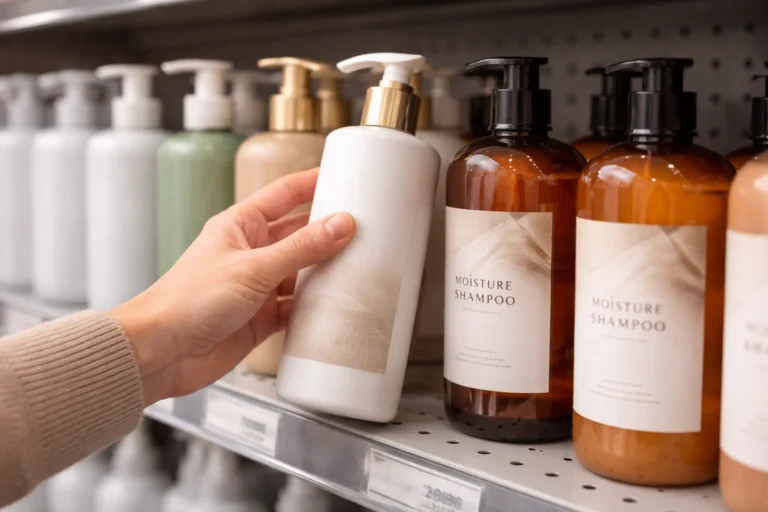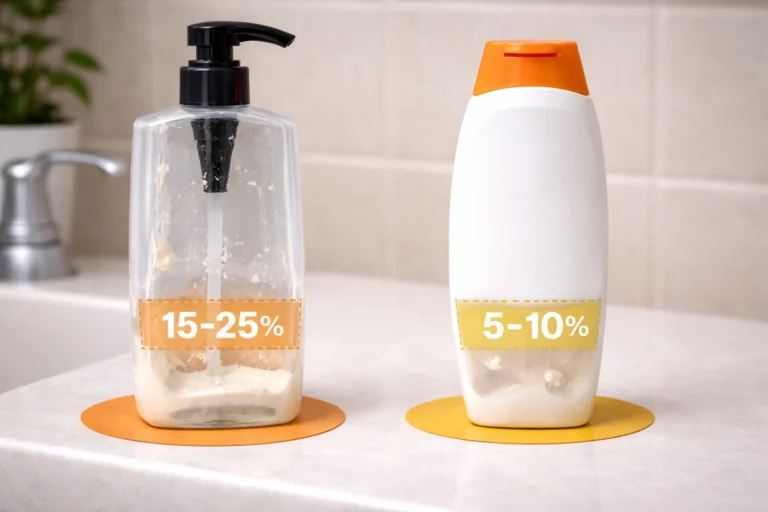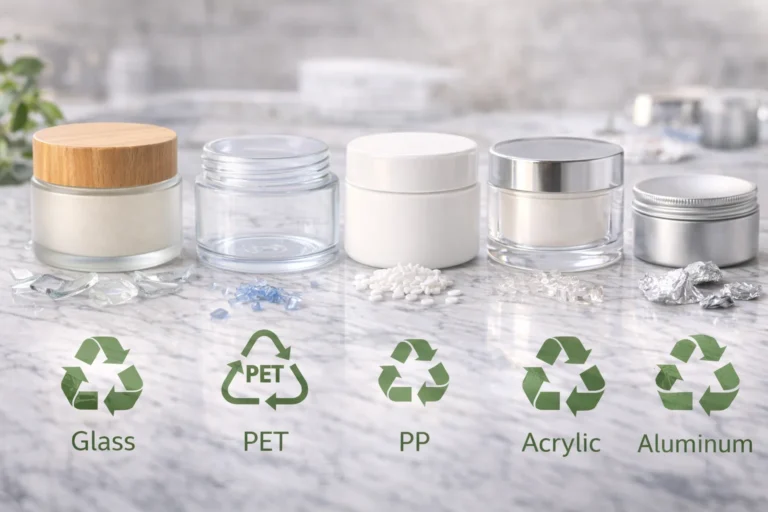
Confused by packaging materials? The wrong choice can damage your product and brand. Let's break down the options to help you pick the perfect one for your cosmetics.
To choose the right cosmetic packaging material[^1], you must balance your product's formula, brand image, budget, and sustainability goals[^2]. Consider factors like chemical compatibility[^3], durability, and customer perception[^4]. Glass is premium, plastic is versatile, and metal is durable.
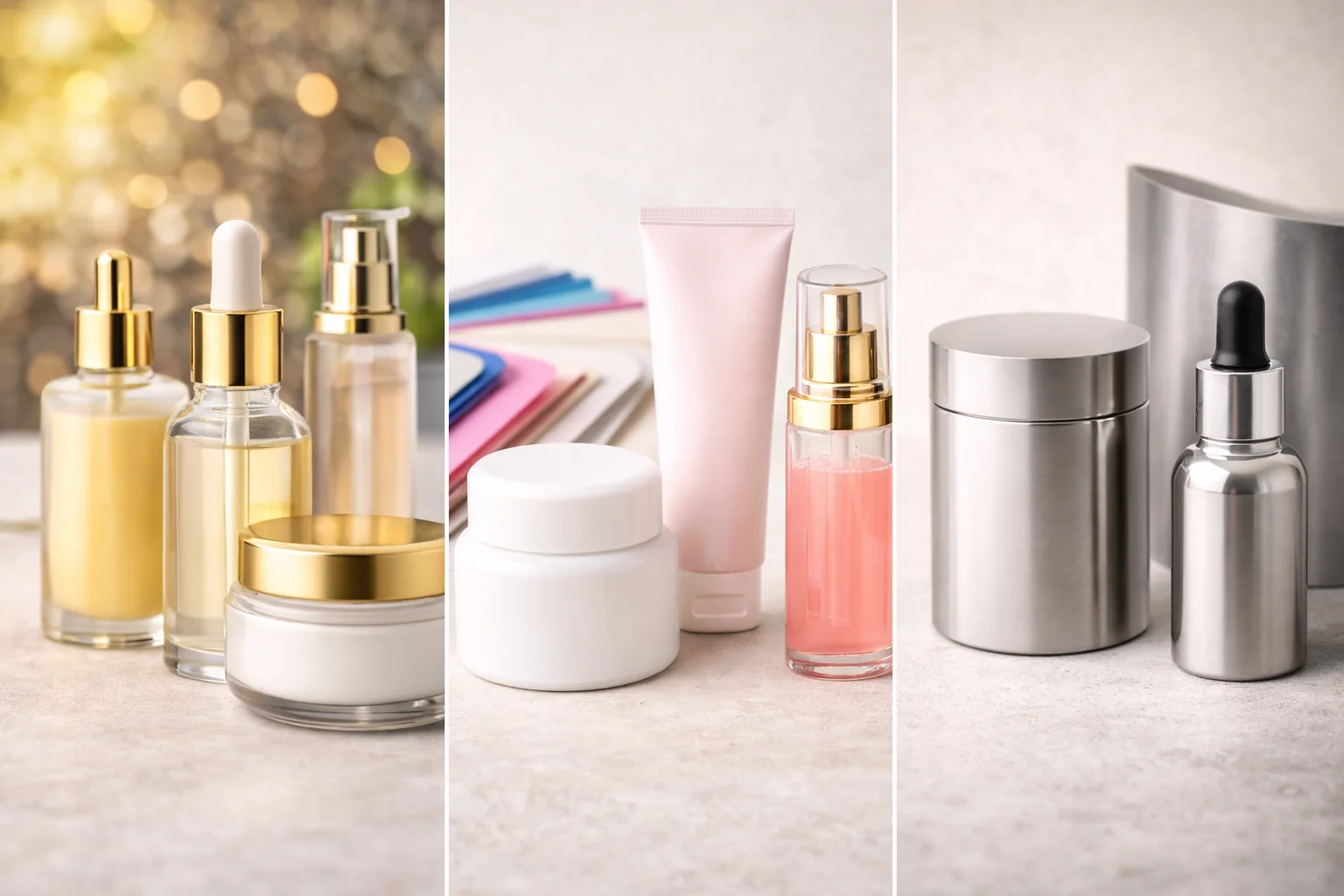
Choosing the right material feels like a huge decision, because it is. It affects everything from how your product looks on the shelf to how it performs in a customer's hands. As a packaging manufacturer, I've seen firsthand how this single choice can make or break a product launch. Before we dive into the specific materials, it's important to understand why this choice is so critical for your brand's success. Let's explore the real impact of your packaging material.
Why does packaging material matter so much in cosmetics?
Do you think packaging is just a container? This mistake can cost you money and customers. Your material choice directly impacts product safety, brand perception[^5], and your bottom line.
Packaging material is crucial because it protects the cosmetic formula from contamination and degradation. It also communicates your brand's value and quality to customers. The right material ensures product integrity[^6], enhances user experience[^7], and supports your brand's message from shelf to bathroom counter.
From my experience on the factory floor, the material is not just a shell; it's an active part of your product. Its importance breaks down into three key areas that every brand owner needs to understand.
1. Product Protection and Stability
The primary job of any package is to protect what's inside. Cosmetic formulas, especially those with active ingredients[^8] like Vitamin C, retinol, or natural oils, can be very sensitive. They can degrade when exposed to air, light, or even the wrong type of plastic. A glass bottle might be chosen for a serum not just for looks, but because its amber color blocks UV light. We always perform compatibility tests to ensure a plastic container won't leach chemicals into or react with the formula. The material is your first line of defense in delivering an effective, safe product to your customer.
2. Brand Messaging and Perception
Your packaging is your silent salesperson. A heavy glass jar with a metal cap instantly communicates luxury and a higher price point. A lightweight, recycled plastic[^9] tube signals practicality and eco-consciousness. The material tells a story before the customer even reads the label. A mismatch here can confuse customers. For example, a brand that markets itself as "100% natural" but uses heavy, virgin plastic packaging[^10] sends a conflicting message. The material must align with the brand identity you want to build.
3. Cost and Logistical Impact
Every material has a different impact on your budget. Glass is often more expensive to produce and much heavier, which significantly increases shipping costs[^11] from our factory in China to your warehouse in the US or Europe. Plastic is lightweight and cheaper, but custom molds[^12] can still be a major investment. Metal is durable but can be dented in transit if not packed correctly. These are the practical, real-world trade-offs we help our clients navigate every day.
Is glass packaging[^13] premium, stable, and protective?
Want a luxury look for your products? Glass feels premium, but its fragility and weight can cause major headaches. Let's see if the benefits outweigh the production risks.
Glass is excellent for luxury cosmetics[^14] because it's inert, impermeable, and offers a high-end feel. It protects sensitive formulas from oxygen and light degradation. This makes it ideal for serums, foundations, and fragrances, where product stability and a premium presentation are top priorities.
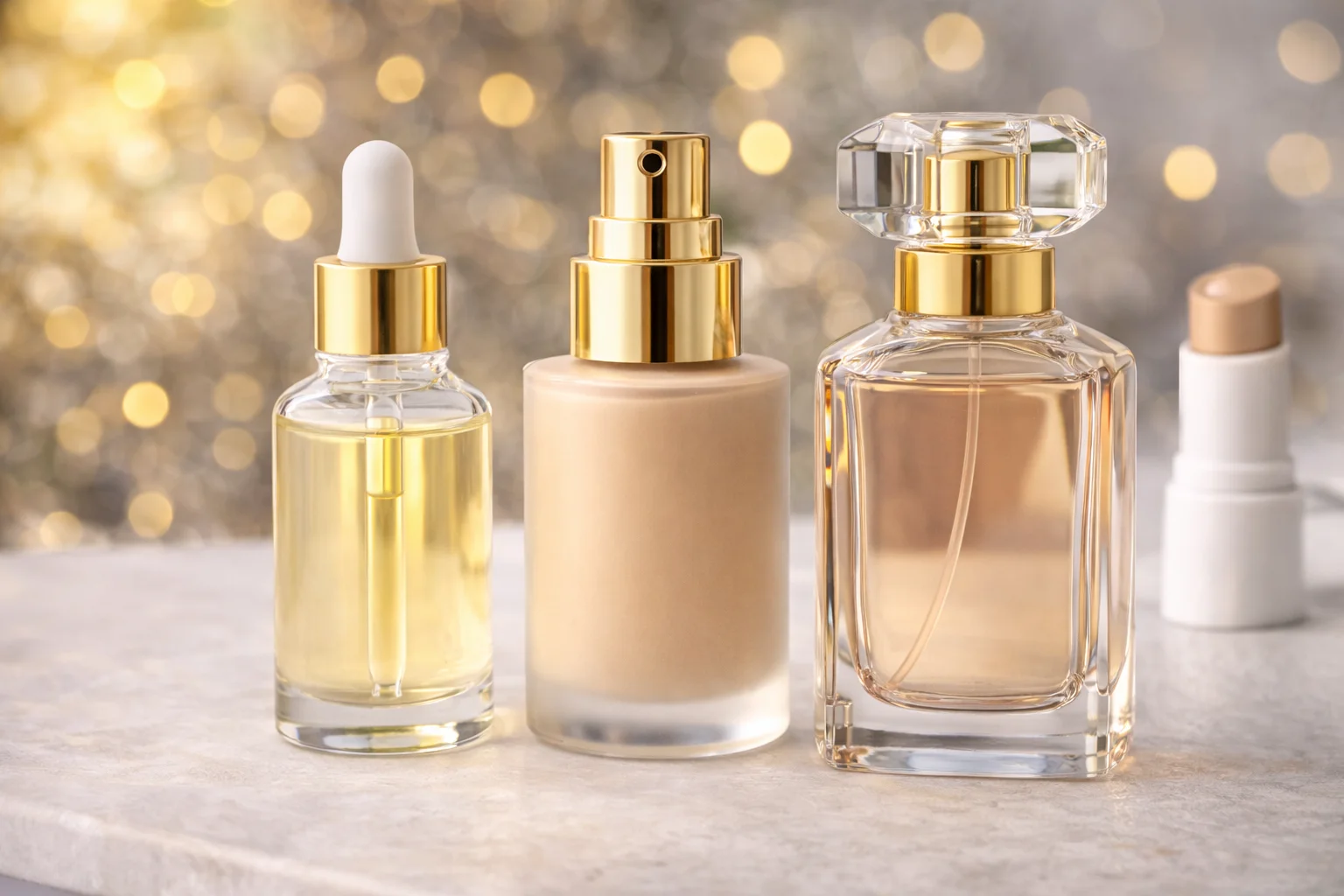
Many of our high-end clients immediately gravitate toward glass, and for good reason. It has a weight and clarity that no other material can match. When a customer picks up a heavy glass jar, it feels substantial and valuable. But from a manufacturing and supply chain perspective, it's a material of trade-offs.
The Clear Advantages of Glass
The biggest technical benefit of glass is that it is inert. This means it will not react with virtually any cosmetic ingredient you put inside it. This is why it's the gold standard for sensitive antioxidant serums or potent essential oil blends. It's also a fantastic barrier against gas and moisture, so the formula inside stays stable for longer. For brands focused on sustainability, glass is infinitely recyclable without any loss in quality, which is a powerful marketing point.
| Pros of Glass Packaging | Description |
|---|---|
| Premium Feel | Heavy and clear, signaling luxury and quality. |
| Inert & Non-Reactive | Safest option for sensitive or aggressive formulas. |
| Excellent Barrier | Protects from oxygen and moisture contamination. |
| Infinitely Recyclable | Can be recycled over and over without degrading. |
The Hidden Challenges of Glass
However, we always caution clients to consider the full picture. Glass is fragile. Breakage can happen during shipping, and we must use extra protective materials, which adds to the cost and environmental footprint[^15]. The biggest factor is weight. For our B2B clients shipping thousands of units internationally, the increased freight cost of glass compared to plastic is significant and must be factored into the final product price. Furthermore, creating a custom glass mold is extremely expensive and requires a very high Minimum Order Quantity (MOQ). This can make it inaccessible for new or smaller brands.
Is plastic packaging[^10] the most widely used option?
Plastic packaging is everywhere, but is it the right choice for you? It's cheap and versatile, but can feel low-quality and has environmental concerns. Let's find the truth.
Plastic is the most common material due to its versatility, low cost, and light weight. Different types like PET, PP, and PE offer various levels of clarity, flexibility, and chemical resistance. This makes it suitable for a wide range of products, from lotions to shampoos.
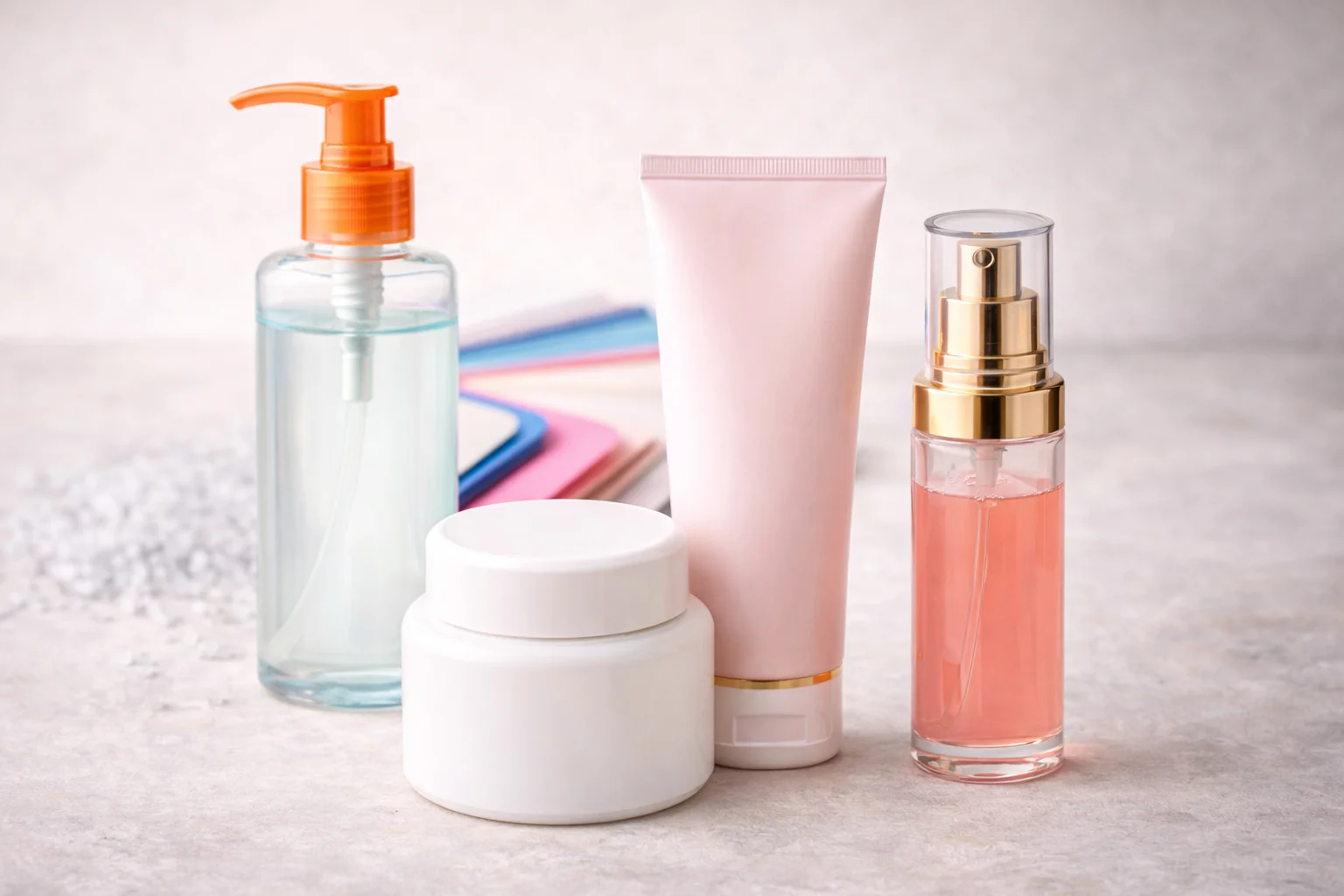
When people think of plastic, they often think of one thing. But in our factory, "plastic" refers to a huge family of materials, each with its own properties. The key to using plastic effectively is choosing the right type for your product and understanding its limitations. It's the workhorse of the cosmetics industry for a reason. Its low cost, durability, and light weight make it an unbeatable choice for many products.
A Quick Guide to Common Cosmetic Plastics
Not all plastics are created equal. We work with these main types every day:
- PET (Polyethylene Terephthalate): This is a popular choice for bottles and jars. It's lightweight, strong, and can be crystal clear, often mimicking the look of glass. It has a good barrier against oxygen and moisture, making it suitable for lotions, toners, and cleansers.
- PP (Polypropylene): This plastic is more rigid and has a high melting point, making it great for hot-fill products. It's often used for jars, caps, and airless pump systems. It is more opaque and has excellent chemical resistance.
- PE (Polyethylene): This is a softer, more flexible plastic. You see it most often in squeeze tubes for lotions or cleansers. It's durable and provides a good moisture barrier.
The Reality of Plastic in Production
The most critical step with plastic is compatibility testing. Some essential oils or solvents can cause certain plastics to warp or degrade over time. We always require a sample of the client's formula to test it against the proposed plastic. The other major conversation is around sustainability. Many clients ask for Post-Consumer Recycled (PCR) plastic. While this is a great option, brands must know that PCR can have slight color variations and is often more expensive than virgin plastic. It's another example of balancing goals—in this case, sustainability with aesthetic perfection and cost.
Is metal packaging[^16] durable and highly recyclable?
Looking for a unique, durable package? Metal offers a cool, modern feel. But it can be costly and prone to dents, which can ruin your perfect product presentation.
Metal, especially aluminum, is a great choice for its durability, light-blocking properties, and high recyclability. It provides an excellent barrier against light, air, and moisture, making it perfect for balms, solid perfumes, and products in aerosol cans. It also conveys a modern, premium feel.
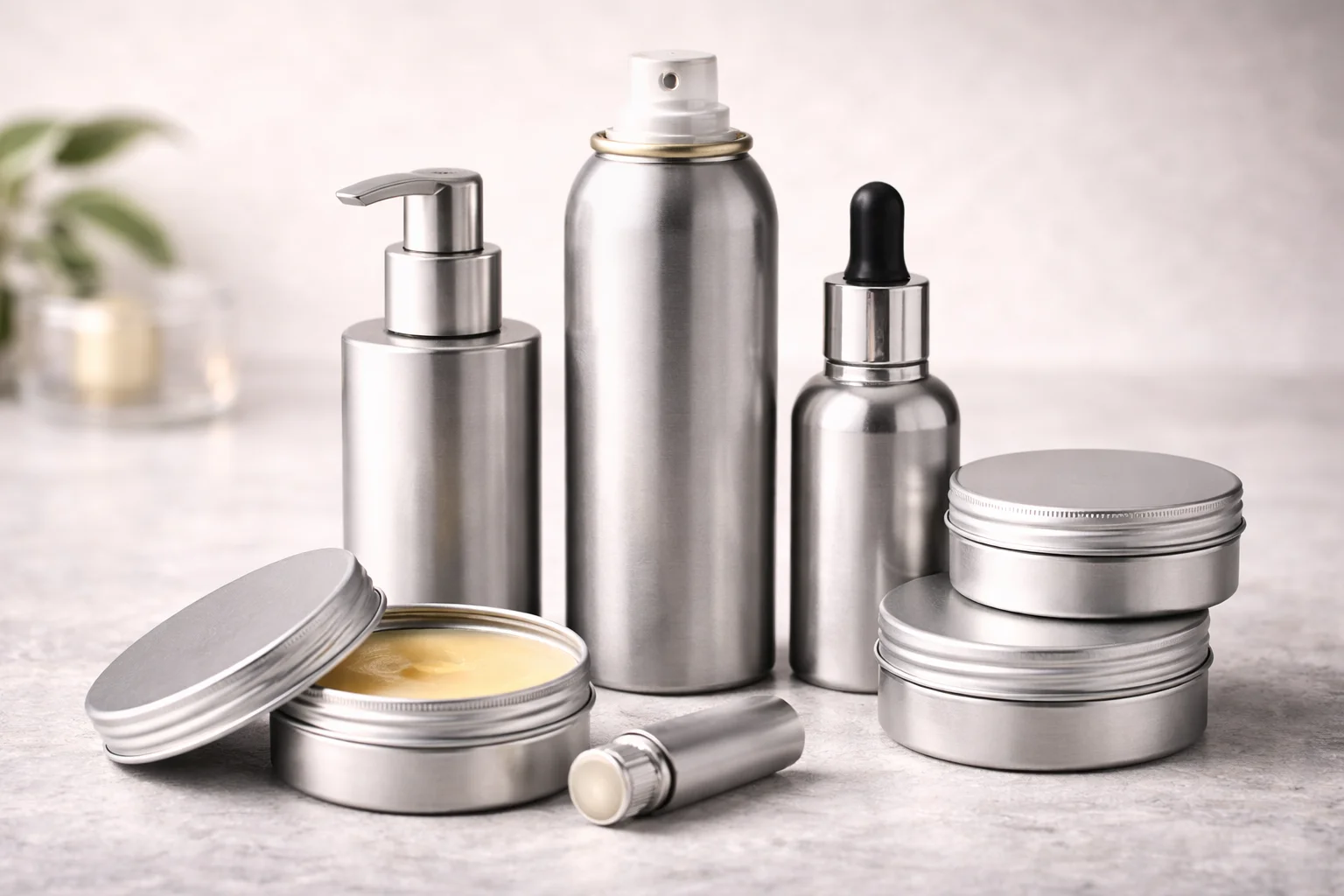
Metal packaging, particularly aluminum, has a unique place in the cosmetics world. It feels modern, sleek, and technical. We often see it used for products that want to project a clean, minimalist, or gender-neutral image. Its physical properties also make it an excellent choice for protecting sensitive formulas.
The Strengths of Metal
The biggest advantage of aluminum is that it is a 100% barrier to light, gas, and moisture. Nothing gets in or out. This makes it perfect for preserving delicate or preservative-free formulas. It's also extremely lightweight yet strong, and it has a high recycling rate globally, which is a big plus for sustainability-minded brands. The cool touch of the metal can also enhance the sensory experience of applying a product, making it feel refreshing. Think of lip balms in tins or face mists in aerosol cans—the packaging is part of the product's function.
Manufacturing and Handling Considerations
While strong, aluminum can be prone to denting. A small dent on a sleek bottle can make the entire product look damaged and cheap. This means we have to be extra careful during production and packing to prevent this. Another thing brands often don't realize is that raw aluminum can react with some product formulas. To prevent this, most aluminum containers, like tubes or bottles, require an internal plastic liner. This adds a step and cost to the manufacturing process and complicates the recycling story. Finally, just like with glass, creating custom molds[^12] for unique metal shapes can be expensive and requires a high MOQ, making it a bigger commitment for a brand.
Does paper & bamboo packaging's natural look match reality?
An earthy, natural look sounds great for your brand. But paper and bamboo packaging[^17] can have hidden issues with durability and product protection[^18] that might surprise you and your customers.
Paper and bamboo packaging are popular for brands wanting a natural, eco-friendly image. They are great for secondary packaging (boxes) and some dry products. However, they often require a plastic or glass inner container to protect liquid formulas, which complicates their "eco-friendly" story.
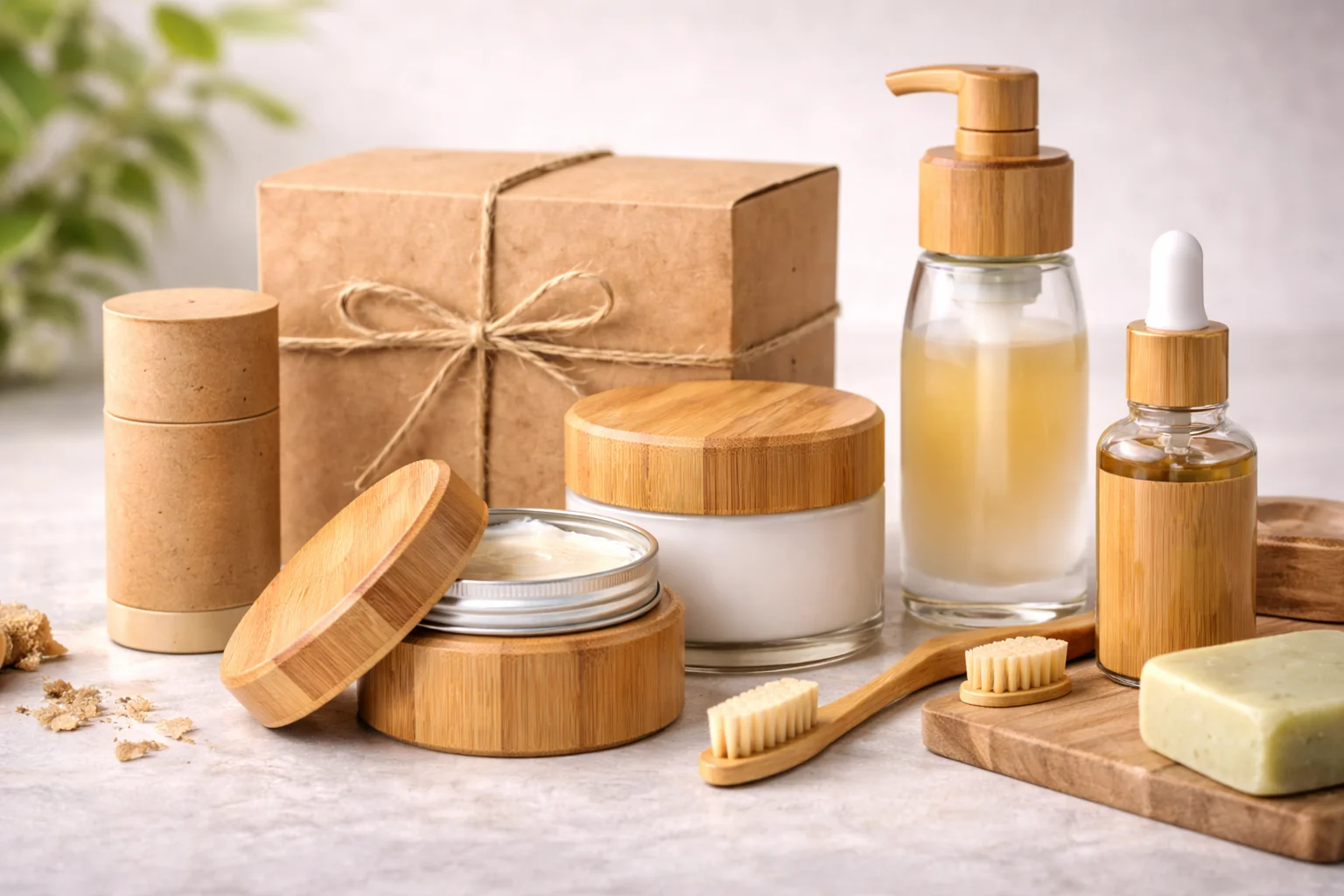
I get more questions about paper and bamboo now than ever before. Brands see it as the ultimate "green" solution. The aesthetic is perfect for organic, clean, or natural product lines. It looks and feels good. However, this is where I see the biggest gap between a brand's expectations and the reality of material science.
The Truth About "Paper" Bottles and "Bamboo" Jars
Here is the simple truth: paper and bamboo are not waterproof. They cannot hold liquids, creams, or oils on their own. They will disintegrate. When you see a paper bottle for a lotion or a bamboo jar for a face cream, what you are actually seeing is a composite package. There is almost always a thin plastic pouch or a full plastic inner jar hidden inside the paper or bamboo shell. The outer shell provides the look and feel, while the inner plastic container does the actual work of holding and protecting the product.
This isn't necessarily a bad thing, but it's a critical detail. From a manufacturing standpoint, it's a more complex, multi-part item to produce, which increases cost. More importantly, brands need to be transparent with their customers about this. Marketing a package as "plastic-free" when it has a plastic liner can lead to accusations of greenwashing.
Best Uses and Limitations
Paper and cardboard are fantastic for secondary packaging—the outer box your product comes in. They are also great for solid, dry products like powder foundations, eyeshadows, or soap bars. But for any liquid or cream, you must plan for an inner container made of a non-porous material like plastic or glass. You also have to consider the use environment. Paper and bamboo packaging can be easily damaged by water, making it a poor choice for products stored in a humid shower or on a wet bathroom counter.
How do you quickly compare cosmetic packaging material[^1]s?
Feeling overwhelmed by the options? It's hard to remember which material does what. A simple mistake here can set back your entire product launch and budget.
To quickly compare materials, use a simple chart. Glass offers the best protection and premium feel but is heavy and fragile. Plastic is versatile and cheap but has environmental concerns. Metal is durable and recyclable but can be costly. Paper is eco-friendly in appearance but lacks protection.
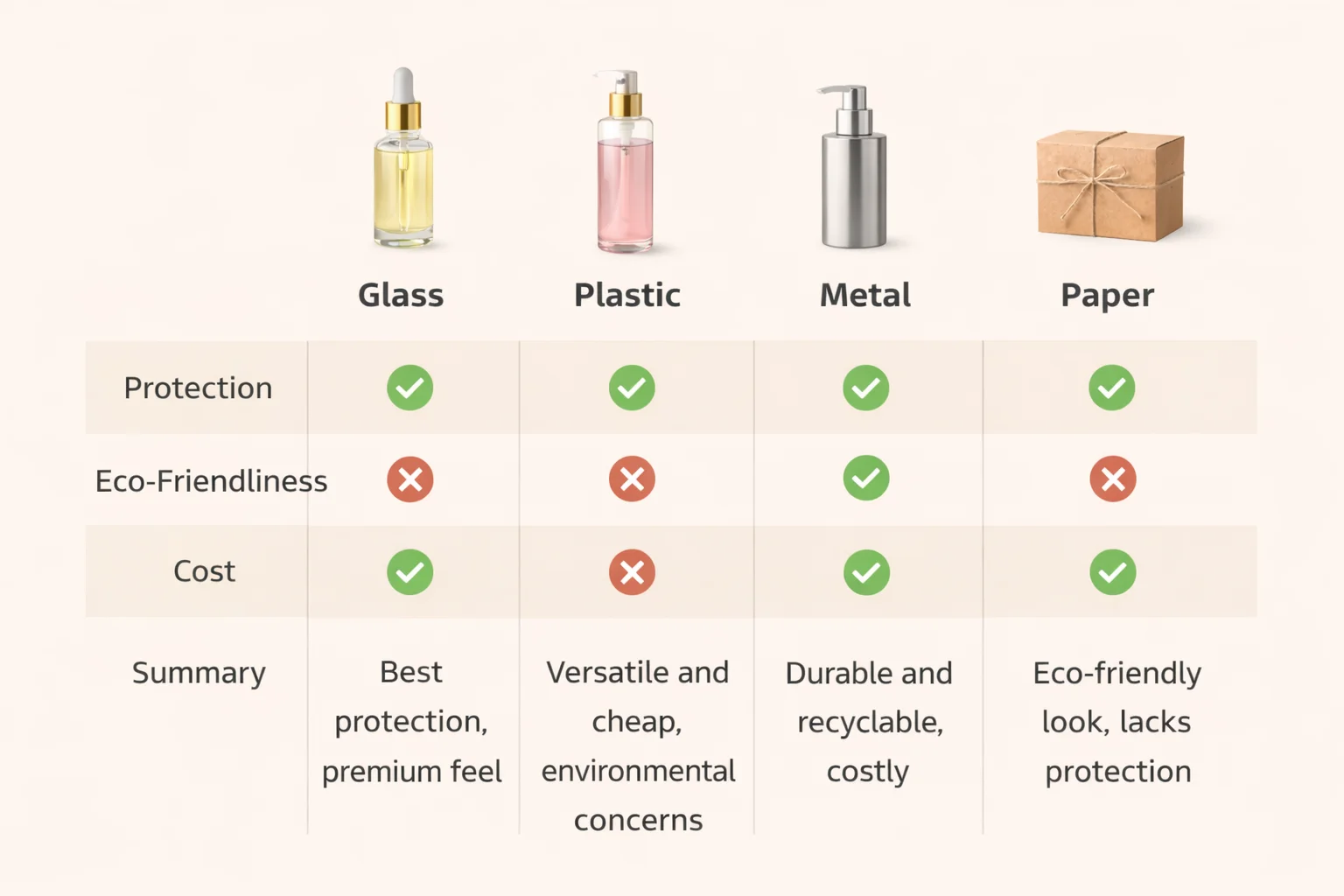
When I'm in an initial meeting with a client, I often find it helpful to lay out the options in a simple, visual way. No single material is perfect; each one is a set of compromises. The "best" choice depends entirely on your specific priorities. To make it easier, I've put together a comparison table based on the key factors we discuss with brands every day. This is a great starting point for narrowing down your options.
Material Comparison at a Glance
| Feature | Glass | Plastic (PET/PP) | Aluminum | Paper / Bamboo |
|---|---|---|---|---|
| Look & Feel | Premium, Heavy | Versatile, Lightweight | Modern, Cool | Natural, Earthy |
| Protection | Excellent | Good to Very Good | Excellent | Poor (Needs Liner) |
| Durability | Fragile | Very Durable | Durable (Can Dent) | Poor (Water-Sensitive) |
| Weight | Heavy | Very Light | Light | Very Light |
| Unit Cost | Medium to High | Low to Medium | Medium to High | Low (Box) to High (Jar) |
| Shipping Cost | High | Low | Low to Medium | Low |
| Recyclability | High (Infinitely) | Medium (Can Degrade) | High | High (If Not Lined) |
| Best For | Serums, Fragrance | Lotions, Tubes, Jars | Balms, Mists, Tins | Powders, Outer Boxes |
Remember, this table provides a general overview. The final cost of any package depends heavily on the level of customization, printing, surface finishes, and the total order quantity. The "Low" cost of a simple stock plastic bottle is very different from the "High" cost of a custom-molded bottle with a multi-color screen print. This is why having a direct conversation with a manufacturer is so important to get accurate pricing for your specific project.
How do you choose the right material for your product?
You know the materials, but how do you actually choose? Making a gut decision without a clear process can lead to costly packaging failures and delays in your production schedule.
To choose the right material, follow a clear process. First, analyze your product's formula for sensitivities. Second, define your brand identity and price point. Third, consider your budget for both packaging and shipping. Finally, evaluate your sustainability goals and choose a material that aligns.
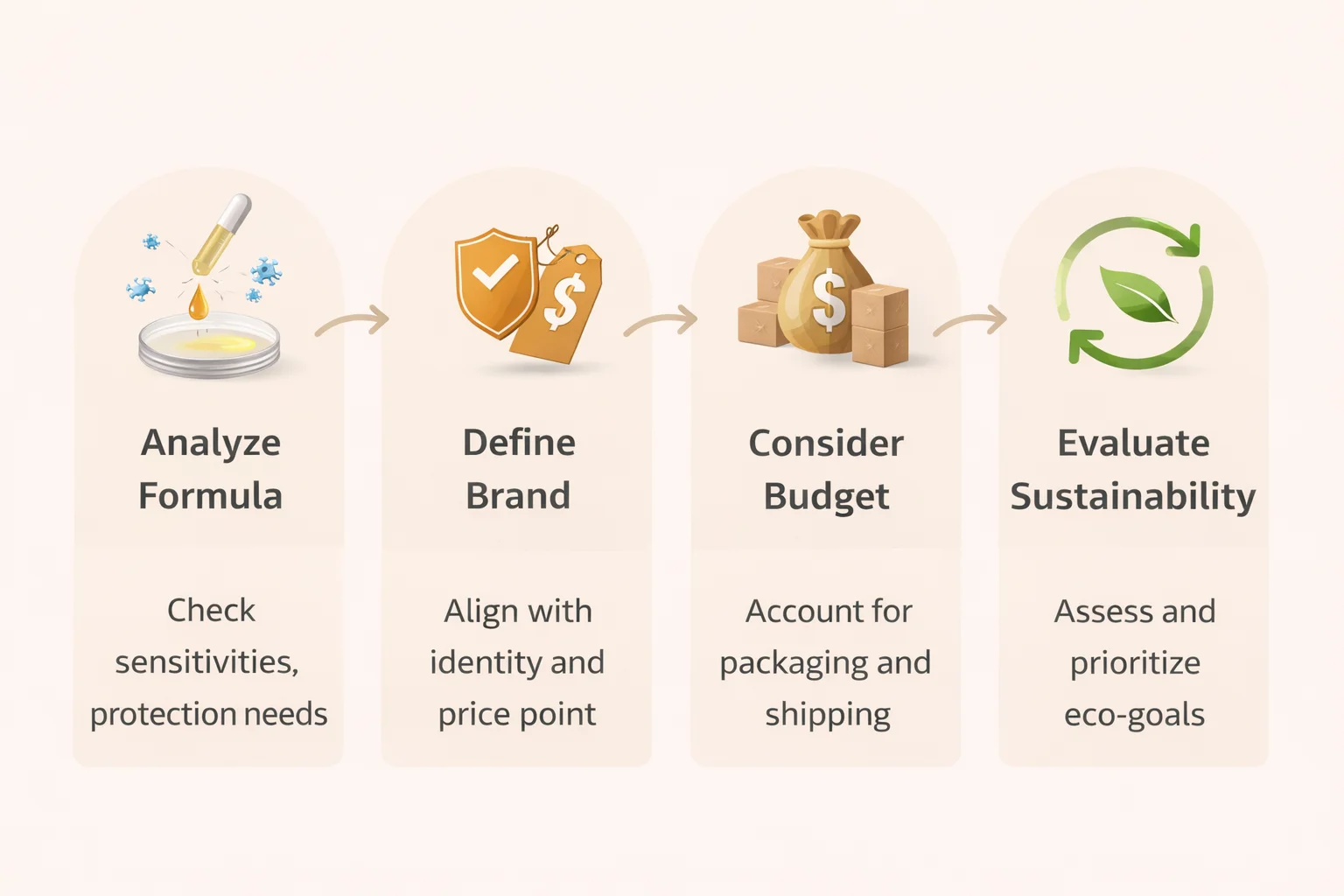
After manufacturing thousands of different cosmetic packages, I've learned that the most successful projects always follow a logical decision-making process. The brands that run into trouble are often the ones who pick a material based on a single factor, like aesthetics, without considering the whole picture. Here is the simple, four-step process we walk our clients through.
Step 1: Start with Your Formula
This is the non-negotiable first step. Before you think about colors or shapes, you must think about chemistry.
- Is your formula light-sensitive? If yes, you need an opaque or dark-colored material like amber glass, aluminum, or opaque plastic.
- Is it sensitive to oxygen? If yes, consider glass or an airless plastic pump, which minimizes air exposure.
- Does it contain aggressive ingredients like high concentrations of alcohol or essential oils? You must choose an inert material like glass or run compatibility tests with specific plastics like PP.
Step 2: Define Your Brand and Customer
Who are you selling to, and what is their expectation?
- Luxury Brand: If you're selling a $150 serum, your customers expect the weight and feel of glass. Using cheap plastic would devalue your product.
- Mass-Market Brand: If you're selling a $12 body lotion, lightweight plastic is practical, affordable, and meets customer expectations for that price point.
Step 3: Set a Realistic Total Budget
Your packaging cost is more than just the price per unit.
- Unit Cost: Get quotes for the packaging itself.
- Shipping Cost: Ask your manufacturer to estimate the shipping cost based on weight and volume. Heavy glass will drastically increase your landed cost per unit.
- Tooling/Mold Cost: If you want a custom shape, there will be a one-time mold fee, which can be thousands of dollars.
Step 4: Consider the Full User Experience
How will someone use this product every day?
- In the shower? You need a shatterproof material like plastic. Glass is a safety hazard.
- For travel? Lightweight plastic or aluminum is better than heavy, breakable glass.
- Dispensing Method: A squeeze tube requires a flexible plastic like PE. A dropper works best with a rigid glass or plastic bottle. The material must enable the function.
What are the common mistakes brands make?
Think you've covered all the bases? Many brands still fall into the same traps. These common mistakes can lead to production nightmares, budget overruns, and a failed product launch.
The most common mistakes are choosing a material based only on aesthetics, ignoring formula compatibility, and underestimating shipping costs. Another big error is not planning for a high enough MOQ for custom designs, especially with glass or metal, which can halt production before it even starts.
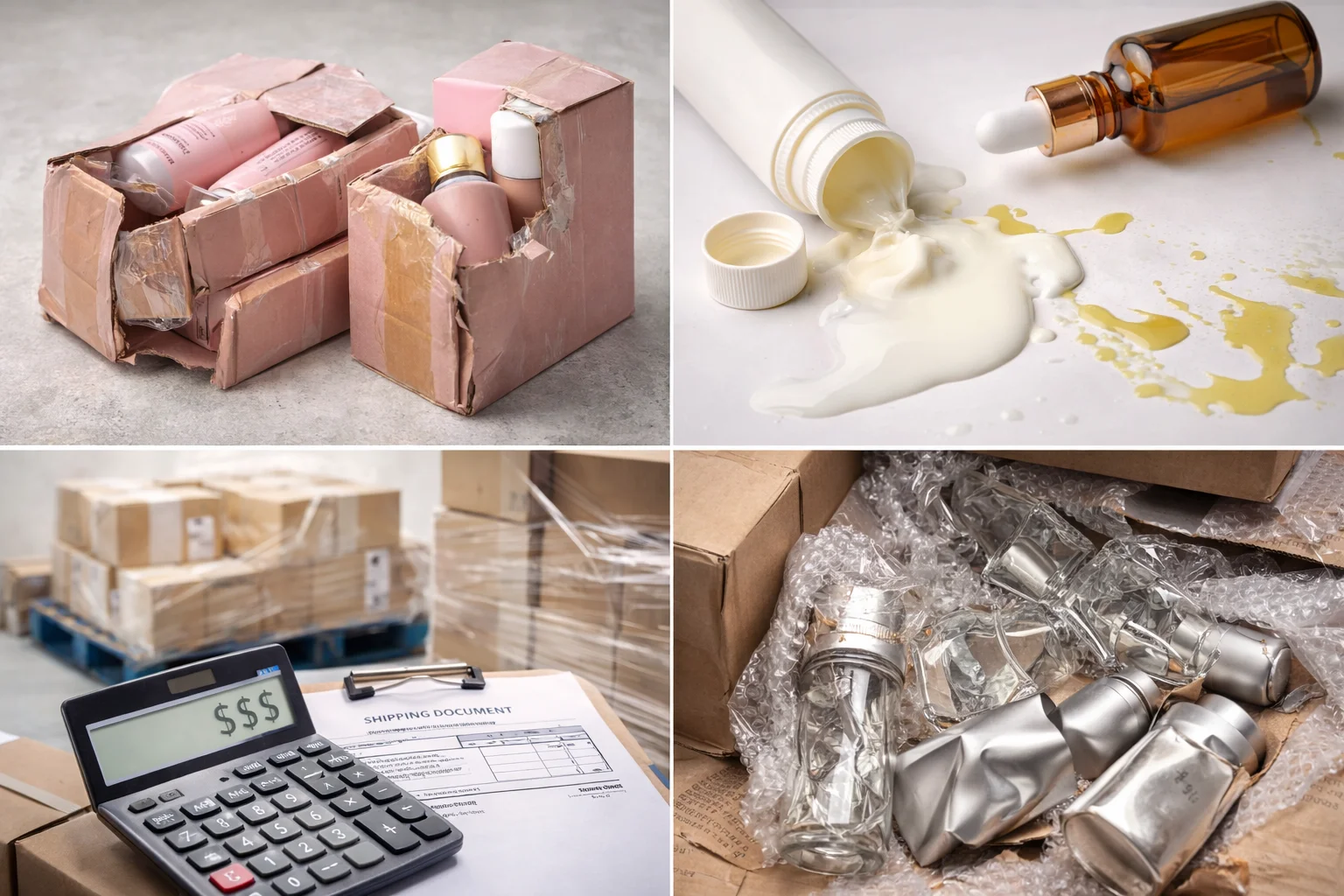
In my 20+ years in this business, I've seen the same painful mistakes happen over and over. They are almost always avoidable with a little bit of foresight and by having honest conversations with your manufacturing partner. My goal is to help you avoid these, because a problem for you is a problem for us.
Mistake 1: Falling in Love with a Look, Ignoring the Science
This is the most common one. A brand founder sees a beautiful package on Pinterest and says, "I want that." But they don't consider if that material works with their formula. I've had to tell clients that their gorgeous, clear PET jar will not work for their light-sensitive retinol cream. It's a tough conversation, but it's better than having thousands of units of spoiled product later. Rule: Function and compatibility always come before form.
Mistake 2: Underestimating the Supply Chain
A brand decides on a very unique custom-colored glass bottle from a specific European supplier. It looks amazing. But that supplier has a six-month lead time and a minimum order of 50,000 units. The brand's forecast was only for 10,000 units. Now their launch is delayed, and they can't afford to place an order. We always advise clients to balance uniqueness with supply chain stability. Sometimes a more standard component that is readily available is a much smarter business decision, especially for a new product.
Mistake 3: The "Eco-Friendly" Communication Gap
This one is subtle but important. A brand chooses a bamboo-shelled jar for their cream to push an eco-friendly message. But they don't tell their customers that there's a recyclable plastic jar inside doing all the work. A savvy customer might discover this and accuse the brand of "greenwashing" on social media. Honesty is the best policy. It's better to say, "We use a bamboo exterior to reduce plastic use by 50% and a recyclable plastic liner to keep your product safe." This kind of transparency builds trust.
Conclusion
Choosing the right material balances product needs, brand goals, and budget. Aligning these factors with material reality is the key to successful, reliable, and beautiful cosmetic packaging.
[^1]: Explore this resource to understand the various options and their benefits for your products.
[^2]: Explore strategies for aligning packaging choices with sustainability objectives.
[^3]: Learn about the significance of chemical compatibility in ensuring product safety and effectiveness.
[^4]: Understand how packaging can shape customer expectations and experiences.
[^5]: Learn how packaging choices can influence customer perceptions and brand identity.
[^6]: Learn about the importance of maintaining product integrity through proper packaging.
[^7]: Understand the role of packaging in improving the overall user experience with cosmetic products.
[^8]: Explore the specific packaging needs for cosmetics containing sensitive active ingredients.
[^9]: Discover the benefits and challenges of using PCR plastic in cosmetic packaging.
[^10]: This resource provides insights into the versatility and challenges of using plastic in cosmetic products.
[^11]: Learn how different packaging choices can impact overall shipping expenses.
[^12]: Explore the complexities and costs associated with custom packaging designs.
[^13]: Discover why glass is often considered the gold standard for luxury cosmetic packaging.
[^14]: Discover the key features that make packaging suitable for luxury cosmetic products.
[^15]: Learn about the environmental impacts of various packaging materials and how to minimize them.
[^16]: Find out how metal packaging can enhance product durability and sustainability.
[^17]: Explore the hidden challenges of using paper and bamboo in cosmetic packaging.
[^18]: Understand the critical role of packaging in safeguarding cosmetic formulas.