Your new soap dispenser clogs[^1], and you blame the pump. But the real problem is probably the soap you used. Let's find out how to fix this for good.
No, you cannot put just any soap into any soap dispenser. Dispensers are designed for specific soap thicknesses[^2], known as viscosity[^3]. Using a soap that is too thick or too thin will cause clogs[^1], leaks[^4], or pump failure[^5]. Matching the soap to the dispenser is essential.
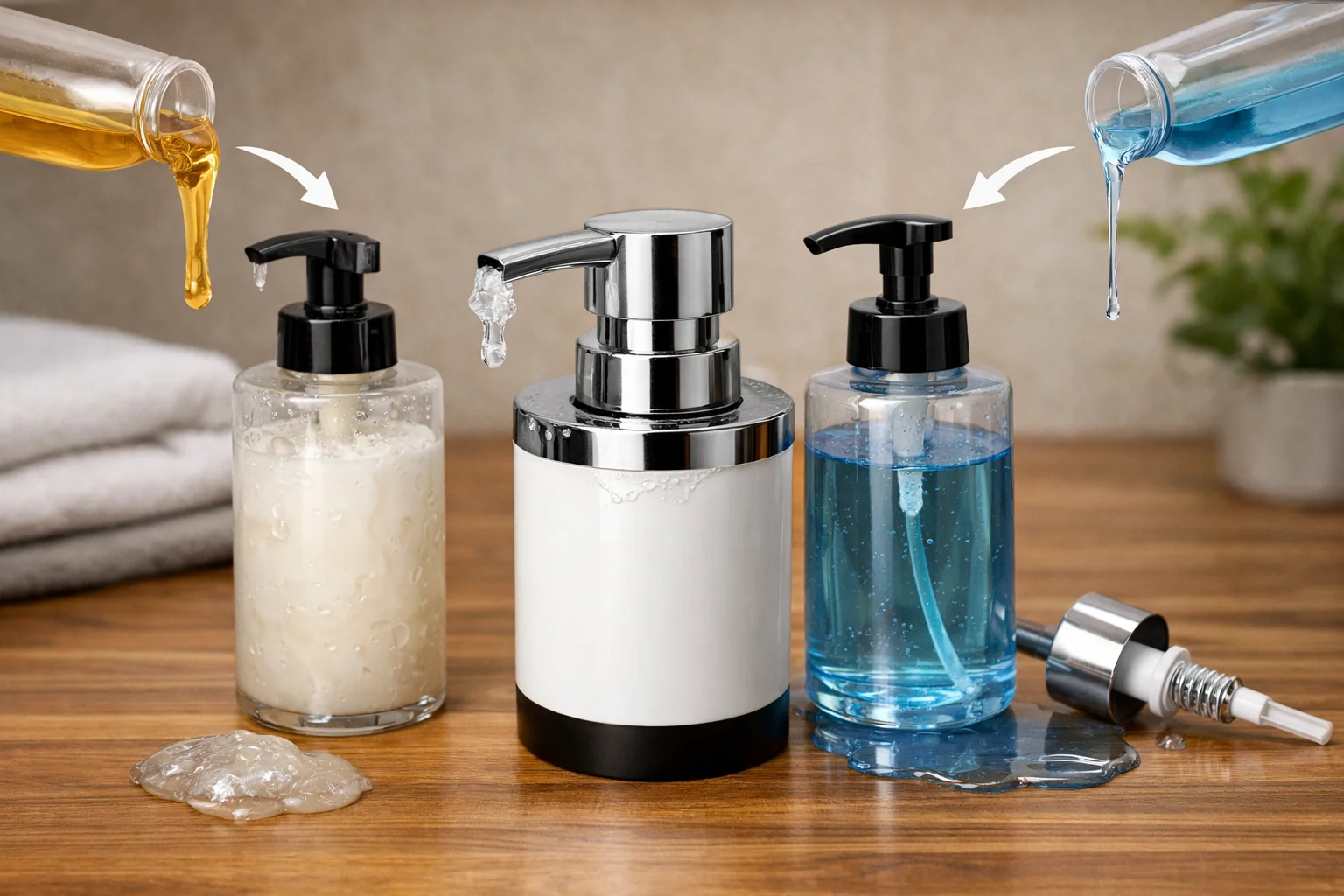
It feels like it should be simple. You buy a soap dispenser, you fill it with soap, and it just works. But as someone who understands the manufacturing side of things, I can tell you that most of the "broken" dispensers returned to us are perfectly fine. The issue wasn't the pump; it was the soap. Every pump is built to handle a certain kind of liquid. Getting that match right is the secret to a dispenser that works every single time. Let's dive into why this matters so much.
Can You Really Put Any Soap in a Soap Dispenser?
Tired of messy soap bottles on your counter? A dispenser seems like the perfect, clean solution. But using the wrong soap can cause frustrating clogs[^1] and leaks[^4], creating an even bigger mess.
No, you really can't. Most soap dispensers have pumps designed for a specific soap thickness and type. Using an incompatible soap is the number one reason for failure. It leads to clogs[^1], leaks[^4], or a pump that simply won't dispense soap, no matter how hard you push.
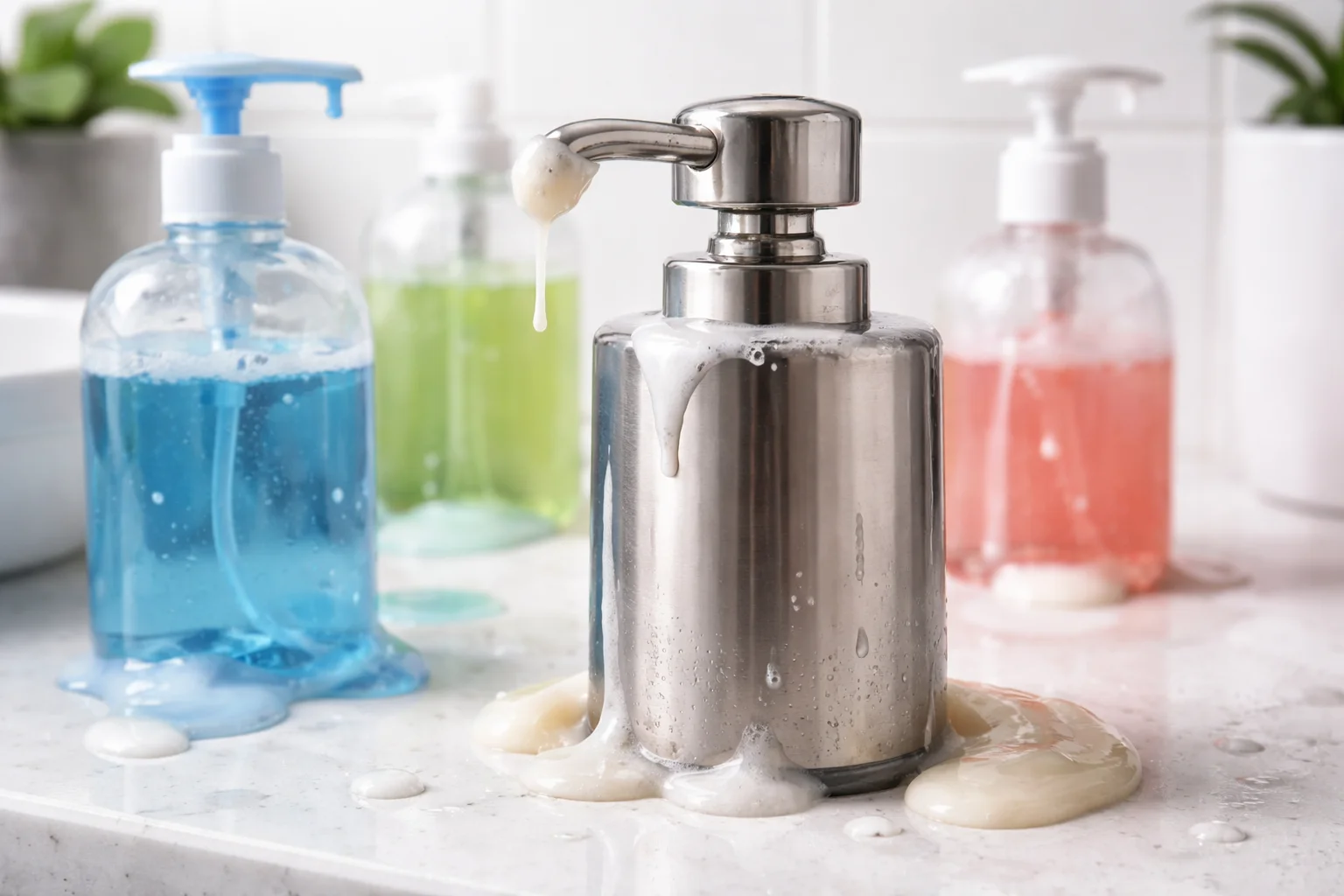
From a manufacturing view, a dispenser pump is a simple machine. But it's a calibrated machine. It's designed to move a liquid with a specific viscosity[^3], which is just a fancy word for thickness. Think of it like a car engine. You can't put diesel fuel in a gasoline car and expect it to run. The engine is built for a specific type of fuel. In the same way, a soap pump is built for a specific type of soap. When I was starting out, I learned this the hard way. I filled a beautiful new automatic dispenser with my favorite thick, gel-like dish soap[^6]. The motor whirred, strained, and then went silent forever. The motor wasn't strong enough to pull the thick gel through the narrow tube. It burned itself out trying. This is what happens inside your dispenser when the soap and pump are not a match.
So, Why Don't All Soaps Work in Any Dispenser?
You bought a huge, economical bottle of hand soap. But now it refuses to pump out of your stylish dispenser. What's the deal? Let's explore why compatibility is so important.
Not all soaps work because dispensers have different pump mechanisms[^7]. A soap that is too thick will jam the pump. A soap that is too thin will leak right through it. A foaming dispenser requires a special, watery soap to create lather, and regular soap will just clog it.
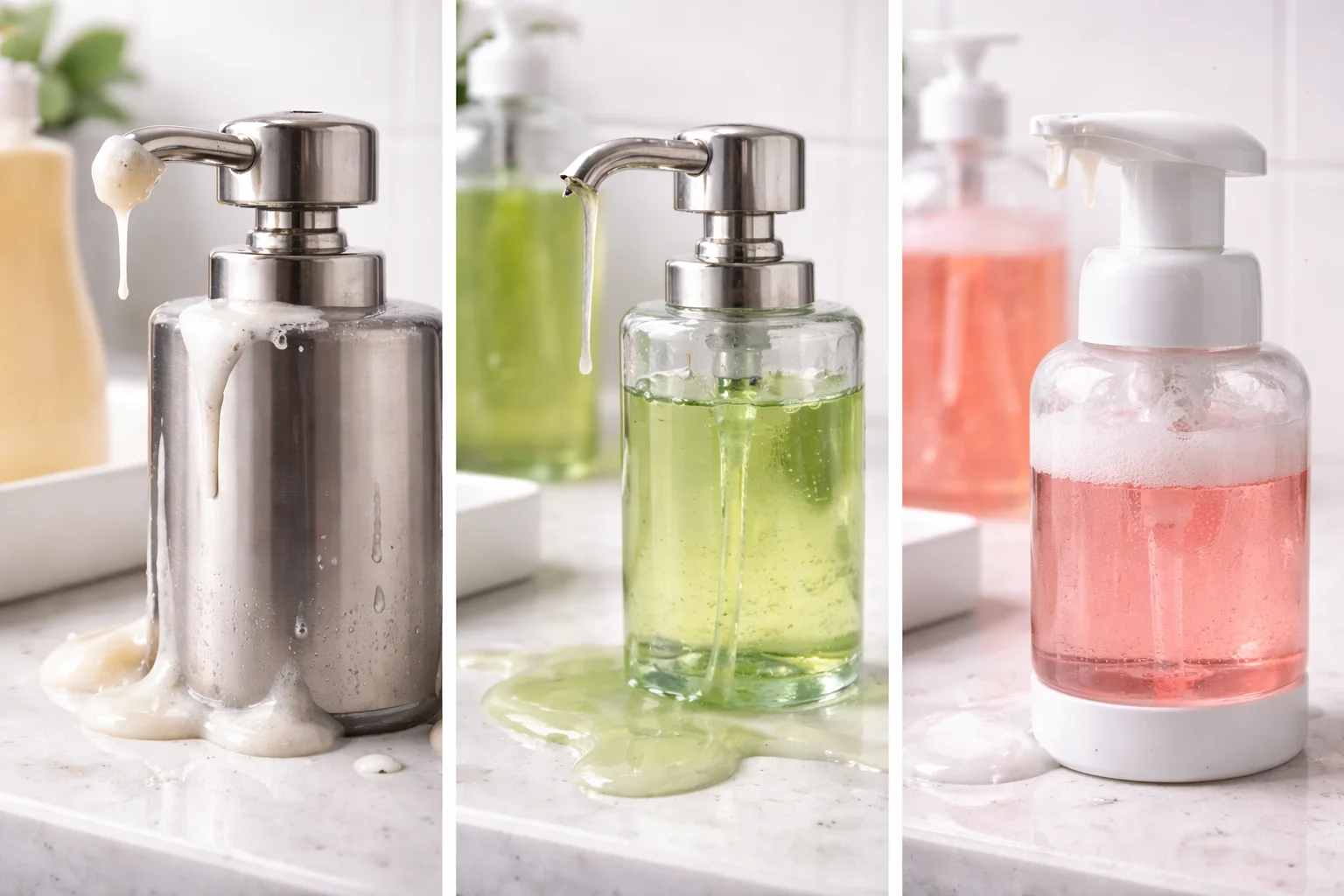
The core of the issue is the pump's design. Each pump style is engineered to solve a different problem, but that specialization creates limits. A mismatch between the soap and the pump is guaranteed to cause trouble. Let's break down the common soap types[^8] and why they are so different.
Soap Viscosity Matters
Viscosity is the most important factor. Here’s a simple breakdown:
- Thin, Watery Soaps: These are used in foaming dispensers[^9]. They have the consistency of water because they need to be mixed with air inside a special pump chamber.
- Standard Liquid Soaps: This is the most common type. It has a medium thickness that works well in most manual and many automatic dispensers[^10].
- Thick Gels and Lotions: These include many dish soap[^6]s, shampoos, and conditioners. They require a very strong, heavy-duty pump to move the thick liquid.
The Problem with Additives
Many soaps today contain more than just soap.
- Exfoliants: Soaps with microbeads, pumice, or sand are terrible for dispensers. These solid particles get stuck in the spring and ball valve of the pump, jamming it permanently.
- Moisturizers: Thick moisturizing swirls or high concentrations of lotion can increase the soap's viscosity[^3], making it too thick for a standard pump.
What Are the Different Types of Soap Dispensers?
You see them everywhere: manual, automatic, and foaming dispensers[^9]. They all look like they do the same thing. But they are not interchangeable, and picking the wrong one guarantees problems.
The main types are manual, automatic, and foaming. Each has a unique pump built for a specific soap consistency. An automatic dispenser's motor can't handle thick soap, and a foaming dispenser needs watery soap to work at all. Knowing your dispenser type is the first step.
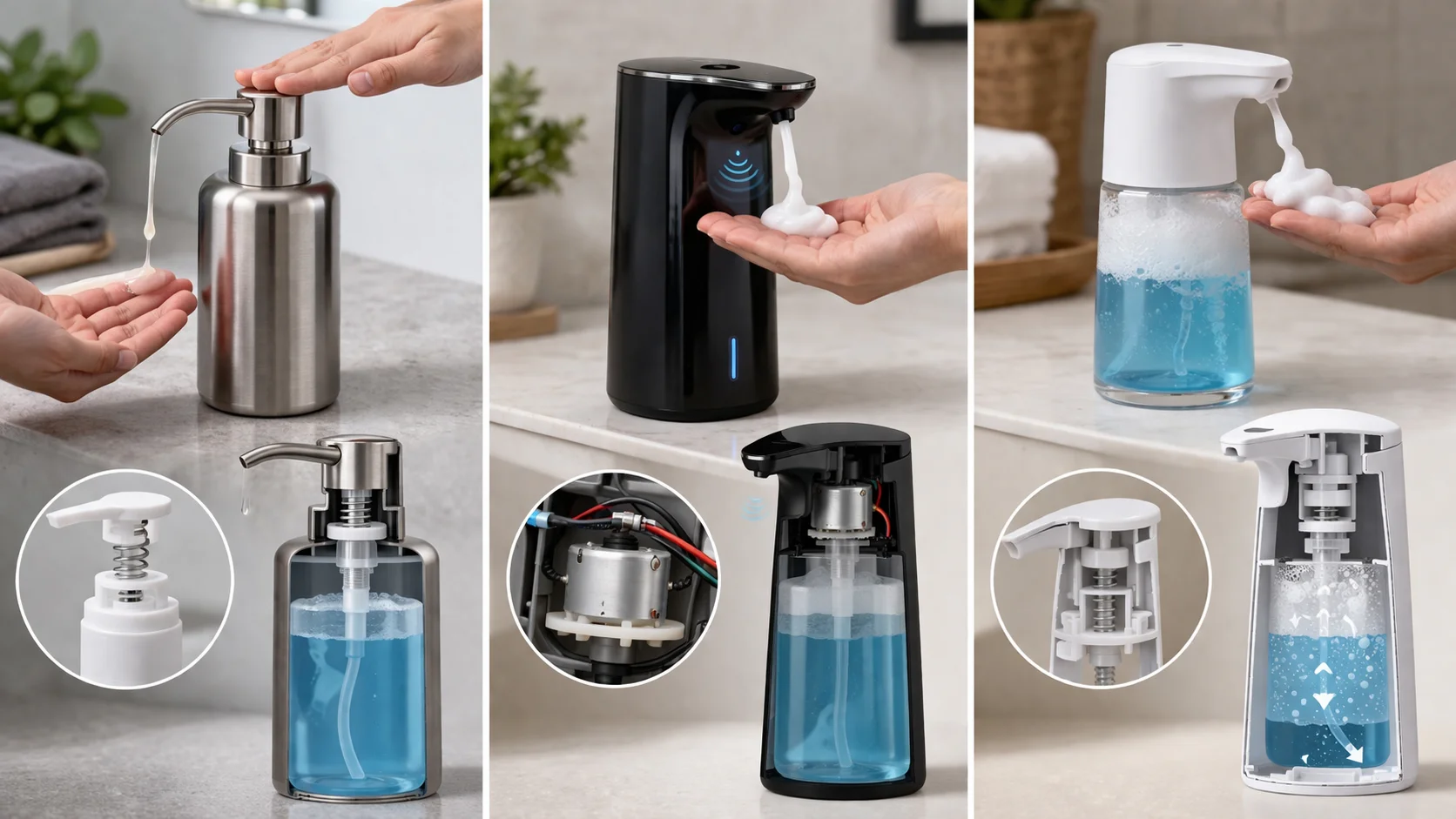
Understanding your dispenser's mechanics is the key to making it last. Each type is engineered differently, and that engineering dictates what kind of soap you can use. I once helped a friend who was furious that her foaming dispenser was "broken." I took one look and knew the problem. She had filled it with thick, regular hand soap. It wasn't broken; it was just clogged.
Manual Dispensers
These are the classic push-top dispensers. They are generally the most forgiving. The pump mechanism is simple and robust, powered by your hand. They can typically handle standard liquid hand soaps and some slightly thicker soaps. However, they will still clog if you use something extremely thick like a body butter or a soap with pumice.
Automatic Dispensers
These use a sensor to dispense soap without touching. They are very convenient but more sensitive. They contain a small electric motor to power the pump. This motor is calibrated for a specific workload. If you use a soap that is too thick, the motor has to work too hard, which can drain the batteries quickly or burn out the motor completely. Stick to standard liquid hand soap for these.
Foaming Dispensers
These are the most specialized. Their pumps have two chambers: one for soap and one for air. When you push the pump, it forces both the soap and air through a fine mesh screen, which creates the foam. Because of this complex process, they require a very thin, watery soap. You must use either a pre-made "foaming soap refill[^11]" or dilute regular liquid soap with water (usually a 1:4 or 1:5 soap-to-water ratio).
What Kinds of Soap Are People Trying to Use?
You want to use your favorite scented body wash[^12] or powerful dish soap[^6] in your countertop dispenser. But will it actually work? Using the wrong product can lead to a sticky, frustrating mess.
People try to use all kinds of soaps. The most common are liquid hand soap, dish soap[^6], shampoo, and body wash[^12]. Soaps with exfoliants[^13] like sand or beads are also frequently used, but these are the most likely to cause a permanent clog in any type of dispenser pump.
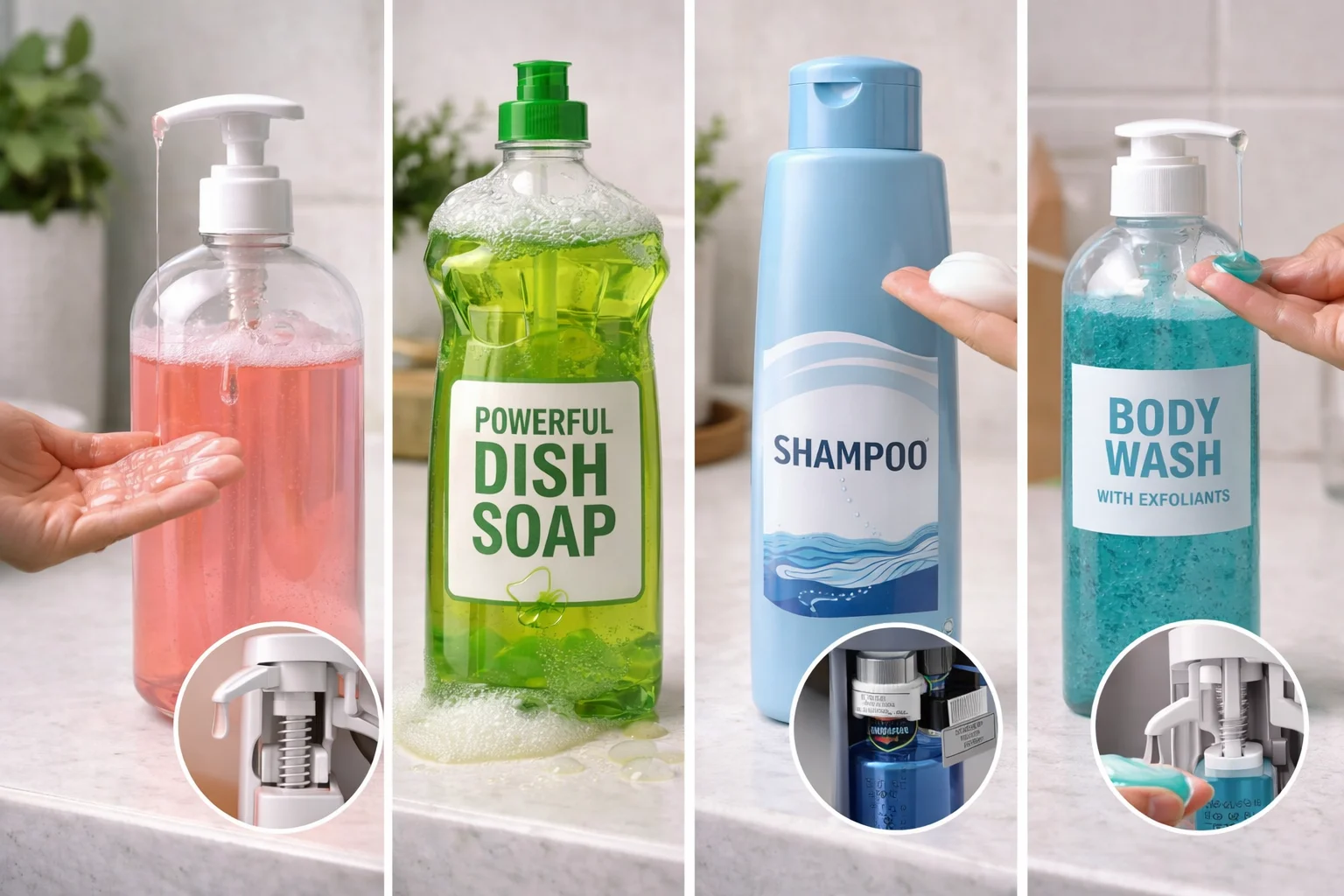
It's natural to want to fill your dispenser with a product you already love. But not all liquids are created equal in the eyes of a pump. The properties that make a dish soap[^6] great at cutting grease (its thickness) or a body wash[^12] feel luxurious (its creamy texture) are the very things that can make them fail in a standard dispenser. Let’s look at a quick compatibility chart to see what generally works and what doesn't.
| Soap Type | Best Dispenser Type | Common Problems |
|---|---|---|
| Standard Liquid Hand Soap | Manual, Automatic | Generally very compatible. The safest choice. |
| Dish Soap | Heavy-Duty Manual | Often too thick for automatic or foaming dispensers[^9]. Can burn out motors. |
| Foaming Soap Refill | Foaming Dispensers Only | Looks like water. Will leak and drip from manual or automatic dispensers[^10]. |
| Shampoo / Conditioner | Not Recommended (Use Lotion Pump) | Almost always too thick. Will clog standard pumps very quickly. |
| Soap with Beads/Pumice | Not Recommended for Any Pump | The solid particles will jam the pump mechanism, often permanently. |
| Diluted Liquid Soap | Foaming Dispensers | A DIY option for foaming pumps. Must be mixed with water (1 part soap to 4 parts water). |
What Really Happens If You Use the Wrong Soap?
Your dispenser is clogged again. You are frustrated and ready to throw it in the trash. But the problem isn't the dispenser; it's the soap you put inside it.
Using the wrong soap causes three main problems: clogs[^1], leaks[^4], and pump failure[^5]. Thick soap will block the tube and nozzle. Thin soap will drip constantly. Soaps with particles will permanently jam the mechanism, breaking the dispenser for good.
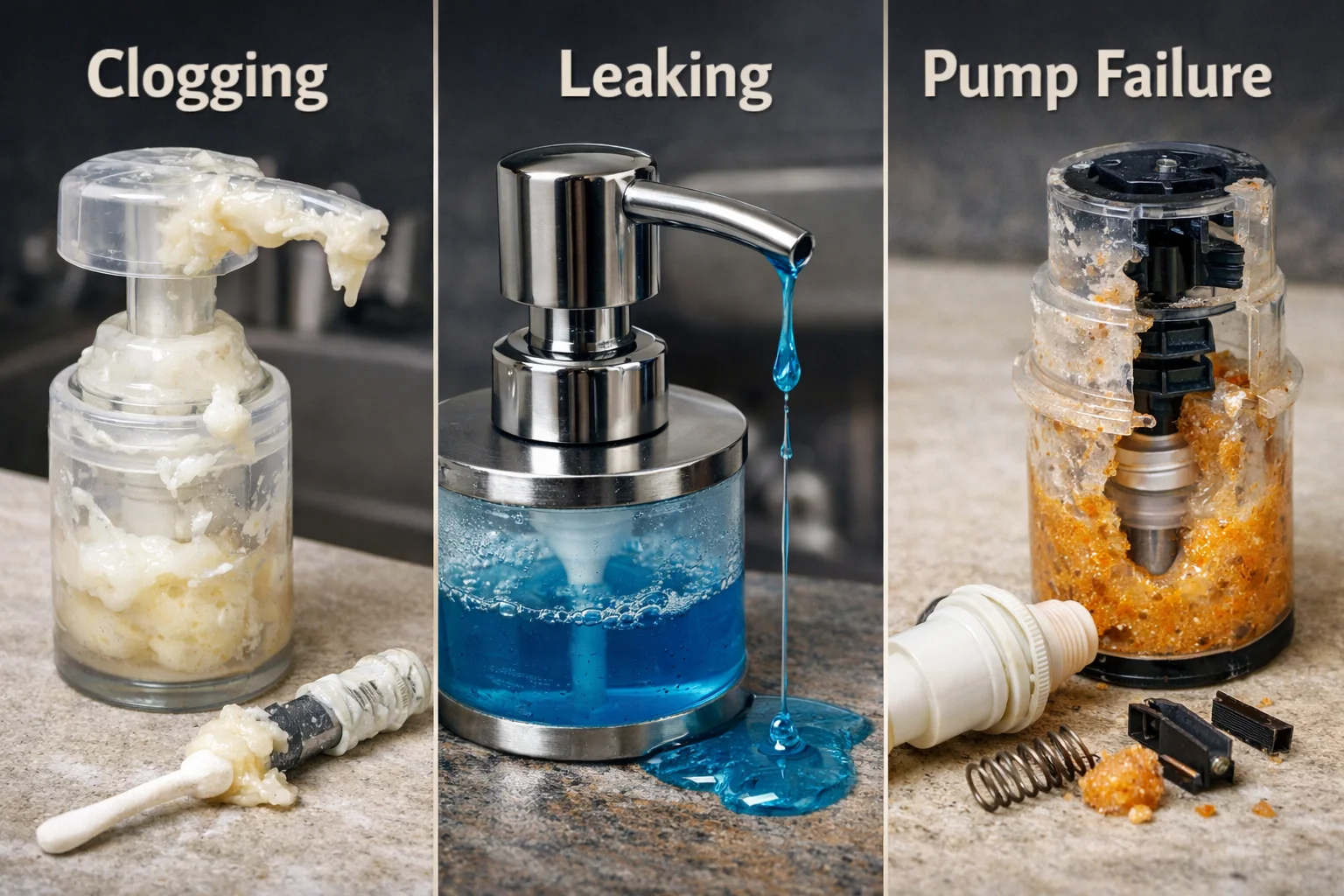
These failures aren't random. They are a direct physical result of a mismatch between the liquid and the machine. I’ve seen it hundreds of times. A customer calls, upset that their brand new automatic dispenser is dead. My first question is always, "What kind of soap did you use?" Nine times out of ten, the answer is something like "extra-thick antibacterial dish soap[^6]." The story always ends the same way.
The Anatomy of a Clog
When a soap is too thick, the pump's suction is not strong enough to pull it up the tube. You push the pump, but nothing comes out. Over time, the soap sitting in the nozzle and the top of the tube is exposed to air and dries out, forming a hard plug. Now, even if you put the correct soap in, it can't get past the plug.
The Reason for Leaks
Leaks happen for the opposite reason. A pump has gaskets and sometimes a small ball valve to stop the soap from flowing back down or dripping out. These are designed to seal against a liquid with some thickness. If you put a watery liquid (like undiluted foaming soap) in a manual dispenser, it's too thin for the valve to seal properly. Gravity will cause it to slowly drip out of the nozzle, creating a constant puddle.
How Pumps Break
This is the most serious outcome. In an automatic dispenser, the motor has a set amount of power. Forcing it to pump a thick gel is like making a small car pull a heavy truck. The motor will overheat and burn out. In a foaming dispenser, trying to force thick soap through the delicate air chamber and mesh screen can crack the plastic or tear the mesh, permanently destroying its ability to make foam.
How Do You Match the Right Soap with Your Dispenser?
You just want a soap dispenser that works. No clogs[^1], no drips, no fuss. The secret is simple but often overlooked. Let's learn how to make the perfect match every time.
First, identify your dispenser type: manual, automatic, or foaming. Then, check the instructions or packaging, which often recommends a soap type. When in doubt, buy soap specifically labeled for your dispenser type (e.g., "foaming hand soap").
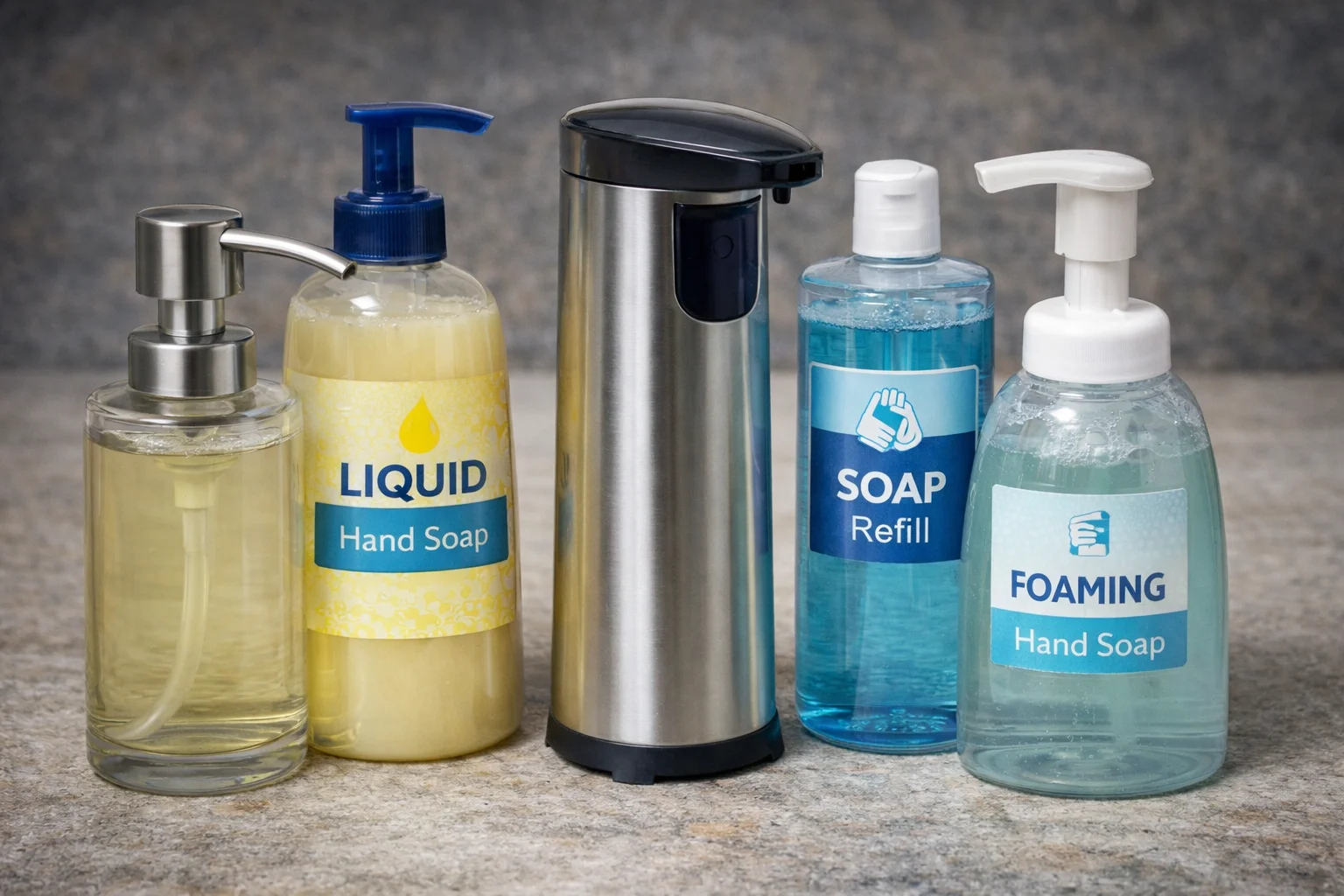
Making the right choice from the start saves you so much time and frustration. It’s a simple, four-step process that will ensure your dispenser works flawlessly. I walk my family and friends through this whenever they get a new dispenser, and it prevents nearly every common issue.
Step 1: Identify Your Dispenser
Look at it closely. Does it have a sensor on the front for touchless operation? It's automatic. Does it have an extra-large nozzle and a pump that feels airy when you push it? It's foaming. If it's just a simple push-top, it's manual.
Step 2: Read the Instructions
The best source of information is the manufacturer. The box or a small paper insert will often tell you exactly what to use and what to avoid. It might say "For use with liquid soap only" or "Do not use soaps with exfoliants[^13]."
Step 3: Choose the Right Soap
- For Foaming Dispensers: Only use refills that explicitly say "foaming soap." Or, make your own by mixing 1 part regular, clear liquid soap with 4-5 parts water. Shake gently to mix.
- For Automatic Dispensers: Use a standard liquid hand soap. Avoid anything that looks like a thick gel or has moisturizers[^14] or beads in it.
- For Manual Dispensers: You have the most flexibility here. Most liquid hand soaps will work. If you want to use dish soap[^6], choose a dispenser with a sturdy, metal pump designed for thicker liquids.
Step 4: Test a Small Amount
Before you fill the entire dispenser, pour just a little bit of the new soap in. Pump it a few times. Does it flow smoothly? If so, you're good to go. If it struggles, the soap is too thick.
What Are the Most Common Dispenser Mistakes to Avoid?
We have all done it. We've poured thick, goopy dish soap[^6] into a tiny bathroom dispenser and just hoped for the best. These common mistakes are the reason so many dispensers end up in the trash.
The biggest mistakes are using undiluted regular soap in a foaming dispenser, putting thick lotion or dish soap[^6] in a standard automatic dispenser, and never cleaning the dispenser between refills. These three things account for most dispenser problems.
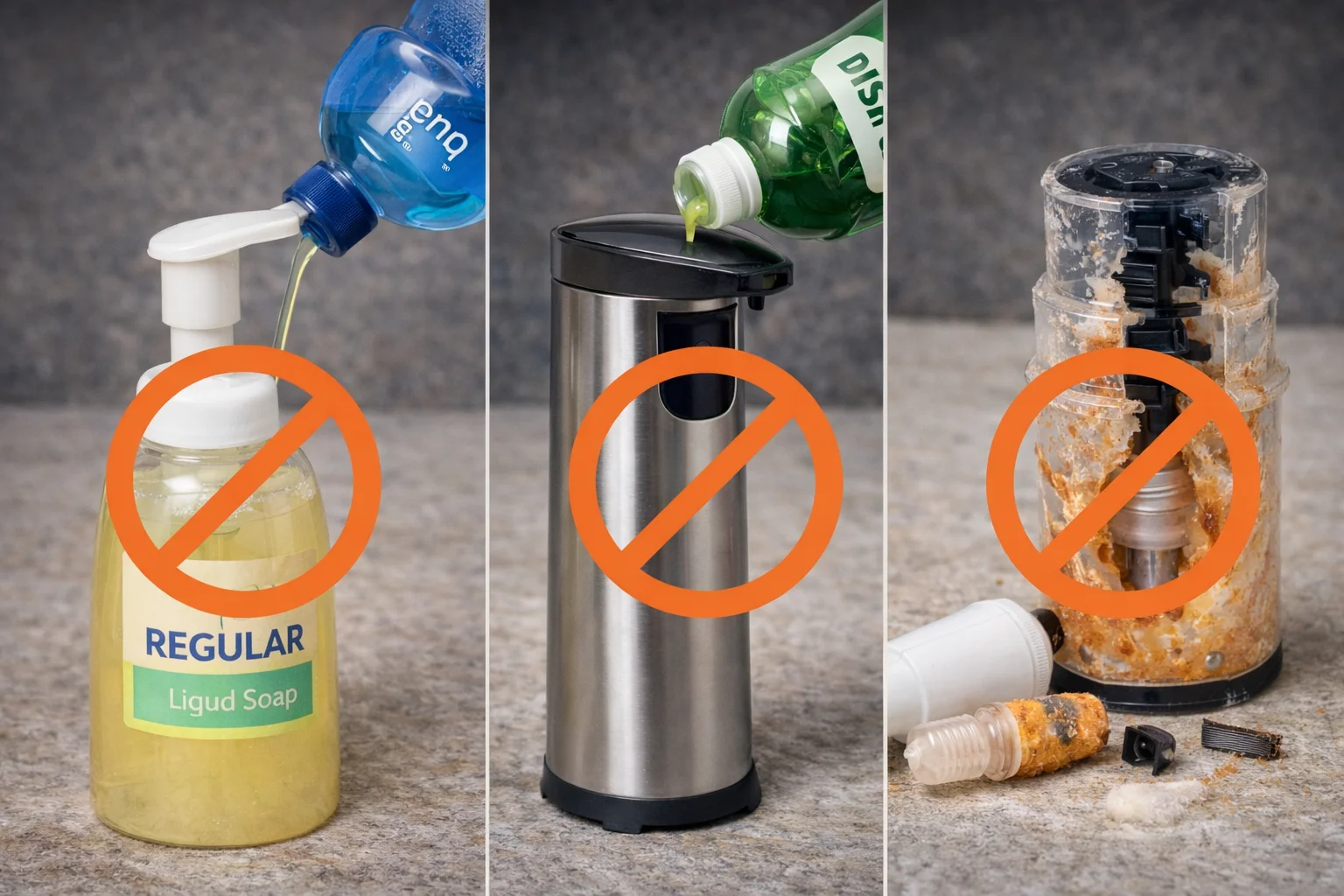
Avoiding these errors is simple once you know what to look for. It's about breaking a few bad habits that seem harmless but actually cause a lot of damage to the pump mechanisms[^7] over time. Here are the top mistakes I see people make again and again.
Mistake 1: The Foaming Dispenser Foul
This is the number one error. People buy a foaming dispenser because they love the lather, but then they refill it with regular hand soap from a large bottle. They push the pump, and a sad, sticky dribble of soap comes out. It will not foam. It will only clog the delicate pump. You must use watery foaming soap refill[^11] or dilute regular soap heavily.
Mistake 2: Ignoring Viscosity
Many people assume all "liquid soap" is the same. But the thickness varies dramatically. A cheap, watery soap might be fine, but a premium, gel-like soap can be too much for a standard pump. Always check the consistency. If it pours slowly like honey, it's probably too thick for an automatic dispenser.
Mistake 3: Using Soaps with "Grit"
Soaps with pumice, sand, walnut shells, or even glitter are dispenser killers. I once took apart a pump that was completely seized. Inside, I found it was packed solid with microbeads from an exfoliating face wash. The tiny plastic beads had wedged themselves into the spring and valve, making it impossible for the pump to move. These soaps are for use in your hand, not in a dispenser.
Mistake 4: Never Cleaning It
When you refill your dispenser, do you just top it off? Over time, old soap residue[^15] can build up on the bottom and inside the pump tube. This old soap can harden and cause clogs. Always give the bottle and pump a quick rinse with warm water before you refill it.
How Can You Make Your Soap Dispenser Last Longer?
Soap dispensers should be a long-term purchase, lasting for years, not months. But they often fail early due to simple, preventable issues. A few good habits can dramatically extend its life.
To make your dispenser last, always use the correct soap for the pump type. Clean it with warm water between refills. If a clog happens, flush the pump with hot water instead of forcing it. For thick soaps, diluting them slightly with water can help.
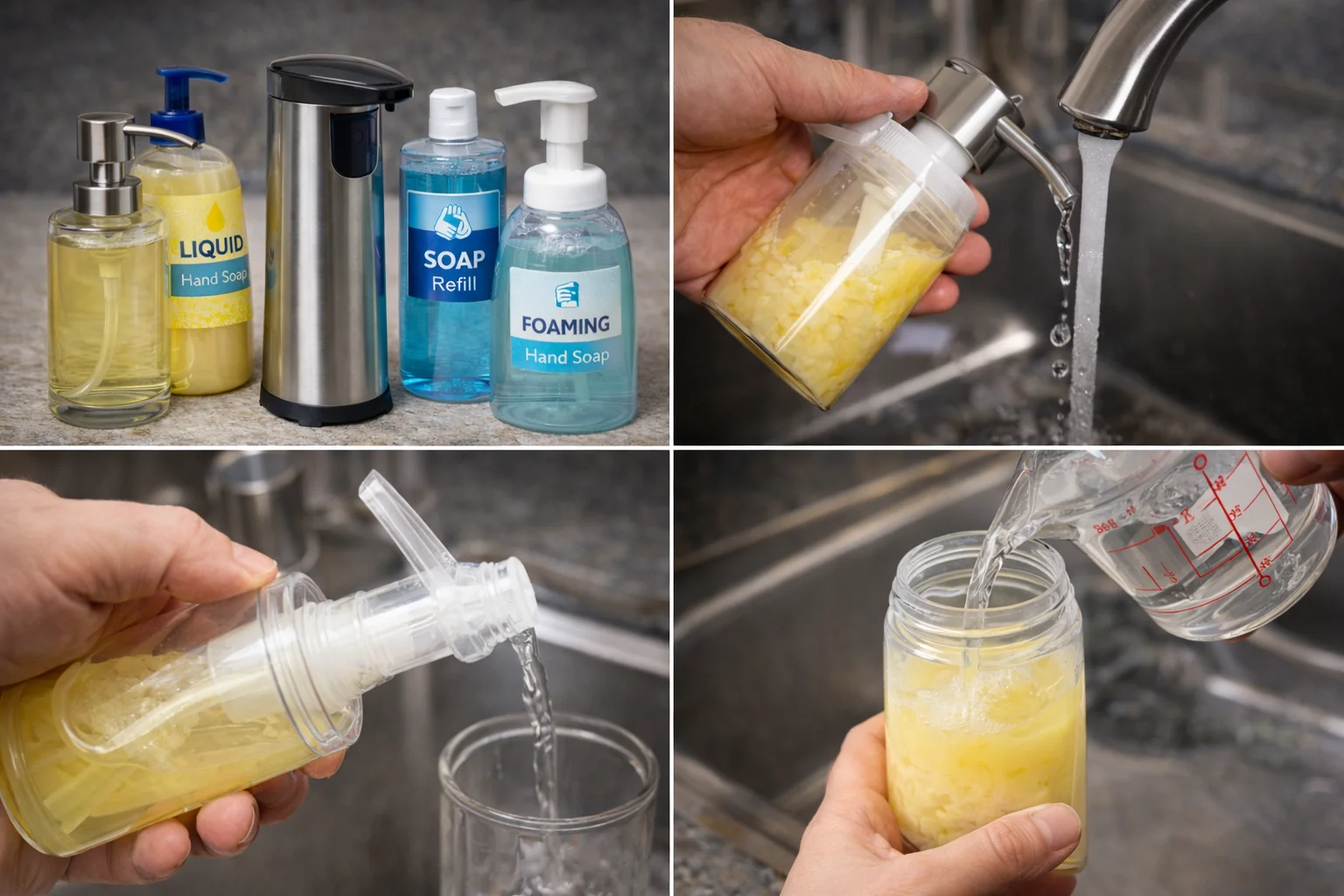
Proper maintenance takes almost no time but makes a huge difference. A well-cared-for dispenser can function perfectly for years. I have a simple manual dispenser in my guest bathroom that is over five years old and still works like new, simply because I follow these rules. It’s not about luck; it’s about maintenance.
1. Clean It with Every Refill
This is the most important habit. When the dispenser is empty, don't just pour more soap in. Take a minute to rinse the bottle and the pump mechanism. Submerge the pump tube in a cup of warm water and pump it a few times to flush out any old soap residue from inside. Then let it dry before refilling.
2. Dilute Thick Soap Slightly
If you find that your favorite liquid soap is just a little too thick and makes the pump struggle, don't be afraid to dilute it. Pour the soap into the dispenser, then add a small amount of water (start with a tablespoon or two) and stir gently. This can lessen the strain on the pump mechanism.
3. Unclog It the Right Way
If your dispenser clogs, your first instinct might be to push down on the pump with all your strength. Don't do this! You can break the pump head. Instead, unscrew the pump and place the tube end in a cup of hot (not boiling) water. Pump repeatedly. The hot water will dissolve the dried soap clog, clearing the tube.
4. Stick with a Winner
Once you find a brand and type of soap that works perfectly with your dispenser, try to stick with it. Constantly switching between different soap viscosities and formulas can lead to buildup and unexpected clogs. Consistency is your friend.
Conclusion
Choosing the right soap for your dispenser is the most important step. Matching the soap's thickness to the pump type is the secret to preventing clogs, leaks, and breakage.
[^1]: Preventing clogs can save you time and frustration, ensuring your dispenser functions smoothly.
[^2]: Understanding soap thickness is crucial for preventing clogs and ensuring your dispenser works effectively.
[^3]: Learn how viscosity affects soap dispensing to choose the right soap for your dispenser.
[^4]: Discover the common causes of leaks to avoid messy situations with your soap dispenser.
[^5]: Understanding pump failure can help you select the right soap and avoid costly replacements.
[^6]: Discover the compatibility of dish soap with different dispensers to prevent issues.
[^7]: Understanding pump mechanisms can help you choose the right dispenser for your soap type.
[^8]: Explore various soap types to find the best match for your specific dispenser.
[^9]: Using the right soap in foaming dispensers is essential for achieving the desired lather.
[^10]: Learn about the mechanics of automatic dispensers to ensure you use compatible soap.
[^11]: Discover the importance of using the correct foaming soap refill for optimal dispenser performance.
[^12]: Find out if body wash is suitable for your dispenser to avoid clogs and leaks.
[^13]: Find out how exfoliants can damage your dispenser and what to avoid when choosing soap.
[^14]: Understanding how moisturizers impact viscosity can help you select the right soap for your dispenser.
[^15]: Cleaning soap residue is essential for maintaining your dispenser's functionality and hygiene.